Richie Havens (1941-2013)
https://www.npr.org/artists/15360580/richie-havens
Plácido Domingo (1941)
http://www.allmusic.com/artist/pl%C3%A1cido-domingo-mn0000851639/biography
Richie Havens (1941-2013)
https://www.npr.org/artists/15360580/richie-havens
Plácido Domingo (1941)
http://www.allmusic.com/artist/pl%C3%A1cido-domingo-mn0000851639/biography
Lead Belly (1889-1949)
https://www.rockhall.com/inductees/lead-belly
Iván Fischer (1951)
http://www.bach-cantatas.com/Bio/Fischer-Ivan.htm
Janis Joplin (1943-1970)
https://www.allmusic.com/artist/janis-joplin-mn0000177060/biography
Simon Rattle (1955)
http://www.bach-cantatas.com/Bio/Rattle-Simon.htm
“The Robert Penn Warren Civil Rights Oral History Project is a collection of interviews concerning the Civil Rights movement and the socioeconomic, cultural, and political struggles of African Americans. Conducted in 1964 by Robert Penn Warren, a Kentucky native and the first poet laureate of the United States, these interviews constituted part of Warren’s research for his book Who Speaks for the Negro? Warren interviewed important civil rights leaders and activists such as Martin Luther King Jr., Milton Galamison, Adam Clayton Powell, Kenneth Bancroft Clark, Vernon Jordan, Malcolm X, Carroll Baker, Stokley Carmichael, William Hastie, Bayard Rustin, Ruth Turner, Claire Collins Harvey, Aaron Henry, Andrew Young, Gilbert Moses, and Ralph Ellison. Topics include racism throughout the United States, school integration, the National Association for the Advancement of Colored People (NAACP), the Congress of Racial Equality (CORE), education, employment, nonviolent protest, peace activism, black nationalism and pride, civil rights legislation, religion and spirituality, the role of whites in the civil rights movement, Abraham Lincoln, African culture, the Free Southern Theatre, and the Student Nonviolent Coordinating Committee (SNCC).”
Robert Penn Warren Civil Rights Oral History Project:
http://www.kentuckyoralhistory.org/collections/robert-penn-warren-civil-rights-oral-history-project
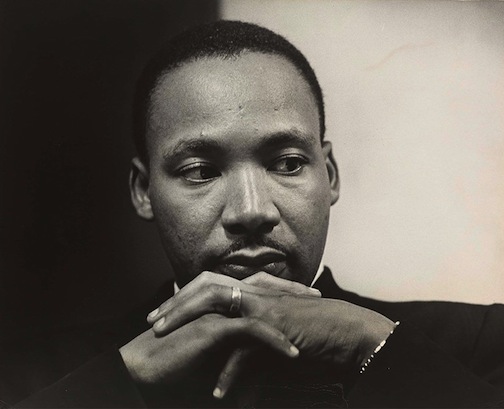
“Iconic images of Dr. King from the Smithsonian collection”
http://www.smithsonianmag.com/multimedia/martin-luther-king-jr-iconic-photos-180949401/
Photo: National Portrait Gallery
César Cui (1835-1918)
https://www.8notes.com/biographies/cui.asp
David Ruffin (1941–1991)
https://www.biography.com/people/david-ruffin-21174455
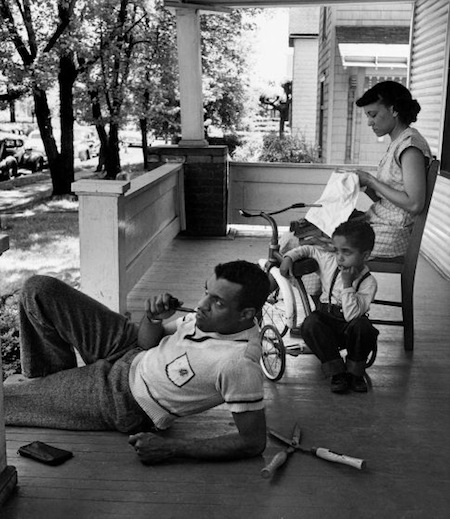
“When Gordon Parks left his hometown of Fort Scott, Kansas, at the age of 15 in 1928, it was to escape a place he would later call “the mecca of bigotry.” Parks’ mother arranged for her son, the youngest of her 15 children, to live with an older sister in Minnesota, where, she hoped, Gordon would be spared the “bitter trials of Kansas.”
At 37, Gordon Parks returned to Fort Scott, sent by LIFE to photograph the bitter trials of Kansas that his mother had wanted him to escape. But his pictures would never be published, bumped from the magazine by stories deemed more newsworthy.
Now these rarely seen photographs are making their public debut in an exhibit, Gordon Parks: Back to Fort Scott, at Boston’s Museum of Fine Arts, which opens on Saturday, Jan. 17. All but lost for more than half a century, the story behind the photographs is now being told for the first time.”
A Lost Story of Segregated America From LIFE’s First Black Photographer:
http://time.com/3664001/gordon-parks-fort-scott/
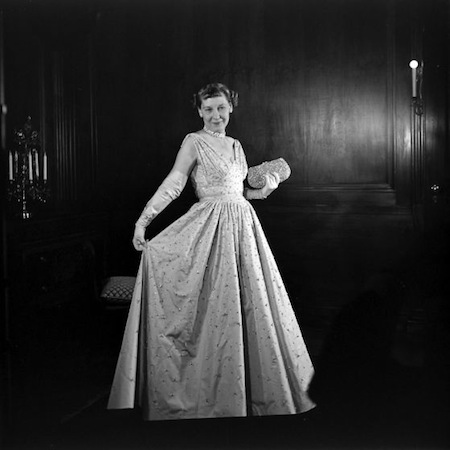
“As these photos by LIFE photographers show, there hasn’t exactly been a dress code, though styles have historically erred on the conservative side (in terms of hem lines, not party lines). The first ladies’ fashions have both evolved with popular trends and helped to inspire them. Furs, seen on Eleanor Roosevelt, Bess Truman, Mamie Eisenhower and Lady Bird Johnson, have fallen out of favor in recent decades. Hats, from Truman’s rather vertical design to Kennedy’s pillbox style, are infrequently sported by recent first ladies. Leather, with the exception of Nancy Reagan, shown in 1968 before her First Lady days, has been far from a staple, whereas the simple pearl necklace continues to be a timeless, nonpartisan classic.
While Kennedy’s style was described by LIFE in 1961 as having “an almost deliberate plainness,” Obama does not shy away from a hint of flourish here and there. But she’s certainly not the first to indulge in a bit of flair. When working with a designer on her dress for the inauguration in 1953, Mamie Eisenhower had a few extra requests. “She specified pink and asked for some additional glitter.” Because even the White House—no, especially the White House—can use a little sparkle now and then.”
44 First Lady Fashion Looks from Eleanor Roosevelt to Michelle Obama:
http://time.com/3665827/first-ladies-fashion/
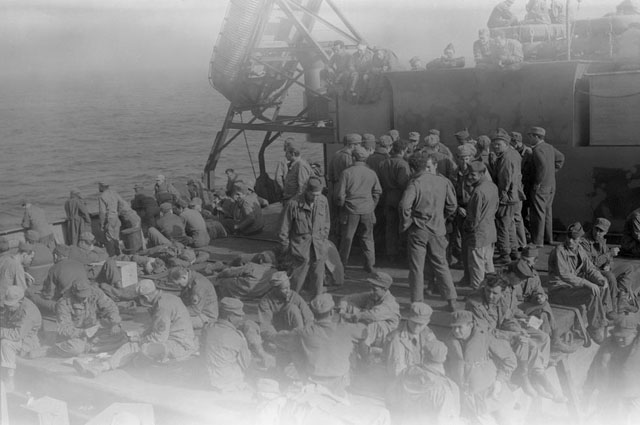
Photographer Levi Bettweiser is the man behind the Rescued Film Project, an effort to find and rescue old and undeveloped rolls of film from the far corners of the world.
He recently came across one of his biggest finds so far: 31 undeveloped rolls of film shot by a single soldier during World War II.
Bettweiser tells us he found the film rolls in late 2014 at an auction in Ohio. About half the rolls were labeled with various location names (i.e. Boston Harbor, Lucky Strike Beach, LaHavre Harbor). “I know nothing about who shot the film or who it belonged to,” he says.
31 Rolls of Undeveloped Film from a Soldier in WWII Discovered and Processed

Another thing to keep me from ever finishing my To Do List:
Inspirograph, a digital replica of the classic Spirograph toy, developed by Nathan Friend:
http://nathanfriend.io/inspirograph/
 The Misty Miss Christy