Billie Holiday: April 7, 1915-July 17, 1959

withDog“Billie Holiday was the daughter of Clarence Holiday. Her early life is obscure, as the account given in her autobiography, Lady Sings the Blues, is self-serving and inaccurate.

At some point after 1930, she began singing at a small club in Brooklyn, and in a year or so moved to Pods’ and Jerry’s, a Harlem club well known to jazz enthusiasts. In 1933, she was working in another Harlem club, Monette’s, where she was discovered by the producer and talent scout John Hammond. Hammond immediately arranged three recording sessions for her with Benny Goodman and found engagements for her in New York clubs.
FROM~ http://www.pbs.org/jazz/biography/artist_id_holiday_billie.htm
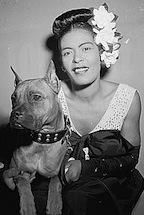
BHolidayStrange Fruit: the first great protest song~ http://www.theguardian.com/music/2011/feb/16/protest-songs-billie-holiday-strange-fruit

The Guardian~“Billie Holiday’s centenary: a life in pictures”
http://www.theguardian.com/music/gallery/2015/apr/07/billie-holidays-centenary-a-life-in-pictures

SFGate~“Billie Holiday at 100: Artists reflect on jazz singer’s legacy”
http://www.sfgate.com/music/article/Billie-Holiday-at-100-Artists-reflect-on-jazz-6177350.php

Looking For Lady Day’s Resting Place? Detour Ahead~ http://www.npr.org/2012/07/17/156686608/looking-for-lady-days-resting-place-detour-ahead

March 17~

Nat King Cole (1919-1965)
art:  William P. Gottlieb Library of Congress
bio: http://www.allmusic.com/artist/nat-king-cole-mn0000317093/biography
video: https://youtu.be/GfAb0gNPy6s

Rudolph Nureyev (1938-1993)
art: Jamie Wyeth
Brandywine River Museum of Art
bio: http://russiapedia.rt.com/prominent-russians/opera-and-ballet/rudoph-nureyev/
video: https://youtu.be/qG7JvpPGdEU

Glenn Miller: Born March 1, 1904

Miller led one of the most popular and best-remembered dance bands of the swing era. In his lifetime he was seen as an intense, ambitious perfectionist, and his success was built on the precise playing of carefully crafted arrangements, rather than propulsive swing or fine jazz solo improvisation (his only important jazz soloist was Bobby Hackett). He was particularly noted for the device of doubling a melody on saxophone with a clarinet an octave higher. His arrangements were seamless and rich. Paradoxically, however, although he had many hits with sentimental ballads performed by such singers as Ray Eberle and Marion Hutton, it was his swinging riff tunes, for example In the Mood and Tuxedo Junction, which became most famous. In 1943, he published Glenn Miller’s Method for Orchestral Arranging.
http://www.pbs.org/jazz/biography/artist_id_miller_glen.htm

Bio~ https://www.biography.com/people/glenn-miller-37990

Harry Belafonte: Born on March 1, 1927

Born March 1, 1927 in poverty-stricken Harlem to first-generation Jamaican immigrants, Belafonte emigrated with his mother back to Jamaica at eight years old, and returned to New York at age thirteen. Midway through high school, he dropped out and enlisted in the Navy. Upon discharge, the young man studied and performed at the Actors Studio (alongside such legends as Tony Curtis and Marlon Brando), Erwin Piscator’s Dramatic Workshop at the New School for Social Research, and The American Negro Theater. A singing role in a theatrical piece led to a string of cabaret engagements, and before long, Belafonte’s success enabled him to secure funding to open his own nightclub. His recording career officially began at the age of 22, in 1949, when he presented himself as a pop singer along the lines of Tony Bennett or Frank Sinatra, but in time he found a more unique niche by delving headfirst into the Library of Congress’s archive of folk song recordings and studying West Indian music. What emerged was a highly unique (and unprecedented) blend of pop, jazz and traditional Caribbean rhythms.
https://www.nytimes.com/search?query=Harry+Belafonte

Harry Belafonte, a supporter of Martin Luther King, Jr., and the civil rights movement, used his celebrity as a beloved entertainer to garner funding for the movement. In her autobiography, Coretta Scott King said of Belafonte, “whenever we got into trouble or when tragedy struck, Harry has always come to our aid, his generous heart wide open” (King, 144-145).
https://kinginstitute.stanford.edu/encyclopedia/belafonte-harold-george-jr

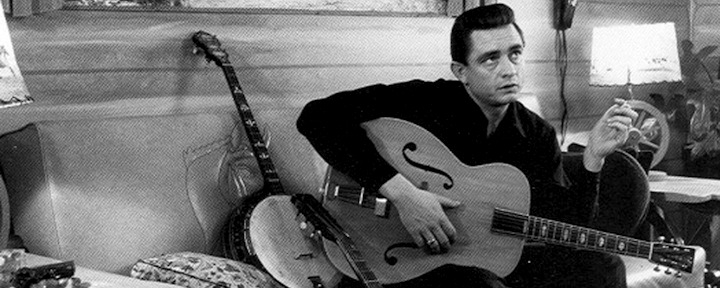
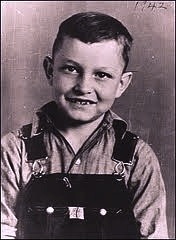
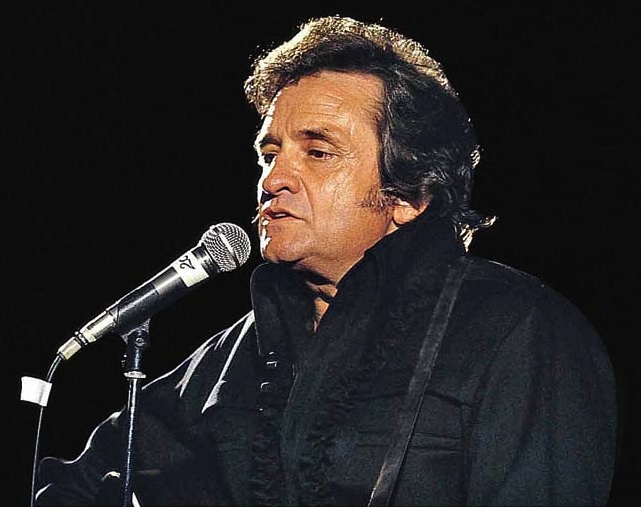
Johnny Cash: Born February 26, 1932

widejohnny

kidjohnnyJohnny Cash was a towering figure in 20th century American music, a minimalist with a booming Old Testament baritone who could wrench an abundance of power from stark settings. At first Cash was backed by guitar and bass; in the end it was simply guitar. But when a voice can tell a story with as much resonance as Cash’s could, not much else is needed.

cashpromo

Cash’s songs – from his early gospel recordings and the resonant outlaw-country of Fifties classics like “Folsom Prison Blues” to late efforts like his unlikely, gut-wrenching cover of Nine Inch Nails’ “Hurt” – influenced not only his fellow country musicians, but also rockers from Bono to Bob Dylan. By turns those songs were laden with pathos, whimsy, regret, hope, lust, and fury; they always cut to the heart of its subject matter, whether it be God, love or the plight of prisoners and Native Americans. Cash led a tumultuous life, battling drug addiction, chaffing against orthodoxy, and doing things his own way. But by the end The Man in Black became an icon, a man who earns almost universal respect among music fans.
FROM http://www.rollingstone.com/music/artists/johnny-cash/biographyDR1001_Johnny_CASH_P

oldcash

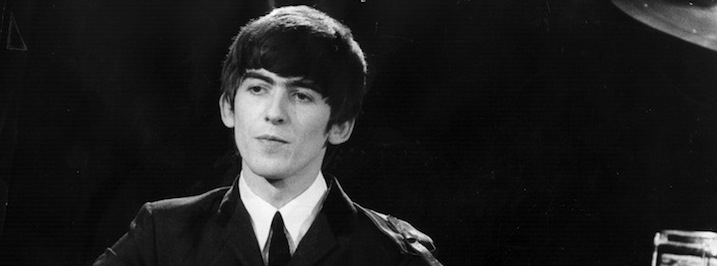
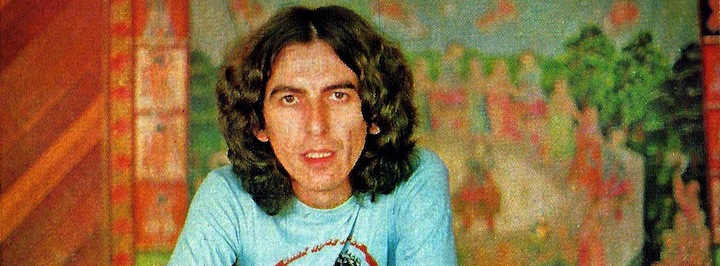
George Harrison: Born on February 25, 1943

George Harrison

georgewguitarAs a songwriter, Harrison was continually out-gunned by Lennon-McCartney. The intense trio of songs he contributed to Revolver — “Taxman,” “I Want to Tell You,” and “Love You To” — would be his most significant contribution to a single Beatles album. He had other classics to his credit, including “Here Comes the Sun” and “Something,” his first Beatles A-side, a track which would top the charts in America. (Both came off 1969’s Abbey Road) But Harrison also funneled his creativity into the guitar, a suitably introspective pursuit. From his raw, early rock-and-roll influences he extrapolated a wide-ranging and poetic style. In the late sixties, he helped introduce the slide guitar to prominence; he also popularized the 12-string Rickenbacker guitar and its ultra-distinctive sound on 1964’s A Hard Day’s Night.
FROM https://www.rollingstone.com/results/#?q=george%20harrisongeorge

georgeintee

February 16, 1964: The Beatles’ second Ed Sullivan Show


edsullivanshowmiami16feb64rehearsalticket1

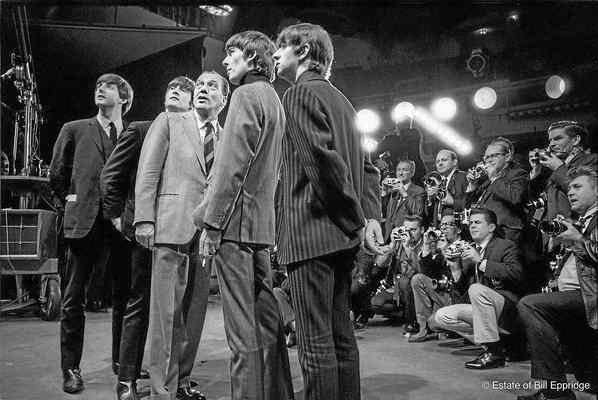
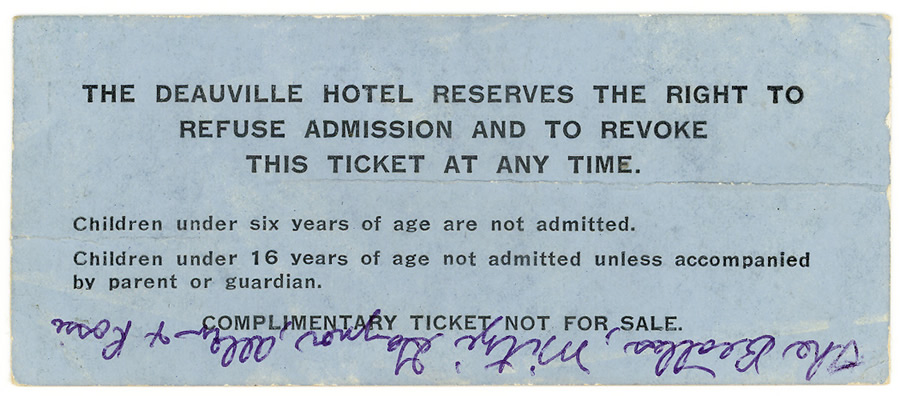
The Beatles’ second appearance on the Ed Sullivan Show took place in Miami’s Deauville Hotel. The Beatles arrived in Miami on Thursday, February 13, and the concert took place on the night of the 16th. The link below is of a rehearsal, which was filmed but not aired.

february16
Rehearsal video here~
BEATLES REHEARSALS : R. CORTES : Free Download & Streaming : Internet Archive

See also~

The Beatles’ second Ed Sullivan Show


http://ultimateclassicrock.com/beatles-second-ed-sullivan-show/

edsullivanshowmiami16feb64rehearsalticket2