Luigi Mancinelli (1848-1921)
http://www.naxos.com/person/Luigi_Mancinelli/30834.htm
Bob Marley (1945-1981)
https://en.wikipedia.org/wiki/Bob_Marley
Luigi Mancinelli (1848-1921)
http://www.naxos.com/person/Luigi_Mancinelli/30834.htm
Bob Marley (1945-1981)
https://en.wikipedia.org/wiki/Bob_Marley
Jascha Heifetz and Fritz Kreisler were both born on Feb. 2 — Kreisler in 1875 and Heifetz in 1901. But the two men share more than just a birthday. Music commentator Miles Hoffman joins Renee Montagne to discuss the two famous fiddlers and how they each set new standards for the art of playing the violin.
http://www.npr.org/templates/story/story.php?storyId=7121113
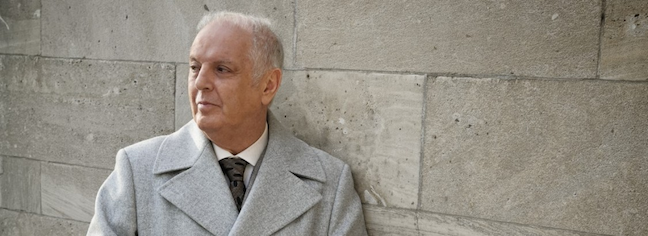 Official website~ http://danielbarenboim.com/
Barenboim’s parents were both pianists, and his father, Enrique Barenboim, was also a noted music professor. The family moved from Argentina to Salzburg, Austria, when Daniel was nine and then on to Israel in 1952. Barenboim had already debuted as a pianist at age seven, and in Europe he became known as something of a child prodigy. He made his debut in London (with the Royal Philharmonic Orchestra) in 1956 and in the United States (at Carnegie Hall) in 1957…
Barenboim started conducting professionally in 1962, first in Israel and then in Australia with the Melbourne and Sydney symphony orchestras. He thereafter was guest conductor in several cities in European countries as well as in Israel and the United States. He served as music director of the Orchestre de Paris from 1975 to 1989. In 1987 he signed to become musical and artistic director of the new Bastille Opera in Paris, but he fell into disputes with representatives of the socialist government in Paris and was dismissed (in January 1989) before the first season was to commence, in 1990. Almost immediately, in January 1989, he accepted the post of music director of the Chicago Symphony Orchestra in succession to Sir Georg Solti.
FROM http://www.britannica.com/biography/Daniel-Barenboim
In 1999, together with the late Palestinian-born writer and Columbia University professor Edward Said, Barenboim founded the West-Eastern Divan workshop and orchestra, bringing together talented young musicians from the Arab countries of the Middle East, Israel and Spain to make music under the guidance of some of the world’s finest musicians, enabling dialogue between the various cultures of the Middle East. Musicians of the Berlin Staatskapelle have participated as teachers in the project since its inception. In summer 2005, the West-Eastern Divan Orchestra presented a concert of historic significance in the Palestinian city of Ramallah, which was telecast and recorded for DVD. Since then, Barenboim and the orchestra have toured extensively, including appearances at the festivals in Lucerne and Salzburg, the BBC Proms in London and making a debut in the United Arab Emirates. In June 2015 Barenboim celebrated the imminent opening of the future home of the Barenboim-Said Akademie in Berlin, an educational institution that will expand upon
the vision of the West-Eastern Divan Orchestra. Barenboim also initiated a project for music education in the Palestinian territories, which includes a music kindergarten as well as a youth orchestra.
FROM https://www.deutschegrammophon.com/en/artists/daniel_barenboim/biography
 Portrait of Erik Satie Playing the Harmonium by Santiago Rusiñol
Erik Satie, original name in full Eric Alfred Leslie Satie (born May 17, 1866, Honfleur, Calvados, France—died July 1, 1925, Paris), French composer whose spare, unconventional, often witty style exerted a major influence on 20th-century music, particularly in France.
…
During his last 10 years Satie’s best friends were painters, many of whom he had met while a café pianist. Satie was nonetheless deeply admired by composers of the rank of Darius Milhaud, Maurice Ravel, and, in particular, Claude Debussy—of whom he was an intimate friend for close to 30 years.
…
His ballet Parade (1917; choreographed by Léonide Massine, scenario by Jean Cocteau, stage design and costumes by Pablo Picasso) was scored for typewriters, sirens, airplane propellers, ticker tape, and a lottery wheel and anticipated the use of jazz materials by Igor Stravinsky and others. The word Surrealism was used for the first time in Guillaume Apollinaire’s program notes for Parade.
FROM https://www.britannica.com/biography/Erik-SatieWatch the 1917 Ballet “Parade”: Created by Erik Satie, Pablo Picasso & Jean Cocteau,
It Provoked a Riot and Inspired the Word “Surrealism” (from Open Culture)
http://www.openculture.com/2017/05/the-1917-ballet-parade-created-by-erik-satie-pablo-picasso-jean-cocteau.html


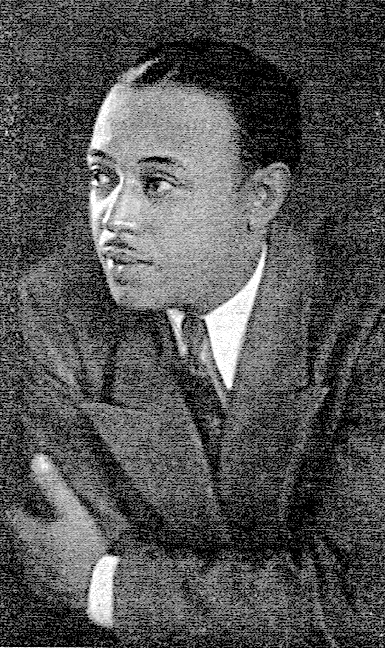
On this date in 1895, William Grant Still was born. He was an African American musician and composer.
Still was the first African American to conduct a major symphony orchestra, the first African-American to have an opera, “Troubled Island” (1949) performed by a major opera company, and the first to have an opera, “A Bayou Legend,” performed on national television (1981).
https://aaregistry.org/story/william-grant-still-a-symphonic-composer/
Sergei Rachmaninov (1873-1943)
http://www.allmusic.com/artist/sergey-rachmaninov-mn0000505265/biography
Alberta Hunter (1895-1984)
https://en.wikipedia.org/wiki/Alberta_Hunter
Stern’s family moved to the United States and settled in San Francisco when he was one year old. His mother, a professional singer, gave him his first music lessons. He began studying the violin at the San Francisco Conservatory in 1928. In 1932 he became the third immensely talented San Francisco-area boy to train with the San Francisco Symphony concertmaster Louis Persinger (the others were Menuhin and Ruggiero Ricci). However, he considered Naoum Blinder, with whom he studied until the age of 15, his only true teacher. Stern made his debut with the San Francisco Symphony on February 18, 1936, with Pierre Monteux conducting the Third Concerto by Saint-Saëns.
FROM http://www.allmusic.com/artist/isaac-stern-mn0000965898/biography
However, Stern was to become as famous internationally for his contribution to public causes as he was
for his concert performances and recordings. His social contributions took many forms: his most noted involvement as a cultural activist was his pivotal role in the 1960 salvation of Carnegie Hall, then facing demolition. Elected president of the Carnegie Hall Corporation, he guided the affairs of the edifice he called “our country’s affirmation of the human spirit” (Stern and Potok, p. 141) until the end of his life. He was chairman of the board of the America-Israel Cultural Foundation and founder and chairman of the
Jerusalem Music Center, and in the United States he campaigned for and became a founding member of the National Endowment for the Arts in 1964. In 1975 he received the first Albert Schweitzer Award for “a life’s work dedicated to music and devoted to humanity” and two years later was made a member of the French Légion d’Honneur.
FROM http://www.anb.org/articles/18/18-03785.html
Obituary, New York Times~ http://www.nytimes.com/2001/09/23/nyregion/violinist-isaac-stern-dies-at-81-led-efforts-to-save-carnegie-hall.html

…But if the Tchaikovsky competition represented Mr. Cliburn’s breakthrough, it also turned out to be his undoing. Relying inordinately on his keen musical instincts, he was not an especially probing artist, and his growth was stalled by his early success. Audiences everywhere wanted to hear him in his prizewinning pieces, the Tchaikovsky First Concerto and the Rachmaninoff Third. Every American town with a community concert series wanted him to come play a recital.
“When I won the Tchaikovsky I was only 23, and everyone talked about that,” Mr. Cliburn said in 2008. “But I felt like I had been at this thing for 20 years already. It was thrilling to be wanted. But it was pressure, too.”
http://www.nytimes.com/2013/02/28/arts/music/van-cliburn-pianist-dies-at-78.html
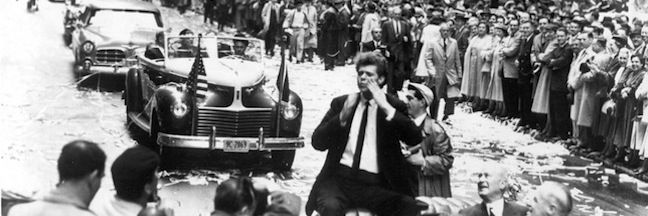
1978 SPECIAL CITATION for distinguished service to the arts (Posthumous)~
http://clevelandartsprize.org/awardees/george_szell.html
NAXOS: George Szell~ http://www.naxos.com/person/George_Szell_38224/38224.htm
Born: June 7, 1897 – Budapest, Hungary
Died: July 30, 1970 – Cleveland, Ohio, USA
Part of the wave of great Hungarian conductors who took over American musical life just before and after World War II — the others included Fritz Reiner, Antal Dorati, and Eugene Ormandy — George Szell quickly transformed a middling Midwestern orchestra into one of the nation’s Big Five. His cultivation of the Cleveland Orchestra set an example of discipline and hard work that gradually helped raise the standards of orchestras across America.
FROM https://www.allmusic.com/artist/george-szell-mn0000366341/biography
Early in his career, Wagner learned both the elements and the practical, political realities of his craft by writing a handful of operas which were unenthusiastically, even angrily, received. Beginning with Rienzi (1838-40) and The Flying Dutchman (1841), however, he enjoyed a string of successes that propelled him to immortality and changed the face of music. His monumental Ring cycle of four operas — Das Rheingold (1853-54), Die Walküre (1854-56), Siegfried (1856-71) and Götterdämmerung (1869-74) — remains the most ambitious and influential contribution by any composer to the opera literature.
http://www.allmusic.com/artist/richard-wagner-mn0000958980/biography
“The Brilliant, Troubled Legacy of Richard Wagner”
https://www.smithsonianmag.com/arts-culture/the-brilliant-troubled-legacy-of-richard-wagner-16686821/
A great music lover, Renoir was one of the first admirers of Wagner in France. At the beginning of 1882, when the painter was travelling in the south of Italy, he had the opportunity to visit Palermo where Wagner was staying. After two fruitless attempts, Renoir was finally introduced to the “maestro” who, the day before, had put the final notes to Parsifal.
The course of this meeting is well known thanks to a letter from Renoir to one of his friends, dated 15 January 1882:
https://www.musee-orsay.fr/en/artworks/richard-wagner-1159




 The Misty Miss Christy