Tag Archives: Music
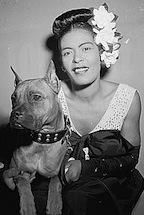
Billie Holiday: April 7, 1915-July 17, 1959
“Billie Holiday was the daughter of Clarence Holiday. Her early life is obscure, as the account given in her autobiography, Lady Sings the Blues, is self-serving and inaccurate.
At some point after 1930, she began singing at a small club in Brooklyn, and in a year or so moved to Pods’ and Jerry’s, a Harlem club well known to jazz enthusiasts. In 1933, she was working in another Harlem club, Monette’s, where she was discovered by the producer and talent scout John Hammond. Hammond immediately arranged three recording sessions for her with Benny Goodman and found engagements for her in New York clubs.
FROM~ http://www.pbs.org/jazz/biography/artist_id_holiday_billie.htm
 Strange Fruit: the first great protest song~ http://www.theguardian.com/music/2011/feb/16/protest-songs-billie-holiday-strange-fruit
The Guardian~“Billie Holiday’s centenary: a life in pictures”
http://www.theguardian.com/music/gallery/2015/apr/07/billie-holidays-centenary-a-life-in-pictures
SFGate~“Billie Holiday at 100: Artists reflect on jazz singer’s legacy”
http://www.sfgate.com/music/article/Billie-Holiday-at-100-Artists-reflect-on-jazz-6177350.php
Looking For Lady Day’s Resting Place? Detour Ahead~ http://www.npr.org/2012/07/17/156686608/looking-for-lady-days-resting-place-detour-ahead
Arturo Toscanini: Born on March 25, 1867
https://www.gramophone.co.uk/musicians/artist/arturo-toscanini-47225
Perhaps the most internationally famous conductor ever, Toscanini rose to instant stardom when he put down his cello and jumped up to the podium to fill in for the conductor during a performance of Verdi’s opera Aida. It was 1886; he was 19, and it was the first time he’d ever conducted.
The last time he’d conduct a live performance was in 1954, 68 years later. By then, he was the first conductor to have appeared regularly on television, and was certainly considered the first true media star of the conducting world.
http://www.npr.org/templates/story/story.php?storyId=89059352
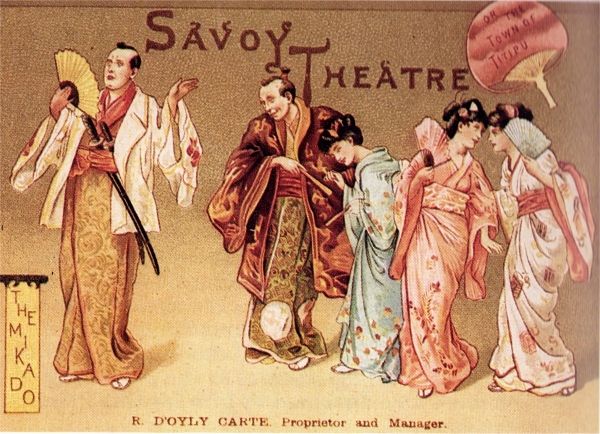
Premiered March 14, 1885: “The Mikado”
“Yes, as we said to begin with, “The Mikado” is a frank success. It is great nonsense, no doubt; but then it is the very funniest fooling to be seen. And so pretty, too!” ~unsigned review from “The Academy”, March 28 1885 http://www.savoyoperas.org.uk/mikado/mik3.html
“Mr. Gilbert has once more exhibited his facility for seizing upon a subject occupying a considerable share of public attention, and turning it to humorous account. Japanese art is extremely fashionable just at present, and the manners and customs of this strange race may be studied with advantage at Knightsbridge. But it is our home political and social life that is principally caricatured in ‘The Mikado,’ and amid much that is incisive and telling we find obvious reminiscences of earlier productions by the same hand.”
~unsigned review from “The Athenæum”, March 21 1885
http://www.savoyoperas.org.uk/mikado/mik2.html
Premiered March 11:
March 11, 1867 – Theatre Imperial de l’Opera, France
DON CARLO started out life as a five-act opera that ran for approximately four hours. Based on Don Carlos, Infant von Spanien by Friedrich Spiller, this lengthy piece saw Verdi put the music to a French libretto by Camille du Lode and Joseph Mery. After the opera had been written, it was found to still be too long during the rehearsal period. Since the audience would need to leave before midnight, further cuts were made during this time in order to make sure that the opera finished before this deadline.
FROM http://www.italymagazine.com/featured-story/homage-verdi-don-carlo
March 11, 1851 – La Fenice Opera House, Italy
One of the most acclaimed Verdi operas, RIGOLETTO at one point, was very much a case of “touch and go”. The three-act opera, based on Victor Hugo’s play “Le roi s’amuse”, came under close scrutiny of the Austrian censors. …However, by January 1851, a breakthrough was reached, albeit with a number of amendments to the original work. The original setting of the royal court of France was to be changed either to a duchy of France or Italy, while many of the characters were to be renamed, notably the jester, who went from Triboulet to Rigoletto. With the deadline for the premiere looming, Verdi managed to complete the work by early February, leaving a month to spare.
FROM http://www.italymagazine.com/featured-story/homage-verdi-rigoletto
Dame Eva Turner: Born March 10, 1892
A dramatic soprano with a voice of mammoth proportions, Eva Turner, though scarcely neglected in her native country, enjoyed many of her greatest successes abroad. Most closely identified with the title role in Turandot (which she first sang in Brescia only a month after its premiere), she brought to all of her roles a voice of both enormous size and great cutting power, topped with an unflagging ease in the highest register. While not always an illuminating actress, she approached all of her work with seriousness of purpose, thorough integrity and no small measure of excitement.
Biography and interview here~ http://www.bruceduffie.com/evaturner.html
Desi Arnaz: Born March 2, 1917
>>>>>>>>>> https://www.discogs.com/artist/358904-Desi-Arnaz <<<<<<<<<<
>>>>>>>>>> https://en.wikipedia.org/wiki/Desi_Arnaz <<<<<<<<<<
Frédéric Chopin: Born March 1, 1810 (?)
Fryderyk Franciszek Chopin…and his family held his date of birth to be 1 March 1810, yet the certificate of baptism signed in the parish church of Brochów is dated 22 February. That discrepancy has still not been entirely resolved, although today it is the date celebrated by Chopin and his family that is more often used. http://en.chopin.nifc.pl/chopin/life/biography/page/1

Marian Anderson: Born February 27, 1897
Contralto Marian Anderson was born in Philadelphia, Pennsylvania. A variety of sources suggested February 17, 1902, as her birthdate; however, Anderson’s birth certificate, released by her family after her death, listed the date as February 27, 1897. Her father was an ice and coal salesman, and her mother was a former teacher.
Although Anderson had early showed an interest in the violin, she eventually focused on singing. The Black community, recognizing her talent, gave her financial and moral support. She also gained the notice of tenor Roland Hayes, who provided guidance in her developing career.
FROM http://www.afrovoices.com/anderson.html
For more images of Marian Anderson, see:
https://www.portrait.gov.au/magazines/64/the-right-note
https://blogs.loc.gov/picturethis/2020/04/marian-anderson-in-performance-a-visual-and-musical-story/
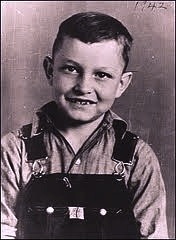
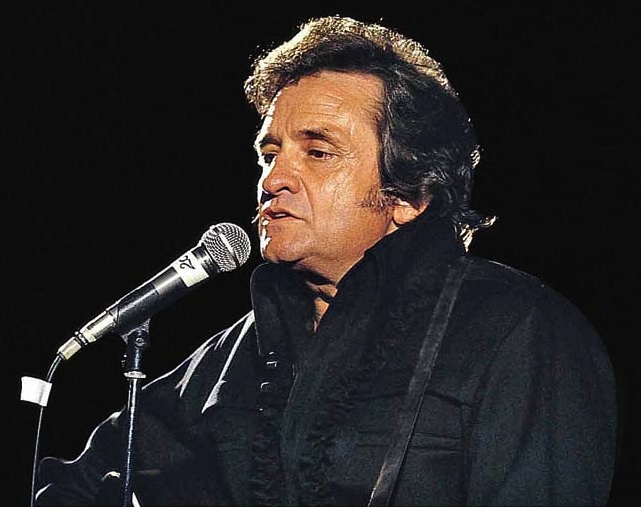
Johnny Cash: Born February 26, 1932
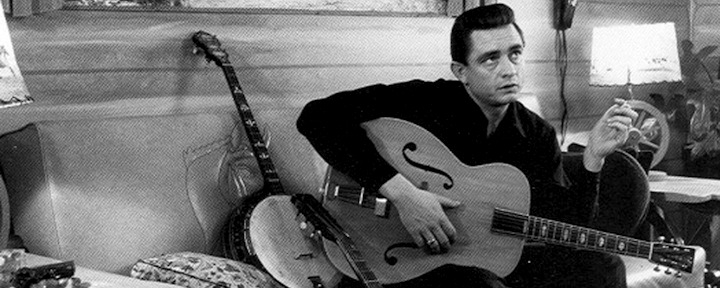
Johnny Cash was a towering figure in 20th century American music, a minimalist with a booming Old Testament baritone who could wrench an abundance of power from stark settings. At first Cash was backed by guitar and bass; in the end it was simply guitar. But when a voice can tell a story with as much resonance as Cash’s could, not much else is needed.
Cash’s songs – from his early gospel recordings and the resonant outlaw-country of Fifties classics like “Folsom Prison Blues” to late efforts like his unlikely, gut-wrenching cover of Nine Inch Nails’ “Hurt” – influenced not only his fellow country musicians, but also rockers from Bono to Bob Dylan. By turns those songs were laden with pathos, whimsy, regret, hope, lust, and fury; they always cut to the heart of its subject matter, whether it be God, love or the plight of prisoners and Native Americans. Cash led a tumultuous life, battling drug addiction, chaffing against orthodoxy, and doing things his own way. But by the end The Man in Black became an icon, a man who earns almost universal respect among music fans.
FROM http://www.rollingstone.com/music/artists/johnny-cash/biography


 The Misty Miss Christy