“Turandot” premieres in Milan on April 25, 1926:

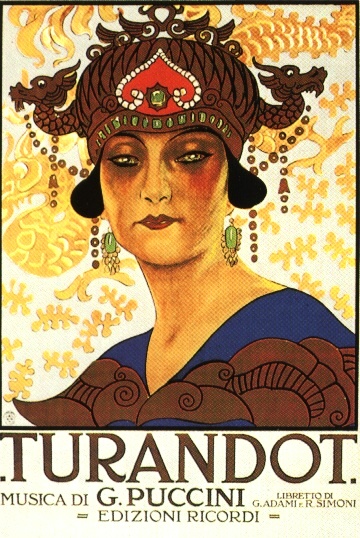
Poster

Turandot premiered at La Scala in Milan on 25 April 1926, almost a year and a half after Puccini’s death. Puccini’s friend Arturo Toscanini, who had worked on the score with the composer during the last months of Puccini’s life, conducted the premiere. As is widely recorded, when the opera reached the last note written by Puccini, Toscanini ended the performance. What he said at the time has been variously reported, from the poetic “Here death triumphed over art” to the poigniant “For me, the work ends here.” An eyewitness quoted in a recent biography puts it somewhere between the two: “Here ends the opera, because at this point the maestro was dead.”
FROM http://www.theopera101.com/operas/turandot/
Lily Pons: Born on April 12, 1898

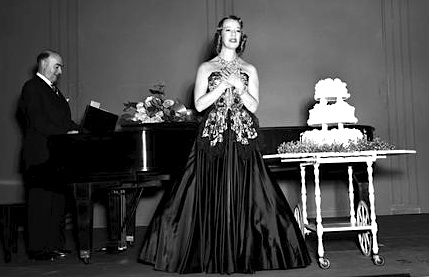
Few opera stars have led such an impressive career. For over a quarter of a century, her coloratura voice captured the stages of Paris, London, Buenos Aires, Mexico, and the United States. Like Mario Lanza and Luciano Pavarotti, she acted in second-rate films about opera stars, which were surprisingly well-attended.

Her sweet soprano voice had an extremely high tessitura. It was said she could hold a high D for about a minute. The Metropolitan Opera revived roles especially for her, like Delibes’ Lakmé, Donizetti’s La Fille du Regiment, and Rimsky-Korsakov’s Le Coq d’or.
FROMhttp://www.classical.net/music/recs/reviews/s/sny60655a.php

In 1932, the tiny Frederick County post office of Lilypons opened for business. “It was a dot on a map, because nobody has ever been quite sure what to call it. Lilypons, Md., was never a city, town or even a hamlet,” said The Evening Sun in 1986. “It is now what it has always been: one frame building surrounded by a small cluster of ponds nestled into a bdaycakepeaceful crook of the Monocacy River eight miles south of Frederick.” In 1963, during a period of cost cutting, the Postal Service discontinued the Lilypons postmark and combined its functions with the nearby Buckeystown post office. A plaque commemorating the tiny post office was mounted on the building in 1986. ~Fred Rasmussen FROMhttps://www.baltimoresun.com/

April 9, 1939: Marian Anderson’s Easter Sunday Lincoln Memorial concert


Marian Anderson, contralto, was denied the right to perform at Constitution Hall by the DAR because of her color. Instead, and at the urging of Eleanor Roosevelt, Harold Ickes permitted her to perform at the Lincoln Memorial on April 9, 1939.

Denied A Stage, She Sang For A Nation~
https://www.npr.org/2014/04/09/298760473/denied-a-stage-she-sang-for-a-nation
Marian Anderson: Musical Icon~
https://www.pbs.org/wgbh/americanexperience/features/eleanor-anderson/
Marian Anderson Biography~https://www.biography.com/musician/marian-anderson

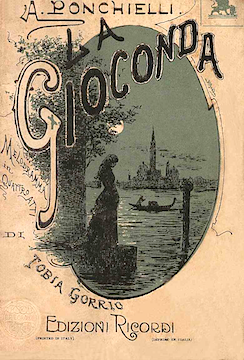
Premiered April 8, 1876: “La Gioconda”

Composer Amilcare Ponchielli was born in Italy in 1834. He started composing operas while still a student at the Milan Conservatory. After graduating in 1854, he held various positions over the years, including professor of composition at the Conservatory; his pupils included Giacomo Puccini and Pietro Mascagni. His most famous opera is “La Gioconda”, written in 1876. It is mainly remembered for its ballet, Dance of the Hours.

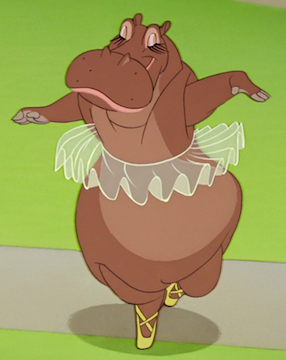
“The Dance of the Hours is probably the only opera ballet that has established a life of its own in both the concert hall as a stand-alone orchestral work…and in pop culture: Walt Disney’s 1940 animated film Fantasia, for example, used the music for a ballet performed by tutu-clad hippos, ostriches, alligators and elephants. And in 1963, parodist Alan Sherman set words to the tune of Ponchielli’s day music with its all-too-familiar four-note theme. Sherman’s “Hello Muddah, Hello Fadduh (A Letter from Camp)” hit No. 2 on the pop charts.”
FROM~ https://nepaphil.org/program-notes-from-an-evening-of-opera-overtures-and-arias/

Ponchielli’s biography~ http://www.allmusic.com/artist/amilcare-ponchielli-mn0000496351/biography

Synopsis of “La Gioconda“~ http://www.opera-arias.com/ponchielli/la-gioconda/synopsis/

Premiered March 14, 1885: “The Mikado”

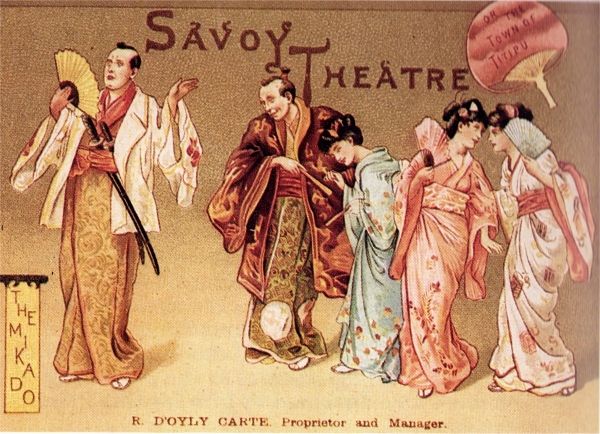
Mikado-Savoy-1885“Yes, as we said to begin with, “The Mikado” is a frank success. It is great nonsense, no doubt; but then it is the very funniest fooling to be seen. And so pretty, too!”  ~unsigned review from “The Academy”, March 28 1885  http://www.savoyoperas.org.uk/mikado/mik3.html

“Mr. Gilbert has once more exhibited his facility for seizing upon a subject occupying a considerable share of public attention, and turning it to humorous account. Japanese art is extremely fashionable just at present, and the manners and customs of this strange race may be studied with advantage at Knightsbridge. But it is our home political and social life that is principally caricatured in ‘The Mikado,’ and amid much that is incisive and telling we find obvious reminiscences of earlier productions by the same hand.”
~unsigned review from “The Athenæum”, March 21 1885
http://www.savoyoperas.org.uk/mikado/mik2.html

Premiered March 11:

March 11, 1867 – Theatre Imperial de l’Opera, France
DON CARLO started out life as a five-act opera that ran for approximately four hours. Based on Don Carlos, Infant von Spanien by Friedrich Spiller, this lengthy piece saw Verdi put the music to a French libretto by Camille du Lode and Joseph Mery. After the opera had been written, it was found to still be too long during the rehearsal period. Since the audience would need to leave before midnight, further cuts were made during this time in order to make sure that the opera finished before this deadline.
FROM http://www.italymagazine.com/featured-story/homage-verdi-don-carlo

March 11, 1851 – La Fenice Opera House, Italy
One of the most acclaimed Verdi operas, RIGOLETTO at one point, was very much a case of “touch and go”. The three-act opera, based on Victor Hugo’s play “Le roi s’amuse”, came under close scrutiny of the Austrian censors. …However, by January 1851, a breakthrough was reached, albeit with a number of amendments to the original work. The original setting of the royal court of France was to be changed either to a duchy of France or Italy, while many of the characters were to be renamed, notably the jester, who went from Triboulet to Rigoletto. With the deadline for the premiere looming, Verdi managed to complete the work by early February, leaving a month to spare.
FROM http://www.italymagazine.com/featured-story/homage-verdi-rigoletto

Dame Eva Turner: Born March 10, 1892

A dramatic soprano with a voice of mammoth proportions, Eva Turner, though scarcely neglected in her native country, enjoyed many of her greatest successes abroad. Most closely identified with the title role in Turandot (which she first sang in Brescia only a month after its premiere), she brought to all of her roles a voice of both enormous size and great cutting power, topped with an unflagging ease in the highest register. While not always an illuminating actress, she approached all of her work with seriousness of purpose, thorough integrity and no small measure of excitement.
Biography and interview here~ http://www.bruceduffie.com/evaturner.html

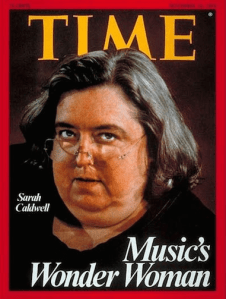
Sarah Caldwell: Born on March 6, 1924

American opera visionary Sarah Caldwell founded the Opera Company of Boston in 1958. The company’s principal prima donna was Beverly Sills, and Placido Domingo was an unknown young tenor when he first sang with the company. Caldwell died on March 23 at the age of 82.
http://www.npr.org/templates/story/story.php?storyId=5311751

sc


Sarah Caldwell, impresario of Boston opera, dead at 82

Biography on Encyclopedia.com

Gioachino Rossini/“Il Barbiere di Siviglia”/Sills, Titus, Gramm, Price, Ramey & Sarah Caldwell/New York City Opera

Discography

Kiri Te Kanawa: Born on March 6, 1944

The internationally famed soprano, Dame Kiri Te Kanawa, was born Claire Mary Teresa Rawstron in the small New Zealand seaside town of Gisborne, where Captain James Cook first made landfall. Just at the edge of the international date line, it prides itself as the first city in the world to greet the sun. Here, the birth child of a native Maori man and a woman of European extraction was adopted at five weeks of age by a local couple, Tom and Nell Te Kanawa, he also a Maori and she with family ties to the British Isles. The Te Kanawas named their daughter Kiri, the Maori word for bell. She was to be their only child.

Her first performances were on a little stage jerry-rigged in the Te Kanawa’s house, complete with a curtain; “the curtains would come back,” she recalled, “and I’d get up and sing.” Without a television in the home, music and singing quickly became the primary entertainment. But although her mom played piano, from early on, Kiri eschewed command performances: “I was rather sort of miffy about it even then. I’d only sing when I felt like it.”

http://www.achievement.org/autodoc/page/tek0bio-1

Marian Anderson: Born February 27, 1897

Contralto Marian Anderson was born in Philadelphia, Pennsylvania. A variety of sources suggested February 17, 1902, as her birthdate; however, Anderson’s birth certificate, released by her family after her death, listed the date as February 27, 1897. Her father was an ice and coal salesman, and her mother was a former teacher.

Although Anderson had early showed an interest in the violin, she eventually focused on singing. The Black community, recognizing her talent, gave her financial and moral support. She also gained the notice of tenor Roland Hayes, who provided guidance in her developing career.
FROM http://www.afrovoices.com/anderson.html

This slideshow requires JavaScript.

For more images of Marian Anderson, see:
https://www.portrait.gov.au/magazines/64/the-right-note
https://blogs.loc.gov/picturethis/2020/04/marian-anderson-in-performance-a-visual-and-musical-story/