Gabriel Fauré by John Singer Sargent
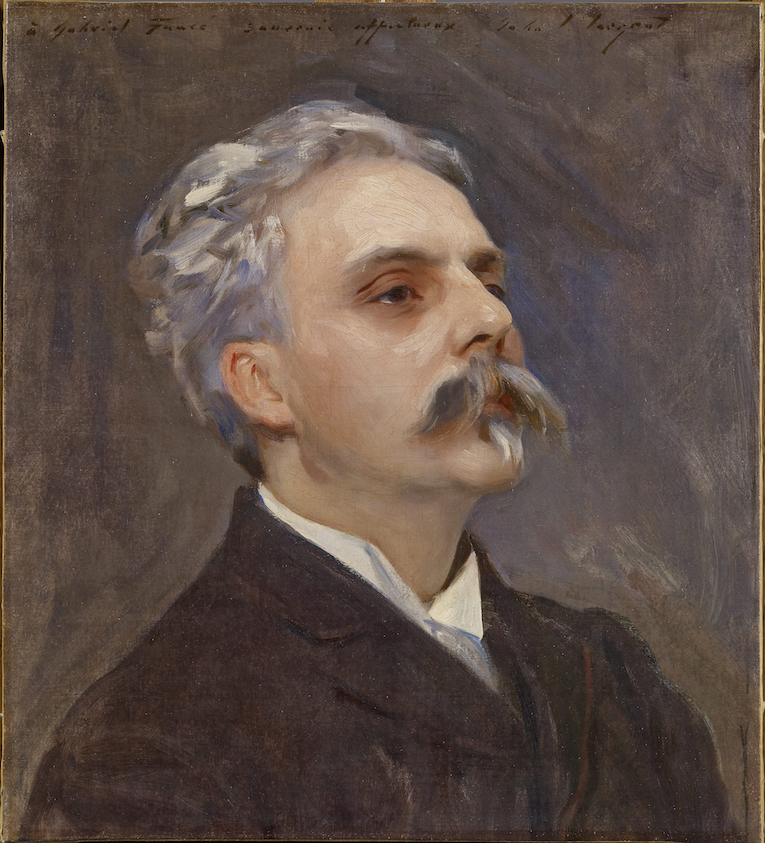 1889 / Oil on canvas / 24″x21 1/2″ / Collection Musée de la Musique, Paris
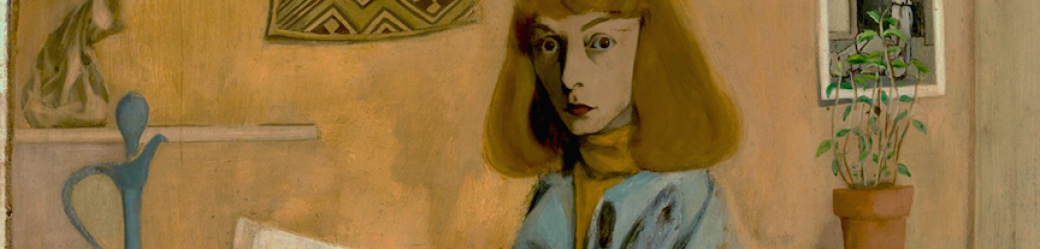
1889 / Oil on canvas / 24″x21 1/2″ / Collection Musée de la Musique, Paris
 1892-1893 / Oil on canvas / 37 3/5″x26 1/3″ / Private collection
“In 1907, Sergei Rachmaninov saw a black and white reproduction of Isle of the Dead, a painting by the Swiss symbolist artist, Arnold Böcklin…When Rachmaninov saw Böcklin’s original color painting, he…went so far as to say, ‘If I had seen first the original I, probably, would have not written my Isle of the Dead. I like it in black and white’.”
~ https://thelistenersclub.com/2019/09/18/rachmaninovs-isle-of-the-dead-a-tone-poem-in-black-and-white/
“In 1880 Marie Berna, the American-born widow of a German diplomat, visited Böcklin in Florence, where she saw an unfinished first version of this painting (now in the Kunstmuseum Basel) on his easel. She commissioned the present work as a memorial to her husband, requesting the additions of the draped coffin and the shrouded female figure. Prodded by his dealer, Böcklin painted three other versions by 1886. This romantic image would become one of Germany’s most beloved, widely circulated through poor reproductions as well as a related etching of 1890 by Max Klinger (1857–1920).” ~The Met
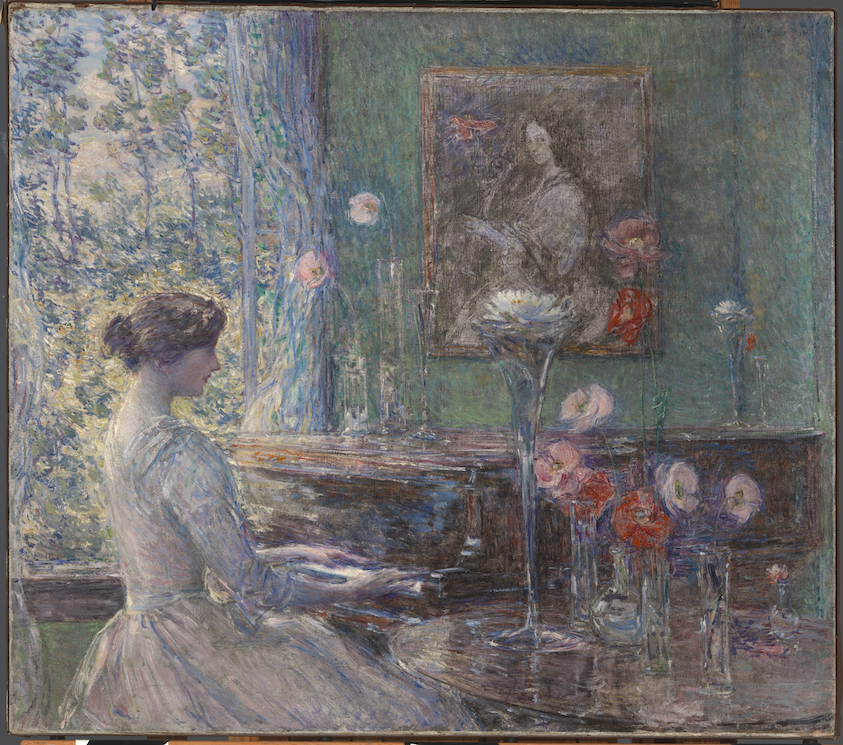 1899 / Oil on canvas / 30″x33 7⁄8″ / Smithsonian American Art Museum, DC
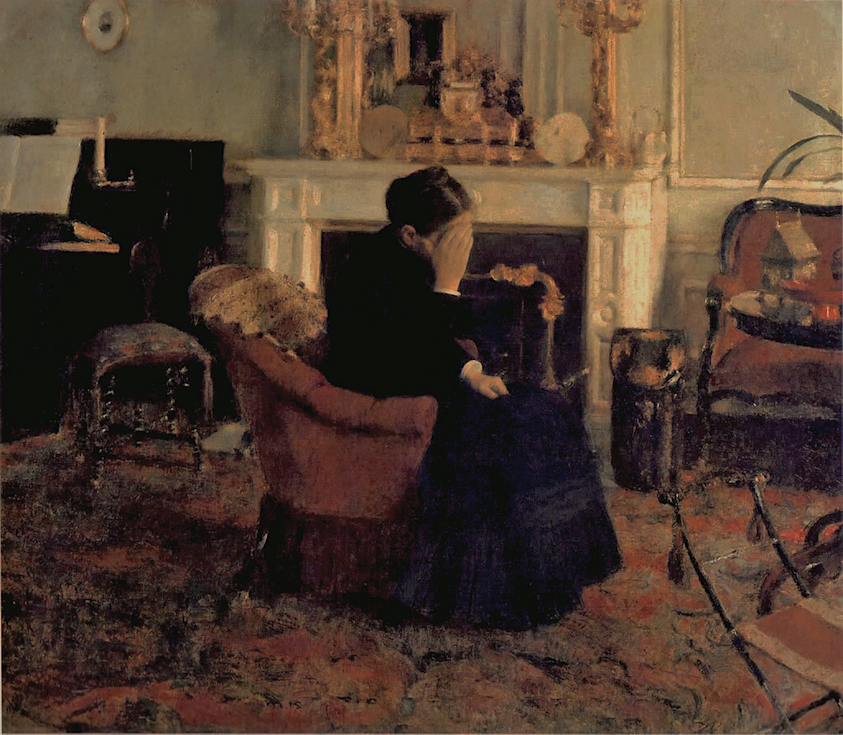 1883 / Oil on canvas / 40″x45 4/5″ / Royal Museums of Fine Arts of Belgium, Brussels, BE
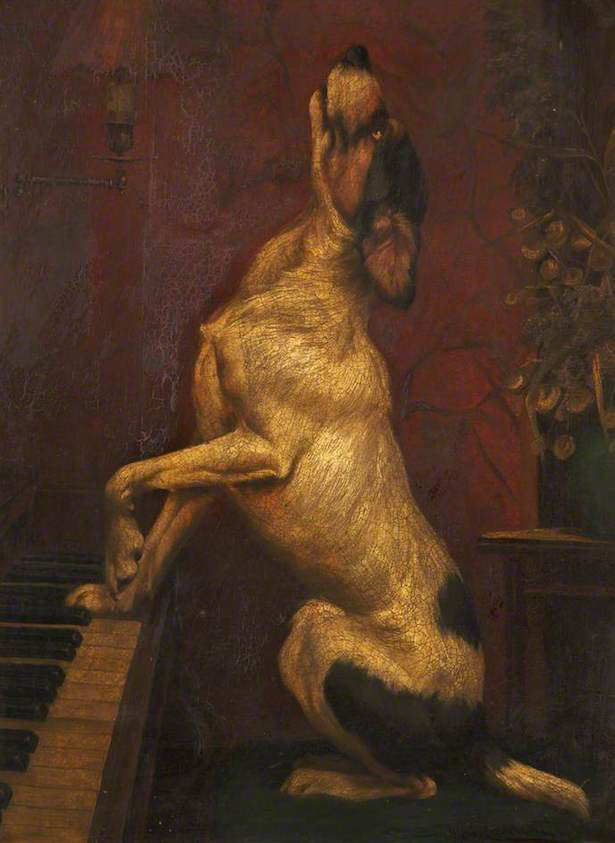 1888 / Oil on canvas / 23 3/5″x17 1/3″ / Stockport Heritage Services, Greater Manchester, England
 1919? / Color lithograph / 29 1/2″x20″ / Various collections
“The Sorcerer is a two-act comic opera, with a libretto by W. S. Gilbert and music by Arthur Sullivan.
It was the British duo’s third operatic collaboration.” ~Wikipedia
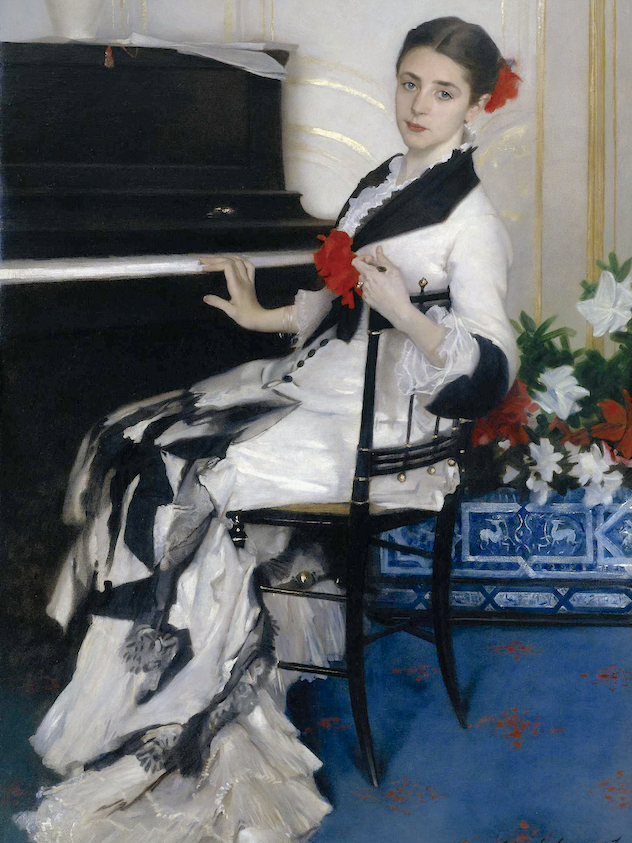 1880 / Oil on canvas / 65″x43 1/4″ / Private collection
“For artist Wassily Kandinsky, the [‘Pictures at an Exhibition‘] cycle served as a basis for his first and only theater project, which was premiered in the German city of Dessau in 1928. Wassily Kandinsky was out to create a synthetic ‘Gesamtkustwerk‘. For him, that meant that sounds took on hues that listeners could see before their eyes as they listened to the music. It was intended to be a Gesamtkustwerk of sound, color and motion.”
~ https://www.dw.com/en/kandinsky-and-mussorgsky-what-happens-when-artists-inspire-each-other/a-19087823
 1928 / Graphite, India ink, and watercolor on paper
11 4/5″x15 3/4″ / Centre Pompidou, Paris, France
Pictures at an Exhibition (original piano version) by Modest Mussorgsky
“One of Modest Mussorgsky’s best friends was Viktor Hartmann, an artist who tragically died of an aneurism in 1873 at the age of 39. Two weeks after Hartmann’s death, his friends and supporters organized a major exhibition of his works at the Imperial Academy of Arts in St. Petersburg. About a year later, Mussorgsky composed ‘Pictures at an Exhibition‘. Completed in only twenty days, ‘Pictures’ was originally a set of short pieces for piano in which Mussorgsky depicted himself walking through the exhibition and contemplating Hartmann’s works.”
~ https://houstonsymphony.org/mussorgsky-pictures/
 “In Russian folklore, Baba Yaga is a witch who flies through the woods on a mortar and pestle, searching for children to eat. She lives in a hut on hen’s legs that stalks the land. This movement was inspired by Hartmann’s design for an ornate clock in the shape of Baba Yaga’s hut.” [Watercolor. N/D]
~ https://houstonsymphony.org/mussorgsky-pictures/

 The Misty Miss Christy