Tag Archives: Art
March 17: National Gallery of Art in Washington, D.C.
The National Gallery of Art was created by a joint resolution of
Congress on March 17, 1937, and dedicated on March 17, 1941
The National Gallery of Art was conceived and given to the people of the United States by Andrew W. Mellon (1855–1937). Mellon was a financier and art collector from Pittsburgh who came to Washington in 1921 to serve as secretary of the treasury. During his years of public service he came to believe that the United States
should have a national art museum equal to those of other great nations.
In 1936 Mellon wrote to President Franklin D. Roosevelt offering to donate his superb art collection for a new museum and to use his own funds to construct a building for itsuse. With the president’s support, Congress accepted Mellon’s gift, which included a sizable endowment, and established the National Gallery of Art in March 1937. Construction began that year at a site on the National Mall along Constitution Avenue between Fourth and Seventh Street NW, near the foot of Capitol Hill.
…
Construction was completed by December 1940, and works of art were installed in the new galleries over the following months. The National Gallery of Art was dedicated on March 17, 1941, with Paul Mellon presenting the museum on behalf of his father, and President Franklin D. Roosevelt accepting the gift for the nation.
FROM http://www.nga.gov/content/ngaweb/about.html


 FDR’s Speech on the Dedication of the National Gallery of Art~
http://www.nga.gov/content/ngaweb/audio-video/audio/west-building-dedication-president-fdr.html
Highlights from the collection~
http://www.nga.gov/content/ngaweb/Collection/highlights.html
75th anniversary programs~
http://www.nga.gov/content/ngaweb/about/seventy-fifth-anniversary.html
Elizabeth Taylor: Born February 27, 1932
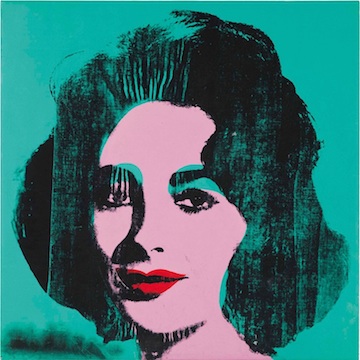
Elizabeth Rosemond Taylor was considered one of the last, if not the last, major star to have come out of the old Hollywood studio system
Biography on IMDb~
http://www.imdb.com/name/nm0000072/bio
Time/LIFE photographs~
news.yahoo.com/elizabeth-taylor-photos-legendary-life-183244564.html
ANDY’S PORTRAITS OF LIZ by Jerry Saltz~
http://www.artnet.com/magazineus/features/saltz/andy-warhols-portraits-of-liz3-24-11.asp
The Elizabeth Taylor AIDS Foundation (ETAF)~ https://elizabethtayloraidsfoundation.org/
Yoko Ono: Born February 18, 1933
http://imaginepeace.com/
http://www.allmusic.com/artist/yoko-ono-mn0000521704/biography
Since emerging onto the international art scene in the early 1960s, Yoko Ono has made profound contributions to visual art, performance, filmmaking, and experimental music. Born in Tokyo in 1933, she moved with her family to New York in the mid-1950s and enrolled at Sarah Lawrence College. Over the next decade she lived in New York, Tokyo, and London, greatly influencing the international development of Fluxus and Conceptual art.
https://www.moma.org/artists/4410
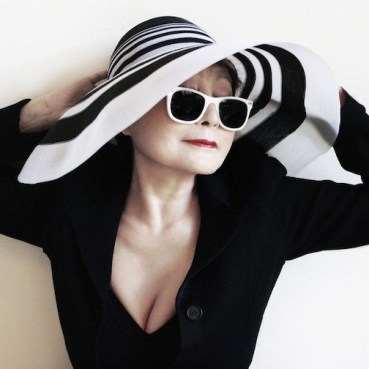
via Yoko Ono On Being An Inspiration And Her Friendship With David Bowie.
Codex Mendoza
Thanks to the always interesting Hyperallergic website, today I learned about a manuscript known as the Codex Mendoza which has been digitized and put online in high resolution. Totally unfamiliar with Mexican codices, I was grateful to see that the http://codice.manuvo.com site has a succinct explanation of what they are and what their significance is.
Mexican codices are pictorial and iconic documents that pre-Hispanic cultures (primarily the Mexicas, Mayas, and Mixtecs) used to preserve and transmit their knowledge. They were produced on different types of surfaces, mainly on deerskin or bark paper. Gordon Brotherston (1992) describes the essential characteristics of codices as non-phonetic, although some might record concept-sounds, such as those produced by the Mayas. They are highly flexible in terms of presentation, for they can be structured as a chronicle told through historical events, a map, or a tribute list. This holistic integration of writing, images, and mathematics, clearly breaks with Western notions of writing.
One of the principal characteristics of codices, according to Brotherston, is that the knowledge contained in most of them is not actually recorded in a language that represents a language, as in the case of modern languages. Codices are part of a different communication system that also invoked oral tradition and other semantic elements no longer used today. They are composed of images and icons that work in tandem with the memory, voice, and knowledge of individuals able to read them:
http://codice.manuvo.com/html/acerca.php?lang=english
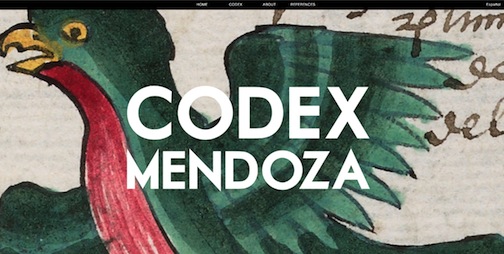
The illustrations in the codex are beautiful in their own right, above and beyond their educational value. The Hyperallergic article is a good introduction to this document and worth checking out before heading over to the Codex Mendoza site. Read it here: http://hyperallergic.com/177110/a-historic-manuscript-on-aztec-life-is-virtually-repatriated/
“Picturing Mary: Woman, Mother, Idea”
Art Exhibit in Washington Explores the Madonna as Woman, Mother, and Idea
Portraits of the Virgin Mary are on show at the National Museum of Women in the Arts until April 2015.She’s the most recognizable woman in the world. Her image spans a wide range of centuries and styles, from reverential portraits by old masters like Michelangelo to cheap plaster statues to the controversial collage by Chris Ofili of a black Madonna studded with elephant dung that caused an uproar when exhibited at the Brooklyn Museum in 1999.
But who is the Virgin Mary, and what do we see when we gaze at her portrait? On December 5, the National Museum of Women in the Arts in Washington, D.C., opens “Picturing Mary: Woman, Mother, Idea”—an exhibit of 70 artworks, from the 14th through the 19th centuries, lent by the Vatican Museums, the Uffizi Gallery, and the Louvre, among others. http://news.nationalgeographic.com/news/2014/12/141204-madonna-art-religion-catholicism-virgin-mary-women-museum-culture/
Monsignor Timothy Verdon, canon of the Florence Cathedral, is guest curator of the exhibition. “Mary is one of the main themes in Western art for more than 1,000 years,” Verdon explains. “Not only are there more images of her than of anyone else — including her son — her son is often part of the image, but the interest of the image is normally more focused on Mary, who is the adult, than on the Christ child.” http://www.npr.org/2014/12/24/372731460/mother-empress-virgin-faith-picturing-mary-and-her-many-meanings

 The Misty Miss Christy