Martin Luther King, Jr.
I’ve Been to the Mountaintop
Delivered April 3, 1968, Mason Temple (Church of God in Christ Headquarters), Memphis, Tennessee
Complete text: http://www.americanrhetoric.com/speeches/mlkivebeentothemountaintop.htm
Martin Luther King, Jr.
I’ve Been to the Mountaintop
Delivered April 3, 1968, Mason Temple (Church of God in Christ Headquarters), Memphis, Tennessee
Complete text: http://www.americanrhetoric.com/speeches/mlkivebeentothemountaintop.htm

James Barker
These Rare Photos of the Selma March Place You in the Thick of History. James Barker, a photographer from Alaska, shares his memories of documenting the famed event:
http://www.smithsonianmag.com/history/rare-photos-selma-march-thick-history-180953874/?no-ist
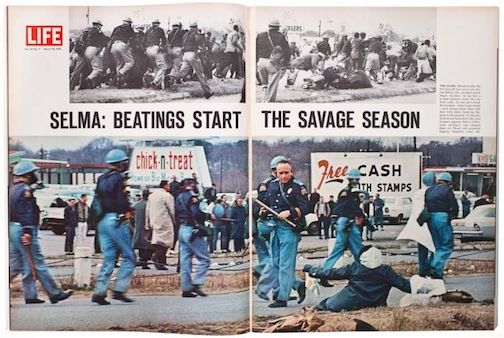
Charles Moore, Flip Schulke and Frank Dandridge
How LIFE Magazine Covered the Selma Marches in 1965. Fifty years after nonviolent protesters clashed with Alabama state troopers in Selma:
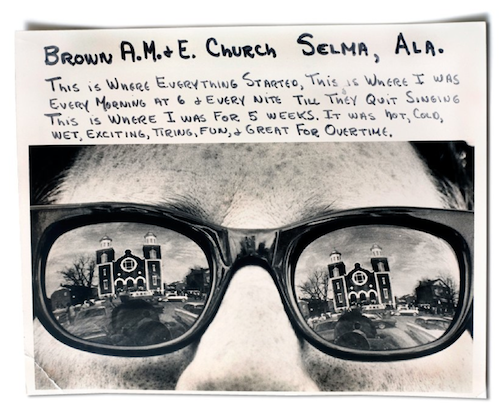
Spider Martin
Photographer Helped Expose Brutality Of Selma’s ‘Bloody Sunday’:
http://www.npr.org/blogs/codeswitch/2015/03/06/390943835/photographer-helped-expose-brutality-of-selmas-bloody-sunday
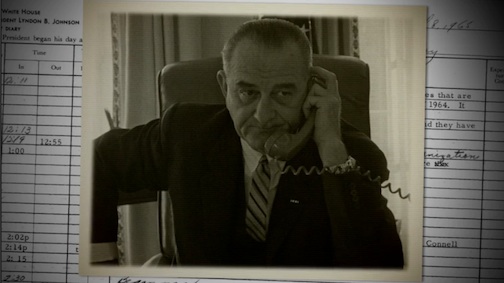
The Atlantic: “What LBJ Really Said About Selma” [click photo]:
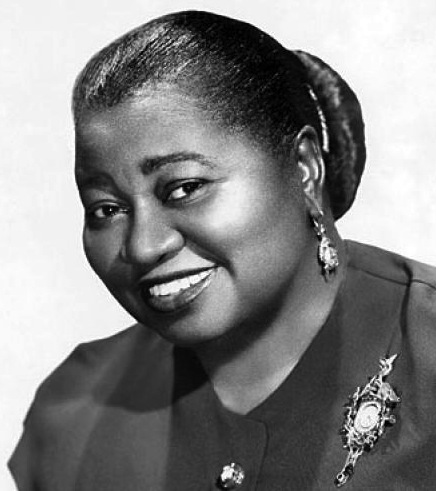
The 12th Academy Awards ceremony was held on February 29, 1940, at the Ambassador Hotel in Los Angeles, with Bob Hope hosting. Gone With The Wind was nominated for 13 awards and won for Outstanding Production, Directing (Victor Fleming), Actress (Vivien Leigh), Art Direction (Lyle Wheeler), Cinematography
(Color) (Ernest Haller and Ray Rennahan), and Film Editing (Hal Kern and James Newcom). Sidney Howard posthumously received the Writing (Screenplay) award, and production designer William Cameron Menzies received a special award for “outstanding use of color for the enhancement of dramatic mood in the production of Gone With The Wind.” In the Actress in Supporting Role category, Hattie McDaniel made history becoming the first African American to receive an Academy Award.
https://sites.utexas.edu/ransomcentermagazine/2016/02/26/hattie-mcdaniels-landmark-academy-awards-win/
Oscar’s First Black Winner Accepted Her Honor in a Segregated ‘No Blacks’ Hotel in L.A.~
http://www.hollywoodreporter.com/features/oscars-first-black-winner-accepted-774335
The Curious Case Of A Missing Academy Award~
http://www.npr.org/templates/story/story.php?storyId=100937570
Contralto Marian Anderson was born in Philadelphia, Pennsylvania. A variety of sources suggested February 17, 1902, as her birthdate; however, Anderson’s birth certificate, released by her family after her death, listed the date as February 27, 1897. Her father was an ice and coal salesman, and her mother was a former teacher.
Although Anderson had early showed an interest in the violin, she eventually focused on singing. The Black community, recognizing her talent, gave her financial and moral support. She also gained the notice of tenor Roland Hayes, who provided guidance in her developing career.
FROM http://www.afrovoices.com/anderson.html
For more images of Marian Anderson, see:
https://www.portrait.gov.au/magazines/64/the-right-note
https://blogs.loc.gov/picturethis/2020/04/marian-anderson-in-performance-a-visual-and-musical-story/
 Thanks to the outstanding Facebook page A Mighty Girl, https://www.facebook.com/amightygirl I learned today about the Civil Rights Movement Veterans website: http://www.crmvet.org/index.htm Their stated purpose: “This website is created by Veterans of the Southern Freedom Movement (1951-1968). It is where we tell it like it was, the way we lived it, the way we saw it, the way we still see it. With a few minor exceptions, everything on this site was written, created, or spoken by Movement activists who were direct participants in the events they chronicle.”
The site contains a wealth of letters, diary entries, interviews, personal narratives, essays, and more. They also have a large collection of photographs taken during that era, allowing us to see history as it was being made.
“The Robert Penn Warren Civil Rights Oral History Project is a collection of interviews concerning the Civil Rights movement and the socioeconomic, cultural, and political struggles of African Americans. Conducted in 1964 by Robert Penn Warren, a Kentucky native and the first poet laureate of the United States, these interviews constituted part of Warren’s research for his book Who Speaks for the Negro? Warren interviewed important civil rights leaders and activists such as Martin Luther King Jr., Milton Galamison, Adam Clayton Powell, Kenneth Bancroft Clark, Vernon Jordan, Malcolm X, Carroll Baker, Stokley Carmichael, William Hastie, Bayard Rustin, Ruth Turner, Claire Collins Harvey, Aaron Henry, Andrew Young, Gilbert Moses, and Ralph Ellison. Topics include racism throughout the United States, school integration, the National Association for the Advancement of Colored People (NAACP), the Congress of Racial Equality (CORE), education, employment, nonviolent protest, peace activism, black nationalism and pride, civil rights legislation, religion and spirituality, the role of whites in the civil rights movement, Abraham Lincoln, African culture, the Free Southern Theatre, and the Student Nonviolent Coordinating Committee (SNCC).”
Robert Penn Warren Civil Rights Oral History Project:
http://www.kentuckyoralhistory.org/collections/robert-penn-warren-civil-rights-oral-history-project
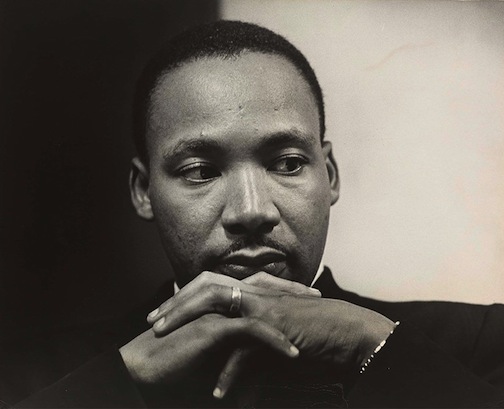
“Iconic images of Dr. King from the Smithsonian collection”
http://www.smithsonianmag.com/multimedia/martin-luther-king-jr-iconic-photos-180949401/
Photo: National Portrait Gallery
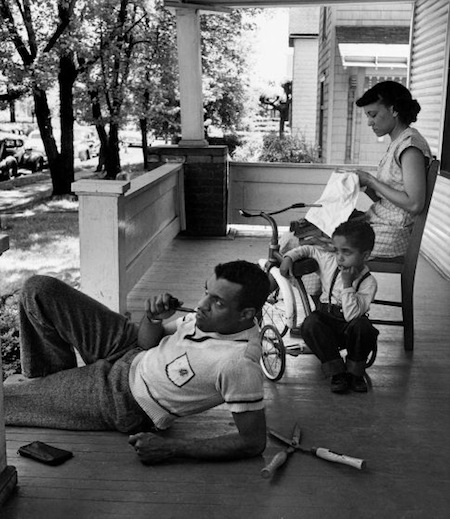
“When Gordon Parks left his hometown of Fort Scott, Kansas, at the age of 15 in 1928, it was to escape a place he would later call “the mecca of bigotry.” Parks’ mother arranged for her son, the youngest of her 15 children, to live with an older sister in Minnesota, where, she hoped, Gordon would be spared the “bitter trials of Kansas.”
At 37, Gordon Parks returned to Fort Scott, sent by LIFE to photograph the bitter trials of Kansas that his mother had wanted him to escape. But his pictures would never be published, bumped from the magazine by stories deemed more newsworthy.
Now these rarely seen photographs are making their public debut in an exhibit, Gordon Parks: Back to Fort Scott, at Boston’s Museum of Fine Arts, which opens on Saturday, Jan. 17. All but lost for more than half a century, the story behind the photographs is now being told for the first time.”
A Lost Story of Segregated America From LIFE’s First Black Photographer:
http://time.com/3664001/gordon-parks-fort-scott/
“When Gordon Parks left his hometown of Fort Scott, Kansas, at the age of 15 in 1928, it was to escape a place he would later call “the mecca of bigotry.” Parks’ mother arranged for her son, the youngest of her 15 children, to live with an older sister in Minnesota, where, she hoped, Gordon would be spared the “bitter trials of Kansas.”
At 37, Gordon Parks returned to Fort Scott, sent by LIFE to photograph the bitter trials of Kansas that his mother had wanted him to escape. But his pictures would never be published, bumped from the magazine by stories deemed more newsworthy.
Now these rarely seen photographs are making their public debut in an exhibit, Gordon Parks: Back to Fort Scott, at Boston’s Museum of Fine Arts, which opens on Saturday, Jan. 17. All but lost for more than half a century, the story behind the photographs is now being told for the first time.”
A Lost Story of Segregated America From LIFE’s First Black Photographer:
http://time.com/3664001/gordon-parks-fort-scott/
Smithsonian Collection: “Remembering Dr. Martin Luther King, Jr.”~
https://schristywolfe.com/2015/01/19/smithsonian-collection-remembering-dr-martin-luther-king-jr/
“Robert Penn Warren Civil Rights Oral History Project”~
https://schristywolfe.com/2015/01/19/robert-penn-warren-civil-rights-oral-history-project/
 The Misty Miss Christy