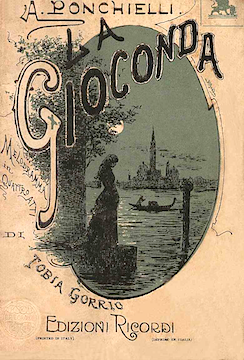
Composer Amilcare Ponchielli was born in Italy in 1834. He started composing operas while still a student at the Milan Conservatory. After graduating in 1854, he held various positions over the years, including professor of composition at the Conservatory; his pupils included Giacomo Puccini and Pietro Mascagni. His most famous opera is “La Gioconda”, written in 1876. It is mainly remembered for its ballet, Dance of the Hours.
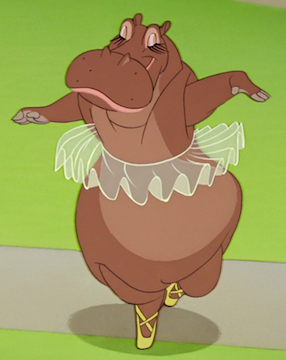
“The Dance of the Hours is probably the only opera ballet that has established a life of its own in both the concert hall as a stand-alone orchestral work…and in pop culture: Walt Disney’s 1940 animated film Fantasia, for example, used the music for a ballet performed by tutu-clad hippos, ostriches, alligators and elephants. And in 1963, parodist Alan Sherman set words to the tune of Ponchielli’s day music with its all-too-familiar four-note theme. Sherman’s “Hello Muddah, Hello Fadduh (A Letter from Camp)” hit No. 2 on the pop charts.” FROM~ https://nepaphil.org/program-notes-from-an-evening-of-opera-overtures-and-arias/
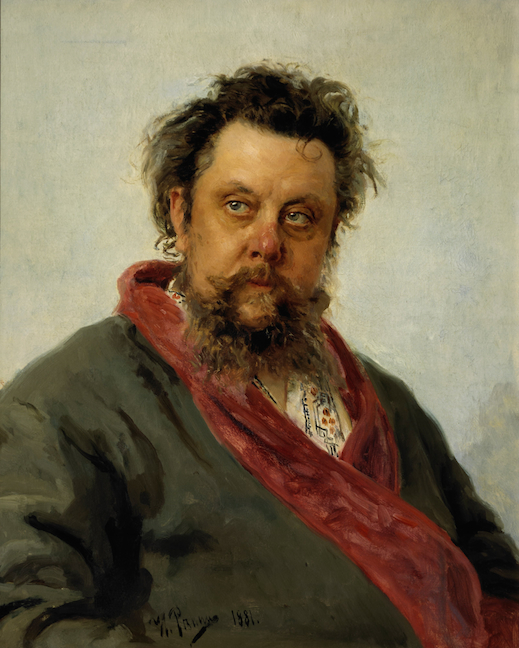
Modest Petrovich Mussorgsky(March 21 [O.S. March 9] 1839 – March 28 [O.S. March 16] 1881) was born into a wealthy rural, landowning family. He began by picking out on the piano the tunes he heard from the serfs on his family’s estate. At the age of six, he began to study piano with his mother. His parents initially set him out on the career of military officer. He became a cadet and finally commissioned in an elite imperial regiment. Two years later, in 1858, he resigned his commission. During this time, he met a musically-inclined army doctor: Alexander Borodin. The two became friends. In 1861, with Russia’s emancipation of the serfs, his family lost significant income, and he was forced to earn a living. In 1863, he began a spotty career in the civil service…In 1856, he met the composer Dargomïzhsky, who in turn introduced him to Cesar Cui, Mily Balakirev, and a critic named Victor Stasov. Gradually, Borodin and Nicolai Rimsky-Korsakoff joined to form a loose group known as the “Moguchaya Kuchka” (“the mighty handful” or “the mighty bunch”). http://www.classical.net/music/comp.lst/mussorgsky.php
Fryderyk Franciszek Chopin…and his family held his date of birth to be 1 March 1810, yet the certificate of baptism signed in the parish church of Brochów is dated 22 February. That discrepancy has still not been entirely resolved, although today it is the date celebrated by Chopin and his family that is more often used. http://en.chopin.nifc.pl/chopin/life/biography/page/1
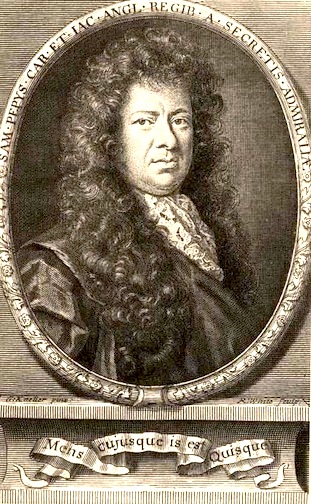
This morning come two of Captain Cooke’s boys, whose voices are broke, and are gone from the Chapel, but have extraordinary skill; and they and my boy, with his broken voice, did sing three parts; their names were Blaewl and Loggings; but, notwithstanding their skill, yet to hear them sing with their broken voices, which they could not command to keep in tune, would make a man mad–so bad it was.
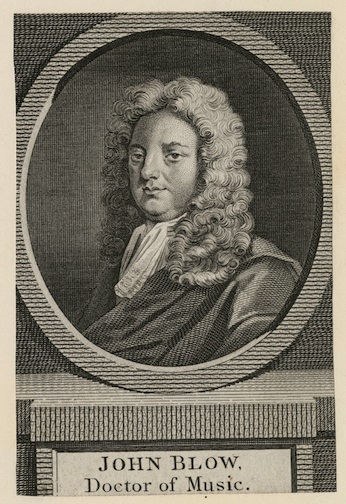
The quote above is Samuel Pepys (born February 23, 1633) referring to John Blow (born February 23, 1649). Samuel Pepys was a member of Parliament who is now most famous for his private diary, kept from 1660 until 1669.
John Blow was an English Baroque composer and organist whose opera Venus & Adonis is considered the earliest surviving British opera and which is believed to have influenced Henry Purcell’s later opera Dido and Aeneas.
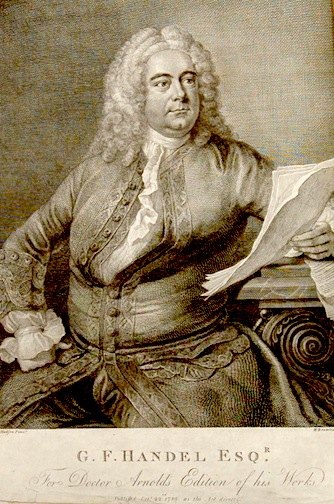
After Purcell, opera in England languished until the arrival of George Frideric Handel (born February 23, 1685) who, however, wrote most of his operas in Italian. Acis and Galatea is Handel’s only work for the theatre that is set to an English libretto.
Of course, most of us know Handel for his English-language oratorio Messiah and for his collection of short pieces for small orchestra known as the Water Music.
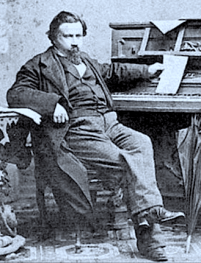 Composer Amilcare Ponchielli was born in Italy in 1834. He started composing operas while still a student at the Milan Conservatory. After graduating in 1854, he held various positions over the years, including professor of composition at the Conservatory; his pupils included Giacomo Puccini and Pietro Mascagni. His most famous opera is “La Gioconda”, written in 1876. It is mainly remembered for its ballet, Dance of the Hours.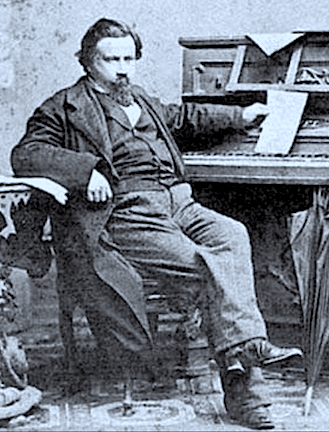
“The Dance of the Hours is probably the only opera ballet that has established a life of its own in both the concert hall as a stand-alone orchestral work…and in pop culture: Walt Disney’s 1940 animated film Fantasia, for example, used the music for a ballet performed by tutu-clad hippos, ostriches, alligators and elephants. And in 1963, parodist Alan Sherman set words to the tune of Ponchielli’s day music with its all-too-familiar four-note theme. Sherman’s “Hello Muddah, Hello Fadduh (A Letter from Camp)” hit No. 2 on the pop charts.”
FROM~ https://nepaphil.org/program-notes-from-an-evening-of-opera-overtures-and-arias/


 The Misty Miss Christy