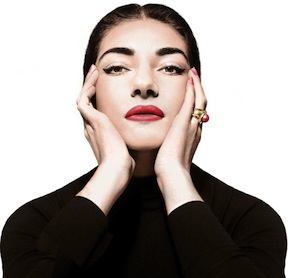
Maria made her first professional appearance in von Suppe’s Boccacio in 1939 and sang the leading part in Tosca in 1942. After a series of disappointments and resenting envy by her colleagues, she returned to the American land of her birth. She lived there for two years (1945-1947), met the bass Nicola Rossi – Lemeni and through him came to know the tenor Giovanni Zenatello, artistic director of the Arena of Verona. Maria Kalogeropoulos left for Italy, met the industrialist Giovanni Batista Meneghini, married him, became Maria Callas and experienced her artistic life’s curtain raiser without suspecting that she was about to emerge as the lyric theatre’s most brilliant personality. FROM http://www.hri.org/MFA/thesis/autumn97/callas.html
Callas’ ability to sing such a wide range of roles was one of the things that led to her meteoric rise. But critic Conrad Osborne says it also contained the seeds of her vocal decline. Callas’ voice was already starting to fail her by the time she was in her 40s — quite young for an opera singer. A number of factors, including a rapid loss of weight, may explain why…But for Callas fans like James Jorden, the diva more than made up for her vocal flaws with her talent for bringing the music to life. FROM http://www.npr.org/templates/story/story.php?storyId=123612228
By the time of her retirement, she had performed more than 40 different roles and had recorded more than 20 complete operas. Callas’s personality and philosophy of performance are powerfully depicted in Terrence McNally’s play Master Class (first performed and published 1995), based on her classes at Juilliard. FROM http://www.britannica.com/biography/Maria-Callas
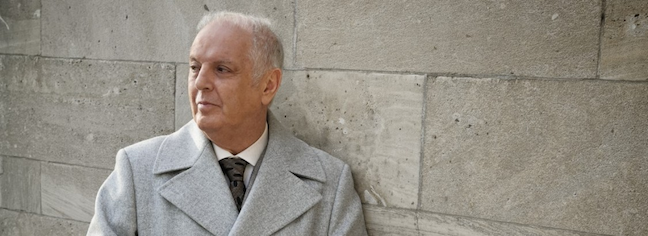
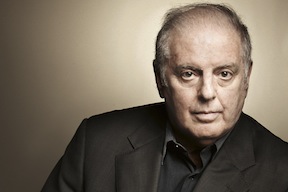
Barenboim’s parents were both pianists, and his father, Enrique Barenboim, was also a noted music professor. The family moved from Argentina to Salzburg, Austria, when Daniel was nine and then on to Israel in 1952. Barenboim had already debuted as a pianist at age seven, and in Europe he became known as something of a child prodigy. He made his debut in London (with the Royal Philharmonic Orchestra) in 1956 and in the United States (at Carnegie Hall) in 1957… Barenboim started conducting professionally in 1962, first in Israel and then in Australia with the Melbourne and Sydney symphony orchestras. He thereafter was guest conductor in several cities in European countries as well as in Israel and the United States. He served as music director of the Orchestre de Paris from 1975 to 1989. In 1987 he signed to become musical and artistic director of the new Bastille Opera in Paris, but he fell into disputes with representatives of the socialist government in Paris and was dismissed (in January 1989) before the first season was to commence, in 1990. Almost immediately, in January 1989, he accepted the post of music director of the Chicago Symphony Orchestra in succession to Sir Georg Solti. FROM http://www.britannica.com/biography/Daniel-Barenboim
In 1999, together with the late Palestinian-born writer and Columbia University professor Edward Said, Barenboim founded the West-Eastern Divan workshop and orchestra, bringing together talented young musicians from the Arab countries of the Middle East, Israel and Spain to make music under the guidance of some of the world’s finest musicians, enabling dialogue between the various cultures of the Middle East. Musicians of the Berlin Staatskapelle have participated as teachers in the project since its inception. In summer 2005, the West-Eastern Divan Orchestra presented a concert of historic significance in the Palestinian city of Ramallah, which was telecast and recorded for DVD. Since then, Barenboim and the orchestra have toured extensively, including appearances at the festivals in Lucerne and Salzburg, the BBC Proms in London and making a debut in the United Arab Emirates. In June 2015 Barenboim celebrated the imminent opening of the future home of the Barenboim-Said Akademie in Berlin, an educational institution that will expand upon the vision of the West-Eastern Divan Orchestra. Barenboim also initiated a project for music education in the Palestinian territories, which includes a music kindergarten as well as a youth orchestra. FROM https://www.deutschegrammophon.com/en/artists/daniel_barenboim/biography
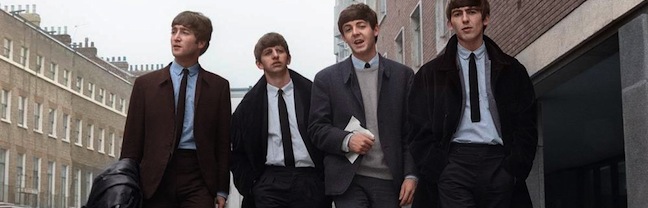
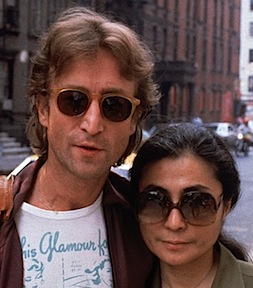
He was born John Winston Lennon on October 9, 1940. Like the other three Beatles, Lennon grew up in a working-class family in Liverpool. His parents, Julia and Fred, separated before he was two (Lennon saw his father only twice in the next 20 years), and Lennon went to live with his mother’s sister Mimi Smith; when Lennon was 17 his mother was killed by a bus. He attended Liverpool’s Dovedale Primary School and later the Quarry Bank High School, which supplied the name for his first band, a skiffle group called the Quarrymen, which he started in 1955. FROM https://www.rollingstone.com/music/
John Lennon didn’t invent rock and roll, nor did he embody it as toweringly as figures like Elvis Presley and Little Richard, but he did more than anyone else to shake it up, move it forward and instill it with a conscience. As the most daring and outspoken of the four Beatles, he helped shape the agenda of the Sixties – socially and politically, no less than musically. As a solo artist, he made music that alternately disturbed and soothed, provoked and sought community. As a human being, he served as an exemplar of honesty in his art and life. FROM https://www.rockhall.com/inductees/john-lennon
Purcell wrote only one full opera, a short work supposedly designed for a girls’ school. The tragic story of Dido and Aeneas, with a libretto by Nahum Tate, has a perfection of its own. Dido’s final lament, before she kills herself, follows the model for such compositions established by Monteverdi eighty years before. Other stage works by Purcell are in the hybrid form now known as semi-opera, combining spoken drama and a musical element that in the concert-hall may be performed apart from its wider dramatic context. FROM~ https://www.orfeomusic.de/Composer/Detail/20995
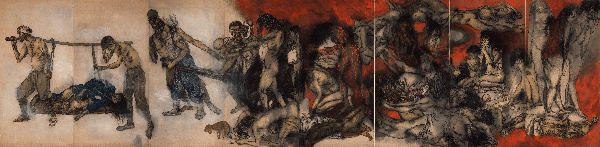
Composed in 1953 (eight years after the city’s bombing, and coinciding with the end of the American occupation of Japan), its six inner movements were inspired by six paintings by Iri and Toshi Maruki (the score’s original title was The Hiroshima Panels ), framed by a Prelude and Elegy.FROMhttps://arkivmusic.com/
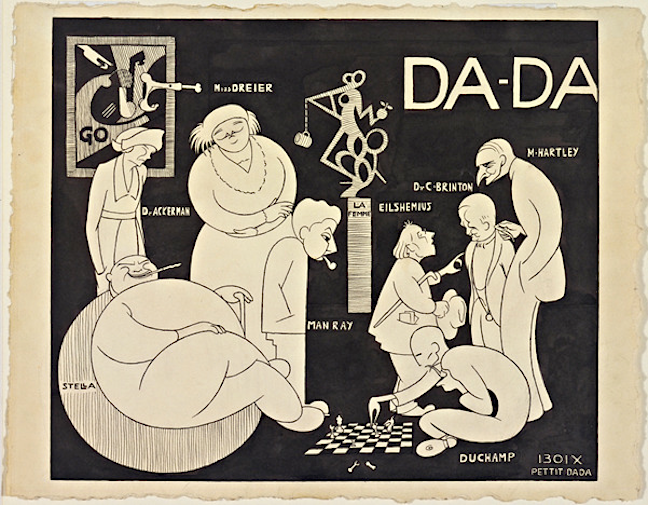
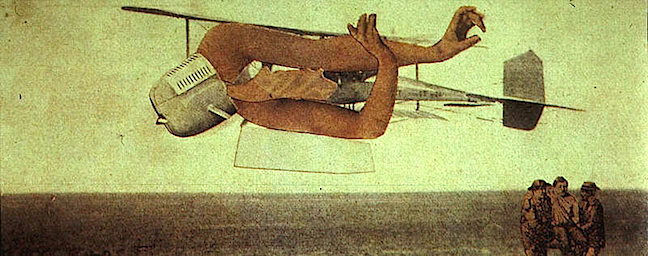
Richard Boix. Da-da (New York Dada Group). 1921. Ink on paper. 11 1/4″ x 14 1/2″ (28.6 x 36.8 cm)
Museum of Modern Art / Katherine S. Dreier Bequest
On July 14, 1916, the poet Hugo Ball proclaimed the manifesto for a new movement. Its name: Dada. Its aim: to “get rid of everything that smacks of journalism, worms, everything nice and right, blinkered, moralistic, europeanised, enervated.” This aim could be achieved simply by saying: “Dada.” https://www.nytimes.com/2016/07/10/arts/dada-100-years-later.html
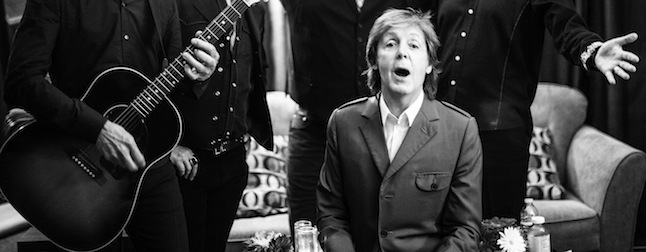
I was saying to someone the other day that one of the very first gigs we did – I don’t even think we were the Beatles, it was the Quarrymen – one the very first times I ever played with John, we did a very early gig at a thing called a Co-Op Hall, and I had a lead solo in one of the songs and I totally froze when my moment came. I really played the crappiest solo ever. I said, “That’s it. I’m never going to play lead guitar again.” It was just too nerve-wracking onstage. So for years, I just became rhythm guitar and bass player and played a bit of piano, do a bit of this, that and the other. But nowadays, I play lead guitar, and that’s the thing that draws me forward. I enjoy it. So, yeah, that means the answer to “Are you going to retire?” is “When I feel like it.” But that’s not today. FROM https://www.rollingstone.com/music/music-news/paul-mccartney-the-long-and-winding-qa-242714/
At the deepest level, McCartney has little idea where all the melodies come from. He still hasn’t figured out how he wrote “Yesterday” in his sleep. “I don’t like to use the word ‘magic,’ unless you spell it with a ‘k’ on the end, because it sounds a bit corny. But when your biggest song – which 3,000 people and counting have recorded – was something that you dreamt, it’s very hard to resist the thought that there’s something otherworldly there.” FROM http://www.rollingstone.com/music/news/paul-mccartney-yesterday-today-20120618
They called him “Mr. Excitement,” and indeed Jackie Wilson was a gifted singer of considerable range and a charismatic showman who commanded a stage like few before or since. Wilson possessed a natural tenor. He sang with the graceful control of Sam Cooke and moved with the frenzied dynamism of James Brown…A mainstay of the R&B and pop charts from 1958 to 1968, Wilson amassed two dozen Top Forty singles, all released on the Brunswick label. … Wilson launched his solo career in November 1957 with the single “Reet Petite (The Finest Girl You Ever Want To Meet).” The song was written by Berry Gordy, Jr., a struggling songwriter who had yet to found his Motown empire. Another Gordy composition, “Lonely Teardrops,” was Wilson’s breakthrough, topping the R&B chart and becoming a Top Ten hit on the pop side. More R&B chart-toppers followed in quick succession FROM https://rockhall.com/inductees/jackie-wilson/bio/
Maria made her first professional appearance in von Suppe’s Boccacio in 1939 and sang the leading part in Tosca in 1942. After a series of disappointments and resenting envy by her colleagues, she returned to the American land of her birth. She lived there for two years (1945-1947), met the bass Nicola Rossi – Lemeni and through him came to know the tenor Giovanni Zenatello, artistic director of the Arena of Verona. Maria Kalogeropoulos left for Italy, met the industrialist Giovanni Batista Meneghini, married him, became Maria Callas and experienced her artistic life’s curtain raiser without suspecting that she was about to emerge as the lyric theatre’s most brilliant personality.
Conrad Osborne says it also contained the seeds of her vocal decline. Callas’ voice was already starting to fail her by the time she was in her 40s — quite young for an opera singer. A number of factors, including a rapid loss of weight, may explain why…But for Callas fans like James Jorden, the diva more than made up for her vocal flaws with her talent for bringing the music to life.
By the time of her retirement, she had performed more than 40 different roles and had recorded more than 20 complete operas. Callas’s personality and philosophy of performance are powerfully depicted in Terrence McNally’s play Master Class (first performed and published 1995), based on her classes at Juilliard.











 The Misty Miss Christy