Irving Berlin~ Born May 11, 1888

“Irving Berlin has no place in American music – he is American music.”  ~Jerome Kern

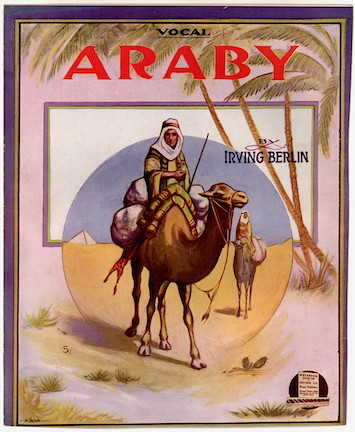
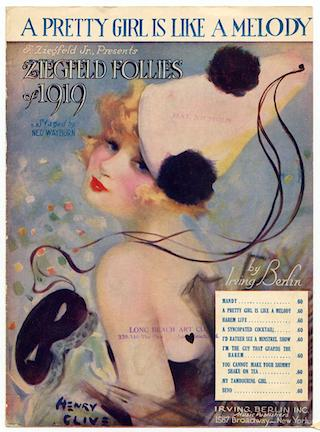
Irving Berlin was born Israel Beilin on May 11, 1888. In 1907 he published his first song, “Marie from Sunny Italy,” and by 1911 he had his first major international hit — “Alexander’s Ragtime Band.” Over the next five decades, Irving Berlin produced an outpouring of ballads, dance numbers, novelty tunes and love songs that defined American popular song for much of the century. He wrote seventeen complete scores for Broadway musicals and revues, and contributed material to six more. His songs have provided memorable moments in dozens of…films. An intuitive business man, Irving Berlin was a co-founder of ASCAP (American Society of Composers, Authors and Publishers), founder of his own music publishing company, and with producer Sam Harris, builder of his own Broadway theatre, The Music Box.
https://www.songhall.org/profile/Irving_Berlin
Biography of Irving Berlin

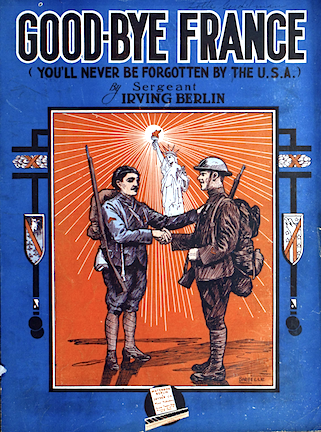
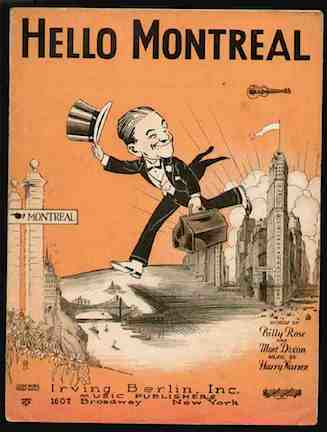
In the late 19th century the sheet music business dominated the music industry in the United States. Parlor music took over the scene as the piano became a part of the middle class home.  This led to a demand for sheet music for home consumption.  The genre that grew out of this demand was called Tin Pan Alley, from the area of New York City where most of the song publishers were located. Success was measured by the sale of sheet music.  To attract business, sheet music publishers hired artists to make beautiful covers…In the early 20th century the phonograph and recorded music grew in popularity and began to replace sheet music.  In the 1920s, radio became the rage and eventually the record industry replaced the sheet music publishers as the prevailing music medium.
http://researchguides.gonzaga.edu/c.php?g=67703&p=436739

Irving Berlin Sheet Music Covers            Sheet Music Illustrators

Ella Fitzgerald: Born April 25, 1917~

Ella Fitzgerald by Al Hirschfeld, 1993. Ink on board. Melvin R. Seiden Collection
of Drawings by Al Hirschfeld, Harvard Theatre Collection, Houghton Library, Harvard University

In mid 1936, Ella made her first recording. “Love and Kisses” was released under the Decca label, with moderate success. By this time she was performing with Chick’s band at the prestigious Harlem’s Savoy Ballroom, often referred to as “The World’s Most Famous Ballroom.”

Shortly afterward, Ella began singing a rendition of the song, “(If You Can’t Sing It) You Have to Swing It.” During this time, the era of big swing bands was shifting, and the focus was turning more toward bebop. Ella played with the new style, often using her voice to take on the role of another horn in the band. “You Have to Swing It” was one of the first times she began experimenting with scat singing, and her improvisation and vocalization thrilled fans. Throughout her career, Ella would master scat singing, turning it into a form of art.
FROM Ella Fitzgerald | Official Site~ http://www.ellafitzgerald.com/about/biography


Ella Fitzgerald at 100 (npr)~

http://www.npr.org/2017/04/25/524726767/early-hardship-couldnt-muffle-ella-fitzgeralds-joy

American Masters~
http://www.pbs.org/wnet/americanmasters/ella-fitzgerald-something-to-live-for/590/

21 Dazzling Photos Of Jazz Legend Ella Fitzgerald Over The Years

RARE PHOTO of Ella Fitzgerald Goes On Display at Smithsonian

Frank Sinatra: Born December 12, 1915

Francis Albert Sinatra [was born] in Hoboken, New Jersey. Although his mother had hoped that he would be the first person in the family to attend college and was disappointed that he did not finish high school, she encouraged his ambition to be a singer. His father, on the other hand, was opposed and insisted that he should find a job. The young Sinatra worked briefly as a truck driver for a newspaper, a riveter in a Hoboken shipyard, and a fruit hauler. By 1932, he had decided that he wanted to be a professional singer.
FROM http://www.anb.org/view/10.1093/anb/9780198606697.001.0001/anb-9780198606697-e-1803570
His break came in 1937, when he and three instrumentalists, billed as the Hoboken Four, won on the Major Bowes Original Amateur Hour. After some touring, the group disbanded. Harry James signed Sinatra to sing with his orchestra, and on July 13, 1939, two weeks after his debut as a big-band vocalist at the Hippodrome Theatre in Baltimore, Sinatra cut his first disc, “From the Bottom of My Heart,” with the orchestra.
FROM https://www.rollingstone.com/music/music-news/an-appreciation-of-frank-sinatra-1915-1998-59176/
James graciously freed Sinatra from his contract when the singer received a more lucrative offer from bandleader Tommy Dorsey in December 1939. By 1942 Sinatra’s fame had eclipsed that of Dorsey, and the singer yearned for a solo career.
FROM https://www.britannica.com/biography/Frank-Sinatra
Between 1943 and 1946, Sinatra’s solo career blossomed as the singer charted a slew of hit singles. Sinatra made his movie acting debut in 1943. In 1945, he won a special Academy Award for The House I Live In, a 10-minute short made to promote racial and religious tolerance on the home front. Sinatra’s popularity began to slide in the postwar years (but) in 1953, he made a triumphant comeback, winning a supporting actor Oscar for From Here to Eternity.
FROM https://www.biography.com/people/frank-sinatra-9484810
In the mid-’70s Sinatra’s career slowed down, but in mid-1980, after a five-year recording hiatus, he released Trilogy which included a version of “Theme From New York, New York” that the city fervently adopted. In 1985, he was accorded the Presidential Medal of Freedom, the nation’s highest civilian award. Frank Sinatra died of a heart attack on May 14, 1998, in L.A.
FROM https://www.rollingstone.com/music/music-news/an-appreciation-of-frank-sinatra-1915-1998-59176/

Claude Debussy: Born August 22, 1862

Claude Debussy (born Achille-Claude Debussy) was among the most influential composers of the late 19th and early 20th centuries. His mature compositions, distinctive and appealing, combined modernism and sensuality so successfully that their sheer beauty often obscures their technical innovation. Debussy is considered the founder and leading exponent of musical Impressionism (although he resisted the label), and his adoption of non-traditional scales and tonal structures was paradigmatic for many composers who followed.

FROM Achille-Claude Debussy (1862-1918): Biography:
http://www.allmusic.com/artist/claude-debussy-mn0000768781/biography

Isaac Stern: Born July 21, 1920

stern1Stern’s family moved to the United States and settled in San Francisco when he was one year old. His mother, a professional singer, gave him his first music lessons. He began studying the violin at the San Francisco Conservatory in 1928. In 1932 he became the third immensely talented San Francisco-area boy to train with the San Francisco Symphony concertmaster Louis Persinger (the others were Menuhin and Ruggiero Ricci). However, he considered Naoum Blinder, with whom he studied until the age of 15, his only true teacher. Stern made his debut with the San Francisco Symphony on February 18, 1936, with Pierre Monteux conducting the Third Concerto by Saint-Saëns.
FROM http://www.allmusic.com/artist/isaac-stern-mn0000965898/biography

However, Stern was to become as famous internationally for his contribution to public causes as he was Stern2for his concert performances and recordings. His social contributions took many forms: his most noted involvement as a cultural activist was his pivotal role in the 1960 salvation of Carnegie Hall, then facing demolition. Elected president of the Carnegie Hall Corporation, he guided the affairs of the edifice he called “our country’s affirmation of the human spirit” (Stern and Potok, p. 141) until the end of his life. He was chairman of the board of the America-Israel Cultural Foundation and founder and chairman of the Stern3Jerusalem Music Center, and in the United States he campaigned for and became a founding member of the National Endowment for the Arts in 1964. In 1975 he received the first Albert Schweitzer Award for “a life’s work dedicated to music and devoted to humanity” and two years later was made a member of the French Légion d’Honneur.
FROM http://www.anb.org/articles/18/18-03785.html

Obituary, New York Times~ http://www.nytimes.com/2001/09/23/nyregion/violinist-isaac-stern-dies-at-81-led-efforts-to-save-carnegie-hall.html

Van Cliburn: Born July 12, 1934

But if the Tchaikovsky competition represented Mr. Cliburn’s breakthrough, it also turned out to be his undoing. Relying inordinately on his keen musical instincts, he was not an especially probing artist, and his growth was stalled by his early success. Audiences everywhere wanted to hear him in his prizewinning pieces, the Tchaikovsky First Concerto and the Rachmaninoff Third. Every American town with a community concert series wanted him to come play a recital.
“When I won the Tchaikovsky I was only 23, and everyone talked about that,” Mr. Cliburn said in 2008. “But I felt like I had been at this thing for 20 years already. It was thrilling to be wanted. But it was pressure, too.”
http://www.nytimes.com/2013/02/28/arts/music/van-cliburn-pianist-dies-at-78.html

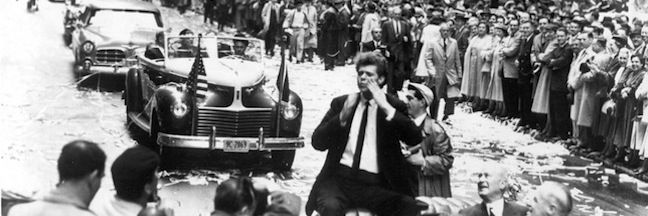
TickerTape


Ringo Starr: Born on July 7, 1940

youngRingo

While some accused Ringo Starr of being a clumsy drummer, many more agreed with George Harrison’s assessment: “Ringo’s the best backbeat in the business.” And while many in the wake of the youngerRingoBeatles’ breakup predicted that Starr would be the one without a solo career, he proved them wrong. Not only has he released several LPs (the first came out before the Beatles disbanded) and hit singles, but he’s also the only Beatle to establish a film-acting career for himself outside of the band’s mid-’60s movies.
http://www.rollingstone.com/music/artists/ringo-starr

Anybody who knows the Beatles’ music intimately knows the tympanic accents and fills as clearly today as when they were recorded: the famous drum roll that launches into “She Loves You”; the shimmering incandescence of his cymbal work on so many of those early hits; the impressionistic free-form of “Rain”; the loping cadence and crispy snare of “Sexy Sadie”; the haunting, almost cinematic drama and rich texture behind “Long, Long”; the building, tour-de-force crescendo that leads up to the “The End” on “Abbey Road.”

“Here’s what I discovered in the very first session that I did with him,” recalls Walsh. “He came in and I oldRingosaid, ‘You want to see a chart on the song?’ And he said, ‘No, give me the lyrics.’ He responds to the singer. A great example of that is when he plays on the Beatles’ ‘Something’ and he does that fill that’s such a musical response it’s almost like a guitar player; there’s notes to it.”
http://variety.com/2014/music/news/ringo-starr-paul-mccartney-beatles-1201073353/

olderRingo

George Szell: Born June 7, 1897

1978 SPECIAL CITATION for distinguished service to the arts (Posthumous)~
http://clevelandartsprize.org/awardees/george_szell.html

NAXOS: George Szell~ http://www.naxos.com/person/George_Szell_38224/38224.htm

Born: June 7, 1897 – Budapest, Hungary
Died: July 30, 1970 – Cleveland, Ohio, USA

Part of the wave of great Hungarian conductors who took over American musical life just before and after World War II — the others included Fritz Reiner, Antal Dorati, and Eugene Ormandy — George Szell quickly transformed a middling Midwestern orchestra into one of the nation’s Big Five. His cultivation of the Cleveland Orchestra set an example of discipline and hard work that gradually helped raise the standards of orchestras across America.
FROM https://www.allmusic.com/artist/george-szell-mn0000366341/biography

Benny Goodman: Born May 30, 1909

AlbumCover

YoungBGBefore he was in his teens, Goodman had begun performing in public…Goodman’s precocious talent allowed him to become a member of the American Federation of Musicians at the age of 14 and that same year he played with Bix Beiderbecke. By his mid-teens Goodman was already established as a leading musician, working on numerous engagements with many bands to the detriment of his formal education.
FROM http://biography.just-the-swing.com/benny-goodmanOrchestra

The second band that he formed (in 1934) got a job at Billy Rose’s Music Hall. This band made some great recordings and began appearing on the 3-hour NBC radio program called “Let’s Dance.”

After this, the Benny Goodman Orchestra began touring (with not so fantastic results) until August 21, 1935, when the Benny Goodman Orchestra opened in the Palomar Ballroom in Los Angeles. After playing a few dance tunes, he told the band to play some Fletcher Henderson arrangements. The mostly young crowd promptly started something of a riot. After this public approval of the music – this thing called “Swing” – there was no looking back!
FROM http://www.touchoftonga.com/DavidMulliss/benny-goodman.html

OlderBGBenny did for clarinet what Louis Armstrong had done for the trumpet.  He gave it a newly assertive leadership role in the jazz ensemble.
FROM http://jazzhotbigstep.com/45801.html

Benny Goodman Discography: http://www.discogs.com/artist/254768-Benny-Goodman