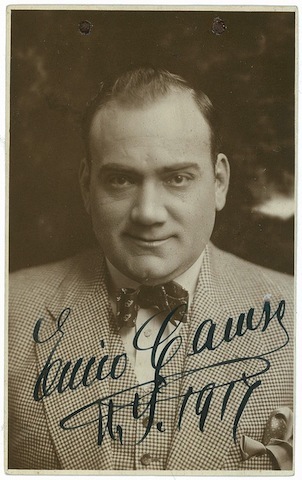
Enrico Caruso: Born February 25, 1873

‘The Great Caruso’ or ‘King of Tenors’ was born in Naples in 1873. He was his parents’ 18th child and the first to survive infancy. Music was his escape from the wretched reality that surrounded him. He sang in Neapolitan cafes and restaurants. By 1895 he was singing leading roles at the Opera House in Naples. From there he went to the major Italian opera houses and then became an international star. ‘Who has sent you to me? God?’ exclaimed Puccini on first hearing him sing.
FROM http://www.vam.ac.uk/content/articles/e/enrico-caruso/caruso

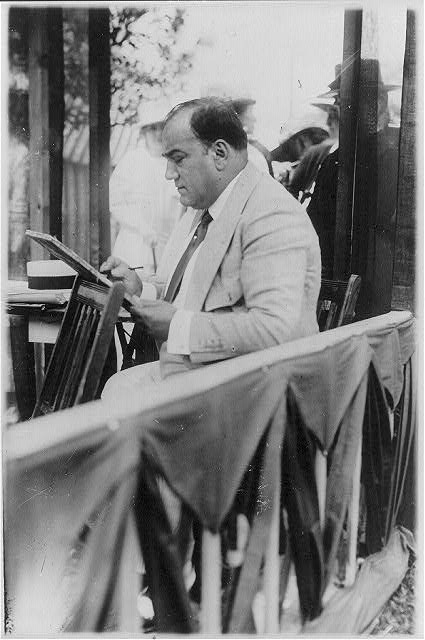
Below: Enrico Caruso drawing caricature sketches in booth at charity fair in Southampton, L.I.~
https://www.loc.gov/item/2005680287/

sketching.jpg

Caruso was a compulsive caricaturist who made spontaneous and witty sketches of colleagues and strangers wherever he went. His doodles often captured a candid likeness of the person, but they were never cruel.

Although he was proud of his sketches, he turned down offers to draw professionally. However, he did regularly contribute to an Italian-American newspaper called La Follia di New York, from which a book of drawings was eventually produced. Nowadays his cartoons are extremely collectable. One firm even reproduced one of his self caricatures as a powder compact.
FROM http://www.vam.ac.uk/content/articles/e/enrico-caruso/

Drawings by Enrico Caruso~
https://commons.wikimedia.org/wiki/Category:Drawings_by_Enrico_Caruso

Renata Scotto: Born February 24, 1934

[Renata Scotto] began vocal studies when she was 14, and moved to Milan when she was 16. In 1952, when she was just 19, she made her debut as Violetta (La traviata) at the Teatro Nuovo, followed by her La Scala debut as Walter in La Wally. However, only a few years later she had a vocal crisis, losing most of her upper range; she now credits her recovery to Alfredo Kraus (himself renowned for a solid technique and vocal longevity), who introducing her to his teacher, Mercedes Llopart. After completely restudying her technique, she re-began her career as a coloratura, making her London debut at the Stoll Theater as Adina in L’elisir d’amore. She returned to La Scala, and in 1957, replaced Maria Callas (whom she had greatly admired) as Amina in La Sonnambula.
– See more at:
http://www.allmusic.com/artist/renata-scotto-mn0000681028/biography
http://musicalworld.com/artists/renata-scotto/biography.html

Men in Wigs

pepys

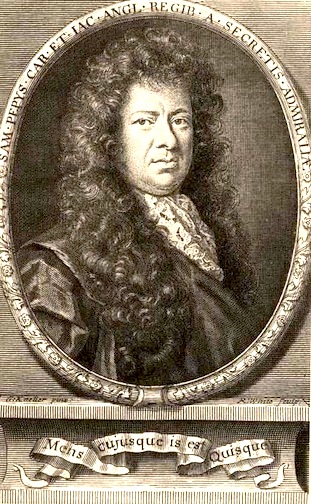
This morning come two of Captain Cooke’s boys, whose voices are broke, and are gone from the Chapel, but have extraordinary skill; and they and my boy, with his broken voice, did sing three parts; their names were Blaewl and Loggings; but, notwithstanding their skill, yet to hear them sing with their broken voices, which they could not command to keep in tune, would make a man mad–so bad it was.

The quote above is Samuel Pepys (born February 23, 1633) referring to John Blow (born February 23, 1649). Samuel Pepys was a member of Parliament who is now most famous for his private diary, kept from 1660 until 1669.

Samuel Pepys (1633 – 1703)
http://www.bbc.co.uk/history/historic_figures/pepys_samuel.shtml
The Diary of Samuel Pepys: http://www.gutenberg.org/files/4200/4200-h/4200-h.htm

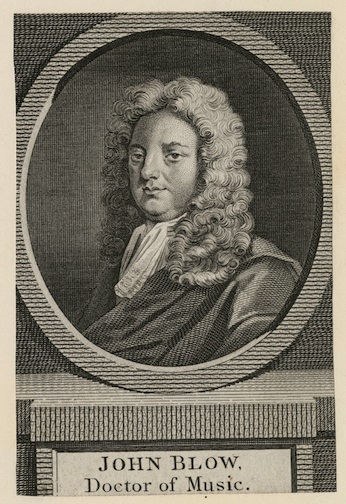
BlowJohn Blow was an English Baroque composer and organist whose opera Venus & Adonis is considered the earliest surviving British opera and which is believed to have influenced Henry Purcell’s later opera Dido and Aeneas.

John Blow (1649 – 1708)
https://en.wikipedia.org
/wiki/John_Blow

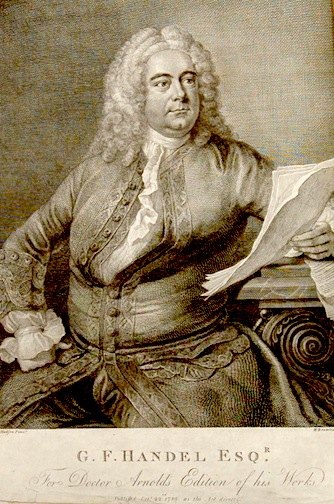
HandelAfter Purcell, opera in England languished until the arrival of George Frideric Handel (born February 23, 1685) who, however, wrote most of his operas in Italian. Acis and Galatea is Handel’s only work for the theatre that is set to an English libretto.

George Frideric Handel (1685 – 1759)
https://en.wikipedia.org/wiki/George_Frideric_Handel

Of course, most of us know Handel for his English-language oratorio Messiah and for his collection of short pieces for small orchestra known as the Water Music.

Adelina Patti: Born February 19, 1843

Adelina Patti, original name Adela Juana Maria Patti (born Feb. 19, 1843, Madrid, Spain—died Sept. 27, 1919, Craig-y-Nos Castle, Brecknockshire, Wales), Italian soprano who was one of the great coloratura singers of the 19th century.
http://www.britannica.com/EBchecked/topic/446851/Adelina-Patti

Biographical sketch of Madame Adelina Patti
https://archive.org/details/biographicalsket00mortiala

Madama Butterfly: First Performance February 17, 1904

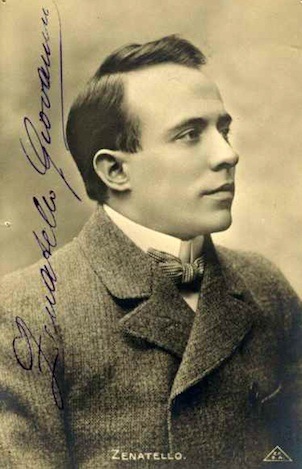
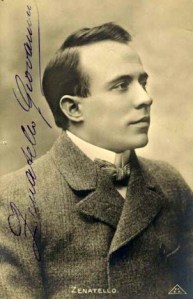
Zenatello

The première of February 17, 1904 would remain a bitter experience for Puccini. As Ricordi described it in the March edition of Musice e Musicisti: Growls, shouts, groans, laughter, giggling, the usual single cries of “bis,” designed to excite the public still more; that sums up the reception which the public of La Scala accorded the new work by Maestro Giacomo Puccini . . . The spectacle given in the auditorium seemed as well organized as that on the stage since it began precisely with the beginning of the opera.
FROM http://www.columbia.edu/itc/music/NYCO/butterfly/fiasco.html

If Ricordi’s memory is accurate, the packed theater was hostile from the beginning, but it seems that the onset of the real problems coincided with Butterfly’s entrance. As Butterfly approaches her new home, she and a chorus of girls sing “Quanto cielo.” To the more belligerent elements of the audience, Butterfly’s descending line resembled a melody from the Act III duet of his earlier opera La Bohème. Nineteenth-century Italian audiences were particularly sensitive to and unforgiving of what they termed “reminiscences”; that is, a composer’s deliberate or inadvertent borrowing from another opera. When they detected this offense, Puccini’s detractors cried out, “Bohème, Bohème!!”
FROM http://www.columbia.edu/itc/music/NYCO/butterfly/fiasco.html
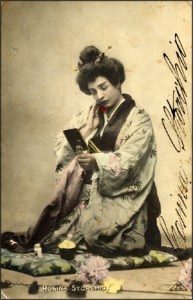
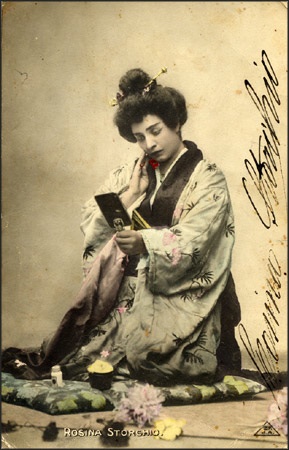
storchio

From this point on, the audience divided into two opposed factions: Puccini’s supporters and those determined to make a mockery of the performance–needless to say, the latter easily constituted the vocal majority. The beautiful Act I duet could not rival the cacophony in the auditorium (the offending passage mentioned earlier is repeated in this piece–this, no doubt, only added fuel to the fire). The Act I curtain fell to a mixture of hissing and scattered applause. The singers and Puccini were called out onto the stage only to receive torrents of derisive laughter.
FROM http://www.columbia.edu/itc/music/NYCO/butterfly/fiasco.html
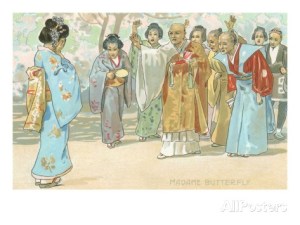
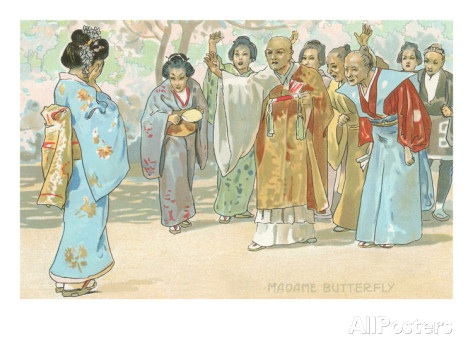
scene

During Act II, the demonstrators redoubled their efforts. Only the letter scene and the flower duet could be heard at all; the remainder of the opera was attended by such disruptive noise that the singers complained of being unable to hear the orchestra. At one point, either owing to a backstage draft or a sudden movement on the soprano’s part, Storchio’s kimono billowed up in front whereupon several cries of “Butterfly is pregnant!” could be heard along with the more offensive “Ah, the little Toscanini!” (this latter affront referred to the highly publicized affair between Storchio and the famous Italian conductor, Arturo Toscanini).
FROM http://www.columbia.edu/itc/music/NYCO/butterfly/fiasco.html
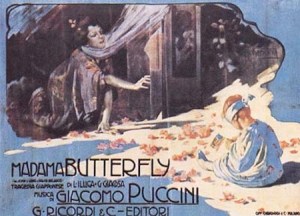
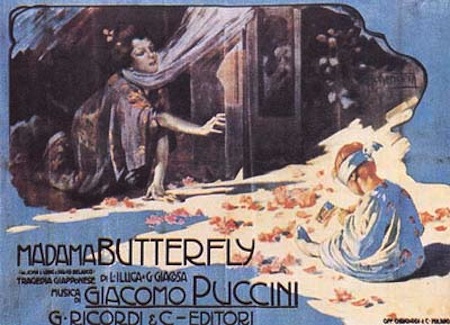
poster

The long Intermezzo (Butterfly’s night vigil) provided another opportunity for buffoonery. In an attempt to outdo Belasco’s intense realism, the opera’s producer placed performers with bird-whistles throughout the opera house to accompany the dawn after Butterfly’s sleepless night. Unwilling to allow such a boon to pass unnoticed, the audience joined in with various animal sounds of their own, reducing the poetic gesture to lunacy. Although accounts differ, the final curtain either fell to “a glacial silence” or howls, laughter and disdain.
FROM http://www.columbia.edu/itc/music/NYCO/butterfly/fiasco.html
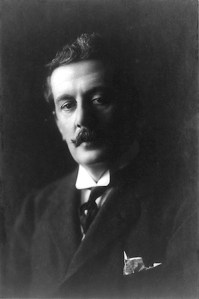
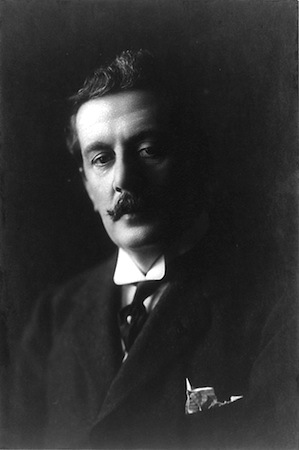
Puccini

Images:
Giovanni Zenatello circa 1905 http://en.wikipedia.org/wiki/File:Giovanni_Zenatello_circa_1910.jpg
Rosina Storchio http://www.historicopera.com/xother/famousfirst1.htm
Scene from Madame Butterfly https://www.gettyimages.com/photos/leopoldo-metlicovitz
Giacomo Puccini http://en.wikipedia.org/wiki/Madama_Butterfly#mediaviewer/File:Puccini6.jpg
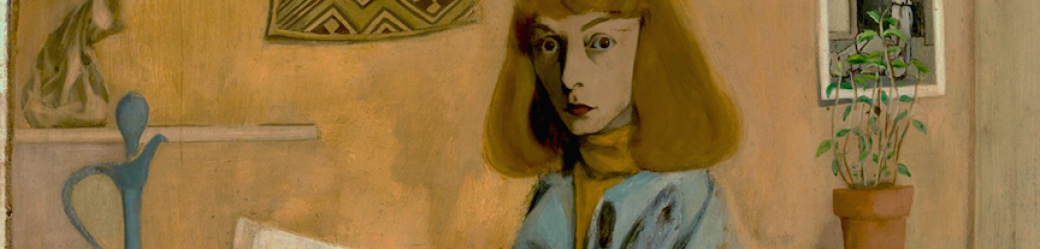
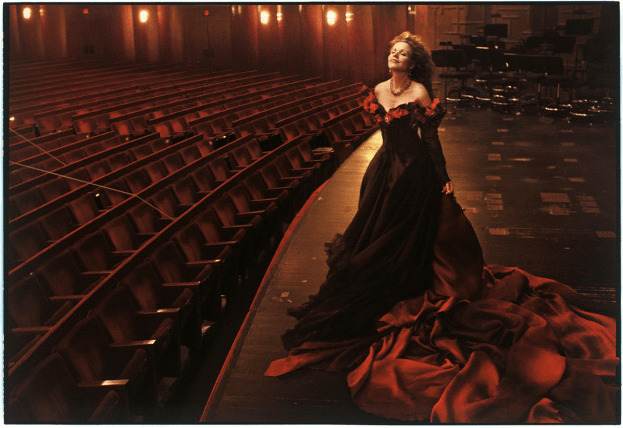
‪Renée Fleming‬: Born February 14, 1959

As a musical statesman, Renée Fleming has been sought after on numerous distinguished occasions, from the 2006 Nobel Peace Prize ceremony to performances in Beijing during the 2008 Olympic Games. On January 18, 2009, was featured on the televised We Are One: The Obama Inaugural Celebration at the Lincoln Memorial concert for President Obama. She has performed for the United States Supreme Court, HRH The Prince of Wales at Buckingham Palace, and, in November 2009, celebrated the 20th anniversary of the Czech Republic’s “Velvet Revolution” at the invitation of Václav Havel. An additional distinction was bestowed in 2008, when breaking a precedent, Ms. Fleming became the first woman in the 125-year history of the Metropolitan Opera to solo headline an opening night gala.
FROM https://reneefleming.com/artistry/

Renée Fleming photographed by Annie Leibovitz, 2008