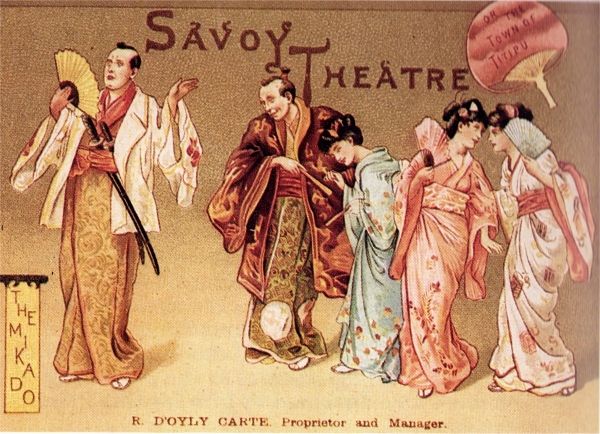
“Yes, as we said to begin with, “The Mikado” is a frank success. It is great nonsense, no doubt; but then it is the very funniest fooling to be seen. And so pretty, too!” ~unsigned review from “The Academy”, March 28 1885 http://www.savoyoperas.org.uk/mikado/mik3.html
“Mr. Gilbert has once more exhibited his facility for seizing upon a subject occupying a considerable share of public attention, and turning it to humorous account. Japanese art is extremely fashionable just at present, and the manners and customs of this strange race may be studied with advantage at Knightsbridge. But it is our home political and social life that is principally caricatured in ‘The Mikado,’ and amid much that is incisive and telling we find obvious reminiscences of earlier productions by the same hand.”
~unsigned review from “The Athenæum”, March 21 1885
http://www.savoyoperas.org.uk/mikado/mik2.html
Category Archives: Miscellanea
The only existing film images of Anne Frank:
Anne Frank and her sister Margot died of typhus
in Bergen-Belsen in March 1945,
seven months after her family was arrested and only weeks before the camp’s liberation by British soldiers.
In this footage, taken from a home movie of a neighbor’s wedding in July of 1941, we see the 12-year-old Anne Frank looking on from a window in her family’s apartment in Amsterdam.
Anne Frank: her life after the diary ended~ https://www.thelocal.de/20170310/anne-frank-beyond-the-diary
Premiered March 11:
March 11, 1867 – Theatre Imperial de l’Opera, France
DON CARLO started out life as a five-act opera that ran for approximately four hours. Based on Don Carlos, Infant von Spanien by Friedrich Spiller, this lengthy piece saw Verdi put the music to a French libretto by Camille du Lode and Joseph Mery. After the opera had been written, it was found to still be too long during the rehearsal period. Since the audience would need to leave before midnight, further cuts were made during this time in order to make sure that the opera finished before this deadline.
FROM http://www.italymagazine.com/featured-story/homage-verdi-don-carlo
March 11, 1851 – La Fenice Opera House, Italy
One of the most acclaimed Verdi operas, RIGOLETTO at one point, was very much a case of “touch and go”. The three-act opera, based on Victor Hugo’s play “Le roi s’amuse”, came under close scrutiny of the Austrian censors. …However, by January 1851, a breakthrough was reached, albeit with a number of amendments to the original work. The original setting of the royal court of France was to be changed either to a duchy of France or Italy, while many of the characters were to be renamed, notably the jester, who went from Triboulet to Rigoletto. With the deadline for the premiere looming, Verdi managed to complete the work by early February, leaving a month to spare.
FROM http://www.italymagazine.com/featured-story/homage-verdi-rigoletto
~Arts Advocacy Day~
Today, over 500 dedicated arts supporters from 44 states will come together in Washington, DC for the 29th annual Arts Advocacy Day: The National Arts Action Summit, the only national event that brings together a broad cross section of America’s cultural and civic organizations. These arts advocates represent a united effort to tell Capitol Hill how important the arts are to our communities, how much arts education means to our children, and how the arts improve our daily lives.
http://www.artsactionfund.org/about/about-us

Here are the top legislative issues affecting the arts. Read about each and then take action to support their positive outcome.
Arts Education Policy and Funding:
Improving Access to Arts Education for All Students
http://www.americansforthearts.org/by-program/reports-and-data/legislation-policy/legislative-issue-center/arts-education-policy-and-funding
Charitable Giving & Tax Reform:
Encouraging Charitable Gifts and Tax Provisions to Support Community Access to the Arts
http://www.americansforthearts.org/by-program/reports-and-data/legislation-policy/legislative-issue-center/charitable-giving-tax-reform
National Endowment for the Arts:
Promoting Creativity and Public Access to the Arts
http://www.americansforthearts.org/by-program/reports-and-data/legislation-policy/legislative-issue-center/national-endowment-for-the-arts-funding-for-arts-agencies
Visit the Legislative Issue Center to learn about other legislation impacting the arts
http://www.americansforthearts.org/by-program/reports-and-data/legislation-policy/legislative-issue-center
.
March 7, 1965: Selma to Montgomery Marches begin
Selma through the camera lens:

James Barker
These Rare Photos of the Selma March Place You in the Thick of History. James Barker, a photographer from Alaska, shares his memories of documenting the famed event:
http://www.smithsonianmag.com/history/rare-photos-selma-march-thick-history-180953874/?no-ist
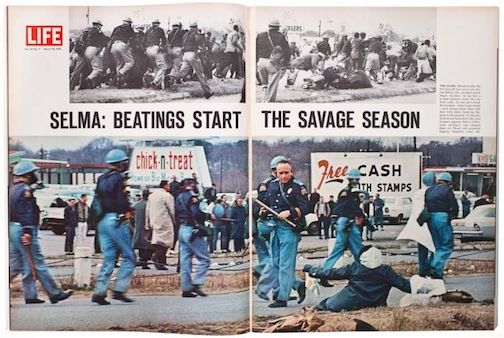
Charles Moore, Flip Schulke and Frank Dandridge
How LIFE Magazine Covered the Selma Marches in 1965. Fifty years after nonviolent protesters clashed with Alabama state troopers in Selma:
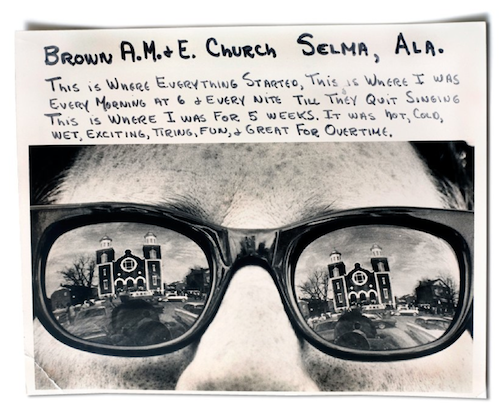
Spider Martin
Photographer Helped Expose Brutality Of Selma’s ‘Bloody Sunday’:
http://www.npr.org/blogs/codeswitch/2015/03/06/390943835/photographer-helped-expose-brutality-of-selmas-bloody-sunday
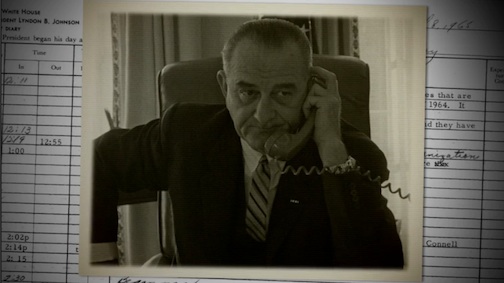
The Atlantic: “What LBJ Really Said About Selma” [click photo]:
March 6, 1998: “The Big Lebowski” is released
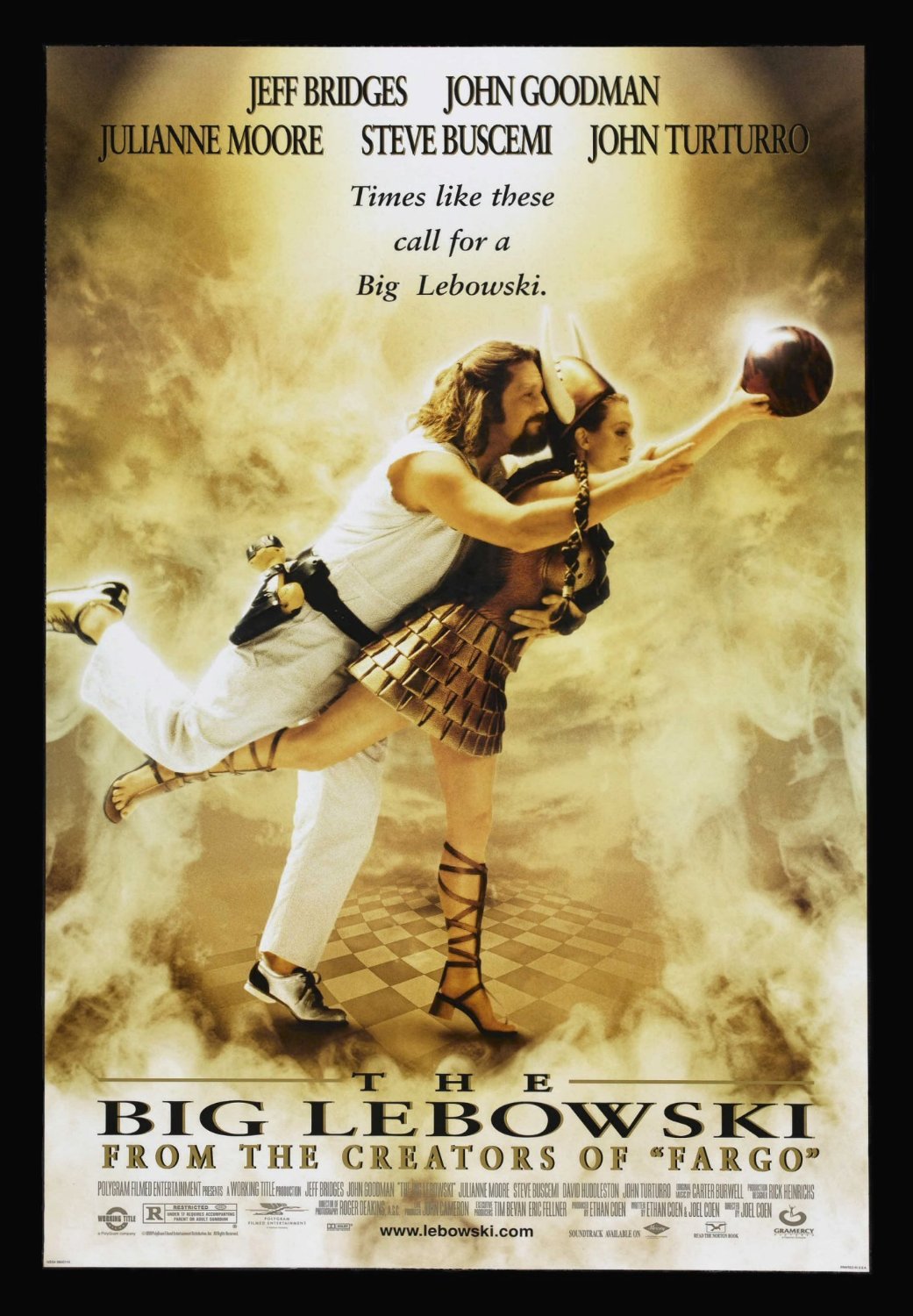 The Big Lebowski, struggled upon release with both audiences and critics, grossing only $17 million at the box office. But over the next decade, it became an object of adoration, inspiring a festival, a religion, and an enormous cult following.
http://www.vulture.com/2016/02/breaking-down-the-coens-box-office-history.html
The best single way to explain its unique appeal is that The Big Lebowski is the only film I know of that is more enjoyable upon second or third, or even fifth or sixth, viewing than the first.
http://www.theatlantic.com/entertainment/archive/2014/09/30-years-of-coens-the-big-lebowski/380220/
http://player.pbs.org/viralplayer/1739091116
February 29, 1940: Hattie McDaniel wins an Oscar
The 12th Academy Awards ceremony was held on February 29, 1940, at the Ambassador Hotel in Los Angeles, with Bob Hope hosting. Gone With The Wind was nominated for 13 awards and won for Outstanding Production, Directing (Victor Fleming), Actress (Vivien Leigh), Art Direction (Lyle Wheeler), Cinematography
(Color) (Ernest Haller and Ray Rennahan), and Film Editing (Hal Kern and James Newcom). Sidney Howard posthumously received the Writing (Screenplay) award, and production designer William Cameron Menzies received a special award for “outstanding use of color for the enhancement of dramatic mood in the production of Gone With The Wind.” In the Actress in Supporting Role category, Hattie McDaniel made history becoming the first African American to receive an Academy Award.
https://sites.utexas.edu/ransomcentermagazine/2016/02/26/hattie-mcdaniels-landmark-academy-awards-win/
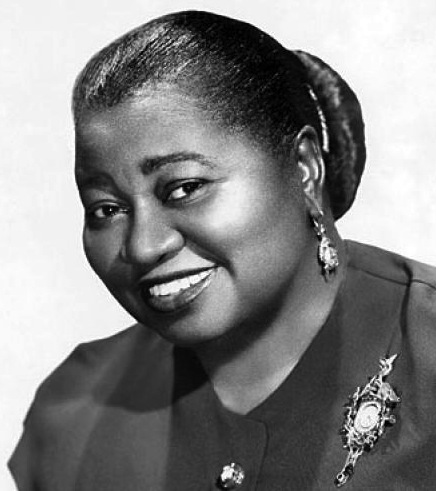
Oscar’s First Black Winner Accepted Her Honor in a Segregated ‘No Blacks’ Hotel in L.A.~
http://www.hollywoodreporter.com/features/oscars-first-black-winner-accepted-774335
The Curious Case Of A Missing Academy Award~
http://www.npr.org/templates/story/story.php?storyId=100937570
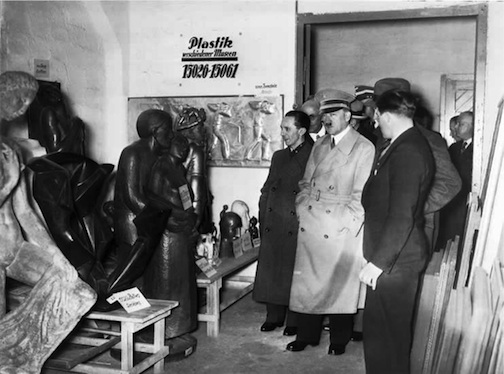
“The art Hitler hated.”
I have observed among the pictures submitted here quite a few paintings which make one actually come to the conclusion that the eye shows things differently to certain human beings than the way they really are, that is, that there really are men who see the present population of our nation only as rotten cretins; who, on principle, see meadows blue, skies green, clouds sulphur yellow, and so on—or, as they say, experience them as such. I do not want to enter into an argument here about the question of whether the persons concerned really do or do not see or feel in such a way, but in the name of the German people, I want to forbid these pitiful misfortunates who quite obviously suffer from an eye disease, to try vehemently to foist these products of their misinterpretation upon the age we live in, or even to wish to present them as “Art.” ~Adolph Hitler, 1937
http://laphamsquarterly.org/arts-letters/artifactitious-stammerings
 The Misty Miss Christy