Greta Deses’s Dada (1967) profiles the Dada movement with live performances, film excerpts, interviews and a reenactment of a performance at the groundbreaking Cabaret Voltaire.
Hugo Ball, Tristan Tzara and Marcel Janco met on February 5, 1916 in Zurich with the ambitious plan of instigating nothing less than an artistic revolution. Their Cabaret Voltaire, which they founded that evening, was a combination of a pub, theater, gallery, and club. Throughout that year, they organized unpredictable events combining chaotic performances, recitations and music. FROM http://www.dw.com/en/how-dadaism-revolutionized-art-100-years-ago/a-19016756
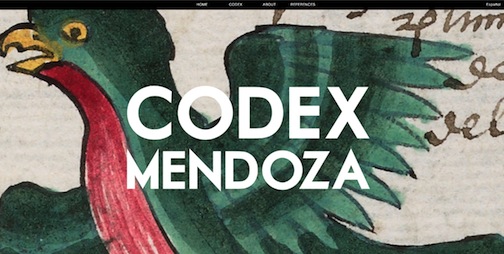
Thanks to the always interesting Hyperallergic website, today I learned about a manuscript known as the Codex Mendoza which has been digitized and put online in high resolution. Totally unfamiliar with Mexican codices, I was grateful to see that the http://codice.manuvo.com site has a succinct explanation of what they are and what their significance is.
Mexican codices are pictorial and iconic documents that pre-Hispanic cultures (primarily the Mexicas, Mayas, and Mixtecs) used to preserve and transmit their knowledge. They were produced on different types of surfaces, mainly on deerskin or bark paper. Gordon Brotherston (1992) describes the essential characteristics of codices as non-phonetic, although some might record concept-sounds, such as those produced by the Mayas. They are highly flexible in terms of presentation, for they can be structured as a chronicle told through historical events, a map, or a tribute list. This holistic integration of writing, images, and mathematics, clearly breaks with Western notions of writing.
One of the principal characteristics of codices, according to Brotherston, is that the knowledge contained in most of them is not actually recorded in a language that represents a language, as in the case of modern languages. Codices are part of a different communication system that also invoked oral tradition and other semantic elements no longer used today. They are composed of images and icons that work in tandem with the memory, voice, and knowledge of individuals able to read them:
If you’re reading this on a computer, you owe a debt to Susan Kare, the pioneering designer behind the original Macintosh’s icons and the first digital typefaces like Chicago, which proved that computers could have great fonts. The 60-year-old is a legend in the digital design field, but you’d never guess it from talking to her. In person, Kare is breezy and down-to-earth, just as happy to chat about how much she likes Lego, or which celebrity gossip blogs she reads, as she is about her early days at Apple. After she chatted with us about her recreation of Apple’s original Pirates of Silicon Valley flag, Kare shared with us some words of wisdom for young designers hoping to make as big of an impact as she did: fake it until you make it, and remember that what makes design great never changes.
A version of this article appeared in the February 2015 issue of Fast Company magazine.
Hanging an art exhibition can involve a number of decisions, such as what height to hang paintings on the wall or how to light the pieces, but one thing which you’d imagine wouldn’t be subjective is what orientation to use. It’s probably best to hang a painting right side up, yes? However, accidents do happen.
Another orientation error, this time sideways rather than upside down, appears to have been made by the Tate Modern in London. The Tate has hung two paintings from Rothko’s Black on Maroon series either vertically or horizontally at various times. Assuming that the artist’s signatures indicate which orientation he preferred, then horizontal is the correct orientation. http://www.telegraph.co.uk/news/uknews/3411910/Rothko-art-hung-wrong-way-round-in-exhibition.html
There are also stories of The Lawrence Tree by Georgia O’Keeffe being hung upside down in a Connecticut gallery, and there are comments she made in letters which confirm the painting was hanging incorrectly for years. A search of Google images indicates that the confusion continues to this day.
Van Gogh’s Grass and Butterflies was evidently hung wrong-side-up in 1965 by the National Gallery in London. Another story I see mentioned frequently is that in 1936 a seascape by Spencer Nichols was hung upside down in a New Jersey museum. These anecdotes appear fairly often on the internet, but never with any citations, so I can’t be sure if they actually happened or are merely the visual arts versions of urban history.
Perhaps a more scientific approach could enlighten us as to the logistics of determining correct orientation.
Abstraction allows the artist to focus on composition and medium rather than on subject matter. In the process of creating a modern artwork, an artist may make an aesthetic decision regarding the orientation at which the work should be hung, based on their intended message. The correct orientation is often specified on the back of the canvas. However, this intended orientation is not always obvious to others viewing the work, especially if there is no recognisable content at all, which raises questions about aesthetics. Is there sufficient information in a modern artwork for a naïve viewer’s judgement to align with the correct orientation? Is the impact or aesthetic value of a work diminished by viewing at an incorrect orientation? http://www.ncbi.nlm.nih.gov/pmc/articles/PMC3485815/
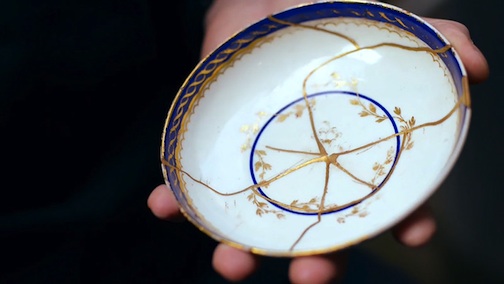
I am so intrigued by kintsugi. I think it’s a wonderful idea to take a broken piece of ceramic and rather than throw it away, or try to mend it as invisibly as possible, to instead embrace the pieces and create something almost new from the shards.
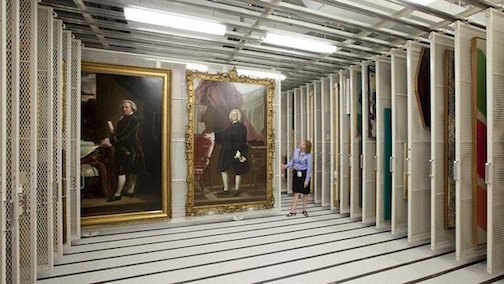
“In major museums around the world, some truly great works of art are hidden away from public view. What are they – and why can’t we see them? Kimberly Bradley finds out”
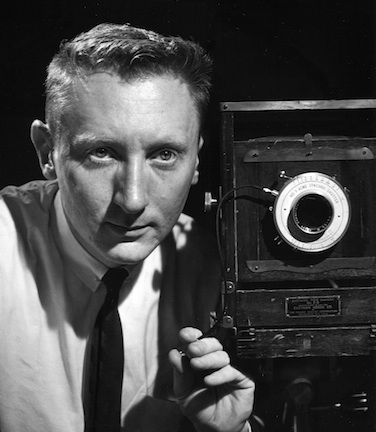
“The Baltimore Sun has a rich history of great photographers and one of my personal favorites is Richard Stacks. His images are part art and part journalism. He is a master of light and composition and is able to maximize both qualities in his images.”

 The Misty Miss Christy