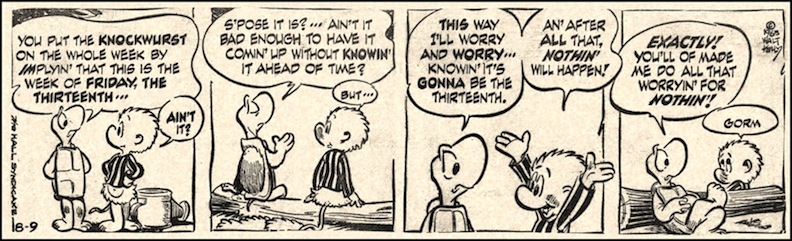
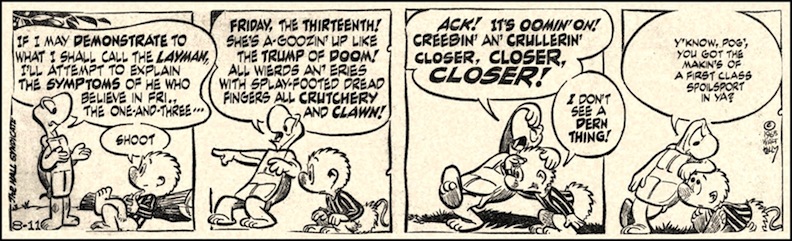
http://booksteveslibrary.blogspot.com/2015/02/friday-13-in-okefenokee.html
By James Estrin Sep. 7, 2016
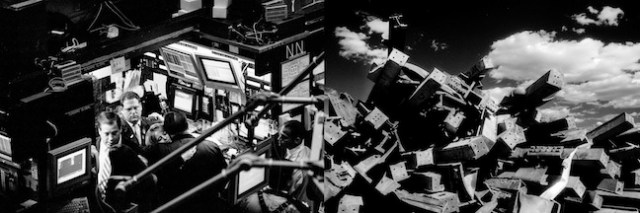
Nina Berman photographed the aftermath of the attacks on the World Trade Center on Sept. 11, 2001. Later she put some of those images together in diptychs and triptychs.
Ms. Berman lives in New York and is a member of the photographer-owned photo agency Noor. She spoke with James Estrin about her post-Sept. 11 work as well as her projects “Purple Hearts — Back From Iraq” (Trolley, 2004) and “Homeland” (Trolley, 2008). Their conversation has been edited for brevity and clarity.
Read more: Continue reading
More black cats here:
https://schristywolfe.com/2018/08/17/august-17-black-cat-appreciation-day-2018/

In pictures: Nagasaki bombing~ http://www.bbc.com/news/in-pictures-33769566
What Nagasaki looked like before and after the bomb~ https://www.washingtonpost.com/news/worldviews/wp/2015/08/09/what-nagasaki-looked-like-before-and-after-the-bomb/?tid=pm_world_pop_b

Nagasaki Official Visitor Guide: Peace Park~ http://visit-nagasaki.com/spots/detail/209
The Art of Peace, Nagasaki~ http://nuclearfutures.org/the-art-of-peace-nagasaki/

Masao Ohki, Symphony No. 5 “Hiroshima”
Composed in 1953 (eight years after the city’s bombing, and coinciding with the end of the American occupation of Japan), its six inner movements were inspired by six paintings by Iri and Toshi Maruki (the score’s original title was The Hiroshima Panels ), framed by a Prelude and Elegy. FROM https://arkivmusic.com/

MARUKI GALLERY FOR THE HIROSHIMA PANELS
Paintings bring Japan’s hellish aftermath into vivid focus
Hiroshima Peace Memorial Museum WesSite~ http://hpmmuseum.jp/?lang=eng

The modern world was born on a printing press. Once essential to communication, the 500-year-old process is now in danger of being lost as its caretakers age. From self-proclaimed basement hoarders to the famed Hatch Show Print, Pressing On: The Letterpress Film explores the question: why has letterpress survived in a digital age?
Worlds of each character emerge as unusual narratives—joyful, mournful, reflective and visionary—are punctuated with on-screen visual poetry, every shot meticulously composed. Captivating personalities blend with wood, metal and type as young printers strive to save this historic process in a film created for the designer, type nerd, historian and collector in us all.
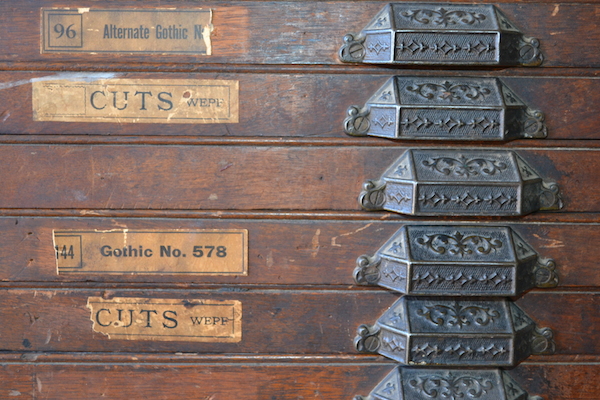
via Pressing On: The Letterpress Film
https://www.nasa.gov/mission_pages/apollo/apollo11.html
Apollo 11 Image Gallery~ http://history.nasa.gov/ap11ann/kippsphotos/apollo.html
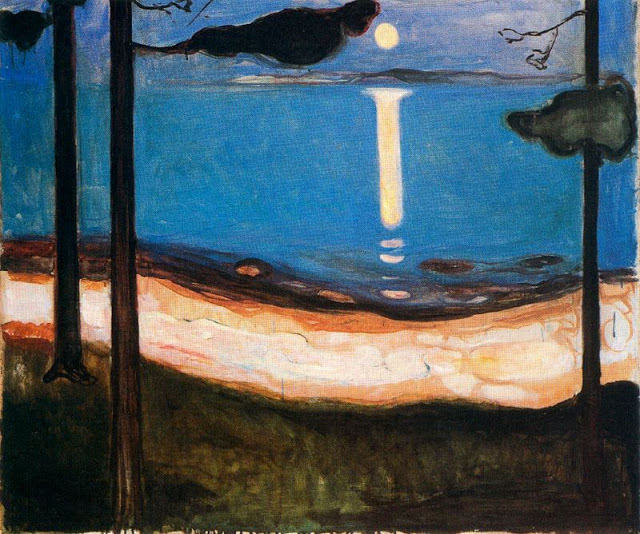 Moon Light by Edvard Munch
The Moon in paintings and art~ http://www.popastro.com/moonwatch/moon_guide/art3.php
Moon in Painting~ http://www.artistsandart.org/2009/07/moon-in-painting.html
Moon Paintings of China and Japan~ https://owlcation.com/humanities/moon-paintings
http://www.film-foundation.org/world-cinema
Directed by Emilio Gómez Muriel, Fred Zinnemann
Music by Silvestre Revueltas
Cinematography by Paul Strand
Produced under trying circumstances and for very little money, Redes nevertheless became a classic Mexican film, launched several cinematic careers, and spearheaded a new transnational film movement in the process.
When shooting ended in November 1934, both Strand and Zinnemann returned to the States, leaving Gomez Muriel and Gunther von Fritsch, a boyhood friend of Zinnemann’s who had done some editing in Hollywood, to edit Redes. They faced problems at this stage too. Because Strand’s Akeley was a silent, hand-cranking camera, all the sound had to be added in postproduction, complicating the syncing and delaying the editing. Finally, Redes was released theatrically in 1936, accompanied by an impressive score by Silvestre Revueltas. Though David Alfaro Siqueiros would later call it “a work of dynamic realism, emotional intensity, and social outlook . . . a masterpiece,” it was a box-office disappointment in Mexico.
Its collectivist, pro-union story about the consciousness- raising of exploited fishermen resonated with the left-leaning politics in international artistic circles in the 1930s. As such, it is a fascinating document from an era when artists championed the rights of workers everywhere. For Strand, in particular, it was the realization of the kind of socially aware art he was searching for. (He would go on to be one of the cinematographers on Pare Lorentz’s 1936 Dust Bowl documentary The Plow That Broke the Plains and was director of photography on Native Land, a valiant, semidocumentary defense of unionism that he codirected, cowrote, and coedited in 1942.)
But Redes is cinematically noteworthy as well. As I’ve said, both Strand’s and
Zinnemann’s styles were compellingly employed. Strand’s primary goal was to honor the fishermen and villagers, and his careful compositions centering them in the frame convey that. The funeral of Miro’s daughter, near the beginning of the film, is a good example of his deferential style perfectly capturing downbeat emotional content. That scene’s matching bookend— the fishermen’s impromptu procession carrying Miro’s body to the boat—is another. It culminates in one of Strand’s most memorable compositions: an impressive deep-focus shot that stretches from a cactus plant in the foreground to the dramatically placed low horizon line in the far distance.
https://www.criterion.com/current/posts/2989-redes-el-cine-mexicano

 The Misty Miss Christy