Hazel Scott by James Van Der Zee
 1933 / Silver print / 13 1/2″x10 1/2″ / Private collection
Who was Hazel Scott?
https://www.classicfm.com/discover-music/instruments/piano/hazel-scott-jazz-entertainer-fought-racial-segregation/
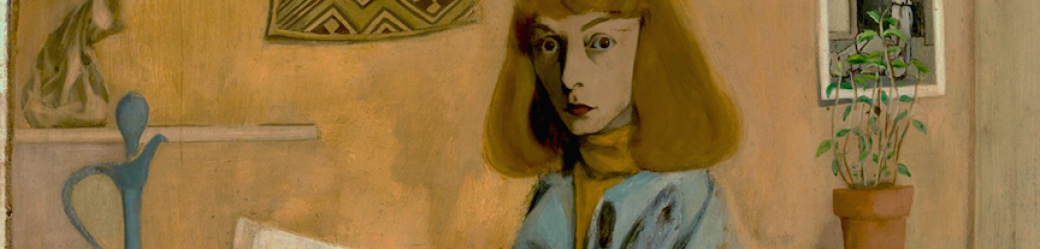
1933 / Silver print / 13 1/2″x10 1/2″ / Private collection
Who was Hazel Scott?
https://www.classicfm.com/discover-music/instruments/piano/hazel-scott-jazz-entertainer-fought-racial-segregation/
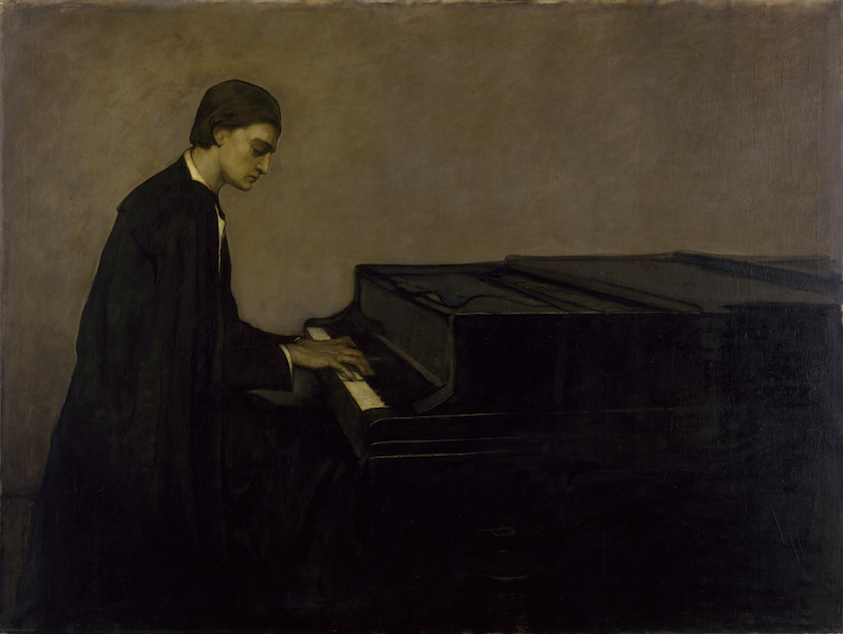 1920 / Oil on canvas / 55 7⁄8″x74 1⁄4″ / Smithsonian American Art Museum, DC
“For artist Wassily Kandinsky, the [‘Pictures at an Exhibition‘] cycle served as a basis for his first and only theater project, which was premiered in the German city of Dessau in 1928. Wassily Kandinsky was out to create a synthetic ‘Gesamtkustwerk‘. For him, that meant that sounds took on hues that listeners could see before their eyes as they listened to the music. It was intended to be a Gesamtkustwerk of sound, color and motion.”
~ https://www.dw.com/en/kandinsky-and-mussorgsky-what-happens-when-artists-inspire-each-other/a-19087823
 1928 / Graphite, India ink, and watercolor on paper
11 4/5″x15 3/4″ / Centre Pompidou, Paris, France
Pictures at an Exhibition (original piano version) by Modest Mussorgsky
“One of Modest Mussorgsky’s best friends was Viktor Hartmann, an artist who tragically died of an aneurism in 1873 at the age of 39. Two weeks after Hartmann’s death, his friends and supporters organized a major exhibition of his works at the Imperial Academy of Arts in St. Petersburg. About a year later, Mussorgsky composed ‘Pictures at an Exhibition‘. Completed in only twenty days, ‘Pictures’ was originally a set of short pieces for piano in which Mussorgsky depicted himself walking through the exhibition and contemplating Hartmann’s works.”
~ https://houstonsymphony.org/mussorgsky-pictures/
 “In Russian folklore, Baba Yaga is a witch who flies through the woods on a mortar and pestle, searching for children to eat. She lives in a hut on hen’s legs that stalks the land. This movement was inspired by Hartmann’s design for an ornate clock in the shape of Baba Yaga’s hut.” [Watercolor. N/D]
~ https://houstonsymphony.org/mussorgsky-pictures/

 1861 / Oil on canvas / 40″x24 3/4″ / Tate Britain, London, UK
The title was suggested by a visitor to the artist’s studio, Mrs Ralph Benson,
and evokes Felix Mendelssohn‘s famous “Songs without Words“,
created for the piano between 1829 and 1845. ~ Tate Britain
In 1852 [Schwind] “composed” A Symphony in oils, and provided the commentary on it himself:
“The whole should be imagined as the Beethoven wall of a music room…
and it is based on a composition by Beethoven, the Fantasia in C for Piano, Orchestra and Choir…”
~ https://www.wga.hu/html_m/s/schwind/symphony.html
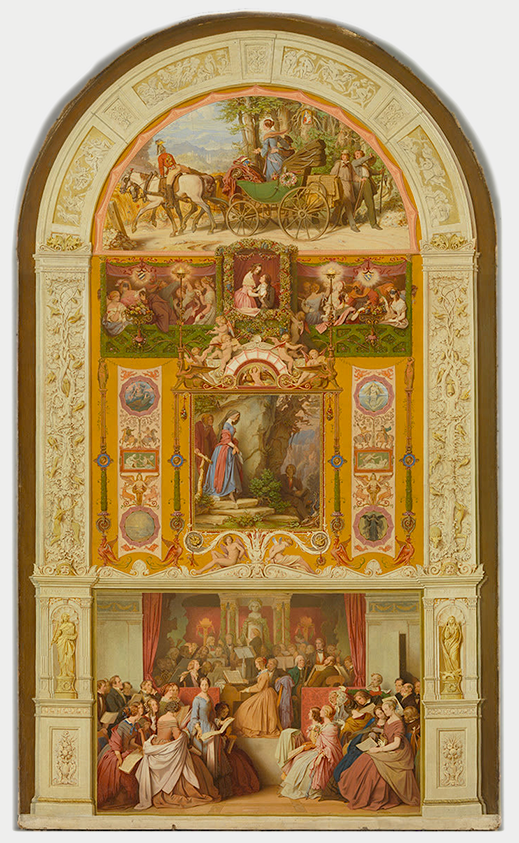 1852 / Oil on canvas / 66 1/2″x39 2/5″ / Neue Pinakothek, Munich, Germany
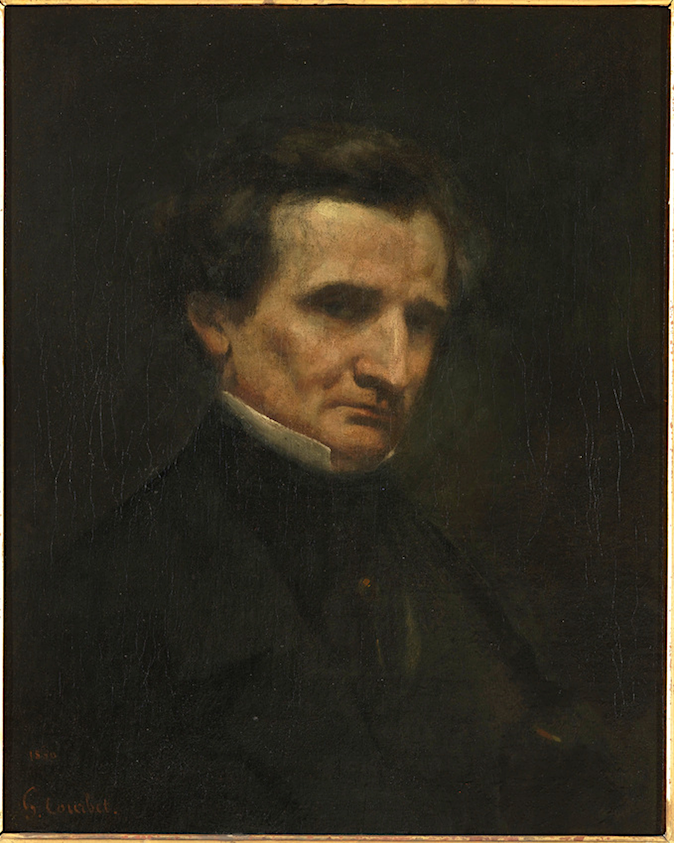
1850 / Oil on canvas / 24″x18 4/5″ / Musée d’Orsay, Paris, France
Hunnenschlacht (The Battle of the Huns), S.105 is a symphonic poem by Franz Liszt, written in 1857
after a painting of the same name by Wilhelm von Kaulbach. ~Wikipedia
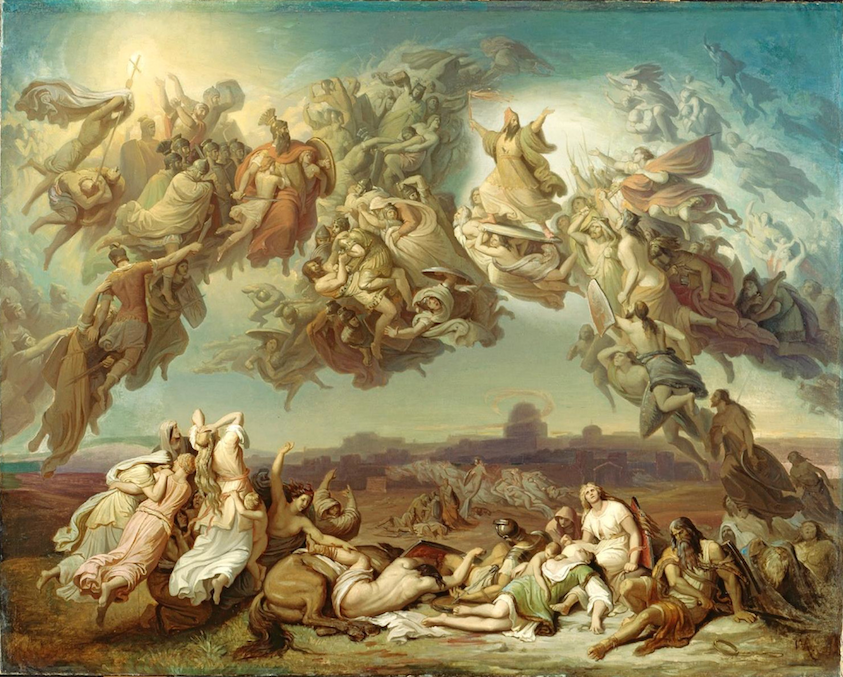 c.1837 / Oil on canvas / 54 1/10″x67 9/19″ / Staatsgalerie Stuttgart, Germany
 1840 / Oil on wood / 46 4/6″x65 3/4″ / Alte Nationalgalerie, Berlin, Germany
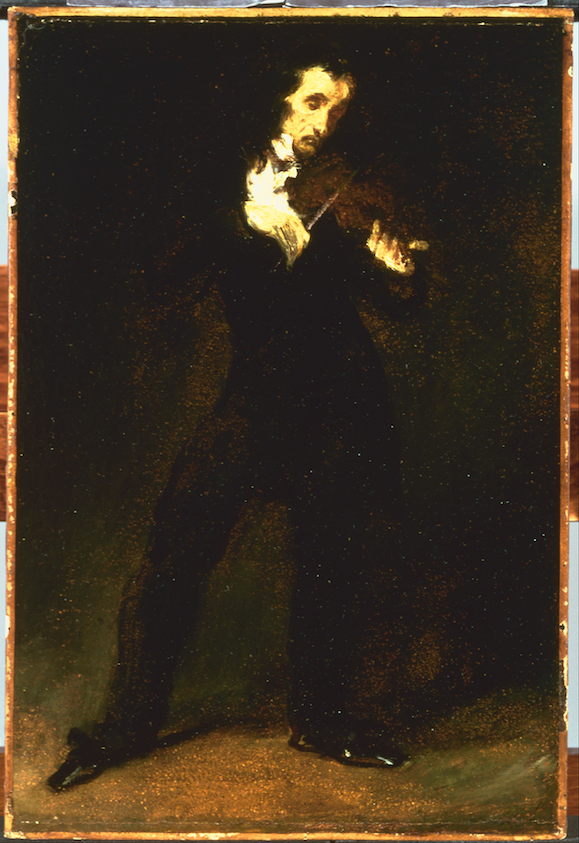 1831 / Oil on cardboard on wood panel / 17 5/8″x11 7/8″ / The Phillips Collection
 The Misty Miss Christy