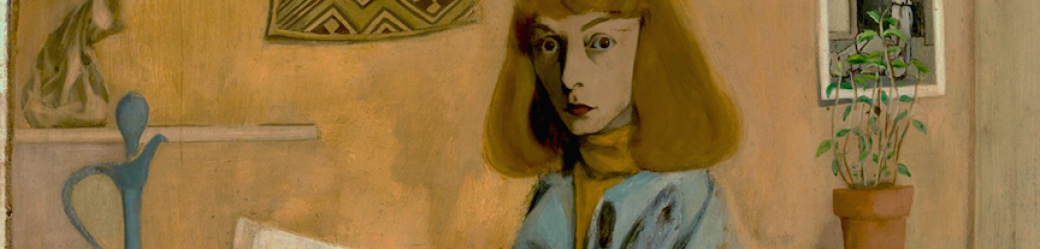
Miller led one of the most popular and best-remembered dance bands of the swing era. In his lifetime he was seen as an intense, ambitious perfectionist, and his success was built on the precise playing of carefully crafted arrangements, rather than propulsive swing or fine jazz solo improvisation (his only important jazz soloist was Bobby Hackett). He was particularly noted for the device of doubling a melody on saxophone with a clarinet an octave higher. His arrangements were seamless and rich. Paradoxically, however, although he had many hits with sentimental ballads performed by such singers as Ray Eberle and Marion Hutton, it was his swinging riff tunes, for example In the Mood and Tuxedo Junction, which became most famous. In 1943, he published Glenn Miller’s Method for Orchestral Arranging.
http://www.pbs.org/jazz/biography/artist_id_miller_glen.htm
Tag Archives: Musicians’ Birthdays
Frédéric Chopin: Born March 1, 1810 (?)
Fryderyk Franciszek Chopin…and his family held his date of birth to be 1 March 1810, yet the certificate of baptism signed in the parish church of Brochów is dated 22 February. That discrepancy has still not been entirely resolved, although today it is the date celebrated by Chopin and his family that is more often used. http://en.chopin.nifc.pl/chopin/life/biography/page/1

Harry Belafonte: Born on March 1, 1927
Born March 1, 1927 in poverty-stricken Harlem to first-generation Jamaican immigrants, Belafonte emigrated with his mother back to Jamaica at eight years old, and returned to New York at age thirteen. Midway through high school, he dropped out and enlisted in the Navy. Upon discharge, the young man studied and performed at the Actors Studio (alongside such legends as Tony Curtis and Marlon Brando), Erwin Piscator’s Dramatic Workshop at the New School for Social Research, and The American Negro Theater. A singing role in a theatrical piece led to a string of cabaret engagements, and before long, Belafonte’s success enabled him to secure funding to open his own nightclub. His recording career officially began at the age of 22, in 1949, when he presented himself as a pop singer along the lines of Tony Bennett or Frank Sinatra, but in time he found a more unique niche by delving headfirst into the Library of Congress’s archive of folk song recordings and studying West Indian music. What emerged was a highly unique (and unprecedented) blend of pop, jazz and traditional Caribbean rhythms.
https://www.nytimes.com/search?query=Harry+Belafonte
Harry Belafonte, a supporter of Martin Luther King, Jr., and the civil rights movement, used his celebrity as a beloved entertainer to garner funding for the movement. In her autobiography, Coretta Scott King said of Belafonte, “whenever we got into trouble or when tragedy struck, Harry has always come to our aid, his generous heart wide open” (King, 144-145).
https://kinginstitute.stanford.edu/encyclopedia/belafonte-harold-george-jr
Marian Anderson: Born February 27, 1897
Contralto Marian Anderson was born in Philadelphia, Pennsylvania. A variety of sources suggested February 17, 1902, as her birthdate; however, Anderson’s birth certificate, released by her family after her death, listed the date as February 27, 1897. Her father was an ice and coal salesman, and her mother was a former teacher.
Although Anderson had early showed an interest in the violin, she eventually focused on singing. The Black community, recognizing her talent, gave her financial and moral support. She also gained the notice of tenor Roland Hayes, who provided guidance in her developing career.
FROM http://www.afrovoices.com/anderson.html
For more images of Marian Anderson, see:
https://www.portrait.gov.au/magazines/64/the-right-note
https://blogs.loc.gov/picturethis/2020/04/marian-anderson-in-performance-a-visual-and-musical-story/
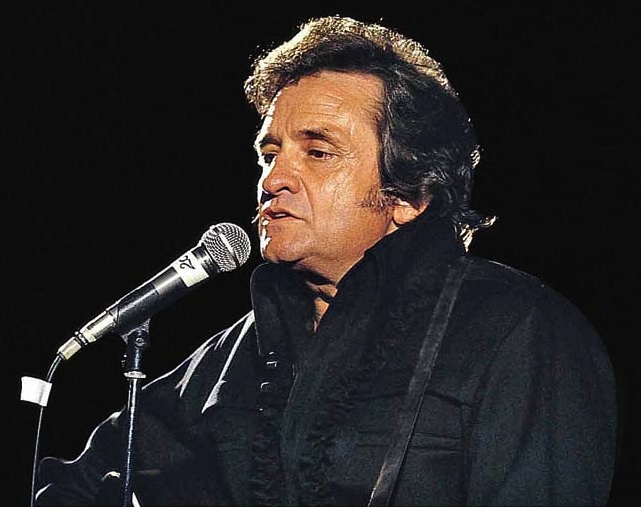
Johnny Cash: Born February 26, 1932
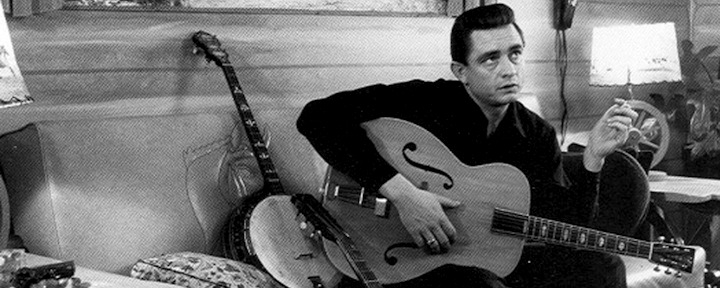
Johnny Cash was a towering figure in 20th century American music, a minimalist with a booming Old Testament baritone who could wrench an abundance of power from stark settings. At first Cash was backed by guitar and bass; in the end it was simply guitar. But when a voice can tell a story with as much resonance as Cash’s could, not much else is needed.
Cash’s songs – from his early gospel recordings and the resonant outlaw-country of Fifties classics like “Folsom Prison Blues” to late efforts like his unlikely, gut-wrenching cover of Nine Inch Nails’ “Hurt” – influenced not only his fellow country musicians, but also rockers from Bono to Bob Dylan. By turns those songs were laden with pathos, whimsy, regret, hope, lust, and fury; they always cut to the heart of its subject matter, whether it be God, love or the plight of prisoners and Native Americans. Cash led a tumultuous life, battling drug addiction, chaffing against orthodoxy, and doing things his own way. But by the end The Man in Black became an icon, a man who earns almost universal respect among music fans.
FROM http://www.rollingstone.com/music/artists/johnny-cash/biography


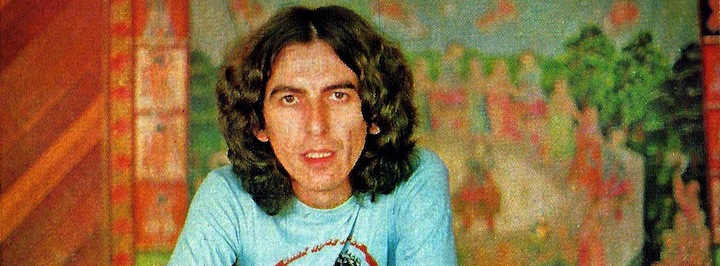
George Harrison: Born on February 25, 1943
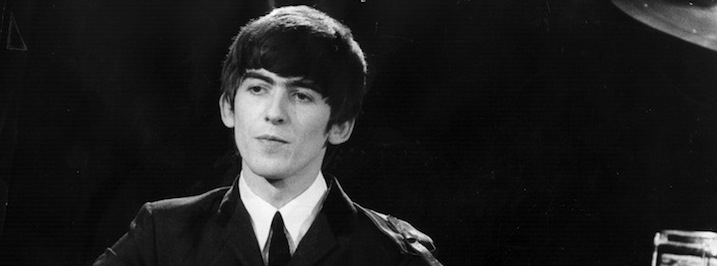
As a songwriter, Harrison was continually out-gunned by Lennon-McCartney. The intense trio of songs he contributed to Revolver — “Taxman,” “I Want to Tell You,” and “Love You To” — would be his most significant contribution to a single Beatles album. He had other classics to his credit, including “Here Comes the Sun” and “Something,” his first Beatles A-side, a track which would top the charts in America. (Both came off 1969’s Abbey Road) But Harrison also funneled his creativity into the guitar, a suitably introspective pursuit. From his raw, early rock-and-roll influences he extrapolated a wide-ranging and poetic style. In the late sixties, he helped introduce the slide guitar to prominence; he also popularized the 12-string Rickenbacker guitar and its ultra-distinctive sound on 1964’s A Hard Day’s Night.
FROM https://www.rollingstone.com/results/#?q=george%20harrison


Enrico Caruso: Born February 25, 1873
‘The Great Caruso’ or ‘King of Tenors’ was born in Naples in 1873. He was his parents’ 18th child and the first to survive infancy. Music was his escape from the wretched reality that surrounded him. He sang in Neapolitan cafes and restaurants. By 1895 he was singing leading roles at the Opera House in Naples. From there he went to the major Italian opera houses and then became an international star. ‘Who has sent you to me? God?’ exclaimed Puccini on first hearing him sing.
FROM http://www.vam.ac.uk/content/articles/e/enrico-caruso/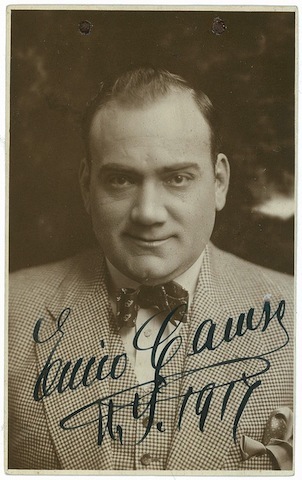
Below: Enrico Caruso drawing caricature sketches in booth at charity fair in Southampton, L.I.~
https://www.loc.gov/item/2005680287/
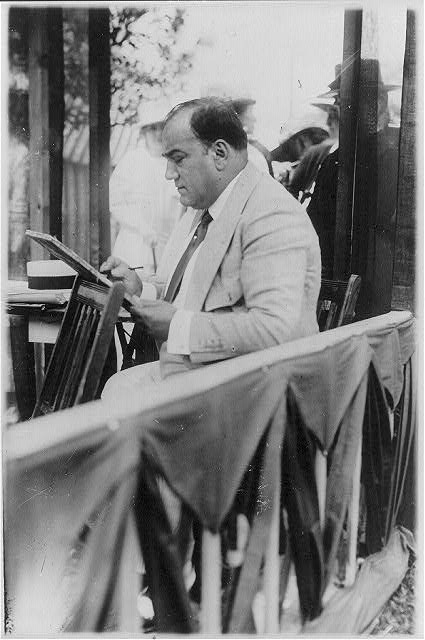
Caruso was a compulsive caricaturist who made spontaneous and witty sketches of colleagues and strangers wherever he went. His doodles often captured a candid likeness of the person, but they were never cruel.
Although he was proud of his sketches, he turned down offers to draw professionally. However, he did regularly contribute to an Italian-American newspaper called La Follia di New York, from which a book of drawings was eventually produced. Nowadays his cartoons are extremely collectable. One firm even reproduced one of his self caricatures as a powder compact.
FROM http://www.vam.ac.uk/content/articles/e/enrico-caruso/
Drawings by Enrico Caruso~
https://commons.wikimedia.org/wiki/Category:Drawings_by_Enrico_Caruso
February 25~
Enrico Caruso (1873-1921)
https://schristywolfe.com/2016/02/25/enrico-caruso-born-february-25-1873-2/
George Harrison (1943-2001)
https://schristywolfe.com/2015/02/25/769/
Renata Scotto: Born February 24, 1934
[Renata Scotto] began vocal studies when she was 14, and moved to Milan when she was 16. In 1952, when she was just 19, she made her debut as Violetta (La traviata) at the Teatro Nuovo, followed by her La Scala debut as Walter in La Wally. However, only a few years later she had a vocal crisis, losing most of her upper range; she now credits her recovery to Alfredo Kraus (himself renowned for a solid technique and vocal longevity), who introducing her to his teacher, Mercedes Llopart. After completely restudying her technique, she re-began her career as a coloratura, making her London debut at the Stoll Theater as Adina in L’elisir d’amore. She returned to La Scala, and in 1957, replaced Maria Callas (whom she had greatly admired) as Amina in La Sonnambula.
– See more at:
http://www.allmusic.com/artist/renata-scotto-mn0000681028/biography
http://musicalworld.com/artists/renata-scotto/biography.html
Men in Wigs
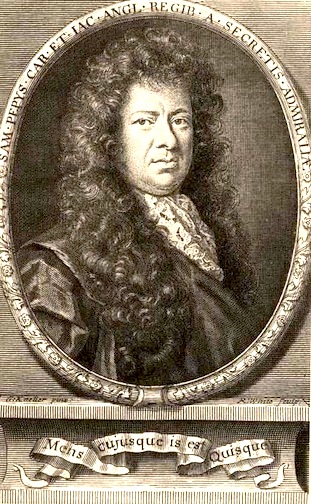
This morning come two of Captain Cooke’s boys, whose voices are broke, and are gone from the Chapel, but have extraordinary skill; and they and my boy, with his broken voice, did sing three parts; their names were Blaewl and Loggings; but, notwithstanding their skill, yet to hear them sing with their broken voices, which they could not command to keep in tune, would make a man mad–so bad it was.
The quote above is Samuel Pepys (born February 23, 1633) referring to John Blow (born February 23, 1649). Samuel Pepys was a member of Parliament who is now most famous for his private diary, kept from 1660 until 1669.
Samuel Pepys (1633 – 1703)
http://www.bbc.co.uk/history/historic_figures/pepys_samuel.shtml
The Diary of Samuel Pepys: http://www.gutenberg.org/files/4200/4200-h/4200-h.htm
 John Blow was an English Baroque composer and organist whose opera Venus & Adonis is considered the earliest surviving British opera and which is believed to have influenced Henry Purcell’s later opera Dido and Aeneas.
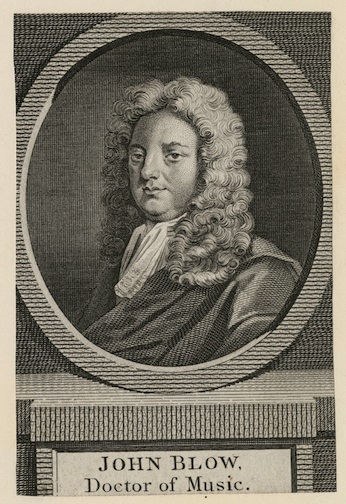
John Blow (1649 – 1708)
https://en.wikipedia.org/wiki/John_Blow
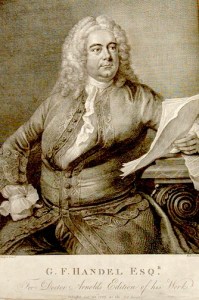 After Purcell, opera in England languished until the arrival of George Frideric Handel (born February 23, 1685) who, however, wrote most of his operas in Italian. Acis and Galatea is Handel’s only work for the theatre that is set to an English libretto.
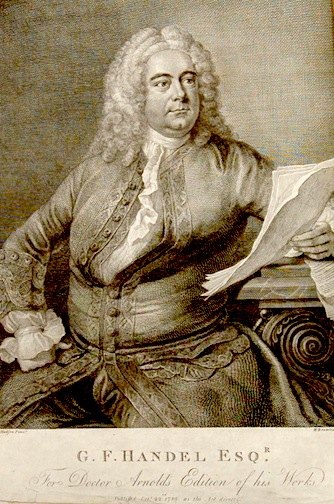
George Frideric Handel (1685 – 1759)
https://en.wikipedia.org/wiki/George_Frideric_Handel
Of course, most of us know Handel for his English-language oratorio Messiah and for his collection of short pieces for small orchestra known as the Water Music.
 The Misty Miss Christy