Ella Fitzgerald by Al Hirschfeld, 1993. Ink on board. Melvin R. Seiden Collection
of Drawings by Al Hirschfeld, Harvard Theatre Collection, Houghton Library, Harvard University
In mid 1936, Ella made her first recording. “Love and Kisses” was released under the Decca label, with moderate success. By this time she was performing with Chick’s band at the prestigious Harlem’s Savoy Ballroom, often referred to as “The World’s Most Famous Ballroom.”
Shortly afterward, Ella began singing a rendition of the song, “(If You Can’t Sing It) You Have to Swing It.” During this time, the era of big swing bands was shifting, and the focus was turning more toward bebop. Ella played with the new style, often using her voice to take on the role of another horn in the band. “You Have to Swing It” was one of the first times she began experimenting with scat singing, and her improvisation and vocalization thrilled fans. Throughout her career, Ella would master scat singing, turning it into a form of art. FROM Ella Fitzgerald | Official Site~ http://www.ellafitzgerald.com/about/biography
Francis Albert Sinatra [was born] in Hoboken, New Jersey. Although his mother had hoped that he would be the first person in the family to attend college and was disappointed that he did not finish high school, she encouraged his ambition to be a singer. His father, on the other hand, was opposed and insisted that he should find a job. The young Sinatra worked briefly as a truck driver for a newspaper, a riveter in a Hoboken shipyard, and a fruit hauler. By 1932, he had decided that he wanted to be a professional singer. FROM http://www.anb.org/view/10.1093/anb/9780198606697.001.0001/anb-9780198606697-e-1803570
His break came in 1937, when he and three instrumentalists, billed as the Hoboken Four, won on the Major Bowes Original Amateur Hour. After some touring, the group disbanded. Harry James signed Sinatra to sing with his orchestra, and on July 13, 1939, two weeks after his debut as a big-band vocalist at the Hippodrome Theatre in Baltimore, Sinatra cut his first disc, “From the Bottom of My Heart,” with the orchestra. FROM https://www.rollingstone.com/music/music-news/an-appreciation-of-frank-sinatra-1915-1998-59176/
James graciously freed Sinatra from his contract when the singer received a more lucrative offer from bandleader Tommy Dorsey in December 1939. By 1942 Sinatra’s fame had eclipsed that of Dorsey, and the singer yearned for a solo career. FROM https://www.britannica.com/biography/Frank-Sinatra
Between 1943 and 1946, Sinatra’s solo career blossomed as the singer charted a slew of hit singles. Sinatra made his movie acting debut in 1943. In 1945, he won a special Academy Award for The House I Live In, a 10-minute short made to promote racial and religious tolerance on the home front. Sinatra’s popularity began to slide in the postwar years (but) in 1953, he made a triumphant comeback, winning a supporting actor Oscar for From Here to Eternity. FROM https://www.biography.com/people/frank-sinatra-9484810
In the mid-’70s Sinatra’s career slowed down, but in mid-1980, after a five-year recording hiatus, he released Trilogy which included a version of “Theme From New York, New York” that the city fervently adopted. In 1985, he was accorded the Presidential Medal of Freedom, the nation’s highest civilian award. Frank Sinatra died of a heart attack on May 14, 1998, in L.A. FROM https://www.rollingstone.com/music/music-news/an-appreciation-of-frank-sinatra-1915-1998-59176/
From his youth, Cummings was fascinated with painting and the fine arts. Born in Cambridge, Massachusetts, in 1894, he began drawing and writing well before his time at Harvard University. “He drew from childhood just as he wrote poems from childhood. He just knew he wanted to be an artist,” said Cohen.
Claude Debussy (born Achille-Claude Debussy) was among the most influential composers of the late 19th and early 20th centuries. His mature compositions, distinctive and appealing, combined modernism and sensuality so successfully that their sheer beauty often obscures their technical innovation. Debussy is considered the founder and leading exponent of musical Impressionism (although he resisted the label), and his adoption of non-traditional scales and tonal structures was paradigmatic for many composers who followed.
Stern’s family moved to the United States and settled in San Francisco when he was one year old. His mother, a professional singer, gave him his first music lessons. He began studying the violin at the San Francisco Conservatory in 1928. In 1932 he became the third immensely talented San Francisco-area boy to train with the San Francisco Symphony concertmaster Louis Persinger (the others were Menuhin and Ruggiero Ricci). However, he considered Naoum Blinder, with whom he studied until the age of 15, his only true teacher. Stern made his debut with the San Francisco Symphony on February 18, 1936, with Pierre Monteux conducting the Third Concerto by Saint-Saëns. FROMhttp://www.allmusic.com/artist/isaac-stern-mn0000965898/biography
However, Stern was to become as famous internationally for his contribution to public causes as he was for his concert performances and recordings. His social contributions took many forms: his most noted involvement as a cultural activist was his pivotal role in the 1960 salvation of Carnegie Hall, then facing demolition. Elected president of the Carnegie Hall Corporation, he guided the affairs of the edifice he called “our country’s affirmation of the human spirit” (Stern and Potok, p. 141) until the end of his life. He was chairman of the board of the America-Israel Cultural Foundation and founder and chairman of the Jerusalem Music Center, and in the United States he campaigned for and became a founding member of the National Endowment for the Arts in 1964. In 1975 he received the first Albert Schweitzer Award for “a life’s work dedicated to music and devoted to humanity” and two years later was made a member of the French Légion d’Honneur. FROMhttp://www.anb.org/articles/18/18-03785.html
Oscar Clendenning Hammerstein II (1895-1960) was perhaps the most influential lyricist and librettist of the American theater. Major musicals for which he wrote the lyrics include “Show Boat,” “South Pacific,” “The King and I,” and “The Sound of Music.” Oscar Hammerstein II~ http://www.pbs.org/wnet/broadway/stars/oscar-hammerstein-ii/
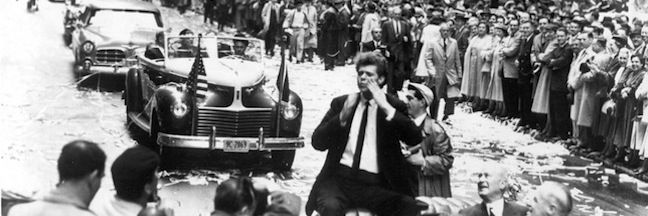
…But if the Tchaikovsky competition represented Mr. Cliburn’s breakthrough, it also turned out to be his undoing. Relying inordinately on his keen musical instincts, he was not an especially probing artist, and his growth was stalled by his early success. Audiences everywhere wanted to hear him in his prizewinning pieces, the Tchaikovsky First Concerto and the Rachmaninoff Third. Every American town with a community concert series wanted him to come play a recital. “When I won the Tchaikovsky I was only 23, and everyone talked about that,” Mr. Cliburn said in 2008. “But I felt like I had been at this thing for 20 years already. It was thrilling to be wanted. But it was pressure, too.” http://www.nytimes.com/2013/02/28/arts/music/van-cliburn-pianist-dies-at-78.html

 “[A] selection of the film’s original artwork: some of the colour lobby cards and posters from its international release”~





 The Misty Miss Christy