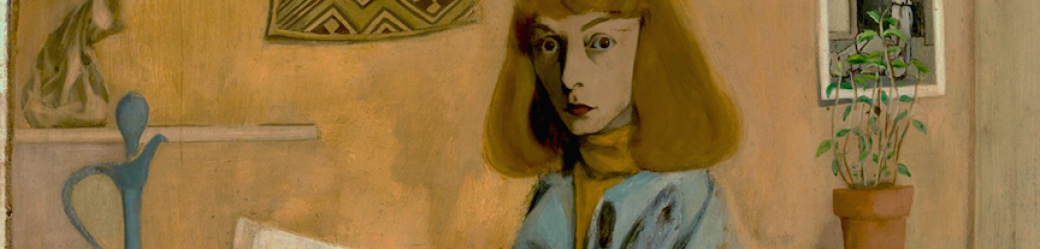
Kiri Te Kanawa: Born on March 6, 1944

The internationally famed soprano, Dame Kiri Te Kanawa, was born Claire Mary Teresa Rawstron in the small New Zealand seaside town of Gisborne, where Captain James Cook first made landfall. Just at the edge of the international date line, it prides itself as the first city in the world to greet the sun. Here, the birth child of a native Maori man and a woman of European extraction was adopted at five weeks of age by a local couple, Tom and Nell Te Kanawa, he also a Maori and she with family ties to the British Isles. The Te Kanawas named their daughter Kiri, the Maori word for bell. She was to be their only child.

Her first performances were on a little stage jerry-rigged in the Te Kanawa’s house, complete with a curtain; “the curtains would come back,” she recalled, “and I’d get up and sing.” Without a television in the home, music and singing quickly became the primary entertainment. But although her mom played piano, from early on, Kiri eschewed command performances: “I was rather sort of miffy about it even then. I’d only sing when I felt like it.”

http://www.achievement.org/autodoc/page/tek0bio-1

Frédéric Chopin: Born March 1, 1810 (?)

ChopinFryderyk Franciszek Chopin…and his family held his date of birth to be 1 March 1810, yet the certificate of baptism signed in the parish church of Brochów is dated 22 February. That discrepancy has still not been entirely resolved, although today it is the date celebrated by Chopin and his family that is more often used. http://en.chopin.nifc.pl/chopin/life/biography/page/1

Marian Anderson: Born February 27, 1897

Contralto Marian Anderson was born in Philadelphia, Pennsylvania. A variety of sources suggested February 17, 1902, as her birthdate; however, Anderson’s birth certificate, released by her family after her death, listed the date as February 27, 1897. Her father was an ice and coal salesman, and her mother was a former teacher.

Although Anderson had early showed an interest in the violin, she eventually focused on singing. The Black community, recognizing her talent, gave her financial and moral support. She also gained the notice of tenor Roland Hayes, who provided guidance in her developing career.
FROM http://www.afrovoices.com/anderson.html

This slideshow requires JavaScript.

For more images of Marian Anderson, see:
https://www.portrait.gov.au/magazines/64/the-right-note
https://blogs.loc.gov/picturethis/2020/04/marian-anderson-in-performance-a-visual-and-musical-story/

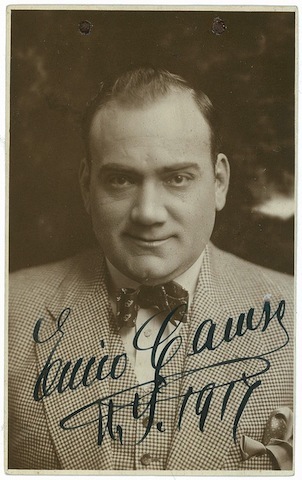
Enrico Caruso: Born February 25, 1873

‘The Great Caruso’ or ‘King of Tenors’ was born in Naples in 1873. He was his parents’ 18th child and the first to survive infancy. Music was his escape from the wretched reality that surrounded him. He sang in Neapolitan cafes and restaurants. By 1895 he was singing leading roles at the Opera House in Naples. From there he went to the major Italian opera houses and then became an international star. ‘Who has sent you to me? God?’ exclaimed Puccini on first hearing him sing.
FROM http://www.vam.ac.uk/content/articles/e/enrico-caruso/caruso

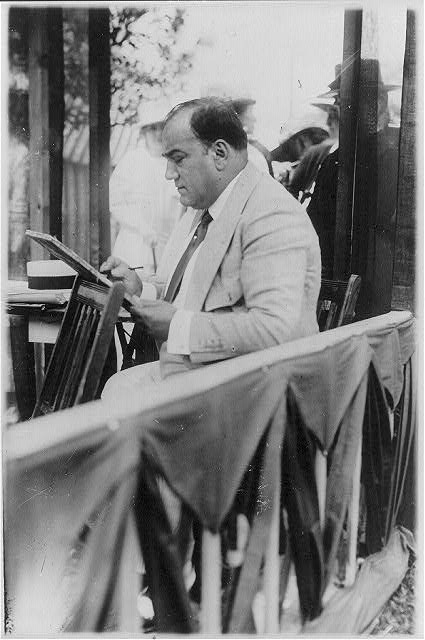
Below: Enrico Caruso drawing caricature sketches in booth at charity fair in Southampton, L.I.~
https://www.loc.gov/item/2005680287/

sketching.jpg

Caruso was a compulsive caricaturist who made spontaneous and witty sketches of colleagues and strangers wherever he went. His doodles often captured a candid likeness of the person, but they were never cruel.

Although he was proud of his sketches, he turned down offers to draw professionally. However, he did regularly contribute to an Italian-American newspaper called La Follia di New York, from which a book of drawings was eventually produced. Nowadays his cartoons are extremely collectable. One firm even reproduced one of his self caricatures as a powder compact.
FROM http://www.vam.ac.uk/content/articles/e/enrico-caruso/

Drawings by Enrico Caruso~
https://commons.wikimedia.org/wiki/Category:Drawings_by_Enrico_Caruso

Renata Scotto: Born February 24, 1934

[Renata Scotto] began vocal studies when she was 14, and moved to Milan when she was 16. In 1952, when she was just 19, she made her debut as Violetta (La traviata) at the Teatro Nuovo, followed by her La Scala debut as Walter in La Wally. However, only a few years later she had a vocal crisis, losing most of her upper range; she now credits her recovery to Alfredo Kraus (himself renowned for a solid technique and vocal longevity), who introducing her to his teacher, Mercedes Llopart. After completely restudying her technique, she re-began her career as a coloratura, making her London debut at the Stoll Theater as Adina in L’elisir d’amore. She returned to La Scala, and in 1957, replaced Maria Callas (whom she had greatly admired) as Amina in La Sonnambula.
– See more at:
http://www.allmusic.com/artist/renata-scotto-mn0000681028/biography
http://musicalworld.com/artists/renata-scotto/biography.html

Men in Wigs

pepys

This morning come two of Captain Cooke’s boys, whose voices are broke, and are gone from the Chapel, but have extraordinary skill; and they and my boy, with his broken voice, did sing three parts; their names were Blaewl and Loggings; but, notwithstanding their skill, yet to hear them sing with their broken voices, which they could not command to keep in tune, would make a man mad–so bad it was.

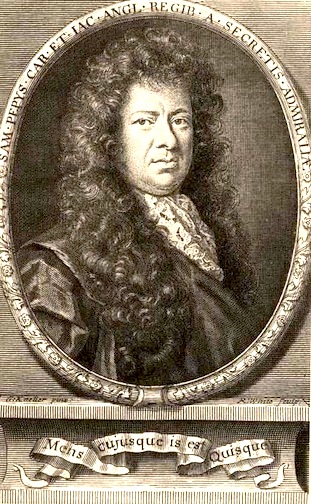
The quote above is Samuel Pepys (born February 23, 1633) referring to John Blow (born February 23, 1649). Samuel Pepys was a member of Parliament who is now most famous for his private diary, kept from 1660 until 1669.

Samuel Pepys (1633 – 1703)
http://www.bbc.co.uk/history/historic_figures/pepys_samuel.shtml
The Diary of Samuel Pepys: http://www.gutenberg.org/files/4200/4200-h/4200-h.htm

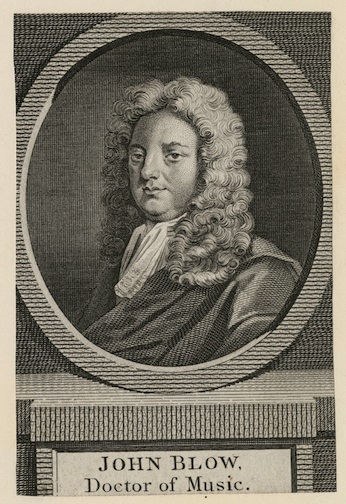
BlowJohn Blow was an English Baroque composer and organist whose opera Venus & Adonis is considered the earliest surviving British opera and which is believed to have influenced Henry Purcell’s later opera Dido and Aeneas.

John Blow (1649 – 1708)
https://en.wikipedia.org
/wiki/John_Blow

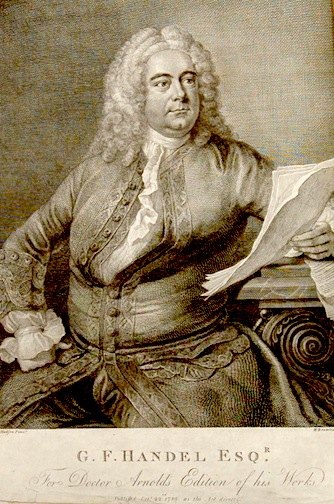
HandelAfter Purcell, opera in England languished until the arrival of George Frideric Handel (born February 23, 1685) who, however, wrote most of his operas in Italian. Acis and Galatea is Handel’s only work for the theatre that is set to an English libretto.

George Frideric Handel (1685 – 1759)
https://en.wikipedia.org/wiki/George_Frideric_Handel

Of course, most of us know Handel for his English-language oratorio Messiah and for his collection of short pieces for small orchestra known as the Water Music.

Adelina Patti: Born February 19, 1843

Adelina Patti, original name Adela Juana Maria Patti (born Feb. 19, 1843, Madrid, Spain—died Sept. 27, 1919, Craig-y-Nos Castle, Brecknockshire, Wales), Italian soprano who was one of the great coloratura singers of the 19th century.
http://www.britannica.com/EBchecked/topic/446851/Adelina-Patti

Biographical sketch of Madame Adelina Patti
https://archive.org/details/biographicalsket00mortiala