Luigi Mancinelli (1848-1921)
http://www.naxos.com/person/Luigi_Mancinelli/30834.htm
Bob Marley (1945-1981)
https://en.wikipedia.org/wiki/Bob_Marley
Luigi Mancinelli (1848-1921)
http://www.naxos.com/person/Luigi_Mancinelli/30834.htm
Bob Marley (1945-1981)
https://en.wikipedia.org/wiki/Bob_Marley
Purcell wrote only one full opera, a short work supposedly designed for a girls’ school. The tragic story of Dido and Aeneas, with a libretto by Nahum Tate, has a perfection of its own. Dido’s final lament, before she kills herself, follows the model for such compositions established by Monteverdi eighty years before. Other stage works by Purcell are in the hybrid form now known as semi-opera, combining spoken drama and a musical element that in the concert-hall may be performed apart from its wider dramatic context.
FROM~ https://www.orfeomusic.de/Composer/Detail/20995
Wikipedia page for Henry Purcell~ https://en.wikipedia.org/wiki/Henry_Purcell
Henry Purcell on classical.net~ http://www.classical.net/music/comp.lst/purcell.php

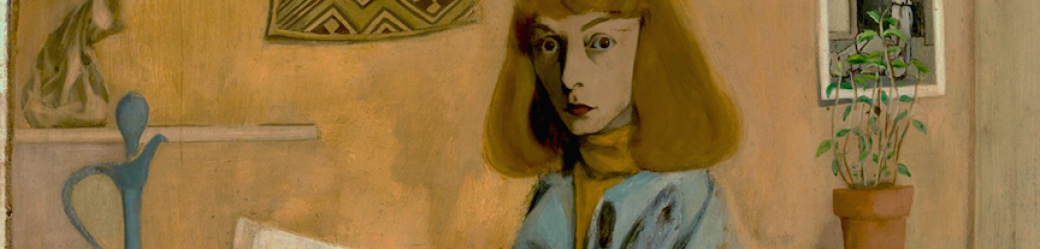
 Portrait of Erik Satie Playing the Harmonium by Santiago Rusiñol
Erik Satie, original name in full Eric Alfred Leslie Satie (born May 17, 1866, Honfleur, Calvados, France—died July 1, 1925, Paris), French composer whose spare, unconventional, often witty style exerted a major influence on 20th-century music, particularly in France.
…
During his last 10 years Satie’s best friends were painters, many of whom he had met while a café pianist. Satie was nonetheless deeply admired by composers of the rank of Darius Milhaud, Maurice Ravel, and, in particular, Claude Debussy—of whom he was an intimate friend for close to 30 years.
…
His ballet Parade (1917; choreographed by Léonide Massine, scenario by Jean Cocteau, stage design and costumes by Pablo Picasso) was scored for typewriters, sirens, airplane propellers, ticker tape, and a lottery wheel and anticipated the use of jazz materials by Igor Stravinsky and others. The word Surrealism was used for the first time in Guillaume Apollinaire’s program notes for Parade.
FROM https://www.britannica.com/biography/Erik-SatieWatch the 1917 Ballet “Parade”: Created by Erik Satie, Pablo Picasso & Jean Cocteau,
It Provoked a Riot and Inspired the Word “Surrealism” (from Open Culture)
http://www.openculture.com/2017/05/the-1917-ballet-parade-created-by-erik-satie-pablo-picasso-jean-cocteau.html
A fine swing clarinetist, an altoist whose sound was influenced by Johnny Hodges, a good soprano saxophonist, and a spirited blues vocalist, Woody Herman’s greatest significance to jazz was as the leader of a long line of big bands. He always encouraged young talent and, more than practically any bandleader from the swing era, kept his repertoire quite modern. Although Herman was always stuck performing a few of his older hits (he played “Four Brothers” and “Early Autumn” nightly for nearly 40 years), he much preferred to play and create new music.
http://www.allmusic.com/artist/woody-herman-mn0000958076/biography


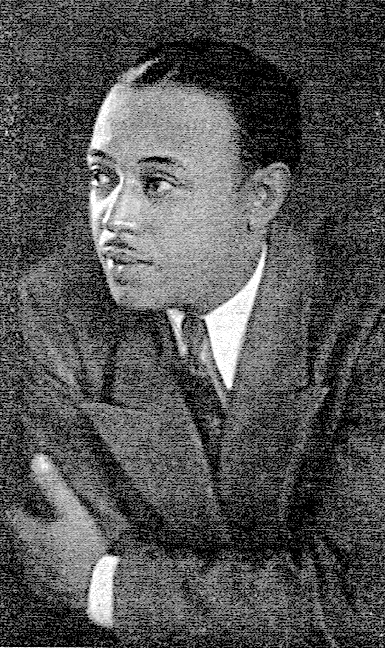
On this date in 1895, William Grant Still was born. He was an African American musician and composer.
Still was the first African American to conduct a major symphony orchestra, the first African-American to have an opera, “Troubled Island” (1949) performed by a major opera company, and the first to have an opera, “A Bayou Legend,” performed on national television (1981).
https://aaregistry.org/story/william-grant-still-a-symphonic-composer/
Sergei Rachmaninov (1873-1943)
http://www.allmusic.com/artist/sergey-rachmaninov-mn0000505265/biography
Alberta Hunter (1895-1984)
https://en.wikipedia.org/wiki/Alberta_Hunter
Claude Debussy (born Achille-Claude Debussy) was among the most influential composers of the late 19th and early 20th centuries. His mature compositions, distinctive and appealing, combined modernism and sensuality so successfully that their sheer beauty often obscures their technical innovation. Debussy is considered the founder and leading exponent of musical Impressionism (although he resisted the label), and his adoption of non-traditional scales and tonal structures was paradigmatic for many composers who followed.
FROM Achille-Claude Debussy (1862-1918): Biography:
http://www.allmusic.com/artist/claude-debussy-mn0000768781/biography
The riot turned the work into a symbol of all that modernist art was supposed to be: a break with tradition and a thumb in the eye of bourgeois taste. Yet for quite some time scholars have called into question the size, the ferocity, and the immediate effects of what definitely was a disturbance on opening night.
But the extent to which this disturbance counts as a riot really is beside the point, as is the question of what actually happened that night. What matters most is that whatever it was, it never happened again.
FROM Spring Fever~ http://www.theparisreview.org/blog/2013/07/11/spring-fever/
A Reconstruction Of ‘The Rite Of Spring”, 2013~ https://www.wbur.org/news/2013/03/15/rite-of-spring
Biographical background~ http://www.cco.caltech.edu/~tan/Stravinsky/biography.html
Early in his career, Wagner learned both the elements and the practical, political realities of his craft by writing a handful of operas which were unenthusiastically, even angrily, received. Beginning with Rienzi (1838-40) and The Flying Dutchman (1841), however, he enjoyed a string of successes that propelled him to immortality and changed the face of music. His monumental Ring cycle of four operas — Das Rheingold (1853-54), Die Walküre (1854-56), Siegfried (1856-71) and Götterdämmerung (1869-74) — remains the most ambitious and influential contribution by any composer to the opera literature.
http://www.allmusic.com/artist/richard-wagner-mn0000958980/biography
“The Brilliant, Troubled Legacy of Richard Wagner”
https://www.smithsonianmag.com/arts-culture/the-brilliant-troubled-legacy-of-richard-wagner-16686821/
A great music lover, Renoir was one of the first admirers of Wagner in France. At the beginning of 1882, when the painter was travelling in the south of Italy, he had the opportunity to visit Palermo where Wagner was staying. After two fruitless attempts, Renoir was finally introduced to the “maestro” who, the day before, had put the final notes to Parsifal.
The course of this meeting is well known thanks to a letter from Renoir to one of his friends, dated 15 January 1882:
https://www.musee-orsay.fr/en/artworks/richard-wagner-1159

 The Misty Miss Christy