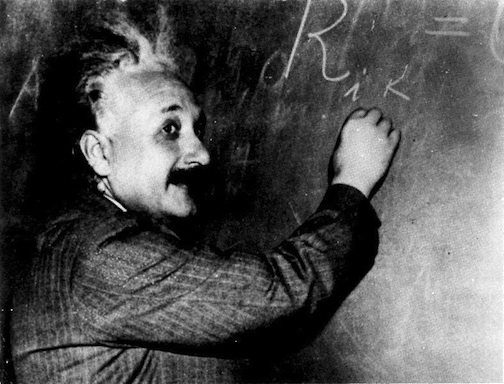
Albert Einstein: Born March 14, 1879

EinsteinAlbert Einstein’s theory of general relativity has held up pretty well after a century out in the world.

The famous theory, which Einstein published in 1915, remains the bedrock upon which scientists’ understanding of the origin and evolution of the universe rests. It continues to inspire research into some of the most fundamental unanswered questions in physics and astronomy.

General relativity “is now, I think, routinely accepted as the foundation of our description of the universe at large, which we call cosmology; of black holes, of neutron stars and of small corrections to the orbits of planets and spacecraft in our own solar system,” said Roger Blandford of the Kavli Institute for Particle Astrophysics and Cosmology at Stanford University.
http://www.space.com/28741-einstein-general-relativity-100-years.html
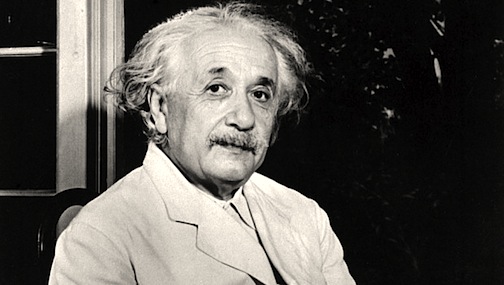
Einstein2

Einstein’s Theory of Relativity Explained (Infographic)
http://www.space.com/28738-einstein-theory-of-relativity-explained-infgraphic.html
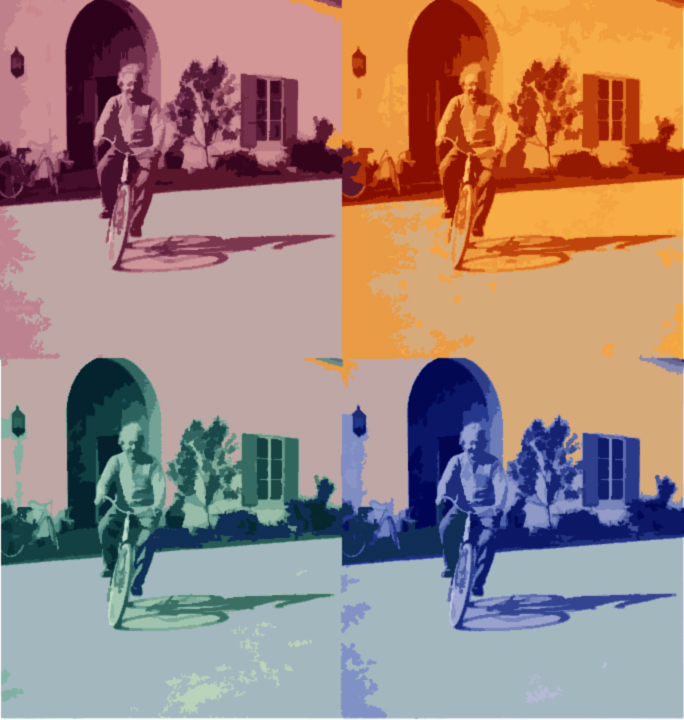
BikeGraphic by The Misty Miss Christy based on http://archives-dc.library.caltech.edu/islandora/object/ct1%3A439

The only existing film images of Anne Frank:

Anne Frank and her sister Margot died of typhus
in Bergen-Belsen in March 1945,

seven months after her family was arrested and only weeks before the camp’s liberation by British soldiers.

In this footage, taken from a home movie of a neighbor’s wedding in July of 1941, we see the 12-year-old Anne Frank looking on from a window in her family’s apartment in Amsterdam.

Anne Frank: her life after the diary ended~ https://www.thelocal.de/20170310/anne-frank-beyond-the-diary

Premiered March 11:

March 11, 1867 – Theatre Imperial de l’Opera, France
DON CARLO started out life as a five-act opera that ran for approximately four hours. Based on Don Carlos, Infant von Spanien by Friedrich Spiller, this lengthy piece saw Verdi put the music to a French libretto by Camille du Lode and Joseph Mery. After the opera had been written, it was found to still be too long during the rehearsal period. Since the audience would need to leave before midnight, further cuts were made during this time in order to make sure that the opera finished before this deadline.
FROM http://www.italymagazine.com/featured-story/homage-verdi-don-carlo

March 11, 1851 – La Fenice Opera House, Italy
One of the most acclaimed Verdi operas, RIGOLETTO at one point, was very much a case of “touch and go”. The three-act opera, based on Victor Hugo’s play “Le roi s’amuse”, came under close scrutiny of the Austrian censors. …However, by January 1851, a breakthrough was reached, albeit with a number of amendments to the original work. The original setting of the royal court of France was to be changed either to a duchy of France or Italy, while many of the characters were to be renamed, notably the jester, who went from Triboulet to Rigoletto. With the deadline for the premiere looming, Verdi managed to complete the work by early February, leaving a month to spare.
FROM http://www.italymagazine.com/featured-story/homage-verdi-rigoletto

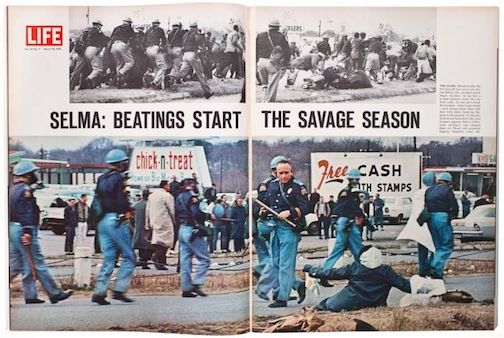
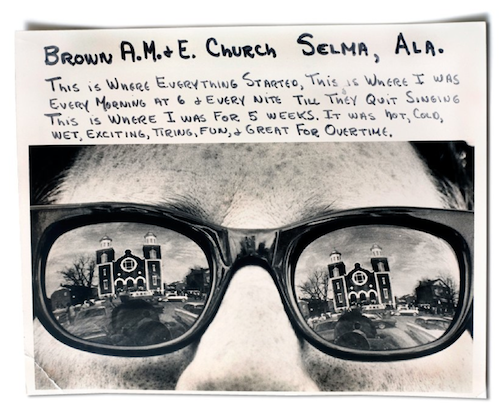
March 7, 1965: Selma to Montgomery Marches begin

Selma through the camera lens:
https://schristywolfe.com/wp-content/uploads/2015/03/barker.jpg

James Barker
These Rare Photos of the Selma March Place You in the Thick of History. James Barker, a photographer from Alaska, shares his memories of documenting the famed event:
http://www.smithsonianmag.com/history/rare-photos-selma-march-thick-history-180953874/?no-ist

LIFE

Charles Moore, Flip Schulke and Frank Dandridge
How LIFE Magazine Covered the Selma Marches in 1965. Fifty years after nonviolent protesters clashed with Alabama state troopers in Selma:

http://time.com/3720555/selma-bloody-sunday/

smartin

Spider Martin
Photographer Helped Expose Brutality Of Selma’s ‘Bloody Sunday’:
http://www.npr.org/blogs/codeswitch/2015/03/06/390943835/photographer-helped-expose-brutality-of-selmas-bloody-sunday


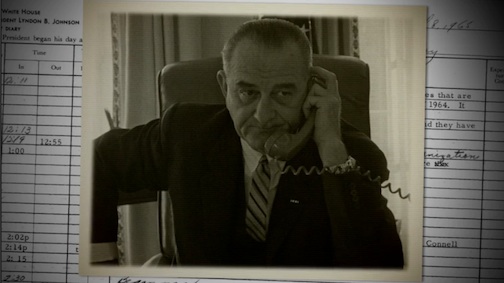
The Atlantic: “What LBJ Really Said About Selma” [click photo]:

lbj

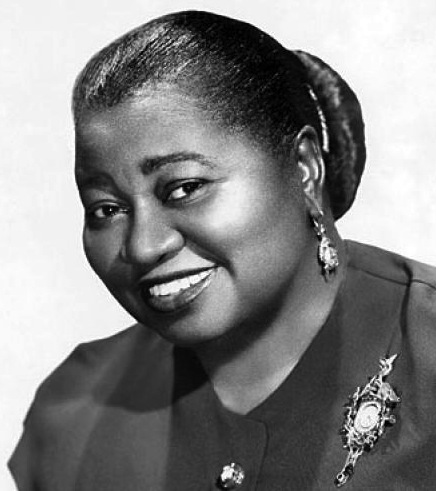
February 29, 1940: Hattie McDaniel wins an Oscar

The 12th Academy Awards ceremony was held on February 29, 1940, at the Ambassador Hotel in Los Angeles, with Bob Hope hosting. Gone With The Wind was nominated for 13 awards and won for Outstanding Production, Directing (Victor Fleming), Actress (Vivien Leigh), Art Direction (Lyle Wheeler), Cinematography HM(Color) (Ernest Haller and Ray Rennahan), and Film Editing (Hal Kern and James Newcom). Sidney Howard posthumously received the Writing (Screenplay) award, and production designer William Cameron Menzies received a special award for “outstanding use of color for the enhancement of dramatic mood in the production of Gone With The Wind.” In the Actress in Supporting Role category, Hattie McDaniel made history becoming the first African American to receive an Academy Award.
https://sites.utexas.edu/ransomcentermagazine/2016/02/26/hattie-mcdaniels-landmark-academy-awards-win/

Oscar’s First Black Winner Accepted Her Honor in a Segregated ‘No Blacks’ Hotel in L.A.~
http://www.hollywoodreporter.com/features/oscars-first-black-winner-accepted-774335

The Curious Case Of A Missing Academy Award~
http://www.npr.org/templates/story/story.php?storyId=100937570

The Artwork of Nijinsky~

nijinskySource: Art Found Out: “Vaslav Nijinsky – in Raw Vision magazine”

For a short period of time, 1918-19, not long before mental illness completely overtook his life, Vaslav Nijinsky created a small body of drawings and paintings…The largest collection of this Nijinsky’s art is in the collection of the Foundation John Neumeier. Neumeier is a dancer, choreographer, and the director of the Hamburg Ballet.
http://artfoundout.blogspot.com/2014/05/vaslav-nijinsky-unknown-paintings.html

Nijinsky: A Dance with Madness
ARTS ABROAD; At the Altar of Nijinsky, Elusive Firebird and Faun

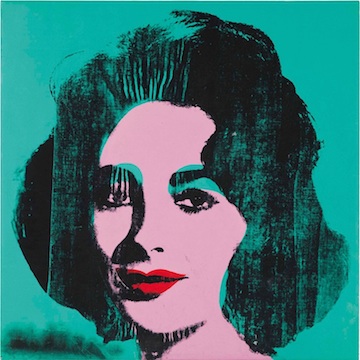
Elizabeth Taylor: Born February 27, 1932

awet

Elizabeth Rosemond Taylor was considered one of the last, if not the last, major star to have come out of the old Hollywood studio system
Biography on IMDb~
http://www.imdb.com/name/nm0000072/bio
Time/LIFE photographs~
news.yahoo.com/elizabeth-taylor-photos-legendary-life-183244564.html
ANDY’S PORTRAITS OF LIZ by Jerry Saltz~
http://www.artnet.com/magazineus/features/saltz/andy-warhols-portraits-of-liz3-24-11.asp
The Elizabeth Taylor AIDS Foundation (ETAF)~ https://elizabethtayloraidsfoundation.org/

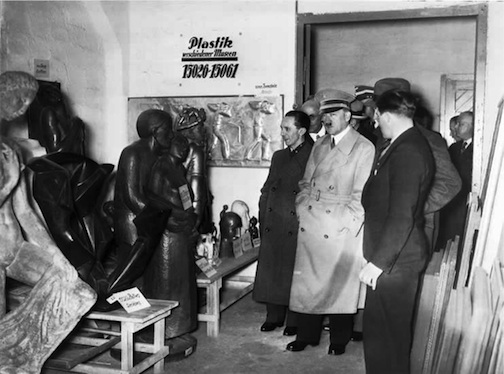
“The art Hitler hated.”

hitler

I have observed among the pictures submitted here quite a few paintings which make one actually come to the conclusion that the eye shows things differently to certain human beings than the way they really are, that is, that there really are men who see the present population of our nation only as rotten cretins; who, on principle, see meadows blue, skies green, clouds sulphur yellow, and so on—or, as they say, experience them as such. I do not want to enter into an argument here about the question of whether the persons concerned really do or do not see or feel in such a way, but in the name of the German people, I want to forbid these pitiful misfortunates who quite obviously suffer from an eye disease, to try vehemently to foist these products of their misinterpretation upon the age we live in, or even to wish to present them as “Art.”   ~Adolph Hitler, 1937
http://laphamsquarterly.org/arts-letters/artifactitious-stammerings

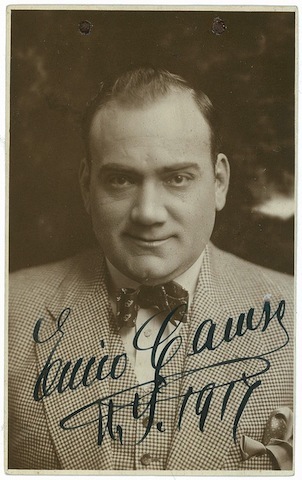
Enrico Caruso: Born February 25, 1873

‘The Great Caruso’ or ‘King of Tenors’ was born in Naples in 1873. He was his parents’ 18th child and the first to survive infancy. Music was his escape from the wretched reality that surrounded him. He sang in Neapolitan cafes and restaurants. By 1895 he was singing leading roles at the Opera House in Naples. From there he went to the major Italian opera houses and then became an international star. ‘Who has sent you to me? God?’ exclaimed Puccini on first hearing him sing.
FROM http://www.vam.ac.uk/content/articles/e/enrico-caruso/caruso

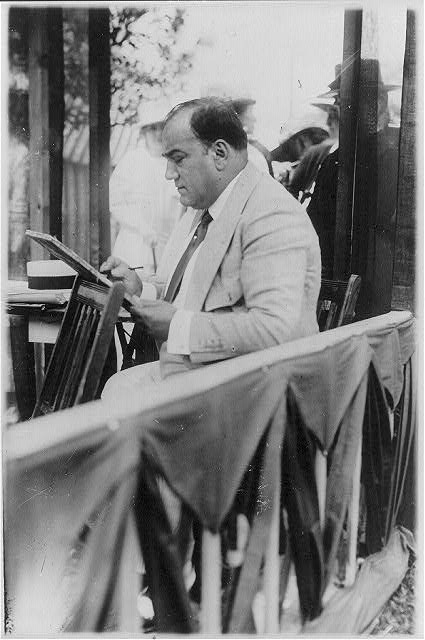
Below: Enrico Caruso drawing caricature sketches in booth at charity fair in Southampton, L.I.~
https://www.loc.gov/item/2005680287/

sketching.jpg

Caruso was a compulsive caricaturist who made spontaneous and witty sketches of colleagues and strangers wherever he went. His doodles often captured a candid likeness of the person, but they were never cruel.

Although he was proud of his sketches, he turned down offers to draw professionally. However, he did regularly contribute to an Italian-American newspaper called La Follia di New York, from which a book of drawings was eventually produced. Nowadays his cartoons are extremely collectable. One firm even reproduced one of his self caricatures as a powder compact.
FROM http://www.vam.ac.uk/content/articles/e/enrico-caruso/

Drawings by Enrico Caruso~
https://commons.wikimedia.org/wiki/Category:Drawings_by_Enrico_Caruso