Steve Jobs: Born February 24, 1955

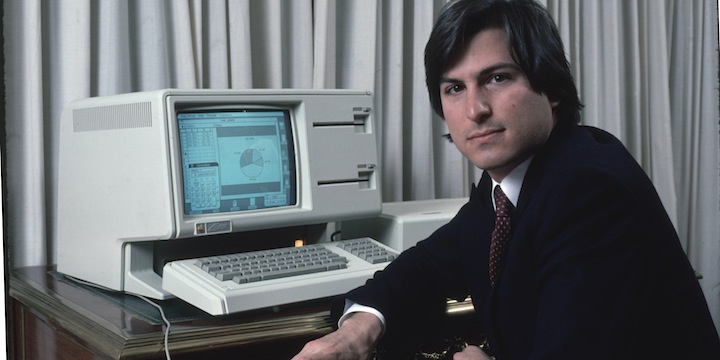
Apple computer Chrmn. Steve Jobs w. new LISA computer during press preview.

Jobs’s friend Larry Ellison, the founder of Oracle, had a private jet, and he designed its interior with a great deal of care. One day, Jobs decided that he wanted a private jet, too. He studied what Ellison had done. Then he set about to reproduce his friend’s design in its entirety—the same jet, the same reconfiguration, the same doors between the cabins. Actually, not in its entirety. Ellison’s jet “had a door between cabins with an open button and a close button,” Isaacson writes. “Jobs insisted that his have a single button that toggled. He didn’t like the polished stainless steel of the buttons, so he had them replaced with brushed metal ones.” Having hired Ellison’s designer, “pretty soon he was driving her crazy.” Of course he was. The great accomplishment of Jobs’s life is how effectively he put his idiosyncrasies—his petulance, his narcissism, and his rudeness—in the service of perfection. “I look at his airplane and mine,” Ellison says, “and everything he changed was better.”
FROM http://www.newyorker.com/magazine/2011/11/14/the-tweaker

“Remembering that I’ll be dead soon is the most important tool I’ve ever encountered to help me make the big choices in life,” he said. “Because almost everything — all external expectations, all pride, all fear of embarrassment or failure — these things just fall away in the face of death, leaving only what is truly important.”

pinThanks to the outstanding Facebook page A Mighty Girl, https://www.facebook.com/amightygirl I learned today about the Civil Rights Movement Veterans website: http://www.crmvet.org/index.htm  Their stated purpose: “This website is created by Veterans of the Southern Freedom Movement (1951-1968). It is where we tell it like it was, the way we lived it, the way we saw it, the way we still see it. With a few minor exceptions, everything on this site was written, created, or spoken by Movement activists who were direct participants in the events they chronicle.”

The site contains a wealth of letters, diary entries, interviews, personal narratives, essays, and more. They also have a large collection of photographs taken during that era, allowing us to see history as it was being made.Selma


Men in Wigs

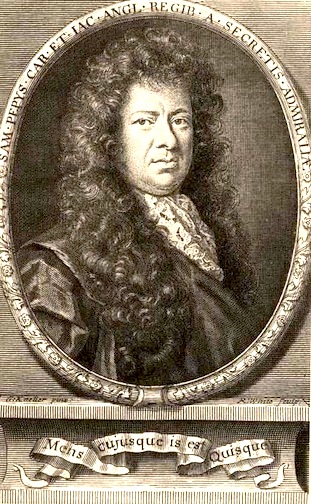
pepys

This morning come two of Captain Cooke’s boys, whose voices are broke, and are gone from the Chapel, but have extraordinary skill; and they and my boy, with his broken voice, did sing three parts; their names were Blaewl and Loggings; but, notwithstanding their skill, yet to hear them sing with their broken voices, which they could not command to keep in tune, would make a man mad–so bad it was.

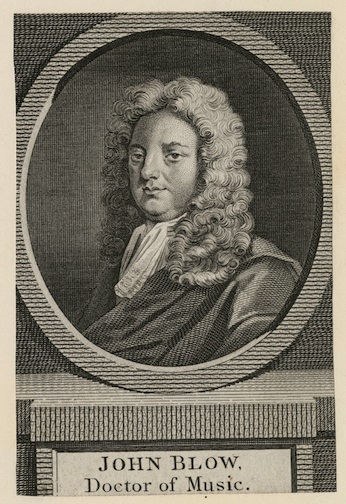
The quote above is Samuel Pepys (born February 23, 1633) referring to John Blow (born February 23, 1649). Samuel Pepys was a member of Parliament who is now most famous for his private diary, kept from 1660 until 1669.

Samuel Pepys (1633 – 1703)
http://www.bbc.co.uk/history/historic_figures/pepys_samuel.shtml
The Diary of Samuel Pepys: http://www.gutenberg.org/files/4200/4200-h/4200-h.htm

BlowJohn Blow was an English Baroque composer and organist whose opera Venus & Adonis is considered the earliest surviving British opera and which is believed to have influenced Henry Purcell’s later opera Dido and Aeneas.

John Blow (1649 – 1708)
https://en.wikipedia.org
/wiki/John_Blow

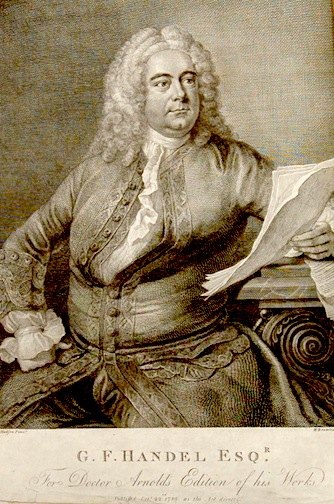
HandelAfter Purcell, opera in England languished until the arrival of George Frideric Handel (born February 23, 1685) who, however, wrote most of his operas in Italian. Acis and Galatea is Handel’s only work for the theatre that is set to an English libretto.

George Frideric Handel (1685 – 1759)
https://en.wikipedia.org/wiki/George_Frideric_Handel

Of course, most of us know Handel for his English-language oratorio Messiah and for his collection of short pieces for small orchestra known as the Water Music.

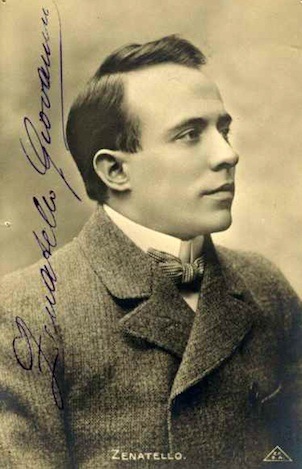
Madama Butterfly: First Performance February 17, 1904

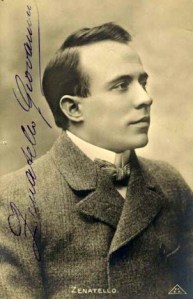
Zenatello

The première of February 17, 1904 would remain a bitter experience for Puccini. As Ricordi described it in the March edition of Musice e Musicisti: Growls, shouts, groans, laughter, giggling, the usual single cries of “bis,” designed to excite the public still more; that sums up the reception which the public of La Scala accorded the new work by Maestro Giacomo Puccini . . . The spectacle given in the auditorium seemed as well organized as that on the stage since it began precisely with the beginning of the opera.
FROM http://www.columbia.edu/itc/music/NYCO/butterfly/fiasco.html

If Ricordi’s memory is accurate, the packed theater was hostile from the beginning, but it seems that the onset of the real problems coincided with Butterfly’s entrance. As Butterfly approaches her new home, she and a chorus of girls sing “Quanto cielo.” To the more belligerent elements of the audience, Butterfly’s descending line resembled a melody from the Act III duet of his earlier opera La Bohème. Nineteenth-century Italian audiences were particularly sensitive to and unforgiving of what they termed “reminiscences”; that is, a composer’s deliberate or inadvertent borrowing from another opera. When they detected this offense, Puccini’s detractors cried out, “Bohème, Bohème!!”
FROM http://www.columbia.edu/itc/music/NYCO/butterfly/fiasco.html
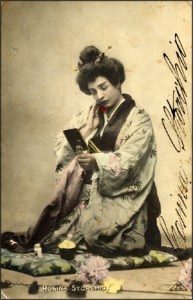
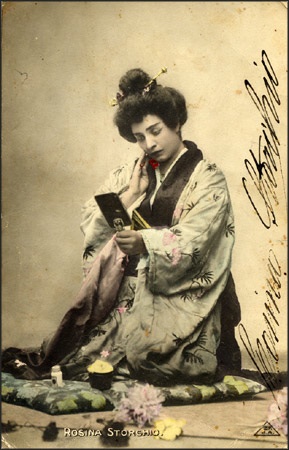
storchio

From this point on, the audience divided into two opposed factions: Puccini’s supporters and those determined to make a mockery of the performance–needless to say, the latter easily constituted the vocal majority. The beautiful Act I duet could not rival the cacophony in the auditorium (the offending passage mentioned earlier is repeated in this piece–this, no doubt, only added fuel to the fire). The Act I curtain fell to a mixture of hissing and scattered applause. The singers and Puccini were called out onto the stage only to receive torrents of derisive laughter.
FROM http://www.columbia.edu/itc/music/NYCO/butterfly/fiasco.html
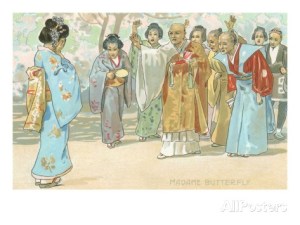
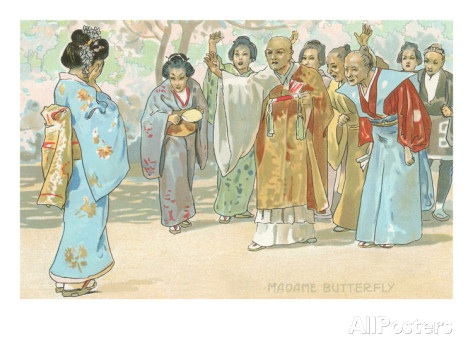
scene

During Act II, the demonstrators redoubled their efforts. Only the letter scene and the flower duet could be heard at all; the remainder of the opera was attended by such disruptive noise that the singers complained of being unable to hear the orchestra. At one point, either owing to a backstage draft or a sudden movement on the soprano’s part, Storchio’s kimono billowed up in front whereupon several cries of “Butterfly is pregnant!” could be heard along with the more offensive “Ah, the little Toscanini!” (this latter affront referred to the highly publicized affair between Storchio and the famous Italian conductor, Arturo Toscanini).
FROM http://www.columbia.edu/itc/music/NYCO/butterfly/fiasco.html
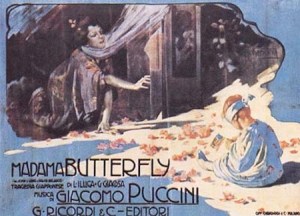
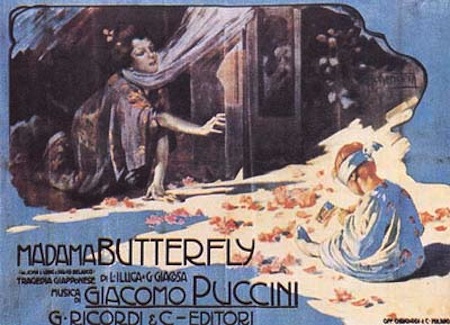
poster

The long Intermezzo (Butterfly’s night vigil) provided another opportunity for buffoonery. In an attempt to outdo Belasco’s intense realism, the opera’s producer placed performers with bird-whistles throughout the opera house to accompany the dawn after Butterfly’s sleepless night. Unwilling to allow such a boon to pass unnoticed, the audience joined in with various animal sounds of their own, reducing the poetic gesture to lunacy. Although accounts differ, the final curtain either fell to “a glacial silence” or howls, laughter and disdain.
FROM http://www.columbia.edu/itc/music/NYCO/butterfly/fiasco.html
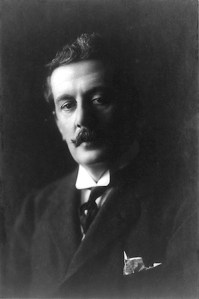
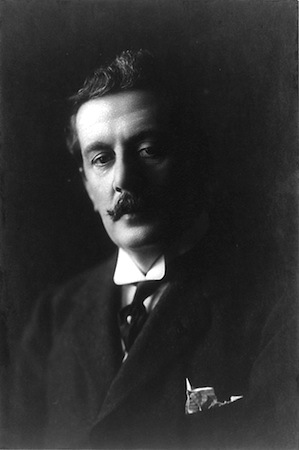
Puccini

Images:
Giovanni Zenatello circa 1905 http://en.wikipedia.org/wiki/File:Giovanni_Zenatello_circa_1910.jpg
Rosina Storchio http://www.historicopera.com/xother/famousfirst1.htm
Scene from Madame Butterfly https://www.gettyimages.com/photos/leopoldo-metlicovitz
Giacomo Puccini http://en.wikipedia.org/wiki/Madama_Butterfly#mediaviewer/File:Puccini6.jpg
February 16, 1964: The Beatles’ second Ed Sullivan Show


edsullivanshowmiami16feb64rehearsalticket1

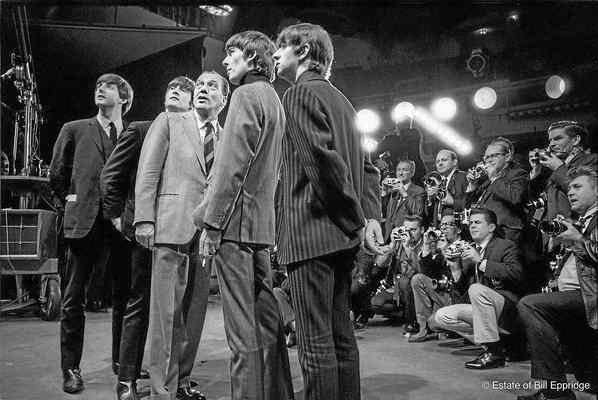
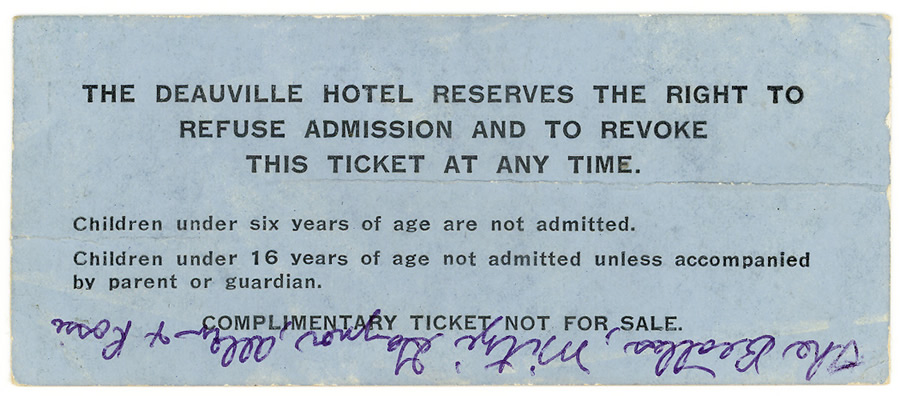
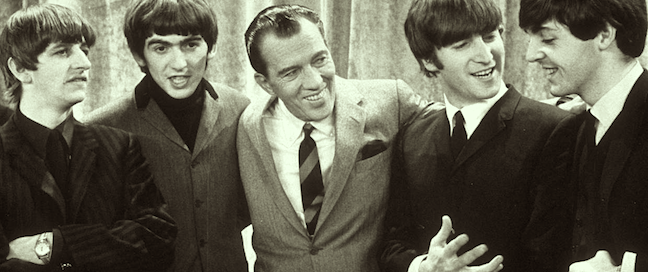
The Beatles’ second appearance on the Ed Sullivan Show took place in Miami’s Deauville Hotel. The Beatles arrived in Miami on Thursday, February 13, and the concert took place on the night of the 16th. The link below is of a rehearsal, which was filmed but not aired.

february16
Rehearsal video here~
BEATLES REHEARSALS : R. CORTES : Free Download & Streaming : Internet Archive

See also~

The Beatles’ second Ed Sullivan Show


http://ultimateclassicrock.com/beatles-second-ed-sullivan-show/

edsullivanshowmiami16feb64rehearsalticket2

Apotheosis of Washington and Lincoln

WandL“Apotheosis” is a Greek word meaning to deify or to glorify in a divine way. It can refer to the theological act of raising an individual to a divine status, and also a glorification of a subject in a work of art.

When Washington died in 1799, the country was beside itself with grief. And things got a little strange. Shortly after his death, artwork appeared representing Washington ascending to heaven.

This kind of thing was pretty un-Republican however, and thankfully it didn’t catch on for future presidents. At least not until Lincoln’s assassination, after which artists directly referenced the images of the 1st president’s divine ascension and applied them to the 16th.
> > > > >http://www.philosophersguild.com

Lincoln and Washington~ https://www.loc.gov/pictures/resource/pga.01775/

Washington & Lincoln Apotheosis~ https://rememberinglincoln.fords.org/node/240

Thomas Edison: Born February 11, 1847

Transcript~ https://archive.org/details/edba-3756
Let us not forget—a message to the American people~ https://www.loc.gov/item/00694069/

Thomas Alva Edison Biography~ https://en.wikipedia.org/wiki/Thomas_Edison

Thomas Alva Edison by Abraham Archibald Anderson
1890 / Oil on canvas / National Portrait Gallery, Smithsonian Institution
https://npg.si.edu/object/npg_NPG.65.23

February 9, 1964: Beatles’ first live appearance on American television

beatlesandedhttp://www.edsullivan.com/the-beatles-on-the-ed-sullivan-show-on-february-9-1964/

The Beatle’s first live appearance on U.S. television was February 9, 1964. However, Americans did have previous chances to see them via stories on the evening news, and a taped segment on The Tonight Show with Jack Paar. The common thread to these appearances is the sarcasm and bad jokes which the reporters and Paar felt compelled to use in order to dismiss the Beatles as an inexplicable phenomenon. All of them were probably taken aback when they finally realized that the Beatles weren’t going to go away any time soon.

November 18, 1963 on “The Huntley-Brinkley Report”~

Nov. 22, 1963 on “CBS Morning News With Mike Wallace”~

January 3, 1964 on the :Jack Paar Tonight Show”~
http://www.45spaces.com/the-beatles-on-tv/r.php?r=the-jack-paar-show

http://www.pophistorydig.com/topics/beatles-in-america-1963-1964/

beatlesanded

‪Benjamin Waterhouse Hawkins‬: Feb. 8, 1807 – Jan. 27, 1894

HawkinsReconstructed skeletons‪ of dinosaurs and life-size models of how they may once have appeared are now commonplace. But until the British artist Benjamin Waterhouse Hawkins created such things in the second half of the nineteenth century, dinosaurs and their kin were poorly understood and of little interest to anyone but a handful of professional paleontologists. Hawkins was responsible for designing public displays both in Great Britain and in the United States depicting prehistoric life‬…‪The beginnings of Hawkins’s lasting influence in paleontology can be traced to September 1852, when he earned an extraordinary commission: to fashion a group of life-size sculptures of “antediluvian monsters” for London’s Crystal Palace.‬
http://www.naturalhistorymag.com/htmlsite/master.html?http://www.naturalhistorymag.com/htmlsite/1208/1208_feature.html

In order to refute the nascent stirrings of evolutionary theory, Owens pressed Hawkins to transform the iguanodon from the huge, low-to-the-ground lizard that scientists had guessed at since its discovery nearly twenty years earlier into a majestic quadruped that walked rather than slithered, built like a grotesquely oversized dog or pig.

Mistakes of that sort abounded in Hawkins’s models, driven in most cases less by ideology than by understandable lack of knowledge. As any contemporary visitor to Dinosaur Court will instantly grasp, these dinosaurs are … off. Awkwardly, humorously so.
http://editions.nymoon.com/post/22591159984/wrongosaurus-dinosaurs-at-the-crystal-palace-by

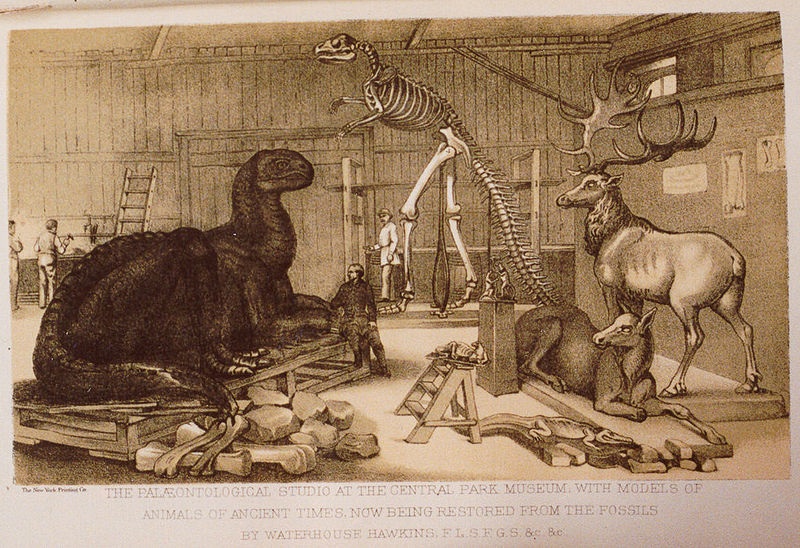
Following his success with the Crystal Palace Exhibition, Hawkins came to New York City with the intent of recreating on one side of the Atlantic what had been so successful on the other…The plan was to set them up in a “Paleozoic Museum” in Central Park, which was then being landscaped under the direction of Frederick Law Olmstead, an ex-engineer officer in the Union army.

However, in 1871, before either the park or the dinosaurs were finished, New York City politics intervened. The corrupt Tammany Hall-Boss Tweed machine took control of city politics, and Hawkins and his dinosaurs were out.
http://academic.brooklyn.cuny.edu/geology/chamber/hawkins.html

The Central Park Conservancy’s historian, Sara Cedar Miller, told us this morning: “The dinosaur models were made of concrete and metal so their ‘bones’ would basically be unidentifiable if found. The remains were thrown into the Pond, not under sod…and the Pond has been dredged for restoration restored many times and it is quite unlikely that anything would be there now.”
http://gothamist.com/2014/09/23/no_there_are_no_dinosaurs_buried_in.php

The link below leads to a collection of images from an album of manuscripts, clippings, and images assembled over time by Benjamin Waterhouse Hawkins: Collection 803. Benjamin Waterhouse Hawkins Album. Academy of Natural Sciences of Philadelphia. http://www.ansp.org/research/library/archives/0800-0899/hawkins803/