February 8~ Chinese New Year 2016

Chinese New Year, also known as the Spring Festival, is the most important Chinese traditional festival. Chinese New Year (CNY) celebrations run from Chinese New Year’s Eve, the last day of the last month of the lunar calendar, to the Lantern Festival on the 15th day of the first lunar month, making the festival the longest in the Chinese calendar.

Legend says that there was a man-eating beast, “nian”, in ancient China. “Nian” would come from the mountain once a year on the New Year Eve and infiltrate houses silently to prey on humans and animals. People later learned that “nian” was afraid of loud noises and the colour red, so people use explosives, fireworks and colour red to scare “nian” away.

CNY is centuries old and gains significance because of several myths and traditions. Traditionally, the festival was a time to honour deities as well as ancestors. It is a time for family reunion and celebration. It is as important as the Thanksgiving Day and Christmas combined in the Western culture.

More information can be found at this wonderful blog:

Source: Chinese New Year custom (農曆新年習俗)

February 7, 1904: The Great Baltimore Fire Begins


Photographs from the Great Baltimore Fire~
http://darkroom.baltimoresun.com/2014/02/great-baltimore-fire-of-1904-110-years-later/#1

1904The Great Baltimore Fire of 1904 started at 10:50 a.m. on Feb. 7 and raged on until 5 p.m. the next day. It destroyed over 1,500 buildings and is the third worst fire in this country’s history (right behind the Great Chicago Fire of 1871 and the San Francisco Earthquake and Fire of 1906). Incredibly, only one life was lost as a direct result of this huge conflagration.

The panoramic photo above, from the collection of the Library of Congress, gives an idea of the complete and total devastation of downtown Baltimore. If you click on the link you will be able to see a much larger version of this image: http://www.loc.gov/pictures/resource/pan.6a05843/

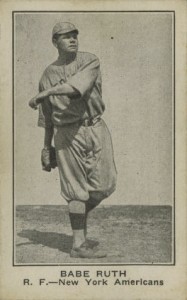
Babe Ruth, February 6, 1895 – August 16, 1948

babeTop 10 Babe Ruth Cards of All-Time

Many of the baseball cards from Babe Ruth’s playing days are obscure offerings with a limited release. However, the ones that surface in good condition generally sell for huge amounts. The following list aims to identify the ten most valuable Babe Ruth cards in existence. Because rarity and condition greatly affect value, historical significance was also factored into this list. Due to the incredible values seen by Babe Ruth cards, narrowing down the list meant that a few popular cards did not make the cut. While time may reveal other hidden gems, the following list represents the dream checklist for many Babe Ruth card collectors. All the cards are worth a small (or large) fortune, and prices generally start around $5,000, and can escalate very quickly.

Ruth

FROM http://www.cardboardconnection.com/top-10-babe-ruth-cards

Dada~ Born February 5, 1916

cabaretOn 5th February 1916, in the back room of a small bar in Zurich, a group of artists launched a nightclub which changed the course of modern art. Cabaret Voltaire was the home of Dada, a movement that revolutionised European culture. A century later, this historic club is still going strong.
FROM
http://www.bbc.co.uk/programmes/articles/g8WYZb6jHWPwXtrFG6JW6G/anarchy-absurdity-dada-the-cabaret-voltaire-at-100


Greta Deses’s Dada (1967) profiles the Dada movement with live performances, film excerpts, interviews and a reenactment of a performance at the groundbreaking Cabaret Voltaire.

Hugo Ball, Tristan Tzara and Marcel Janco met on February 5, 1916 in Zurich with the ambitious plan of instigating nothing less than an artistic revolution. Their Cabaret Voltaire, which they founded that evening, was a combination of a pub, theater, gallery, and club. Throughout that year, they organized unpredictable events combining chaotic performances, recitations and music.
FROM
http://www.dw.com/en/how-dadaism-revolutionized-art-100-years-ago/a-19016756

Codex Mendoza

Thanks to the always interesting Hyperallergic website, today I learned about a manuscript known as the Codex Mendoza which has been digitized and put online in high resolution. Totally unfamiliar with Mexican codices, I was grateful to see that the http://codice.manuvo.com site has a succinct explanation of what they are and what their significance is.

Mexican codices are pictorial and iconic documents that pre-Hispanic cultures (primarily the Mexicas, Mayas, and Mixtecs) used to preserve and transmit their knowledge. They were produced on different types of surfaces, mainly on deerskin or bark paper. Gordon Brotherston (1992) describes the essential characteristics of codices as non-phonetic, although some might record concept-sounds, such as those produced by the Mayas. They are highly flexible in terms of presentation, for they can be structured as a chronicle told through historical events, a map, or a tribute list. This holistic integration of writing, images, and mathematics, clearly breaks with Western notions of writing.

One of the principal characteristics of codices, according to Brotherston, is that the knowledge contained in most of them is not actually recorded in a language that represents a language, as in the case of modern languages. Codices are part of a different communication system that also invoked oral tradition and other semantic elements no longer used today. They are composed of images and icons that work in tandem with the memory, voice, and knowledge of individuals able to read them:

http://codice.manuvo.com/html/acerca.php?lang=english

cm

The illustrations in the codex are beautiful in their own right, above and beyond their educational value. The Hyperallergic article is a good introduction to this document and worth checking out before heading over to the Codex Mendoza site. Read it here:  http://hyperallergic.com/177110/a-historic-manuscript-on-aztec-life-is-virtually-repatriated/

“Robert Penn Warren Civil Rights Oral History Project”

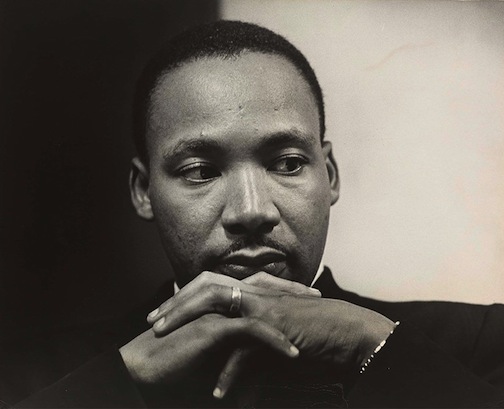
“The Robert Penn Warren Civil Rights Oral History Project is a collection of interviews concerning the Civil Rights movement and the socioeconomic, cultural, and political struggles of African Americans. Conducted in 1964 by Robert Penn Warren, a Kentucky native and the first poet laureate of the United States, these interviews constituted part of Warren’s research for his book Who Speaks for the Negro? Warren interviewed important civil rights leaders and activists such as Martin Luther King Jr., Milton Galamison, Adam Clayton Powell, Kenneth Bancroft Clark, Vernon Jordan, Malcolm X, Carroll Baker, Stokley Carmichael, William Hastie, Bayard Rustin, Ruth Turner, Claire Collins Harvey, Aaron Henry, Andrew Young, Gilbert Moses, and Ralph Ellison. Topics include racism throughout the United States, school integration, the National Association for the Advancement of Colored People (NAACP), the Congress of Racial Equality (CORE), education, employment, nonviolent protest, peace activism, black nationalism and pride, civil rights legislation, religion and spirituality, the role of whites in the civil rights movement, Abraham Lincoln, African culture, the Free Southern Theatre, and the Student Nonviolent Coordinating Committee (SNCC).”

Robert Penn Warren Civil Rights Oral History Project:
http://www.kentuckyoralhistory.org/collections/robert-penn-warren-civil-rights-oral-history-project

“A Lost Story of Segregated America From LIFE’s First Black Photographer”

150112-gordon-parks-fort-scott-07

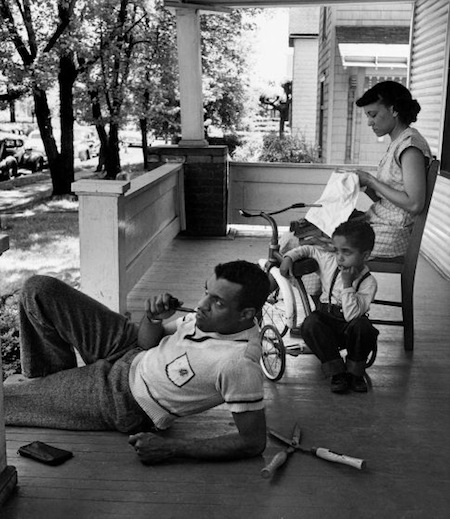
“When Gordon Parks left his hometown of Fort Scott, Kansas, at the age of 15 in 1928, it was to escape a place he would later call “the mecca of bigotry.” Parks’ mother arranged for her son, the youngest of her 15 children, to live with an older sister in Minnesota, where, she hoped, Gordon would be spared the “bitter trials of Kansas.”
At 37, Gordon Parks returned to Fort Scott, sent by LIFE to photograph the bitter trials of Kansas that his mother had wanted him to escape. But his pictures would never be published, bumped from the magazine by stories deemed more newsworthy.
Now these rarely seen photographs are making their public debut in an exhibit, Gordon Parks: Back to Fort Scott, at Boston’s Museum of Fine Arts, which opens on Saturday, Jan. 17. All but lost for more than half a century, the story behind the photographs is now being told for the first time.”

A Lost Story of Segregated America From LIFE’s First Black Photographer:
http://time.com/3664001/gordon-parks-fort-scott/

31 Rolls of Undeveloped Film from a Soldier in WWII Discovered and Processed

post

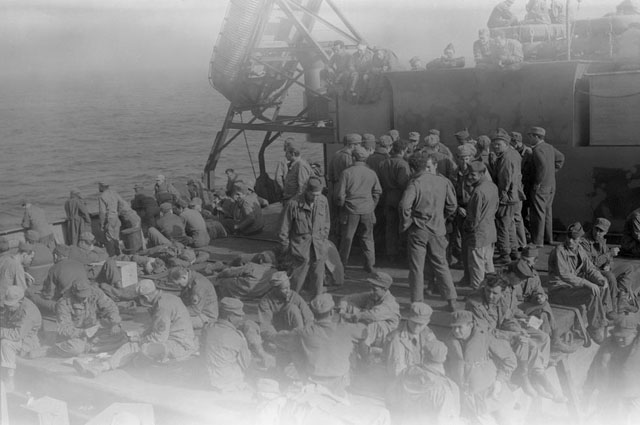
Photographer Levi Bettweiser is the man behind the Rescued Film Project, an effort to find and rescue old and undeveloped rolls of film from the far corners of the world.

He recently came across one of his biggest finds so far: 31 undeveloped rolls of film shot by a single soldier during World War II.

Bettweiser tells us he found the film rolls in late 2014 at an auction in Ohio. About half the rolls were labeled with various location names (i.e. Boston Harbor, Lucky Strike Beach, LaHavre Harbor). “I know nothing about who shot the film or who it belonged to,” he says.

31 Rolls of Undeveloped Film from a Soldier in WWII Discovered and Processed

http://www.rescuedfilm.com/#!rescuedwwii/c1d05