Sarah Caldwell (1924-2006)
https://schristywolfe.com/2015/03/06/sarah-caldwell-born-on-march-6-1924/
Kiri Te Kanawa (1944)
https://schristywolfe.com/2015/03/06/960/
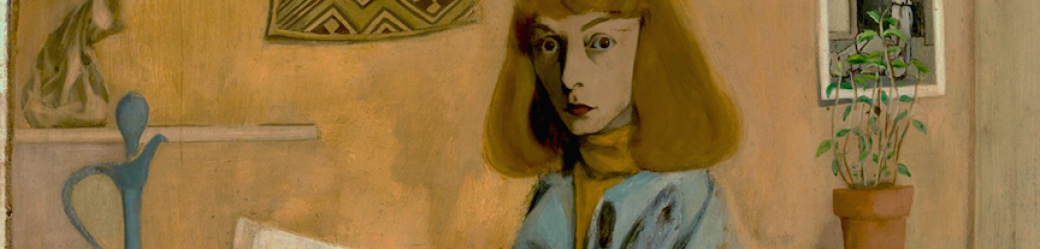
Sarah Caldwell (1924-2006)
https://schristywolfe.com/2015/03/06/sarah-caldwell-born-on-march-6-1924/
Kiri Te Kanawa (1944)
https://schristywolfe.com/2015/03/06/960/
Bedřich Smetana (1824-1884)
http://www.classical.net/music/comp.lst/smetana.php
Kurt Julian Weill (1900-1950)
http://www.kwf.org/pages/kw-biography.html
Leontyne Price received many honorary degrees as well as the Presidential Medal of Freedom (1965), the Kennedy Center Honors (1980), and the National Medal of Arts (1985). Her many recordings earned nineteen Grammy Awards, and she received a special Grammy Lifetime Achievement Award in 1989. For her performance on Live From Lincoln Center, Leontyne Price, Zubin Mehta and the New York Philharmonic, Price received the 1982 Emmy award for Outstanding Individual Performance in a Variety or Music Program.
Price has been described as a “lirico-spinto” soprano with a 3-1/2 octave range. Her rock-solid vocal technique and purity and her dramatic flair have been combined to create a mix suitable both for the opera and concert stage.
– See more at: http://afrovoices.com/leontyne-price-biography/
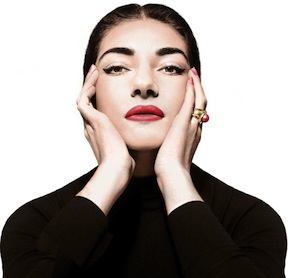
Maria made her first professional appearance in von Suppe’s Boccacio in 1939 and sang the leading part in Tosca in 1942. After a series of disappointments and resenting envy by her colleagues, she returned to the American land of her birth. She lived there for two years (1945-1947), met the bass Nicola Rossi – Lemeni and through him came to know the tenor Giovanni Zenatello, artistic director of the Arena of Verona. Maria Kalogeropoulos left for Italy, met the industrialist Giovanni Batista Meneghini, married him, became Maria Callas and experienced her artistic life’s curtain raiser without suspecting that she was about to emerge as the lyric theatre’s most brilliant personality.
FROM http://www.hri.org/MFA/thesis/autumn97/callas.htmlCallas’ ability to sing such a wide range of roles was one of the things that led to her meteoric rise. But critic
Conrad Osborne says it also contained the seeds of her vocal decline. Callas’ voice was already starting to fail her by the time she was in her 40s — quite young for an opera singer. A number of factors, including a rapid loss of weight, may explain why…But for Callas fans like James Jorden, the diva more than made up for her vocal flaws with her talent for bringing the music to life.
FROM http://www.npr.org/templates/story/story.php?storyId=123612228
By the time of her retirement, she had performed more than 40 different roles and had recorded more than 20 complete operas. Callas’s personality and philosophy of performance are powerfully depicted in Terrence McNally’s play Master Class (first performed and published 1995), based on her classes at Juilliard.
FROM http://www.britannica.com/biography/Maria-Callas
Purcell wrote only one full opera, a short work supposedly designed for a girls’ school. The tragic story of Dido and Aeneas, with a libretto by Nahum Tate, has a perfection of its own. Dido’s final lament, before she kills herself, follows the model for such compositions established by Monteverdi eighty years before. Other stage works by Purcell are in the hybrid form now known as semi-opera, combining spoken drama and a musical element that in the concert-hall may be performed apart from its wider dramatic context.
FROM~ https://www.orfeomusic.de/Composer/Detail/20995
Wikipedia page for Henry Purcell~ https://en.wikipedia.org/wiki/Henry_Purcell
Henry Purcell on classical.net~ http://www.classical.net/music/comp.lst/purcell.php

In the 1920s and 1930s, Bonham mezzo-soprano Roberta Dodd Crawford (1897-1954) shot across the concert world like a rare comet, blazing with talent and demonstrating the power of black performers to seriously engage American and European critics and audiences. In the end, through bad luck and poor circumstance, she flamed out, dying broke and forgotten by the world she had made richer by her incandescent presence.
She came from humble circumstances, spent long years training her remarkable voice, toured extensively in the U.S. and France, socialized and worked with fellow ex-patriots in Paris during the 1920s and early 1930s, married an American World War I hero and, later, an African prince; and suffered physically and mentally while under Nazi detention during World War II.
FROM
http://ntxe-news.com/cgi-bin/artman/exec/view.cgi?archive=51&num=81273
Dubbed by one critic “the Picasso of children’s literature” and once addressed by former President Bill Clinton as “the King of Dreams,” Maurice Sendak illustrated nearly a hundred picture books throughout a career that spanned more than 60 years. Some of his best known books include Chicken Soup with Rice (1962), Where the Wild Things Are (1963), and In the Night Kitchen (1970). Born in Brooklyn in 1928 to Jewish immigrant parents from northern Poland, Sendak grew up idolizing the storytelling abilities of his father, Philip, and his big brother, Jack. As a child he illustrated his first stories on shirt cardboard provided by his tailor-father. Aside from a few night classes in art after graduating high school, Sendak was a largely self-taught artist.
FROM http://www.rosenbach.org/maurice-sendak-biography-and-timeline
Classical Music Fueled Maurice Sendak’s Creative Muse~
https://www.wqxr.org/story/207545-classical-music-fueled-maurice-sendak-muse/
Early in his career, Wagner learned both the elements and the practical, political realities of his craft by writing a handful of operas which were unenthusiastically, even angrily, received. Beginning with Rienzi (1838-40) and The Flying Dutchman (1841), however, he enjoyed a string of successes that propelled him to immortality and changed the face of music. His monumental Ring cycle of four operas — Das Rheingold (1853-54), Die Walküre (1854-56), Siegfried (1856-71) and Götterdämmerung (1869-74) — remains the most ambitious and influential contribution by any composer to the opera literature.
http://www.allmusic.com/artist/richard-wagner-mn0000958980/biography
“The Brilliant, Troubled Legacy of Richard Wagner”
https://www.smithsonianmag.com/arts-culture/the-brilliant-troubled-legacy-of-richard-wagner-16686821/
A great music lover, Renoir was one of the first admirers of Wagner in France. At the beginning of 1882, when the painter was travelling in the south of Italy, he had the opportunity to visit Palermo where Wagner was staying. After two fruitless attempts, Renoir was finally introduced to the “maestro” who, the day before, had put the final notes to Parsifal.
The course of this meeting is well known thanks to a letter from Renoir to one of his friends, dated 15 January 1882:
https://www.musee-orsay.fr/en/artworks/richard-wagner-1159


Photographer David Leventi captures opera houses all over the world in breathtaking detail in his series Opera. Leventi uses large-format photography to ensure the detail of rich texture and light in his work.
http://laughingsquid.com/breathtakingly-detailed-large-format-photographs-of-opera-houses-around-the-world/


 The Misty Miss Christy