Sam Savitt

Equine artist and illustrator Sam Savitt (1917-2000)

Image from Equestrian Living: Remembering Artist Sam Savitt
https://eqliving.com/remembering-artist-sam-savitt/

[Sam Savitt] “started his career doing magazine illustrations, and became well known for his illustrations for Dell comic book covers, for whom he did Western illustrations. He wrote, or co-wrote, 17 books on horses, as well as private commissions and the Sam Savitt series of charts, which were used in the Smithsonian.”
https://janebadgerbooks.co.uk/illustrators/savitt-sam/

The Lone Ranger’s Famous Horse Hi-Yo Silver, No3, 1952 / Dell Comics

Lad: A Dog Anniversary Edition, 1968 / E. P. Dutton, NY
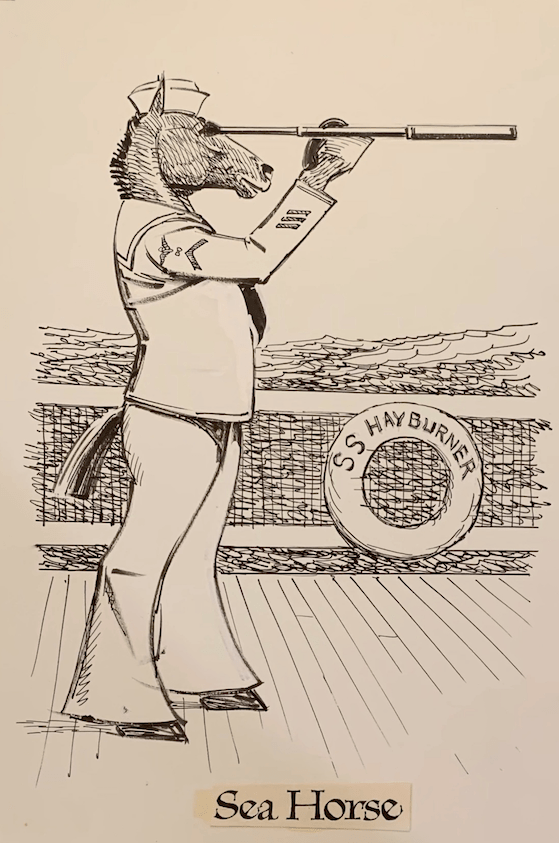
Sea Horse from Sam Savitt’s Book of Horse Nonsense, 1975 / Black Horse Press, NY
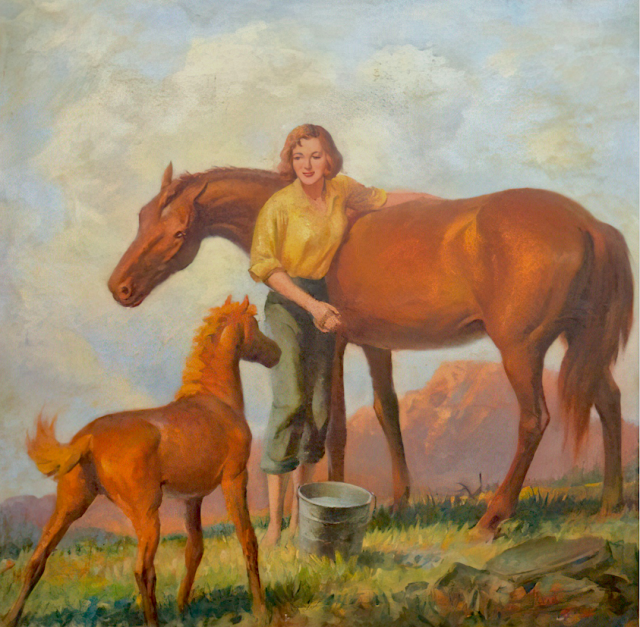
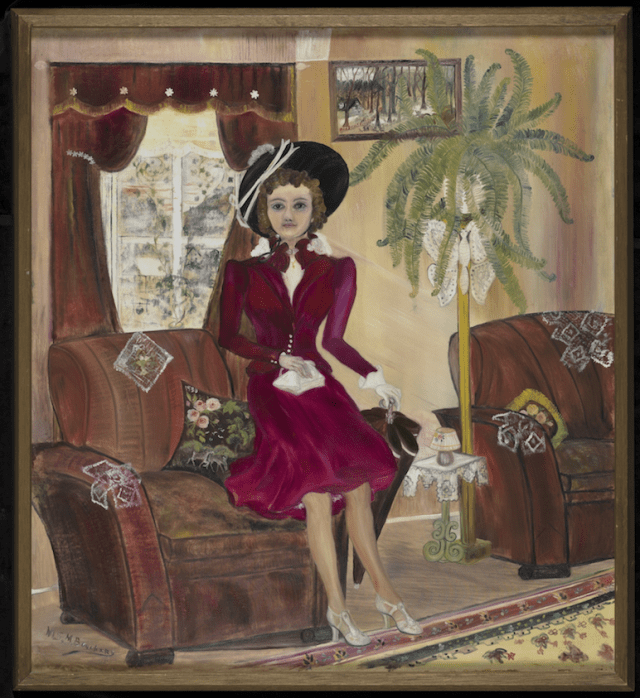
Woman with a horse and foal, ND / Oil on canvas / Private collection

[5 embedded links above]

Wikipedia~ https://en.wikipedia.org/wiki/Sam_Savitt
Field Guide to Wild American Pulp Artists~
https://www.pulpartists.com/Savitt.html
Horse Book Illustrators, Part Three: Sam Savitt~
http://estatesalechronicles.blogspot.com/2014/06/horse-book-illustrators-part-three-sam.html

Autoportrait Day 361~ Maria Lassnig

A random survey of self-portraits created by women through the centuries

Austrian painter Maria Lassnig (1919-2014)

1. Self-Portrait, 1942 (detail) / Oil on canvas / Friedrich Petzel, New York

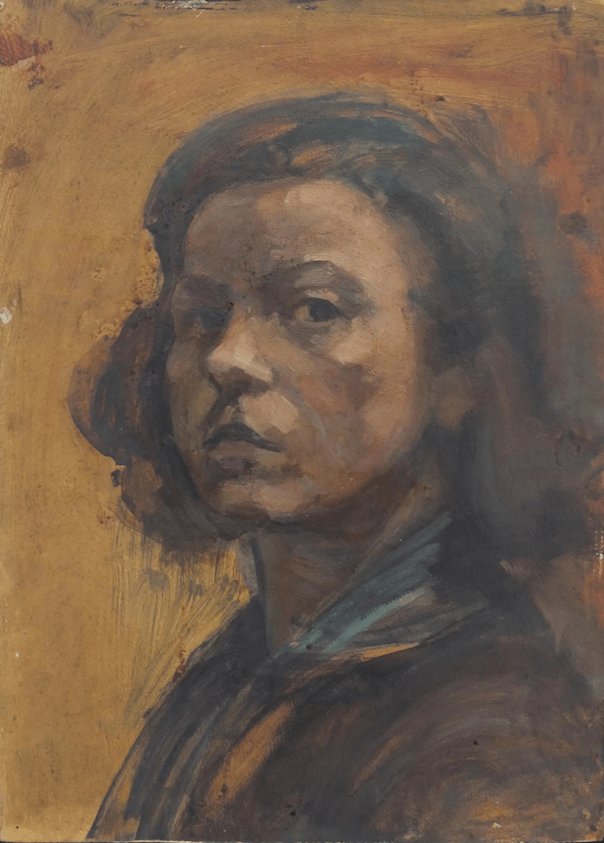
2. Expressive Self-Portrait, 1945 / Oil, charcoal on fiberboard / Maria Lassnig Foundation

3. Self-Portrait/Abstract Head, 1956 / Oil on Canvas / Universalmuseum Joanneum, Graz, Austria

4. Self-Portrait as Animal, 1963 / Oil on canvas / Maria Lassnig Foundation

5. Self-Portrait with Stick, 1971/ Oil, charcoal on canvas / Maria Lassnig Foundation

6. Transparent Self-Portrait, 1987 / Oil on canvas / Museum of Modern Art, NYC

7. Scientific Self-Portrait, 1994 / Graphite pencil on wove paper / Morgan Library & Museum, NYC

8. Self-Portrait with Rabbit, 2003 / Oil on Canvas / Hauser & Wirth, NYC

[9 embedded links above]

Hubert Robert by Élisabeth Louise Vigée-Le Brun, 1788

[Élisabeth Louise Vigée-Le Brun’s] virtuoso portrait of Robert in romantic mode, casually dressed, hair unkempt, palette and brushes in hand, gazing intently into the distance. It was painted in 1788, the year before the French Revolution, when Robert was in his mid-50s. By then he was one of France’s most celebrated and best-paid artists and had a clientèle that included Catherine the Great and the Russian aristocracy.
~FROM https://www.nytimes.com/2016/04/27/arts/international/hubert-robert-and-the-beautiful-ravages-of-time.html

Portrait of Hubert Robert by Élisabeth Louise Vigée-Le Brun, 1788 / Oil on wood / Louvre Museum, Department of Paintings, Paris, FR

[3 embedded links above]

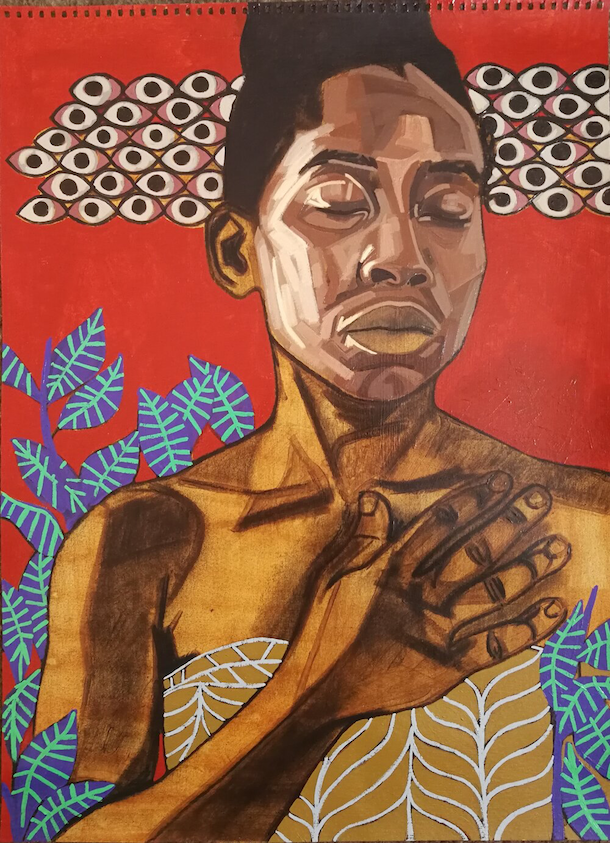
Autoportrait Day 360~ Claudette Johnson

A random survey of self-portraits created by women through the centuries

British figurative artist Claudette Johnson MBE (born 1959)

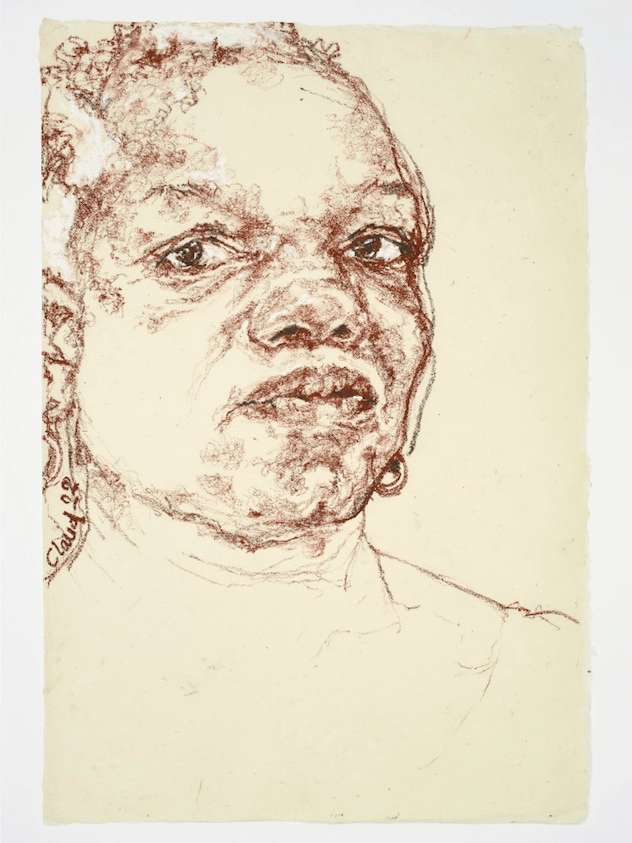
1. Untitled, 2015 / Pastel on paper / RISD Museum, Providence, RI

2. Standing Figure with African Masks, 2018 / Pastel and gouache on paper / Tate, London, UK

3. Doing Lines 1 (Lockdown) Line Journeys, 2020 / Oil pastel on paper / Herbert Art Gallery & Museum, Coventry, UK

4. Self-Study, 2022 / Ortuzar Projects, Tribeca, NYC

[5 embedded links above]

Autoportrait Day 359~ Zulmé Maspero

A random survey of self-portraits created by women through the centuries

19th century artist Zulmé Maspero (no dates)

Self-Portrait by Zulmé Maspero de la Mardel, c.1853 /
Oil on canvas / The Historic New Orleans Collection, LA

[2 embedded links above]

It was long believed that one of the three women in a large portrait of Emma Olivier, Olivia Olivier, and their sister-in-law, Zulmé, was an artist. A recent donation to The Historic New Orleans Collection of three portraits of the Olivier women included a circa-1853 oval portrait signed discreetly with a small letter “Z,” revealing Zulmé Maspero as the painter. The source of Maspero’s training is unknown, but her skill and technical proficiency are comparable with male painters of the same period.
FROM~ https://tfaoi.org/aa/9aa/9aa64.htm

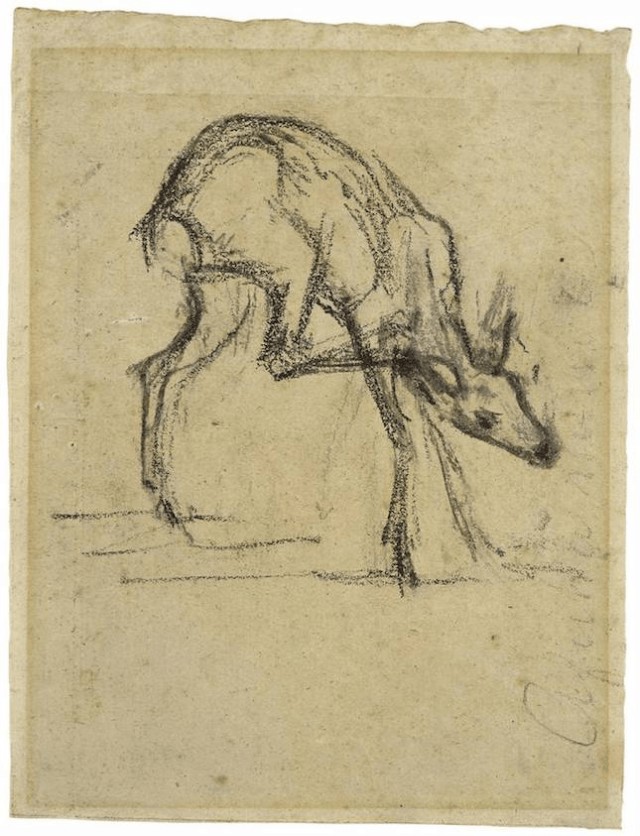
Franz Marc (Animals in Art)

Aiming to recreate the animals ‘from the inside’, Marc made himself so complete a master of their anatomy that he felt qualified to teach classes on the subject, though in the end there were few takers. This anatomical knowledge gave him the ability to improvise. From this point on, Marc did not aim to merely copy nature, but to capture the spirit of nature and of ‘animal life’.
~FROM https://www.gseart.com/artist/franz-marc/bio

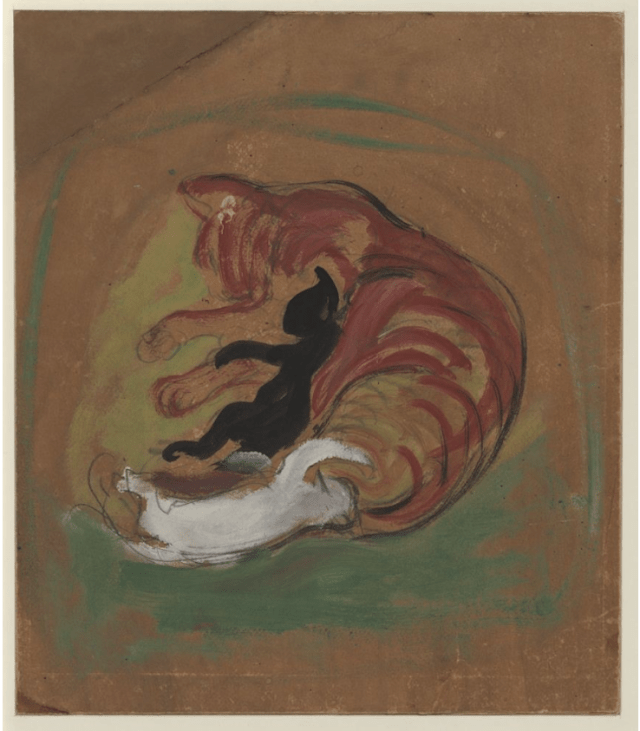
1. Katze mit Jungen, 1900-1916 / Tempera, oil, pencil on cardboard / Kunstmuseum Moritzburg, Halle, Germany

2. Sketch, 1908 / Crayon on paper / Private collection

3. Two Horses, 1908-09 / Bronze / Lenbachhaus München, Germany

4. Yellow Cow, 1911 / Oil on canvas / Solomon R. Guggenheim Museum, NYC

5. Tierlegende (Animal Legend), 1912 / Woodcut on Japanese paper / Various locations

[5 embedded links above]

Franz Marc~
https://en.wikipedia.org/wiki/Franz_Marc

Why Did Franz Marc Paint Animals?
https://www.thecollector.com/why-did-franz-marc-paint-animals/
Franz Marc and the animalization of art
https://smarthistory.org/franz-marc-animal-art/

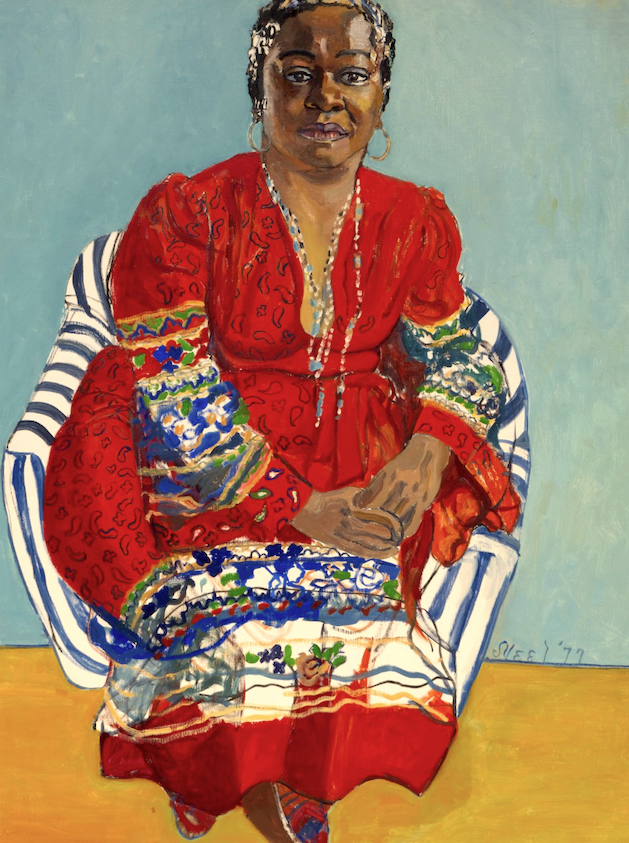
Faith Ringgold by Alice Neel

“I knew Alice had a way of painting people so that you saw them in ways you’d never seen them before. I didn’t want to be uncovered in that way. Now I kind of wish I had done it back then—because today I definitely wouldn’t pose in the nude. So anyway, I put on this red dress and my hair was braided with beads, because I had just come back from my trip and I thought the beads would go over well in Ghana and Nigeria, and that I could pass as an African—but they all knew I was American.”
~FROM https://www.culturetype.com/2019/08/27/a-portrait-of-faith-ringgold-painted-by-alice-neel-is-jordan-casteels-favorite-artwork/

Portrait of Faith Ringgold by Alice Neel, 1977 / Oil on canvas / Private collection

[3 embedded links above]