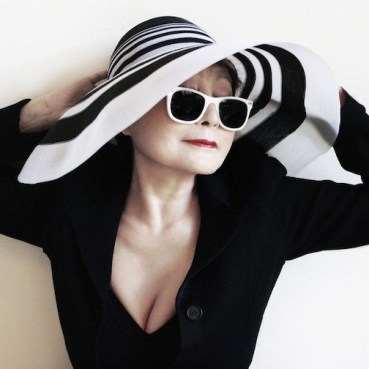
Yoko Ono: Born February 18, 1933

http://imaginepeace.com/
http://www.allmusic.com/artist/yoko-ono-mn0000521704/biography

https://schristywolfe.com/wp-content/uploads/2015/02/yoko.jpg

Since emerging onto the international art scene in the early 1960s, Yoko Ono has made profound contributions to visual art, performance, filmmaking, and experimental music. Born in Tokyo in 1933, she moved with her family to New York in the mid-1950s and enrolled at Sarah Lawrence College. Over the next decade she lived in New York, Tokyo, and London, greatly influencing the international development of Fluxus and Conceptual art.
https://www.moma.org/artists/4410

via Yoko Ono On Being An Inspiration And Her Friendship With David Bowie.

Madama Butterfly: First Performance February 17, 1904

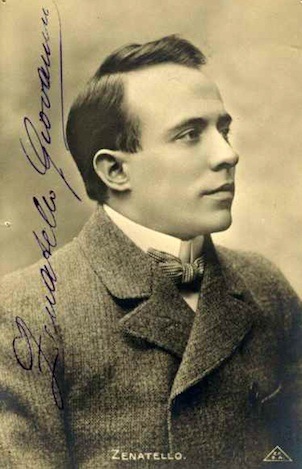
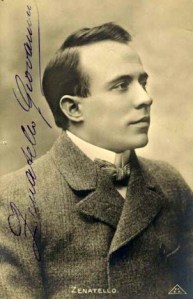
Zenatello

The première of February 17, 1904 would remain a bitter experience for Puccini. As Ricordi described it in the March edition of Musice e Musicisti: Growls, shouts, groans, laughter, giggling, the usual single cries of “bis,” designed to excite the public still more; that sums up the reception which the public of La Scala accorded the new work by Maestro Giacomo Puccini . . . The spectacle given in the auditorium seemed as well organized as that on the stage since it began precisely with the beginning of the opera.
FROM http://www.columbia.edu/itc/music/NYCO/butterfly/fiasco.html

If Ricordi’s memory is accurate, the packed theater was hostile from the beginning, but it seems that the onset of the real problems coincided with Butterfly’s entrance. As Butterfly approaches her new home, she and a chorus of girls sing “Quanto cielo.” To the more belligerent elements of the audience, Butterfly’s descending line resembled a melody from the Act III duet of his earlier opera La Bohème. Nineteenth-century Italian audiences were particularly sensitive to and unforgiving of what they termed “reminiscences”; that is, a composer’s deliberate or inadvertent borrowing from another opera. When they detected this offense, Puccini’s detractors cried out, “Bohème, Bohème!!”
FROM http://www.columbia.edu/itc/music/NYCO/butterfly/fiasco.html
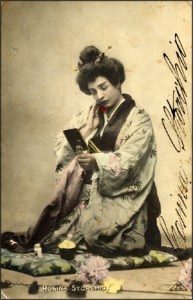
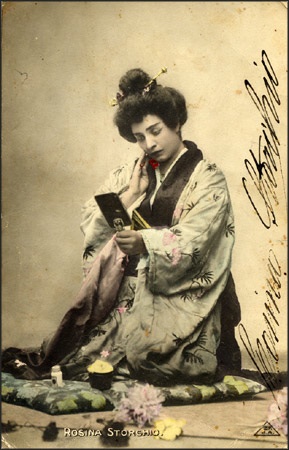
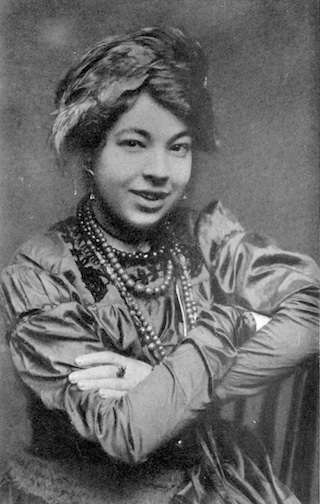
storchio

From this point on, the audience divided into two opposed factions: Puccini’s supporters and those determined to make a mockery of the performance–needless to say, the latter easily constituted the vocal majority. The beautiful Act I duet could not rival the cacophony in the auditorium (the offending passage mentioned earlier is repeated in this piece–this, no doubt, only added fuel to the fire). The Act I curtain fell to a mixture of hissing and scattered applause. The singers and Puccini were called out onto the stage only to receive torrents of derisive laughter.
FROM http://www.columbia.edu/itc/music/NYCO/butterfly/fiasco.html
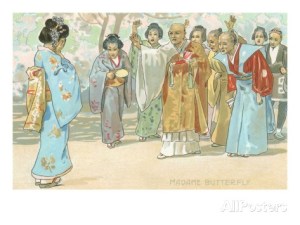
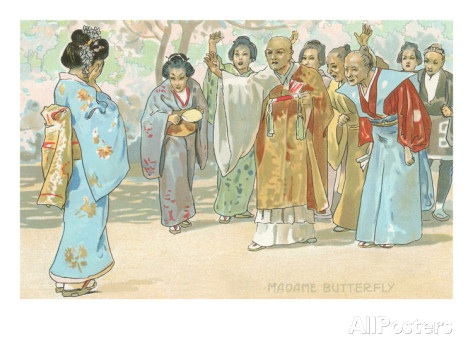
scene

During Act II, the demonstrators redoubled their efforts. Only the letter scene and the flower duet could be heard at all; the remainder of the opera was attended by such disruptive noise that the singers complained of being unable to hear the orchestra. At one point, either owing to a backstage draft or a sudden movement on the soprano’s part, Storchio’s kimono billowed up in front whereupon several cries of “Butterfly is pregnant!” could be heard along with the more offensive “Ah, the little Toscanini!” (this latter affront referred to the highly publicized affair between Storchio and the famous Italian conductor, Arturo Toscanini).
FROM http://www.columbia.edu/itc/music/NYCO/butterfly/fiasco.html
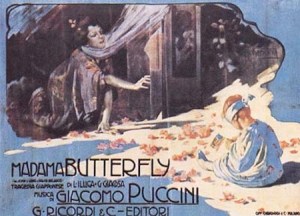
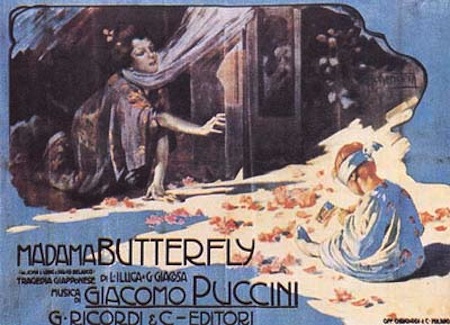
poster

The long Intermezzo (Butterfly’s night vigil) provided another opportunity for buffoonery. In an attempt to outdo Belasco’s intense realism, the opera’s producer placed performers with bird-whistles throughout the opera house to accompany the dawn after Butterfly’s sleepless night. Unwilling to allow such a boon to pass unnoticed, the audience joined in with various animal sounds of their own, reducing the poetic gesture to lunacy. Although accounts differ, the final curtain either fell to “a glacial silence” or howls, laughter and disdain.
FROM http://www.columbia.edu/itc/music/NYCO/butterfly/fiasco.html
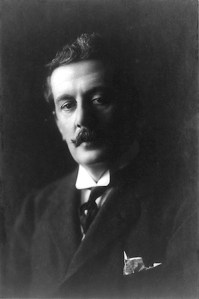
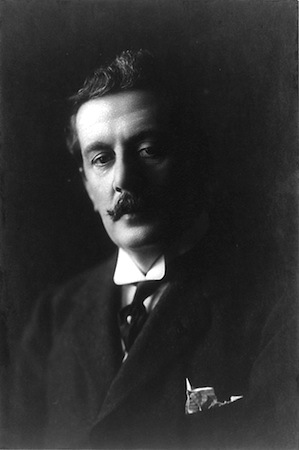
Puccini

Images:
Giovanni Zenatello circa 1905 http://en.wikipedia.org/wiki/File:Giovanni_Zenatello_circa_1910.jpg
Rosina Storchio http://www.historicopera.com/xother/famousfirst1.htm
Scene from Madame Butterfly https://www.gettyimages.com/photos/leopoldo-metlicovitz
Giacomo Puccini http://en.wikipedia.org/wiki/Madama_Butterfly#mediaviewer/File:Puccini6.jpg
Illustrator Pamela Colman Smith: Born February 16, 1878

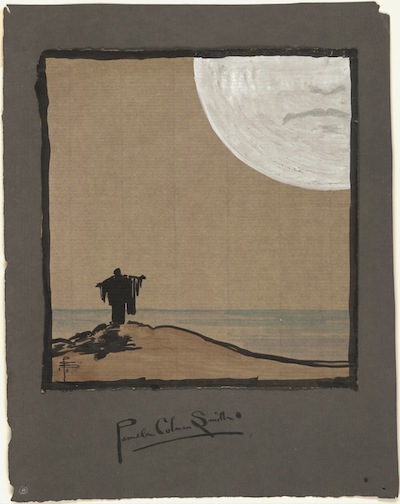
I’ve never given any thought to who might have designed and/or illustrated Tarot Cards, I suppose because I figured they were something that evolved over time and were already established by the time card/game companies began printing them. The popular version that I am familiar with turns out to have been illustrated by one Pamela Colman Smith, an illustrator who attended (but did not finish) Pratt.

Smith1912

sample

Pamela Colman Smith (16 February 1878 – 18 September 1951), also nicknamed Pixie, was an artist, illustrator, and writer. She is best known for designing the Waite-Smith deck of divinatory tarot cards (also called the Rider-Waite or the Rider-Waite-Smith deck) for Arthur Edward Waite.
http://en.wikipedia.org/wiki/Pamela_Colman_Smith

The Beinecke Rare Book & Manuscript Library of the Yale University Library:
https://collections.library.yale.edu/catalog?search_field=all_fields&q=Pamela%20Colman%20Smithdeck

Photographer Esther Bubley: Born February 16, 1921

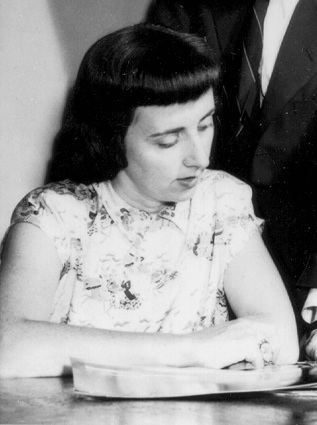
ebubley

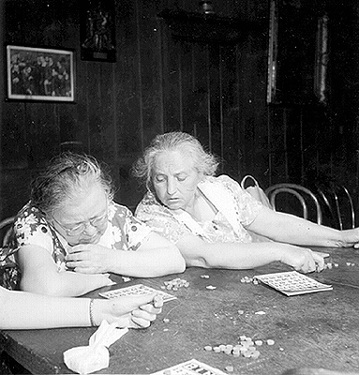
“Put me down with people, and it’s just overwhelming,” Bubley exclaimed in an interview. Like most great photojournalists, she found her art in everyday life, and she successfully balanced her artistic ambitions with the demands of commercial publishing. Edward Steichen, curator of photographs at the Museum of Modern Art and the era’s arbiter of taste, was a great supporter of Bubley, whose work embodied his aesthetic ideal that photography “explain man to man and each to himself.” She was shown in several group shows at the Museum of Modern Art and was given a one-person show at the Limelight, Helen Gee’s legendary coffee house and the only gallery specializing in photography in New York during the 1950s. Bubley worked primarily for the printed page, however, and like her colleagues, can be only partially understood in the context of today’s gallery-oriented photography world, in which photographs are shown as isolated works of art.
FROM http://www.estherbubley.com/bio_frame_set.htm

bingo

http://www.loc.gov/rr/print/coll/womphotoj/bubleyintro.html

https://www.loc.gov/exhibits/wcf/wcf0012.html

https://lens.blogs.nytimes.com/2011/08/02/tender-moments-in-the-maelstrom-of-war/

February 16, 1964: The Beatles’ second Ed Sullivan Show


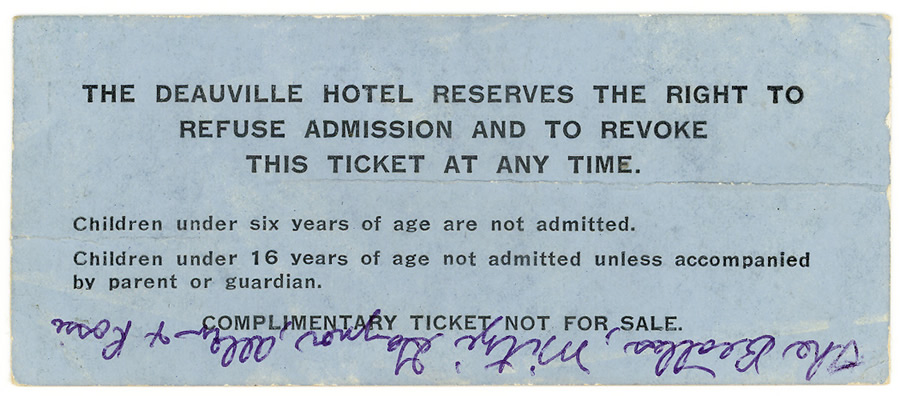
edsullivanshowmiami16feb64rehearsalticket1

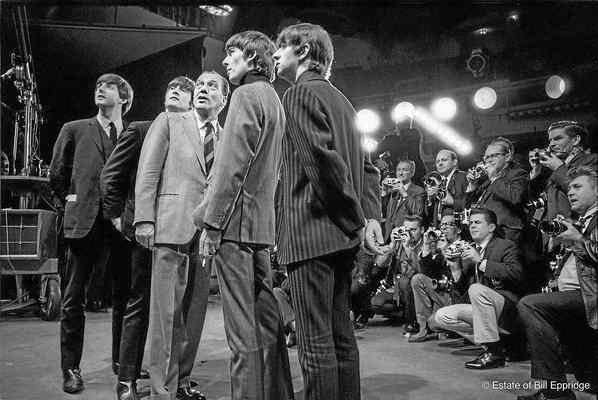
The Beatles’ second appearance on the Ed Sullivan Show took place in Miami’s Deauville Hotel. The Beatles arrived in Miami on Thursday, February 13, and the concert took place on the night of the 16th. The link below is of a rehearsal, which was filmed but not aired.

february16
Rehearsal video here~
BEATLES REHEARSALS : R. CORTES : Free Download & Streaming : Internet Archive

See also~

The Beatles’ second Ed Sullivan Show


http://ultimateclassicrock.com/beatles-second-ed-sullivan-show/

edsullivanshowmiami16feb64rehearsalticket2

Apotheosis of Washington and Lincoln

WandL“Apotheosis” is a Greek word meaning to deify or to glorify in a divine way. It can refer to the theological act of raising an individual to a divine status, and also a glorification of a subject in a work of art.

When Washington died in 1799, the country was beside itself with grief. And things got a little strange. Shortly after his death, artwork appeared representing Washington ascending to heaven.

This kind of thing was pretty un-Republican however, and thankfully it didn’t catch on for future presidents. At least not until Lincoln’s assassination, after which artists directly referenced the images of the 1st president’s divine ascension and applied them to the 16th.
> > > > >http://www.philosophersguild.com

Lincoln and Washington~ https://www.loc.gov/pictures/resource/pga.01775/

Washington & Lincoln Apotheosis~ https://rememberinglincoln.fords.org/node/240

‪Renée Fleming‬: Born February 14, 1959

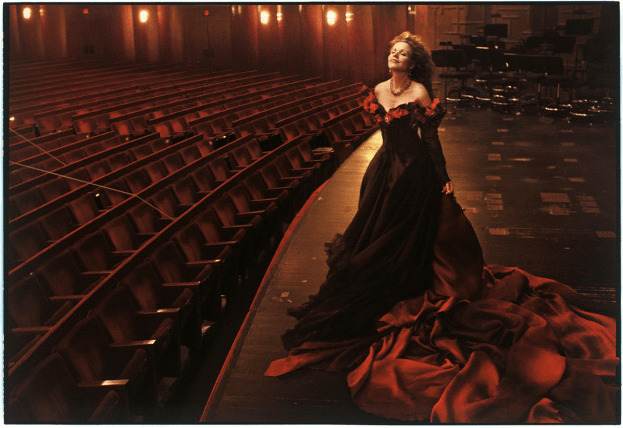
As a musical statesman, Renée Fleming has been sought after on numerous distinguished occasions, from the 2006 Nobel Peace Prize ceremony to performances in Beijing during the 2008 Olympic Games. On January 18, 2009, was featured on the televised We Are One: The Obama Inaugural Celebration at the Lincoln Memorial concert for President Obama. She has performed for the United States Supreme Court, HRH The Prince of Wales at Buckingham Palace, and, in November 2009, celebrated the 20th anniversary of the Czech Republic’s “Velvet Revolution” at the invitation of Václav Havel. An additional distinction was bestowed in 2008, when breaking a precedent, Ms. Fleming became the first woman in the 125-year history of the Metropolitan Opera to solo headline an opening night gala.
FROM https://reneefleming.com/artistry/

Renée Fleming photographed by Annie Leibovitz, 2008

American Gothic

parody2

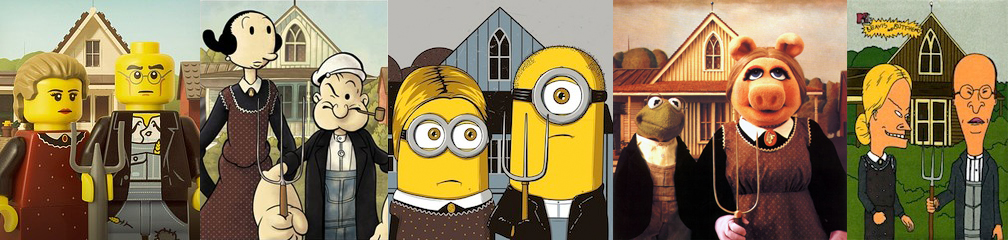
The painting endures, Biel concludes, because it is both itself and a parody of itself. Its meaning has more to do with the viewer’s perception than Wood’s intention. In this, Biel is identifying something common to all visual material. Paintings (like films) never change, but they are subject to differing responses and interpretations as times change. Those that survive cultural, aesthetic and historical shifts share the characteristics that can be seen in ”American Gothic.” It’s simple — two people and a house — and easily remembered. It’s ambiguous and thus can evoke the ambivalent. Wood’s choice of clothing, hairstyle, color and sober posture denies specifics, yet suggests a time, a place and an attitude. It opens the door to popularity (anyone can enjoy it for any reason); argument (does it criticize Middle America or affirm its values?); hatred (it’s an ugly cliché and she’s got rickrack on her dress); parody (the Barbie and Ken or Mickey and Minnie Mouse versions); rebellion (Gordon Parks’s photograph of a black cleaning woman uses the pose to remind us of its basic whiteness); commerce (Paul Newman and his daughter posing on their organic snack packages); politics (representations of a long line of American presidents and their first ladies); and endless pop cultural references (the small-town tableau of ”The Music Man” or the credits for ”Green Acres”)
http://www.nytimes.com/2005/07/10/books/review/10BASSING.html?pagewanted=all&_r=0

modelshouse

GreenAcresparody1