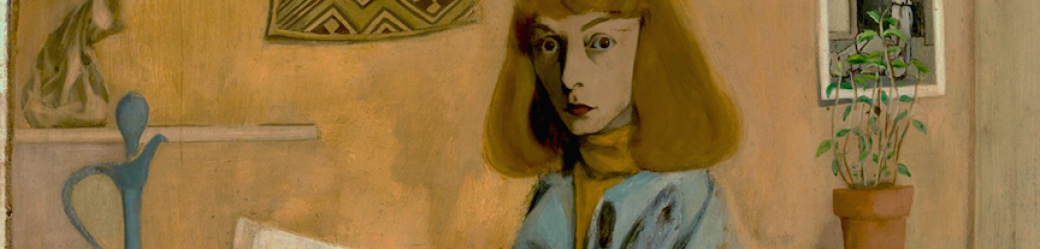
Randolph Caldecott: Born on March 22, 1846

artMedal

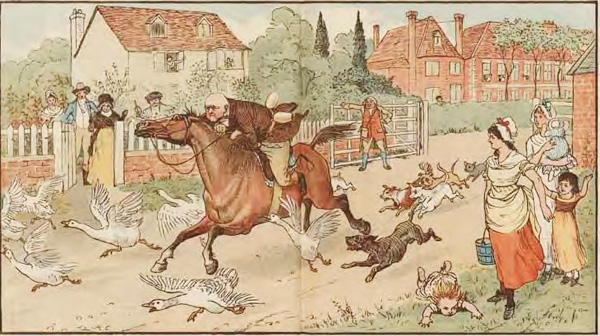
The full-color illustration adapted for the image depicted on the Caldecott Medal, from The Diverting History of John Gilpin (1878). Source: http://www.publishersweekly.com/images/data/ARTICLE_PHOTO/photo/000/017/17815-1.JPG

Randolph Caldecott was born in Chester on 22 March 1846. He was the third son of John Caldecott and his first wife Mary Dinah Brookes, and one of 13 siblings or half-siblings. Caldecott attended King Henry VIII School, Chester, where he became head boy.

From an early age Caldecott showed artistic talent. He won a prize for drawing while at school in Chester, and in 1861, when he was 15 years old, the Illustrated London News published his drawing and written account of a major fire at a railway hotel in Chester.

Caldecott was also interested in sculpture, and studied for a time with the French sculptor Jules Dalou. He also produced decorative murals, panels and bas-reliefs, and painted in oils.

Caldecott is most famous for his 16 picture books, published annually in pairs by George Routledge & Sons, London.
https://www.natwestgroup.com/heritage/people/randolph-caldecott.html
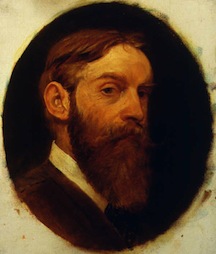
selfportraitThe Randolph Caldecott Medal
Frederic G. Melcher suggested in 1937 the establishment of a…medal is to be given to the artist who had created the most distinguished picture book of the year and named in honor of the nineteenth-century English illustrator Randolph J. Caldecott.
The Caldecott Medal “shall be awarded to the artist of the most distinguished American Picture Book for Children published in the United States during the preceding year.”
http://www.ala.org/alsc/awardsgrants/bookmedia/caldecottmedal/aboutcaldecott/aboutcaldecott

Caldecott Medal & Honor Books, 1938-Present
http://www.ala.org/alsc/awardsgrants/bookmedia/caldecottmedal/caldecotthonors/caldecottmedal

An excerpt from ‘Randolph Caldecott: The Man Who Could Not Stop Drawing’
http://www.publishersweekly.com/pw/by-topic/childrens/childrens-book-news/article/58869-randolph-caldecott-the-man-who-could-not-stop-drawing-a-pw-excerpt.html

JackBuilt

THE HOUSE THAT JACK BUILT:
One of R. Caldecott’s Picture Books
http://www.gutenberg.org/files/12109/12109-h/12109-h.htm
March 22~

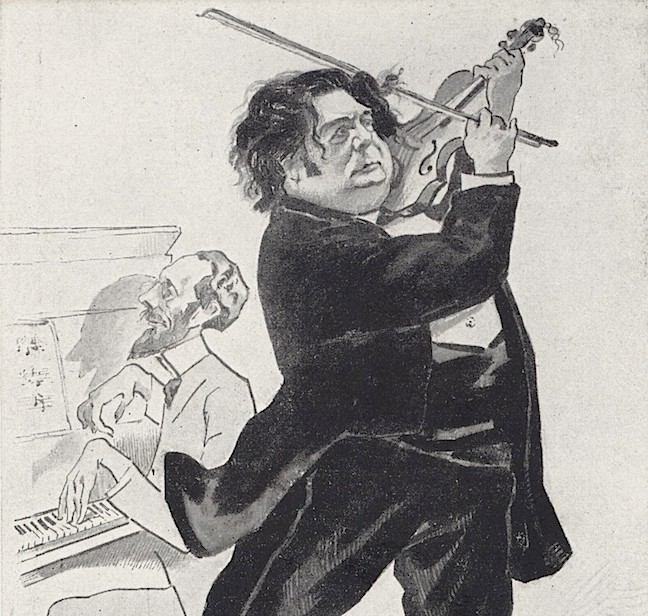
Théo Ysaÿe (1865-1918)
art:  Detail, caricature of Theo Ysaÿe and brother Eugène Ysaÿe
bio: https://en.wikipedia.org/wiki/Th%C3%A9o_Ysa%C3%BFe
video: https://youtu.be/7eHXRCuHtyQ


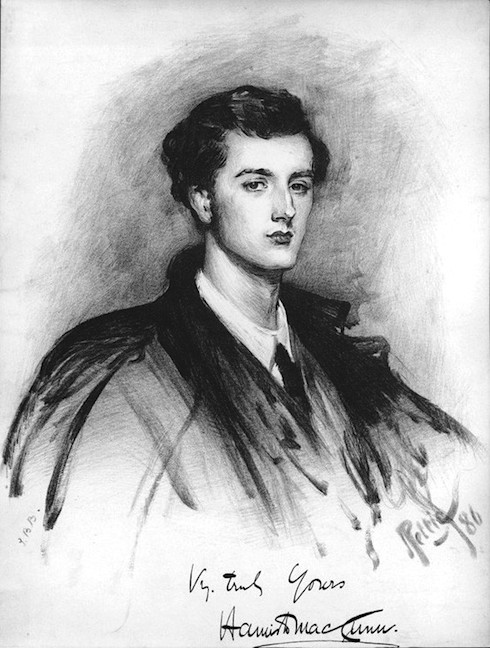
Hamish MacCunn (1868-1916)

art: Sketch of Hamish MacCunn by J.B.B., after John Pettie, National Portrait Gallery, London
bio: https://en.wikipedia.org/wiki/Hamish_MacCunn
video: https://youtu.be/c4p7SLbWdGg

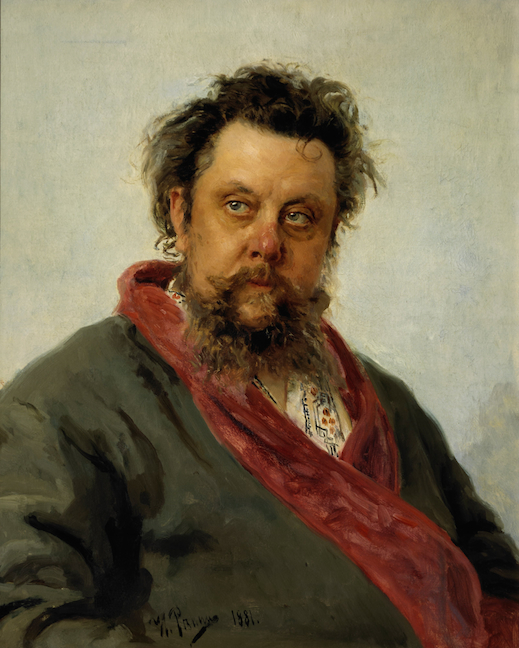
Modest Mussorgsky: Born March 21, 1839

Modest Petrovich Mussorgsky (March 21 [O.S. March 9] 1839 – March 28 [O.S. March 16] 1881) was born into a wealthy rural, landowning family. He began by picking out on the piano the tunes he heard from the serfs on his family’s estate. At the age of six, he began to study piano with his mother. His parents initially set him out on the career of military officer. He became a cadet and finally commissioned in an elite imperial regiment. Two years later, in 1858, he resigned his commission. During this time, he met a musically-inclined army doctor: Alexander Borodin. The two became friends. In 1861, with Russia’s emancipation of the serfs, his family lost significant income, and he was forced to earn a living. In 1863, he began a spotty career in the civil service…In 1856, he met the composer Dargomïzhsky, who in turn introduced him to Cesar Cui, Mily Balakirev, and a critic named Victor Stasov. Gradually, Borodin and Nicolai Rimsky-Korsakoff joined to form a loose group known as the “Moguchaya Kuchka” (“the mighty handful” or “the mighty bunch”).
http://www.classical.net/music/comp.lst/mussorgsky.php

See also: https://schristywolfe.com/2015/05/05/viktor-hartmann-born-may-5-1834/

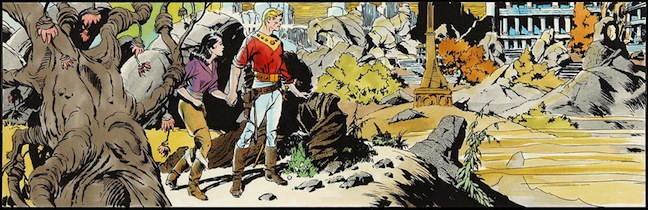
Al Williamson: Born March 21, 1931

WilliamsonAlfonso Williamson (March 21, 1931-June 12, 2010) was an American cartoonist, comic book artist,
and illustrator specializing in adventure, Western, and science-fiction/fantasy  ~ Wikipedia

http://www.comicbookresources.com/?page=article&id=28503
http://www.inkwellawards.com/?page_id=316
https://www.lambiek.net/artists/w/williamson_a.htm

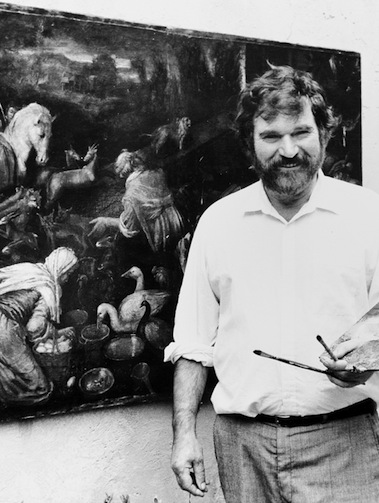
Art Forger Eric Hebborn: Born March 20, 1934

Hebbornhttp://www.intenttodeceive.org/forger-profiles/eric-hebborn/
<<<<<<<

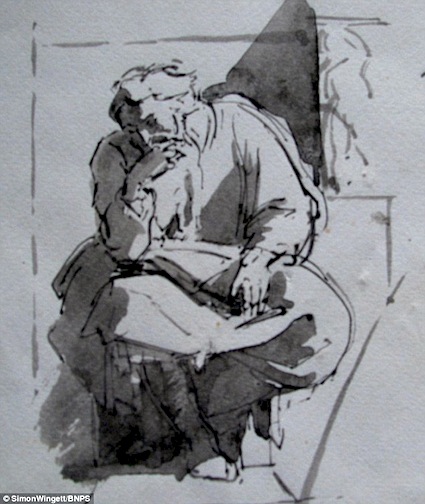
The number of works by Eric Hebborn in public collections will never be certain. Between the early 1960s and his death in 1996, Hebborn created an estimated 1,000 drawings in the manner of various Old Masters, artfully mixed in with thousands more of legitimate origin that he handled as a dealer. Though dozens of the fakes have been detected by curators, and more were revealed by Hebborn himself in his notoriously mischievous 1991 autobiography, Drawn to Trouble, the vast majority remain in circulation under names other than his own.
The sheer variety of known Hebborn fakes has further complicated the task of finding his undisclosed forgeries. He drew convincingly as Andrea Mantegna and Nicolas Poussin, Giovanni Battista Piranesi and Peter Paul Rubens, Thomas Gainsborough and Jean-Baptiste-Camille Corot. He could even limn the 20th century, illicitly expanding the oeuvres of Augustus John and David Hockney.
http://www.artandantiquesmag.com/2011/07/forging-a-career/

Forgery and Plagiarism
Encyclopedia of Applied Ethics, edited by Ruth Chadwick. 4 vols. San Diego: Academic Press, 1998.
Denis Dutton    http://www.denisdutton.com/forgery_and_plagiarism.htm

Art forger Eric Hebborn collection sells for thousands
http://www.bbc.com/news/uk-england-wiltshire-29750380Fake

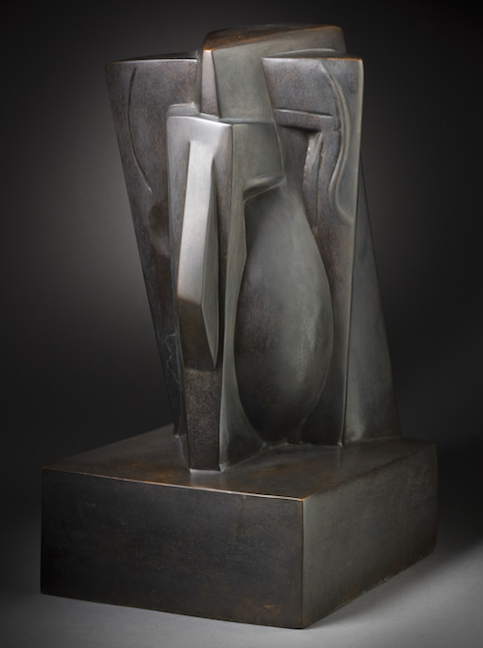
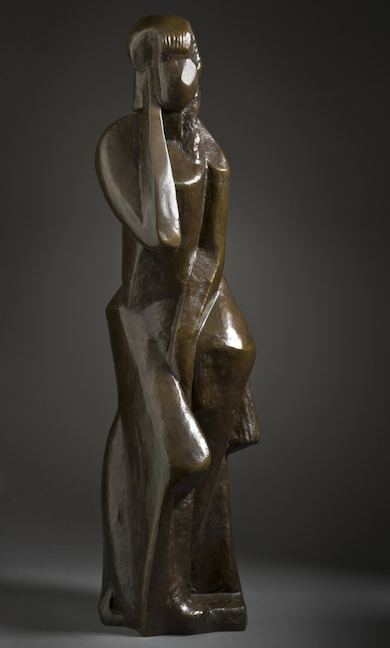
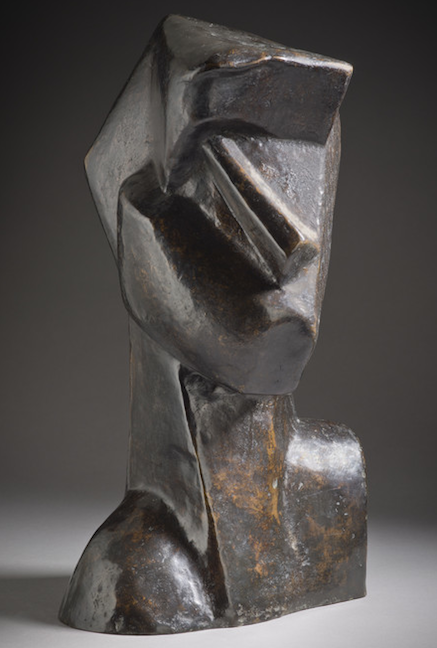
Joseph Csaky: Born March 18, 1888

Joseph Csaky (March 18, 1888-May 1, 1971) was a Hungarian avant-garde artist, sculptor, and graphic artist, best known for his early participation as a sculptor in the Cubist movement.*

https://collections.lacma.org/node/2109599

*https://en.wikipedia.org/wiki/Joseph_Csaky
http://www.ngv.vic.gov.au/explore/collection/work/3363/
https://www.guggenheim.org/artwork/artist/joseph-csaky

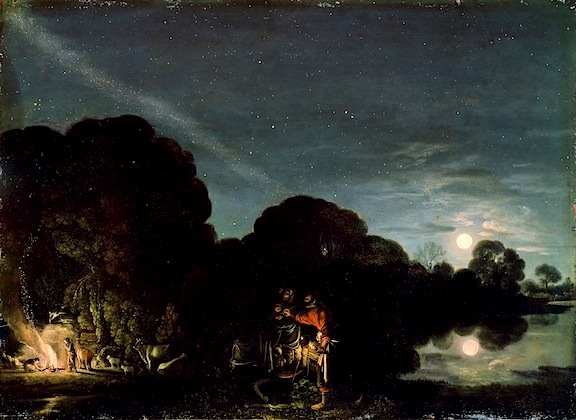
Adam Elsheimer: Born March 18, 1578

DGA505268Adam Elsheimer (1578-1610)~ https://www.nationalgallery.org.uk/artists/adam-elsheimer

The tiny stars were painted almost 400 years ago by Adam Elsheimer, a tailor’s son from Frankfurt, who made it as an artist in Rome. He is a painter long known by experts as a key influence on Rubens and Rembrandt, but his name is unfamiliar to the general public.

Now, she tells me, scientist have confirmed that the constellations in Elsheimer’s miniature painting, The Flight Into Egypt, are clearly recognisable, his shimmering depiction of the milky way the very first of its type, and the position of the moon so accurate that it can be dated to a particular night: June 16, 1609, a year before Galileo published his groundbreaking research. To make his painting, Elsheimer must have observed the night sky through a telescope. His reputation may have become buried in the past, but in his own time he was a man of the future.
FROM http://www.heraldscotland.com/sport/spl/aberdeen/twinkle-twinkle-little-stars-you-ll-need-a-magnifying-glass-to-appreciate-adam-elsheimer-s-groundbreaking-miniature-milky-way-by-moira-jeffrey-1.18082

In this picture, considered the first true moonlit night scene in European painting, Elsheimer reproduced the starry night sky with the Milky Way. Unresolved remains the question whether the artist was aware of Galileo’s research published in 1610 and whether he recorded an actual Roman night sky.
FROM https://hnanews.org/hnar/reviews/six-publications-adam-elsheimer/

March 17~

Nat King Cole (1919-1965)
art:  William P. Gottlieb Library of Congress
bio: http://www.allmusic.com/artist/nat-king-cole-mn0000317093/biography
video: https://youtu.be/GfAb0gNPy6s

Rudolph Nureyev (1938-1993)
art: Jamie Wyeth
Brandywine River Museum of Art
bio: http://russiapedia.rt.com/prominent-russians/opera-and-ballet/rudoph-nureyev/
video: https://youtu.be/qG7JvpPGdEU

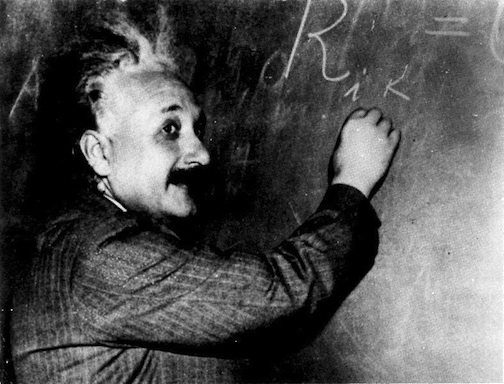
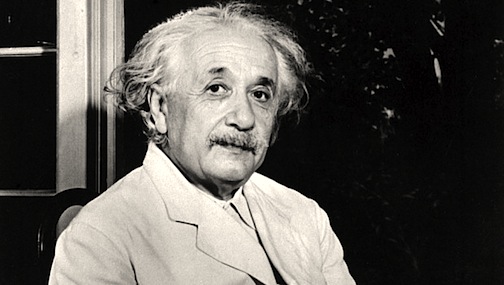
Albert Einstein: Born March 14, 1879

EinsteinAlbert Einstein’s theory of general relativity has held up pretty well after a century out in the world.

The famous theory, which Einstein published in 1915, remains the bedrock upon which scientists’ understanding of the origin and evolution of the universe rests. It continues to inspire research into some of the most fundamental unanswered questions in physics and astronomy.

General relativity “is now, I think, routinely accepted as the foundation of our description of the universe at large, which we call cosmology; of black holes, of neutron stars and of small corrections to the orbits of planets and spacecraft in our own solar system,” said Roger Blandford of the Kavli Institute for Particle Astrophysics and Cosmology at Stanford University.
http://www.space.com/28741-einstein-general-relativity-100-years.html

Einstein2

Einstein’s Theory of Relativity Explained (Infographic)
http://www.space.com/28738-einstein-theory-of-relativity-explained-infgraphic.html

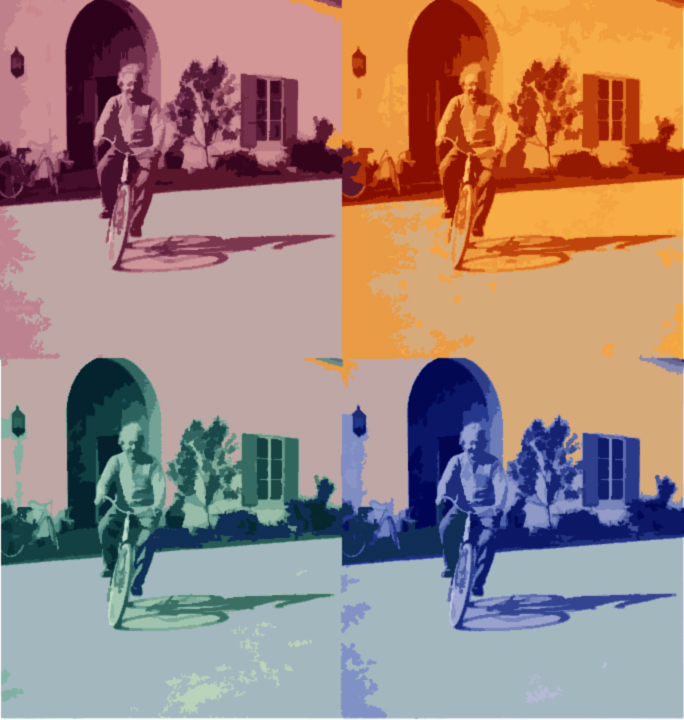
BikeGraphic by The Misty Miss Christy based on http://archives-dc.library.caltech.edu/islandora/object/ct1%3A439