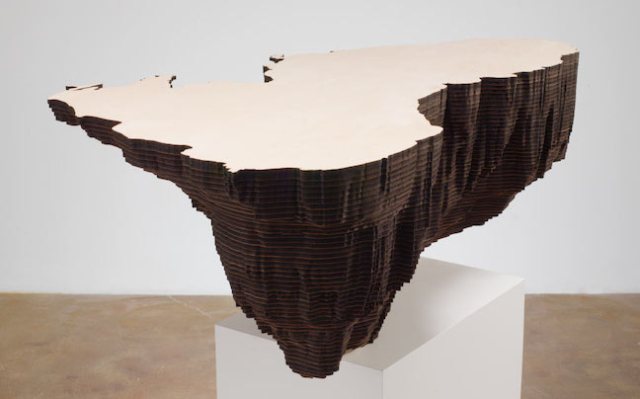
Although chiefly known as a sculptor, Lin also has worked on several architectural projects, which often have been noted for their emphasis on sustainability. Some of the high-profile works in this realm include the Langston Hughes Library (1999) and the Museum of Chinese in America in New York City (2009). Never one to fall into artistic complacency, Maya Lin has also created What Is Missing?, a multimedia, multi-location project that focused on bringing awareness to habitat loss.
For her life’s work, Lin was awarded the National Medal of Arts in 2009, and a film about the artist, Maya Lin: A Strong Clear Vision, won the 1994 Oscar for best documentary. Lin has served as a board member of the National Resources Defense Council and a member of the World Trade Center Site Memorial design jury. In 2016, she was honored with the Presidential Medal of Freedom by Barack Obama. https://www.biography.com/people/maya-lin-37259
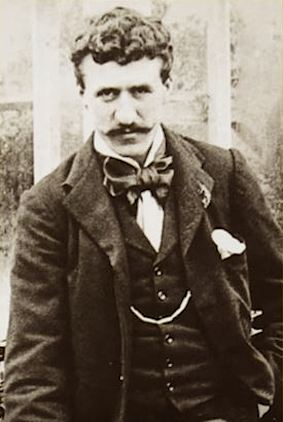
Charles Rennie Mackintosh (7 June 1868-10 December 1928) “was a Scottish architect, designer, water colourist and artist. He was a designer in the Post-Impressionist movement and also the main representative of Art Nouveau in the United Kingdom. He had considerable influence on European design. He was born in Glasgow…” FROM https://alchetron.com/Charles-Rennie-Mackintosh-1221200-W
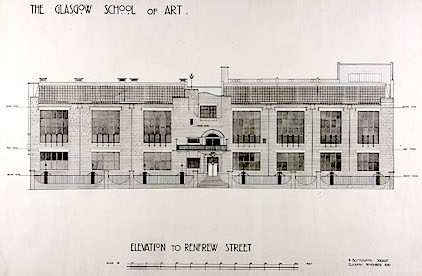
“Mackintosh was apprenticed to a local architect John Hutchison, but in 1889 he transferred to the larger, more established city practice of Honeyman and Keppie.
“The majority of Mackintosh’s architectural practice was supported by his wife Margaret Macdonald with whom he had studied at the Glasgow School of Art. Her mind was often responsible for the artistic flourish that became so integral to the aforementioned Mackintosh Rose motif. In his time as a professional architect, Mackintosh worked with his wife to design buildings ranging in use from residential, to commercial and religious.” FROM https://www.archdaily.com/639483/spotlight-charles-rennie-mackintosh
“Despite success in Europe and the support of clients such as Blackie and Cranston, Mackintosh’s work met with considerable indifference at home and his career soon declined. Few private clients were sufficiently sympathetic to want his ‘total design’ of house and interior. … A move to the South of France in 1923 signalled the end of Mackintosh’s three-dimensional career and the last years of his life were spent painting. He died in London on 10 December 1928.” FROM https://gsaarchives.net/collections/charles-rennie-mackintosh/
American architect Raymond Mathewson Hoodwas born March 29, 1881 in Pawtucket, Rhode Island. He attended Brown University, transferring to and graduating from the MIT School of Architecture. He later continued his education at the École des Beaux-Arts, earning a degree in 1911. Hood has been associated with the architectural styles of Neo-Gothic, Art Deco, Streamlined Moderne, and International.
Hood made his name in 1922 when he and John Mead Howells (whom he had met while in Paris) won a competition to design the Chicago Tribune Tower (completed 1925).
Raymond Hood is perhaps best known for his work on Rockefeller Center (completed 1930-40) in Midtown Manhattan. Covering 22 acres, Rockefeller Center encompasses 19 buildings, including the Art Deco Radio City Music Hall.










 The Misty Miss Christy