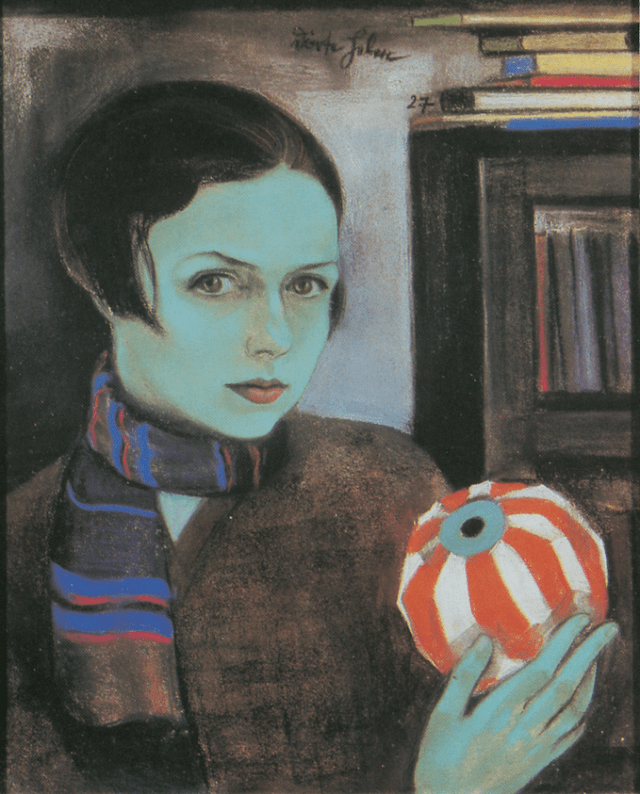
Designer Eva Zeisel

Eva Striker Zeisel (1906-2011) was a Hungarian-born American industrial designer.
https://en.wikipedia.org/wiki/Eva_Zeisel

Image from:  https://www.filzfelt.com/designers/view/eva-zeisel

Born in 1906, Zeisel’s prolific output as a designer began in her late teens and continued until her death in 2011 at age 105, even as her eyesight failed and she had to design by touch. Even more impressive, in her later years she estimated that her designs numbered more than 100,000.

Quote from A Friendly Reminder of Eva Zeisel’s Enduring Excellence
https://www.core77.com/posts/53721/A-Friendly-Reminder-of-Eva-Zeisels-Enduring-Excellence#

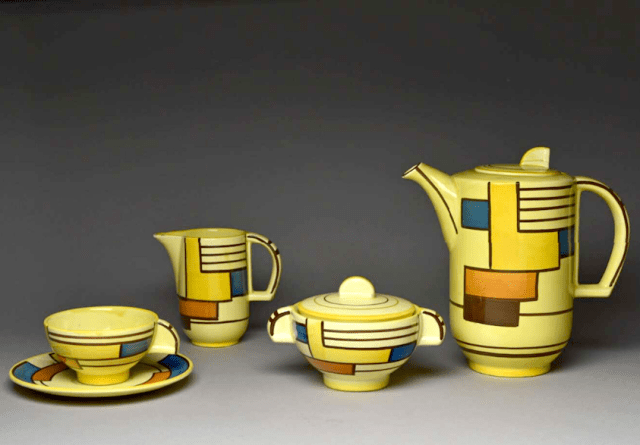
Coffee service, 1928-1930 / Earthenware / The British Museum, London, UK

Tea Service [Shapes: Eva Zeisel; decorations: Varvara Petrovna Freze], 1935
Porcelain / Cooper Hewitt, NYC

“Museum” Pattern, c.1942-1943 / Porcelain / Brooklyn Museum, NYC

Hallcraft “Tomorrow’s Classic Caprice”, 1953 / Earthenware with decals
International Museum of Dinnerware Design, Ann Arbor, Michigan

Chantal Eva Kettle, 2005 / Stainless steel / Image from Dwell Magazine

[5 embedded links above]

Further reading:
https://www.atomic-ranch.com/interior-design/designers-craftsmen/eva-zeisel/
https://learninglab.si.edu/collections/Eva%20Zeisel:%20A%20Lifetime%20of%20Design/J17uojVrorDtmXvr

Andy Warhol’s Endangered Species (Animals in Art)

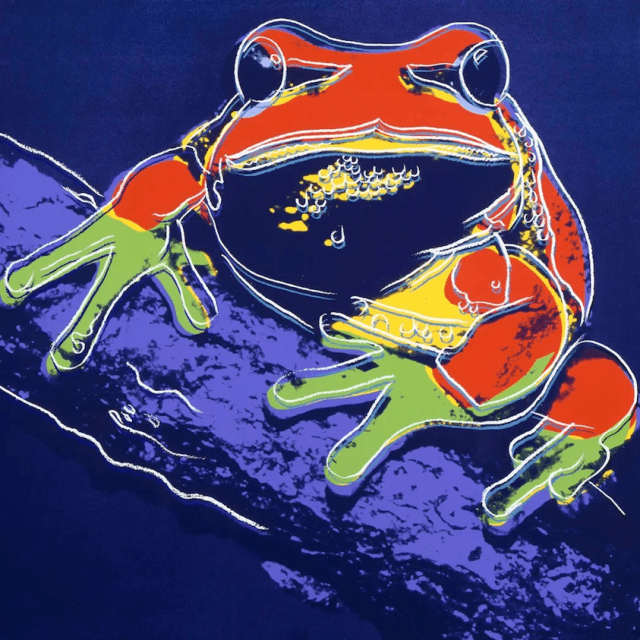
Created in 1983, the series consists of 10 silkscreen prints featuring images of animals that were endangered or threatened with extinction. The series was a collaboration between Warhol and his friend, the art dealer and gallerist Ron Feldman, and it was created in support of the Endangered Species Act, which was passed by the U.S. Congress in 1973.
~FROM https://andipaeditions.com/blog/104-endangered-species-by-andy-warhol-an-important-milestone/

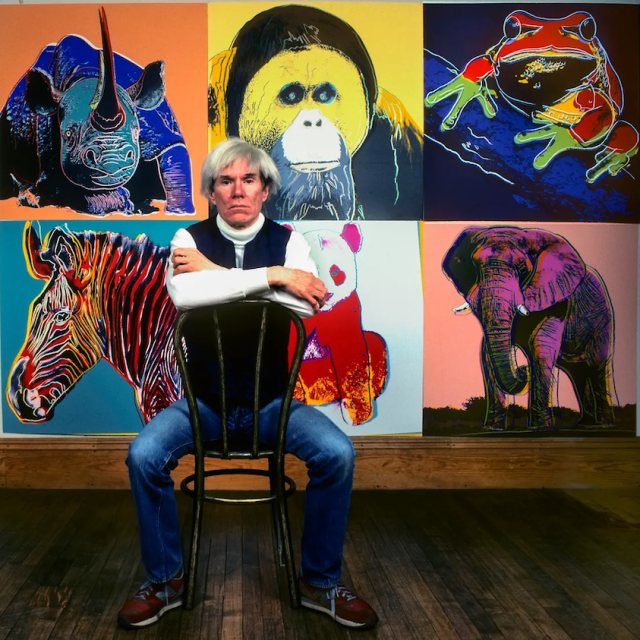
Andy Warhol at The Factory, NYC, April 12, 1983 [Getty Images]

Endangered Species Portfolio, 1983 / Screenprint on Lenox Museum Board / 41″x41″ / Various collections

[1 embedded link above]

10 Facts About Andy Warhol’s Endangered Species
https://www.myartbroker.com/artist-andy-warhol/10-facts/10-facts-about-warhol-endangered-species

Designer Anna Maria Garthwaite

Anna Maria Garthwaite (1688-1763) was an English textile designer.
https://en.wikipedia.org/wiki/Anna_Maria_Garthwaite

Image from https://eastendwomensmuseum.org/blog/2020/9/23/anna-maria-garthwaite

In general, there is often scant surviving evidence for most textile artisans of the eighteenth century. One important exception, however, is Anna Maria Garthwaite, a designer who was based in London’s fashionable weaving district, Spitalfields. Unlike many women artists of the eighteenth century, Garthwaite was both highly regarded in her lifetime and remains well known today by modern historians who study historic dress and textiles.

Quote from The Minneapolis Institute of Art
https://collections.artsmia.org/art/143568/textile-anna-maria-garthwaite

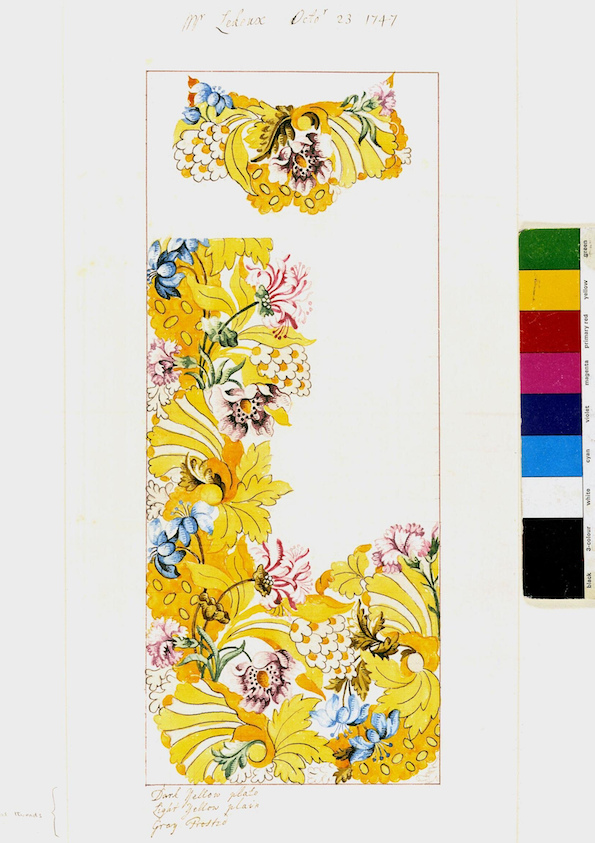
Design for a woven silk, 1747 / Watercolor on paper / Victoria & Albert Museum, UK
↓ A waistcoat woven from this design is in the Costume Institute of The Met ↓

Waistcoat, 1747 / Silk, wool, metallic / Metropolitan Museum of Art, NYC

Silk damask dress, c.1775 / Museum at the Fashion Institute of Technology, NYC

Design for a woven silk, 1748-1749 / Watercolor on paper / Victoria & Albert Museum, UK

[4 embedded links above]

Further reading:
https://www.english-heritage.org.uk/visit/blue-plaques/anna-maria-garthwaite/
https://womeninspire.co.uk/blog/anna-maria-garthwaite-a-pioneer-in-british-design
https://twonerdyhistorygirls.blogspot.com/2010/05/intrepid-ladies-anna-maria-garthwaite.html

Designer Zuzana Licko

Zuzana Licko (born 1961) is an American type designer and visual artist
https://en.wikipedia.org/wiki/Zuzana_Licko

Image from No Web Without Women~
https://nowebwithoutwomen.com/

In 1984, the Apple Macintosh computer was introduced, ushering in a new era of digital type design.

That same year, Rudy VanderLans and Zuzana Licko founded Emigre Graphics in San Francisco. Soon, this typeface foundry and its magazine, Emigre, became the late 20th century’s wellspring of experimental digital typography and graphic design.

Quote from the web site Poster House
https://posterhouse.org/exhibition/the-revolution-will-be-digitized-typefaces-from-emigre-fuse/

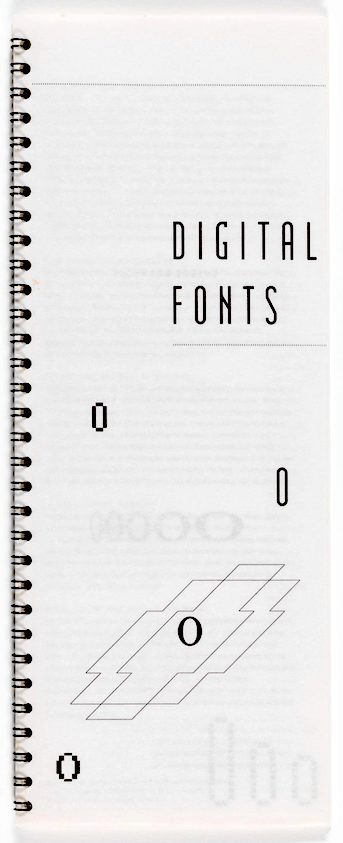
Emigre digital font catalogue, 1986 / San Francisco Museum of Modern Art, CA

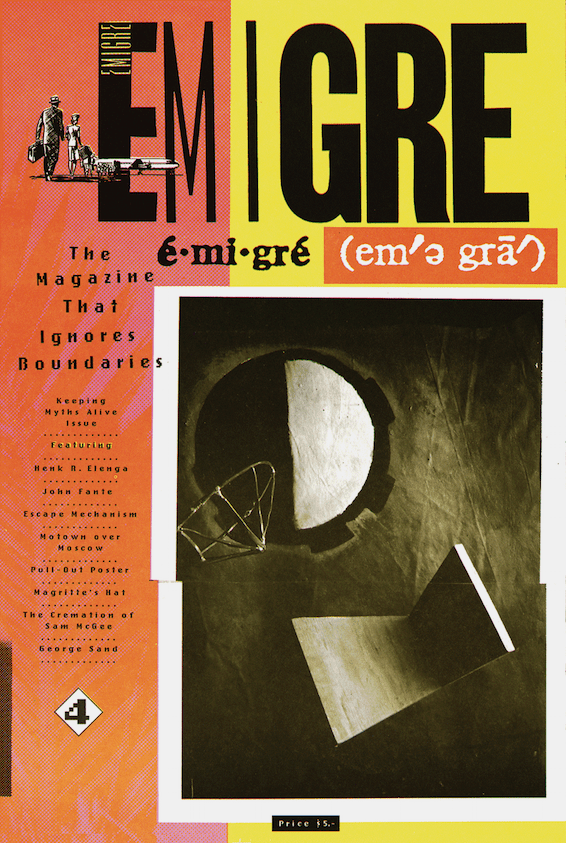
Emigre 4, The Magazine That Ignores Boundaries, 1986 / Museum of Modern Art, NYC

Mrs Eaves typeface, designed by Zuzana Licko / Emigre digital type foundry, Berkeley, CA

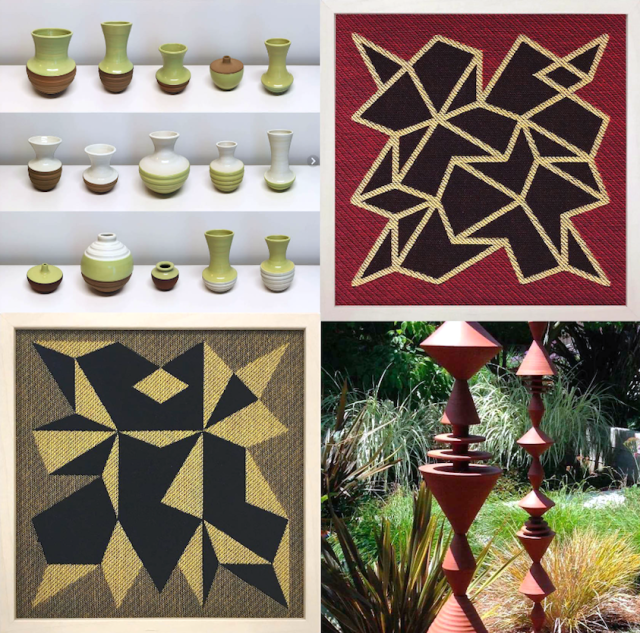
Zuzana Licko’s Ceramic vases / Jacquard Weavings / Terra Cotta Garden Cones Sculptures
These images from  https://www.zuzanalicko.com/vases.php
https://ksmallgallery.com/blogs/exhibits/zuzana-licko-9-jacquard-weavings
https://www.wescover.com/p/terra-cotta-garden-cones-sculpture-by-zuzana-licko–PS1NMxFZXO

[3 embedded links above]

Further reading:
https://www.eyemagazine.com/feature/article/reputations-zuzana-licko
https://www.printmag.com/daily-heller/the-daily-heller-vanderlans-licko-return-to-their-bitmap-roots/

Designer Edith Head

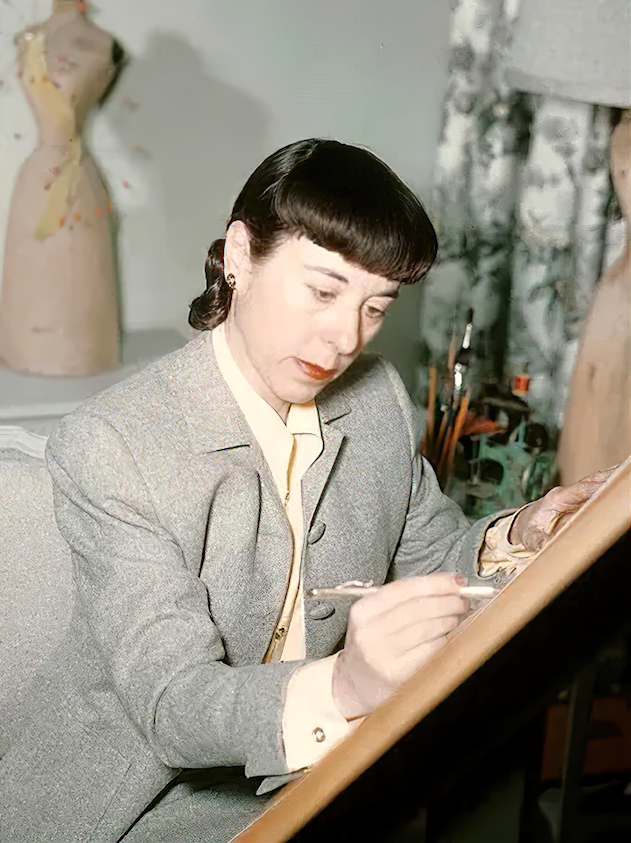
Edith Head (1897-1981) was an American costume designer
https://en.wikipedia.org/wiki/Edith_Head

Image found on internet

Edith Head was…active in film from 1932 to 1982. She was the head designer at Paramount for many years. She married production designer Wiard Ihnen in 1940. Head was nominated by the Academy 35 times in the costume design category. She received Academy Awards for her work on THE HEIRESS (1949), ALL ABOUT EVE (1950), SAMSON AND DELILAH (1949), A PLACE IN THE SUN (1951), ROMAN HOLIDAY (1953), SABRINA (1954), THE FACTS OF LIFE (1960), and THE STING (1973). She authored two books, “The Dress Doctor” and “How to Dress for Success.”

Quote from The Online Archive of California
https://oac.cdlib.org/findaid/ark:/13030/c80k29tm/

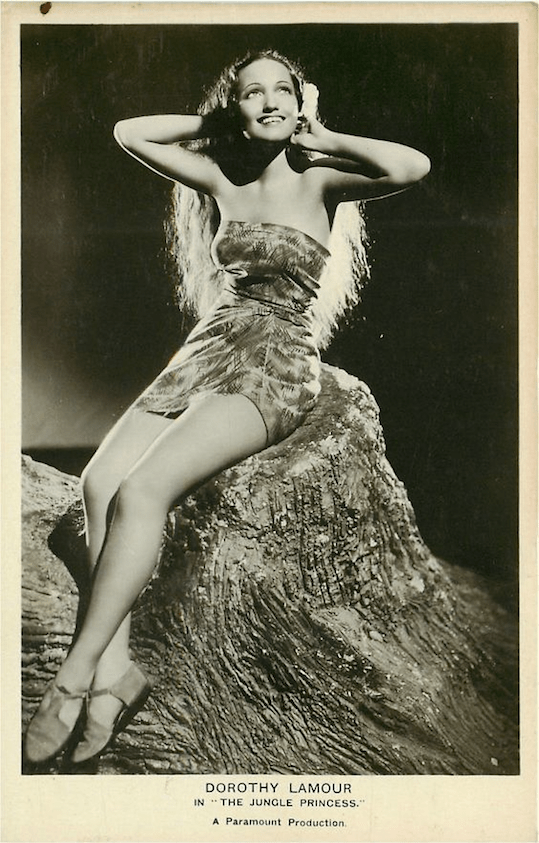
Dorothy Lamour’s sarong for the 1936 movie The Jungle Princess

Head won her first Academy Award for The Heiress (1949) in 1950

“Fasten your seatbelts” dress for All About Eve

Jacket and Slacks Design for for Kim Novak in Vertigo

Head won her last Academy Award for The Sting (1973) in 1974

[5 embedded links above]

Further reading:
https://www.thecut.com/2013/10/30-fantastic-movie-costumes-by-edith-head.html
https://fidmmuseum.org/category/edith-head
https://www.oscars.org/collection-highlights/edith-head

Designer Alice Cordelia Morse

Alice Cordelia Morse (June 1, 1863-July 15, 1961) was an American designer of book covers.
https://en.wikipedia.org/wiki/Alice_Cordelia_Morse

Image from https://archive.org/details/womanofcenturyfo00will

In 1885, two years after graduating from Cooper Union, Morse took a position at Tiffany and Company as a designer and painter of stained glass. Around this time, progressive American publishers began to commission artist-designers to design the covers of commercial books, rather than assigning the work to die-makers and engravers, as was customary. Morse grew interested in the emerging field of book-cover design while still at Tiffany’s. Perhaps in part due to her experience there, she developed an impressive ability to interpret nature motifs and historical ornament. On leaving Tiffany’s in 1889, Morse resumed her education at the Woman’s Art School while also working as an independent designer. She soon rose to the forefront of the first generation of artists to design commercially produced books.

Quote from Mindell Dubansky, author of
The Proper Decoration of Book Covers: The Life and Work of Alice C. Morse, 2008
http://alicemorse.blogspot.com/p/overview-2.html


Design for Stained Glass, late 19th century / Brush and gouache, watercolor on paper / Cooper Hewitt, Smithsonian Design Museum, NYC

Art and Handicraft in the Woman’s Building of the World’s Columbian Exposition, Chicago, 1893 / Cloth cover with gold-stamped and silver-lined floral motifs / Smithsonian Libraries, DC

Design for Title Page, Occupations of Women and Their Compensation, c.1899 / Brush and gouache on paper / Cooper Hewitt, Smithsonian Design Museum, NYC

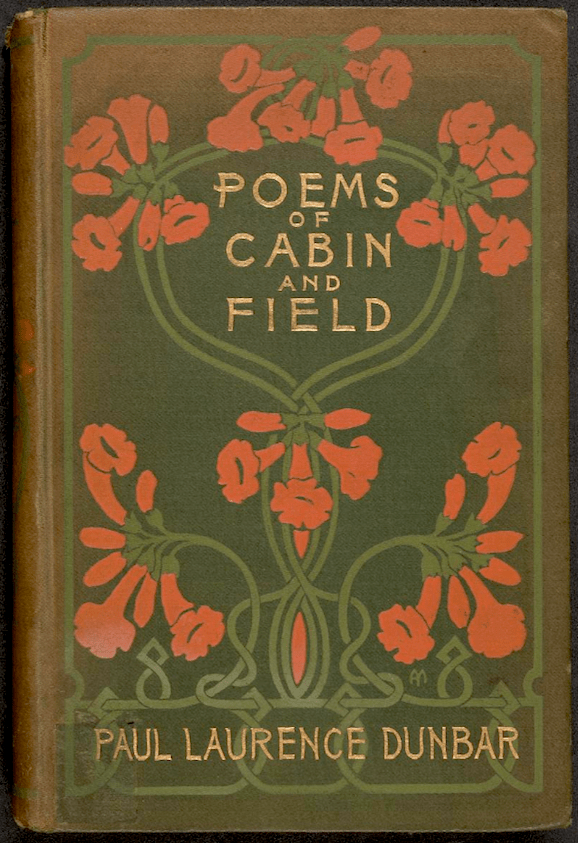
Poems of Cabin and Field, 1899 / Cloth cover with orange and green stamping / National Museum of African American History and Culture, DC

[4 embedded links above]

Further reading:
https://www.metmuseum.org/toah/hd/mors/hd_mors.htm
https://www.carnegiehall.org/Explore/Articles/2020/11/06/Carnegie-Halls-Stained-Glass-Windows
https://bookbindersmuseum.org/women-in-book-cover-design/

Dandelions in Art, Part 2 of 2~

“Taraxacum officinale, the dandelion or common dandelion, is a flowering herbaceous perennial plant, well known for its yellow flower heads that turn into round balls of silver-tufted fruits that disperse in the wind.
The common dandelion grows in temperate regions of the world in areas with moist soils. It is most often considered a weed, especially in lawns and along roadsides, but the leaves, flowers, and roots are sometimes used in herbal medicine and as food.”
~https://en.wikipedia.org/wiki/Taraxacum_officinale

The Dandelion

O dandelion, rich and haughty,
King of village flowers!
Each day is coronation time,
You have no humble hours.
I like to see you bring a troop
To beat the blue-grass spears,
To scorn the lawn-mower that would be
Like fate’s triumphant shears.
Your yellow heads are cut away,
It seems your reign is o’er.
By noon you raise a sea of stars
More golden than before.
~Vachel Lindsay (1879-1931) https://www.poetryfoundation.org/poets/vachel-lindsay
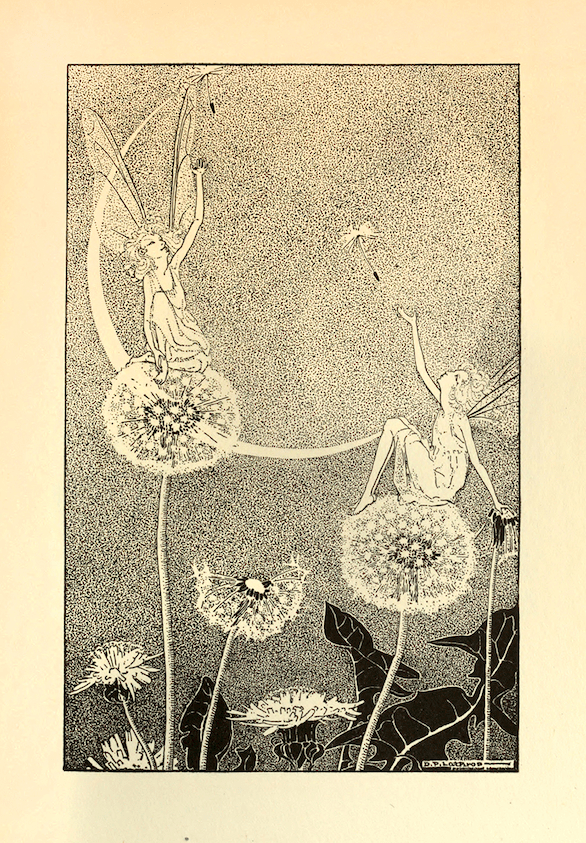
10. Happy, Happy It Is To Be, illustration by Dorothy Pulis Lathrop (1891-1980)
https://www.bellusfineart.com/artists/dorothy-pulis-lathrop/
From Walter de la Mare’s Down-Adown-Derry, published 1922, Constable & Co. Ltd, London
https://archive.org/details/downadownderrybo00delauoft/page/58/mode/2up

11. “Certainly, I am a little wild,” remarked Danny Dandelion, illustration by T. Benjamin Faucett (1884-1966)
http://strippersguide.blogspot.com/2013/03/ink-slinger-profiles-t-benjamin-faucett.html
From Frolicsome Flowers:They See the Wonderful Rajah Rug, written and illustrated by
T. Benjamin Faucett, published 1924, A. L. Burt, New York

https://50watts.com/filter/forgotten-illustrator/Frolicsome-Flowers-of-Evil

12. The Dandelion (Study for Hide-and-Seek), 1939, by Pavel Tchelitchew (1898-1957)
https://en.wikipedia.org/wiki/Pavel_Tchelitchew
Gouache and watercolor on colored paper / Museum of Modern Art, NYC
https://www.moma.org/collection/works/36474
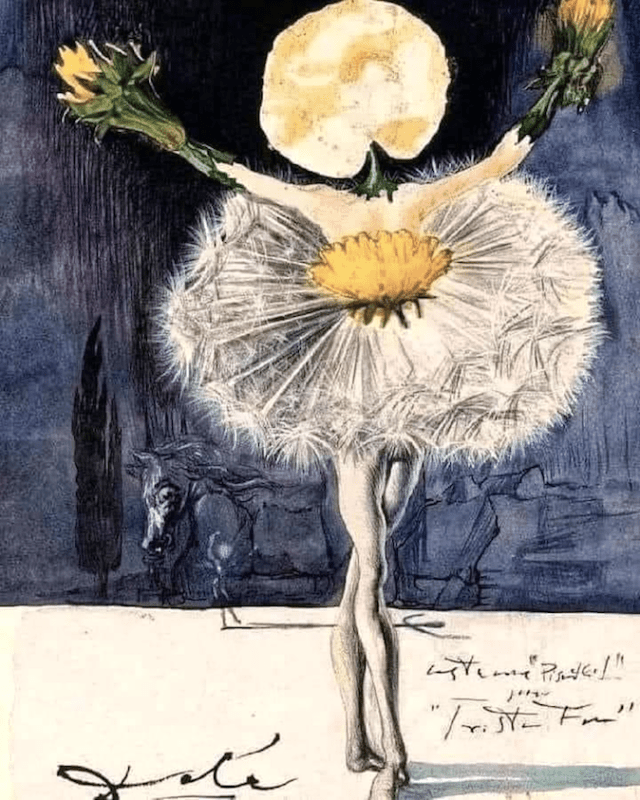
13. Une Costume ‘Pisenlit’ pour le ballet ‘Tristan Fou, 1944, by Salvador Dalí (1904-1989)
https://www.salvador-dali.org/en/dali/bio-dali/
Mixed media and collage on paper / Private collection
https://www.artnet.com/artists/salvador-dal%C3%AD/une-costume-pisenlit-pour-le-ballet-tristan-fou-0JOFE2LX4QngtRB1iuvBg2

14. Dandelions, 1945, by Kate Neufeld (1905-2004)
Anabaptist Mennonite Encyclopedia Online~ bit.ly/3GZuDjF
Linoleum cut / Cleveland Museum of Art, Ohio
https://www.clevelandart.org/art/1945.66

15. Dandelions, 1985, by Yayoi Kusama (born 1929)
https://en.wikipedia.org/wiki/Yayoi_Kusama
Lithograph / Edition of 100, Various collections
https://www.artnet.com/auctions/artists/yayoi-kusama/dandelions

16. Dandelion Floor Lamp, 2003, by Matteo Bazzicalupo and Raffaella Mangiarotti
http://www.deepdesign.it/en/studio/biography/
Varnished sheet metal and polycarbonate / Museum of Modern Art, NYC
https://www.moma.org/collection/works/120852
Image: https://raffaellamangiarotti.com/Dandelion

17. Dandelion Eye, 2009, by Sylvia Fein (born 1919)
https://en.wikipedia.org/wiki/Sylvia_Fein
Egg tempera on board / Collection of the artist
https://hyperallergic.com/529354/sylvia-fein-matrix-275-bampfa-berkeley/

18. Dandelions, 2011, by David Hockney (born 1937)
https://www.thedavidhockneyfoundation.org/chronology
iPad drawing printed on paper / Archeus/Post-Modern Ltd., London, UK
https://www.archeus.com/artists/art-for-sale/dandelions-david-hockney?

~~~~~~~~~~~~~~~~~~~~~~~~
Monday, January 16th: Dandelions in Art, Part 1 of 2
https://schristywolfe.com/2023/01/16/dandelions-in-art-part-1-of-2/
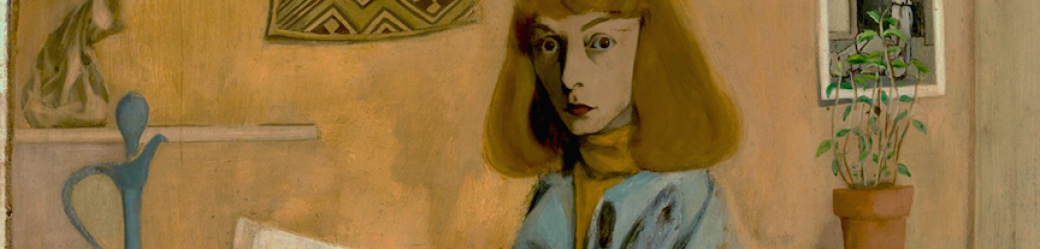
 

Autoportrait Day 179~ Dörte Helm

A random survey of self-portraits created by women through the centuries

German artist, painter, and designer Dörte Helm (1898-1941)

1. Self-portrait, 1918 / Etching / Private collection?

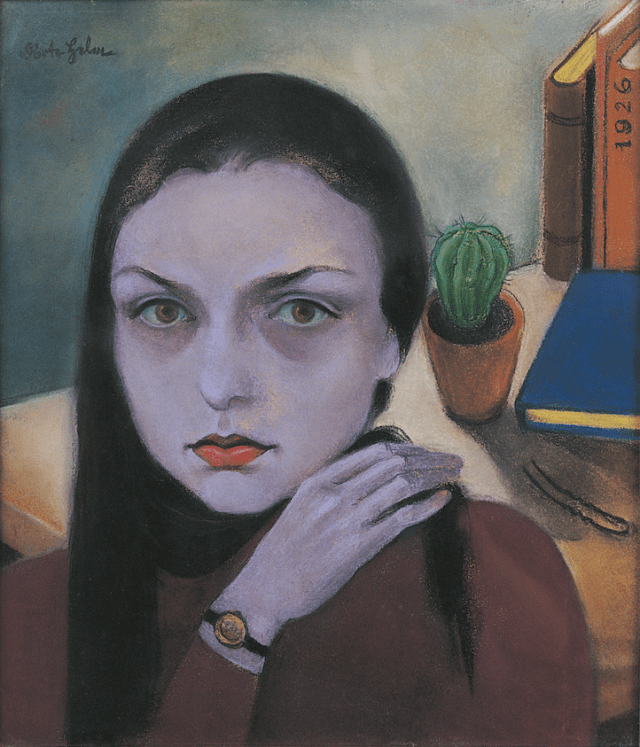
2. Self-portrait with Cactus, 1926 / Pastel on paper / Private collection

3. Self-Portrait, 1927 / Pastel on paper / Private collection

4. Self-Portrait, 1929 / Painting / Bauhaus Archive Museum of Design, Berlin, DE

[5 embedded links above]