“If 1,000 years from now, archaeologists happen to dig beneath the sands of Guadalupe, I hope they will not rush into print with the amazing news that Egyptian civilization, far from being confined to the valley of the Nile, extended all the way to the Pacific coast of North America.” ~”The Autobiography of Cecil B. DeMille,” 1959
So why did DeMille choose to bulldoze his set, rather than truck it back to Los Angeles? “I think there were two things were going on,” Brosnan said, starting with DeMille’s pledge to leave the site as he’d found it. “Hauling away all that statuary would have been very expensive … so I think he pulled a fast one and buried it.” In addition, he said, “(DeMille) knew that if he left it standing … the very next day somebody would be there filming a quickie on his set and they’d be on the streets with it in a few weeks. He was protecting his patent by taking it down.” FROMhttp://www.kcet.org/arts/artbound/counties/santa-barbara/cecil-b-demill-ten-commandments-excavation-nipomo-dunes.html
The modern world was born on a printing press. Once essential to communication, the 500-year-old process is now in danger of being lost as its caretakers age. From self-proclaimed basement hoarders to the famed Hatch Show Print, Pressing On: The Letterpress Film explores the question: why has letterpress survived in a digital age?
Worlds of each character emerge as unusual narratives—joyful, mournful, reflective and visionary—are punctuated with on-screen visual poetry, every shot meticulously composed. Captivating personalities blend with wood, metal and type as young printers strive to save this historic process in a film created for the designer, type nerd, historian and collector in us all.
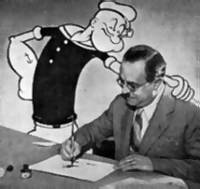
In 1900 Max began to work as an errand boy at the Brooklyn Daily Eagle. By 1904 he was a staff artist. In 1905 he married his childhood sweetheart, Essie Gold; they had two children. After he left the Eagle, Max briefly did artwork for two companies and then became art editor of Popular Science Monthly in 1914. There his childhood interest in mechanical matters was reignited.
In fact, it was a mechanical problem that pulled Max Fleischer into the field of animation. Early animation was frequently very choppy. Max theorized that if live-action footage were traced, frame by frame, fluid motion could be achieved. He enlisted the help of his brothers Dave and Joe, and the three developed the Rotoscope, a camera mounted under a piece of frosted glass with a crank to advance the film, so each frame could be traced.
It took the brothers a week to build the Rotoscope, but it was a full year before they finished their first cartoon. Dave donned a clown suit, and Max and Joe filmed him. Then they traced the clown on the Rotoscope. Work on the cartoon was completed in 1916, and a patent for the Rotoscope came through a year later. FROMhttp://anb.org/articles/20/20-01567.html
The Fleischers put popular, modern music at the center of many of their films, building entire cartoons around jazz legends such as Cab Calloway, Louis Armstrong and Don Redman. These cartoons often featured the Fleischers’ signature combination of live action and animation; in fact the earliest known footage of Cab Calloway in performance can be seen in the Fleischer classic Minnie the Moocher.
In 1929 the Studio made a major agreement with Paramount that would allow Paramount to distribute all Fleischer films. That same year the Studio changed its name to ‘Fleischer Studios.’ FROMhttp://www.fleischerstudios.com/history.html
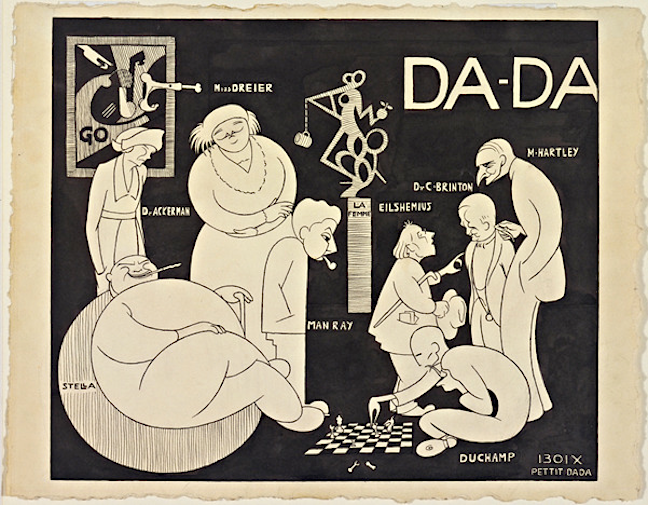
Richard Boix. Da-da (New York Dada Group). 1921. Ink on paper. 11 1/4″ x 14 1/2″ (28.6 x 36.8 cm)
Museum of Modern Art / Katherine S. Dreier Bequest
On July 14, 1916, the poet Hugo Ball proclaimed the manifesto for a new movement. Its name: Dada. Its aim: to “get rid of everything that smacks of journalism, worms, everything nice and right, blinkered, moralistic, europeanised, enervated.” This aim could be achieved simply by saying: “Dada.” https://www.nytimes.com/2016/07/10/arts/dada-100-years-later.html
 The Art of Tim Burton~ https://the-artifice.com/art-tim-burton/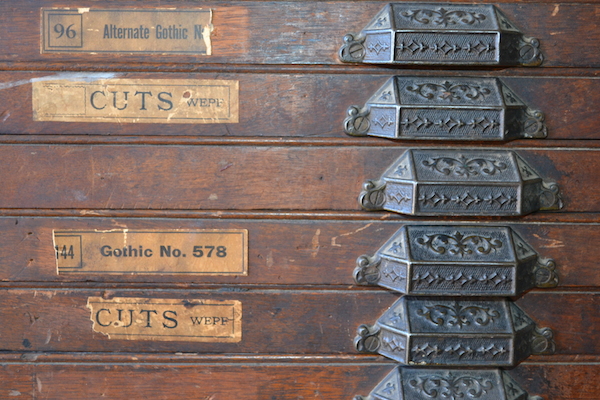





 The Misty Miss Christy