Sergei Rachmaninov (1873-1943)
http://www.allmusic.com/artist/sergey-rachmaninov-mn0000505265/biography
Alberta Hunter (1895-1984)
https://en.wikipedia.org/wiki/Alberta_Hunter
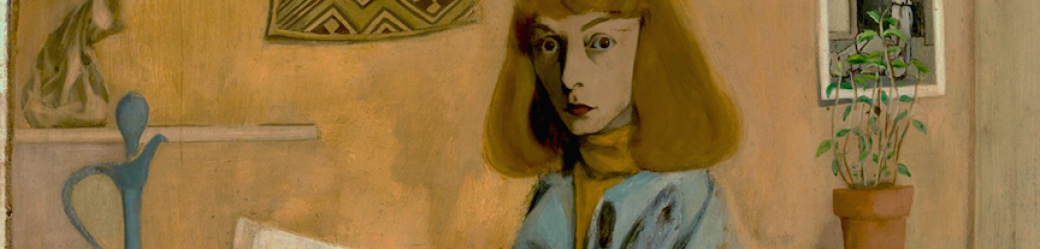
Sergei Rachmaninov (1873-1943)
http://www.allmusic.com/artist/sergey-rachmaninov-mn0000505265/biography
Alberta Hunter (1895-1984)
https://en.wikipedia.org/wiki/Alberta_Hunter
Francis Albert Sinatra [was born] in Hoboken, New Jersey. Although his mother had hoped that he would be the first person in the family to attend college and was disappointed that he did not finish high school, she encouraged his ambition to be a singer. His father, on the other hand, was opposed and insisted that he should find a job. The young Sinatra worked briefly as a truck driver for a newspaper, a riveter in a Hoboken shipyard, and a fruit hauler. By 1932, he had decided that he wanted to be a professional singer.
FROM http://www.anb.org/view/10.1093/anb/9780198606697.001.0001/anb-9780198606697-e-1803570His break came in 1937, when he and three instrumentalists, billed as the Hoboken Four, won on the Major Bowes Original Amateur Hour. After some touring, the group disbanded. Harry James signed Sinatra to sing with his orchestra, and on July 13, 1939, two weeks after his debut as a big-band vocalist at the Hippodrome Theatre in Baltimore, Sinatra cut his first disc, “From the Bottom of My Heart,” with the orchestra.
FROM https://www.rollingstone.com/music/music-news/an-appreciation-of-frank-sinatra-1915-1998-59176/
James graciously freed Sinatra from his contract when the singer received a more lucrative offer from bandleader Tommy Dorsey in December 1939. By 1942 Sinatra’s fame had eclipsed that of Dorsey, and the singer yearned for a solo career.
FROM https://www.britannica.com/biography/Frank-SinatraBetween 1943 and 1946, Sinatra’s solo career blossomed as the singer charted a slew of hit singles. Sinatra made his movie acting debut in 1943. In 1945, he won a special Academy Award for The House I Live In, a 10-minute short made to promote racial and religious tolerance on the home front. Sinatra’s popularity began to slide in the postwar years (but) in 1953, he made a triumphant comeback, winning a supporting actor Oscar for From Here to Eternity.
FROM https://www.biography.com/people/frank-sinatra-9484810
In the mid-’70s Sinatra’s career slowed down, but in mid-1980, after a five-year recording hiatus, he released Trilogy which included a version of “Theme From New York, New York” that the city fervently adopted. In 1985, he was accorded the Presidential Medal of Freedom, the nation’s highest civilian award. Frank Sinatra died of a heart attack on May 14, 1998, in L.A.
FROM https://www.rollingstone.com/music/music-news/an-appreciation-of-frank-sinatra-1915-1998-59176/

Before he was in his teens, Goodman had begun performing in public…Goodman’s precocious talent allowed him to become a member of the American Federation of Musicians at the age of 14 and that same year he played with Bix Beiderbecke. By his mid-teens Goodman was already established as a leading musician, working on numerous engagements with many bands to the detriment of his formal education.
FROM http://biography.just-the-swing.com/benny-goodman
The second band that he formed (in 1934) got a job at Billy Rose’s Music Hall. This band made some great recordings and began appearing on the 3-hour NBC radio program called “Let’s Dance.”
After this, the Benny Goodman Orchestra began touring (with not so fantastic results) until August 21, 1935, when the Benny Goodman Orchestra opened in the Palomar Ballroom in Los Angeles. After playing a few dance tunes, he told the band to play some Fletcher Henderson arrangements. The mostly young crowd promptly started something of a riot. After this public approval of the music – this thing called “Swing” – there was no looking back!
FROM http://www.touchoftonga.com/DavidMulliss/benny-goodman.html
Benny did for clarinet what Louis Armstrong had done for the trumpet. He gave it a newly assertive leadership role in the jazz ensemble.
FROM http://jazzhotbigstep.com/45801.html
Benny Goodman Discography: http://www.discogs.com/artist/254768-Benny-Goodman
“Bill “Bojangles” Robinson (May 25, 1878-November 25, 1949), was a pioneer and pre-eminent African-American tap dance performer since his childhood.”
https://www.harlemworldmagazine.com/bill-bojangles-robinson/
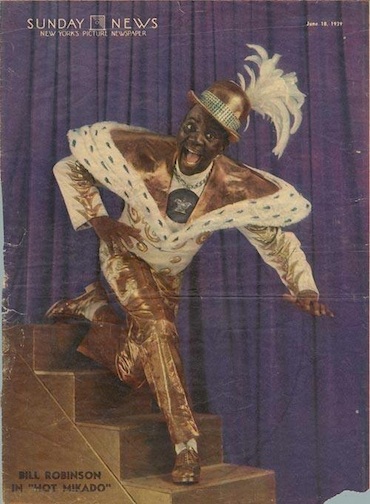
“The Hot Mikado,” starring Bill “Bojangles” Robinson, was a big Broadway hit. It was noted for its wild costuming and all black cast. It ran at the Broadhurst Theater, in Manhattan, from March 23 to June 3, 1939.
Producer Mike Todd announced he was moving the show to the New York World’s Fair. The show became one of the biggest hits at the fair and opened at the Hall of Music on June 22, 1939.
FROM http://www.qchron.com/qboro/i_have_often_walked/bill-bojangles-robinson/article_81b0281a-c1ee-5853-ae31-f810fb8b92a7.html
Silent movie film footage of the Michael Todd production at the New York World’s Fair 1939-1940:
Erskine Hawkins Orchestra – Two Selections from “Hot Mikado”~
https://archive.org/details/ErskineHawkinsOrchestra-TwoSelectionsFromhotMikado
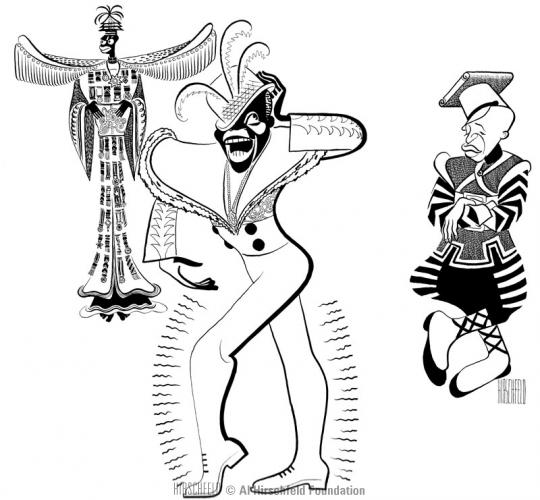
Bill Robinson:
https://artsedge.kennedy-center.org/interactives/harlem/faces/bill_robinson.html
https://www.pbs.org/wnet/broadway/stars/bill-bojangles-robinson/
Fats Waller (May 21, 1904-December 15, 1943), jazz and popular pianist, singer, and songwriter, was born Thomas Wright Waller in New York City, the son of Edward Martin Waller, a Baptist preacher, and Adeline Lockett. From age six Waller was devoted to the piano but initially failed to practice properly or learn to read music well, because he could memorize lessons immediately. In his youth he also played reed organ in church. He studied piano, string bass, and violin at P.S. 89, which he attended to about age fourteen or fifteen. Although his girth had earned him a nickname by this time, the names Thomas and Fats appeared interchangeably (and sometimes together, as Thomas “Fats” Waller) in his professional work until at least 1931. Later in his career, and posthumously, the nickname prevailed.
http://www.anb.org/articles/18/18-01201.html
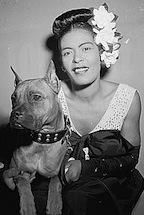
“Billie Holiday was the daughter of Clarence Holiday. Her early life is obscure, as the account given in her autobiography, Lady Sings the Blues, is self-serving and inaccurate.
At some point after 1930, she began singing at a small club in Brooklyn, and in a year or so moved to Pods’ and Jerry’s, a Harlem club well known to jazz enthusiasts. In 1933, she was working in another Harlem club, Monette’s, where she was discovered by the producer and talent scout John Hammond. Hammond immediately arranged three recording sessions for her with Benny Goodman and found engagements for her in New York clubs.
FROM~ http://www.pbs.org/jazz/biography/artist_id_holiday_billie.htm
 Strange Fruit: the first great protest song~ http://www.theguardian.com/music/2011/feb/16/protest-songs-billie-holiday-strange-fruit
The Guardian~“Billie Holiday’s centenary: a life in pictures”
http://www.theguardian.com/music/gallery/2015/apr/07/billie-holidays-centenary-a-life-in-pictures
SFGate~“Billie Holiday at 100: Artists reflect on jazz singer’s legacy”
http://www.sfgate.com/music/article/Billie-Holiday-at-100-Artists-reflect-on-jazz-6177350.php
Looking For Lady Day’s Resting Place? Detour Ahead~ http://www.npr.org/2012/07/17/156686608/looking-for-lady-days-resting-place-detour-ahead
Miller led one of the most popular and best-remembered dance bands of the swing era. In his lifetime he was seen as an intense, ambitious perfectionist, and his success was built on the precise playing of carefully crafted arrangements, rather than propulsive swing or fine jazz solo improvisation (his only important jazz soloist was Bobby Hackett). He was particularly noted for the device of doubling a melody on saxophone with a clarinet an octave higher. His arrangements were seamless and rich. Paradoxically, however, although he had many hits with sentimental ballads performed by such singers as Ray Eberle and Marion Hutton, it was his swinging riff tunes, for example In the Mood and Tuxedo Junction, which became most famous. In 1943, he published Glenn Miller’s Method for Orchestral Arranging.
http://www.pbs.org/jazz/biography/artist_id_miller_glen.htm
Joachim Nicolas Eggert (1779-1813)
https://en.wikipedia.org/wiki/Joachim_Nicolas_Eggert
Buddy Tate (1913-2001)
https://www.allmusic.com/artist/buddy-tate-mn0000631071/biography

Felix Mendelssohn (1809-1847)
art: Wilhelm Hensel
bio: http://www.famouscomposers.net/felix-mendelssohn
video: https://youtu.be/SEkcP8lZvZA
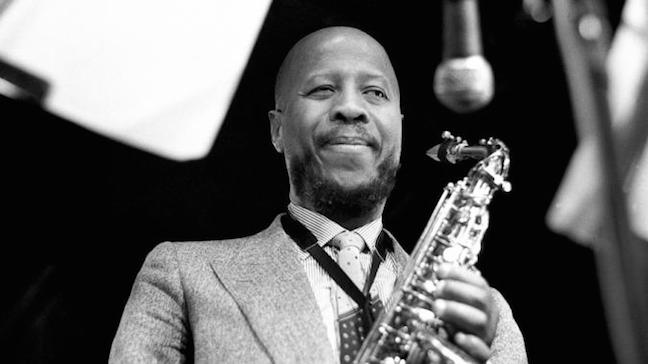
John Handy (1933)
art: Jan Persson
bio: http://www.allmusic.com/artist/john-handy-mn0000221660/biography
video: https://youtu.be/5qKRVSDIMUU


 The Misty Miss Christy