Josephine Baker: Born on June 3, 1906

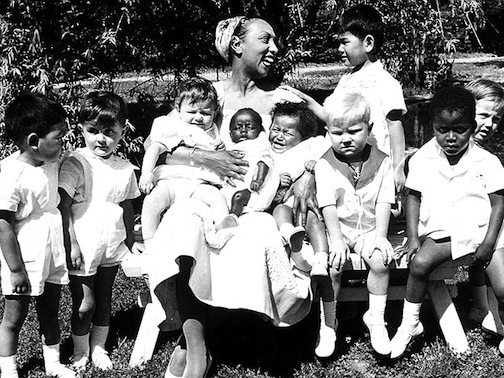
JBJoséphine Baker (June 3, 1906-April 12, 1975) was an American-born French entertainer, French Resistance agent, and civil rights activist.

“Baker flourished as a dancer in several Vaudeville shows, which was a popular theatre genre in the 20th century. She eventually moved to New York City and participated in the celebration of black life and art now known as the Harlem Renaissance. A few years later her success took her to Paris. Baker became one of the most sought-after performers due to her distinct dancing style and unique costumes. Although her audiences were mostly white, Baker’s performances followed African themes and style. In her famed show Danse Sauvage she danced across stage in a banana skirt. Baker was multitalented, known for her dancing and singing she even played in several successful major motion pictures released in Europe.
FROM https://www.womenshistory.org/education-resources/biographies/josephine-baker

JBfamilyOfficial Site~ http://www.cmgww.com/stars/baker/
JBDCSpeech at the March on Washington~http://www.blackpast.org/1963-josephine-baker-speech-march-washington
FBI files~ http://vault.fbi.gov/josephine-baker

Discography~ http://www.discogs.com/artist/378436-Josephine-Baker
Woody Herman: Born May 16, 1913

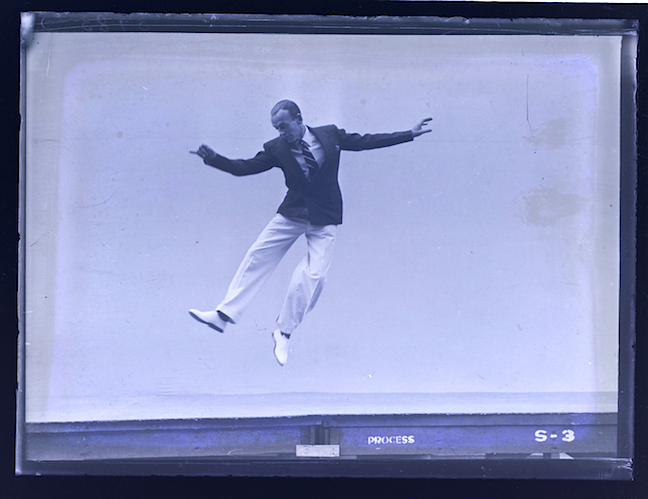
A fine swing clarinetist, an altoist whose sound was influenced by Johnny Hodges, a good soprano saxophonist, and a spirited blues vocalist, Woody Herman’s greatest significance to jazz was as the leader of a long line of big bands. He always encouraged young talent and, more than practically any bandleader from the swing era, kept his repertoire quite modern. Although Herman was always stuck performing a few of his older hits (he played “Four Brothers” and “Early Autumn” nightly for nearly 40 years), he much preferred to play and create new music.
http://www.allmusic.com/artist/woody-herman-mn0000958076/biography

Artist Birthday Quiz for 5/7~

What court painter and tapestry designer later focused most of his activities on designing tapestries and stained glass, including windows for the Brussels Cathedral?

What abstract painter was also a singer who auditioned for the New York City Opera and became a success as a dramatic soprano?

Answers here~ https://schristywolfe.com/2015/05/07/may-7/

Richard D’Oyly Carte: Born May 3, 1844

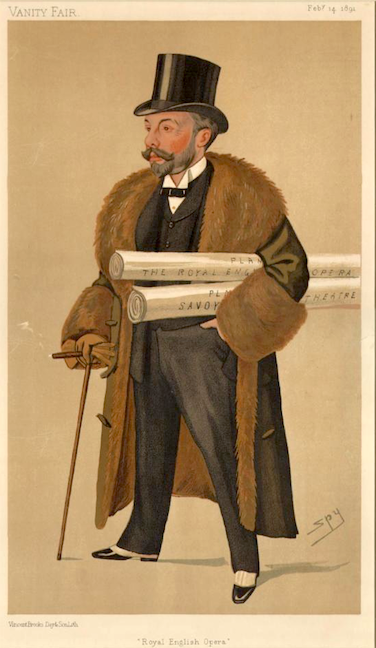
Richard D’Oyly Carte, born 1844, died 1901; was theatrical manager of the Royalty Theatre, London, where Trial by Jury was produced in 1875, when he became the originator and promoter of a scheme for English “comedy-opera,” of which the first-fruit was The Sorcerer, brought out at the Opéra Comique, London, on November 17, 1877. H.M.S. Pinafore, The Pirates of Penzance, and Patience followed at the same theatre, under the same auspices. In October, 1881, Patience was transferred to the Savoy Theatre, which Richard D’Oyly Carte had built specially for the production of Gilbert-Sullivan pieces, and of which he remained the owner and director, at the same time owning and directing numerous travelling companies both in the British provinces and in America. In January, 1891, he opened, in Cambridge Circus, London,–with Sullivan’s Ivanhoe specially written for the occasion–the English Opera House, of which he had been the projector, but which, in December, 1892, was re-christened the Palace Theatre, and later devoted, under other management, to “variety” performances. D’Oyly Carte himself wrote the music for two dramatic pieces entitled Dr. Ambrosias, his Secret (1887) and Maria (1871).
http://www.theatrehistory.com/british/richard_doyly_carte_001.html

(Click images to enlarge)

Richard D’Oyly Carte~  http://www.gsarchive.net/carte/burleigh.html

Savoy Hotel~  http://www.fairmont.com/savoy-london/hotelhistory/

Savoy Theatre~  http://grimsdyke.com/savoy-theatre-home-gilbert-sullivan/

Savoy Scaffolding etching by James McNeill Whistler (1834-1903), D’Oyly Carte was a strong supporter of Whistler and a close friend.

Frank Sinatra: Born December 12, 1915

Francis Albert Sinatra [was born] in Hoboken, New Jersey. Although his mother had hoped that he would be the first person in the family to attend college and was disappointed that he did not finish high school, she encouraged his ambition to be a singer. His father, on the other hand, was opposed and insisted that he should find a job. The young Sinatra worked briefly as a truck driver for a newspaper, a riveter in a Hoboken shipyard, and a fruit hauler. By 1932, he had decided that he wanted to be a professional singer.
FROM http://www.anb.org/view/10.1093/anb/9780198606697.001.0001/anb-9780198606697-e-1803570
His break came in 1937, when he and three instrumentalists, billed as the Hoboken Four, won on the Major Bowes Original Amateur Hour. After some touring, the group disbanded. Harry James signed Sinatra to sing with his orchestra, and on July 13, 1939, two weeks after his debut as a big-band vocalist at the Hippodrome Theatre in Baltimore, Sinatra cut his first disc, “From the Bottom of My Heart,” with the orchestra.
FROM https://www.rollingstone.com/music/music-news/an-appreciation-of-frank-sinatra-1915-1998-59176/
James graciously freed Sinatra from his contract when the singer received a more lucrative offer from bandleader Tommy Dorsey in December 1939. By 1942 Sinatra’s fame had eclipsed that of Dorsey, and the singer yearned for a solo career.
FROM https://www.britannica.com/biography/Frank-Sinatra
Between 1943 and 1946, Sinatra’s solo career blossomed as the singer charted a slew of hit singles. Sinatra made his movie acting debut in 1943. In 1945, he won a special Academy Award for The House I Live In, a 10-minute short made to promote racial and religious tolerance on the home front. Sinatra’s popularity began to slide in the postwar years (but) in 1953, he made a triumphant comeback, winning a supporting actor Oscar for From Here to Eternity.
FROM https://www.biography.com/people/frank-sinatra-9484810
In the mid-’70s Sinatra’s career slowed down, but in mid-1980, after a five-year recording hiatus, he released Trilogy which included a version of “Theme From New York, New York” that the city fervently adopted. In 1985, he was accorded the Presidential Medal of Freedom, the nation’s highest civilian award. Frank Sinatra died of a heart attack on May 14, 1998, in L.A.
FROM https://www.rollingstone.com/music/music-news/an-appreciation-of-frank-sinatra-1915-1998-59176/

Arnold Schönberg: Born September 13, 1874

arnold_schoenbergArnold Schoenberg (1874-1951)

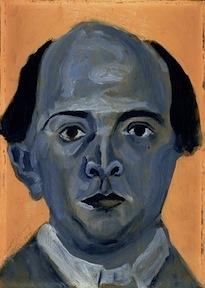
Born in Vienna on 13 September 1874, into a family that was not particularly musical, Schoenberg was largely self-taught as a musician. An amateur cellist, he demonstrated from early age a particular aptitude for composition. He received rudimentary instruction in harmony and counterpoint from Oskar Adler and studied composition briefly with Alexander Zemlinsky, his eventual brother-in-law. Early in his career, Schoenberg took jobs orchestrating operettas, but most of his life was spent teaching, both privately and at various institutions, and composing…Schoenberg fled the poisonous political atmosphere of Europe in 1933 and spent the remainder of his life primarily in the United States, becoming a naturalized citizen in 1941.gschoenberg
FROM http://www.allmusic.com/artist/arnold-schoenberg-mn0000691043/biograph

Arnold Schoenberg’s Many Faces~ http://www.nytimes.com/1995/10/28/style/28iht-arn.t.html

schoenbergArnold Schönberg Center~ http://www.schoenberg.at/index.php/en/

Artistic Parallels between Arnold Schönberg’s Music & Painting~ essay written by Courtney Adams~ http://symposium.music.org/index.php?option=com_k2&view=item&id=2111:artistic-parallels-between-arnold-schoenbergs-music-and-painting-1908-1912&Itemid=124

Claude Debussy: Born August 22, 1862

Claude Debussy (born Achille-Claude Debussy) was among the most influential composers of the late 19th and early 20th centuries. His mature compositions, distinctive and appealing, combined modernism and sensuality so successfully that their sheer beauty often obscures their technical innovation. Debussy is considered the founder and leading exponent of musical Impressionism (although he resisted the label), and his adoption of non-traditional scales and tonal structures was paradigmatic for many composers who followed.

FROM Achille-Claude Debussy (1862-1918): Biography:
http://www.allmusic.com/artist/claude-debussy-mn0000768781/biography