On February 19, 1981, a New York judge determined that George Harrison was guilty of “subconscious plagiarism” when he wrote My Sweet Lord, due to its similarities to the 1963 Chiffons hit He’s So Fine. Harrison was ordered to pay ABKCO Music $587,000.
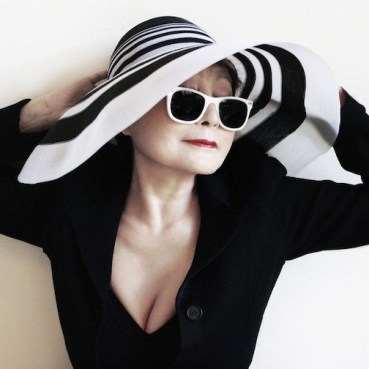
Since emerging onto the international art scene in the early 1960s, Yoko Ono has made profound contributions to visual art, performance, filmmaking, and experimental music. Born in Tokyo in 1933, she moved with her family to New York in the mid-1950s and enrolled at Sarah Lawrence College. Over the next decade she lived in New York, Tokyo, and London, greatly influencing the international development of Fluxus and Conceptual art. https://www.moma.org/artists/4410
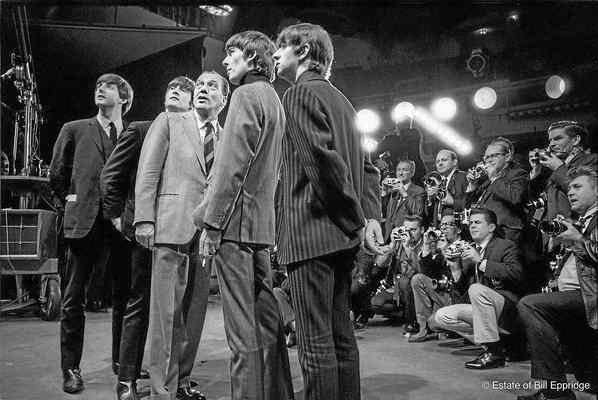
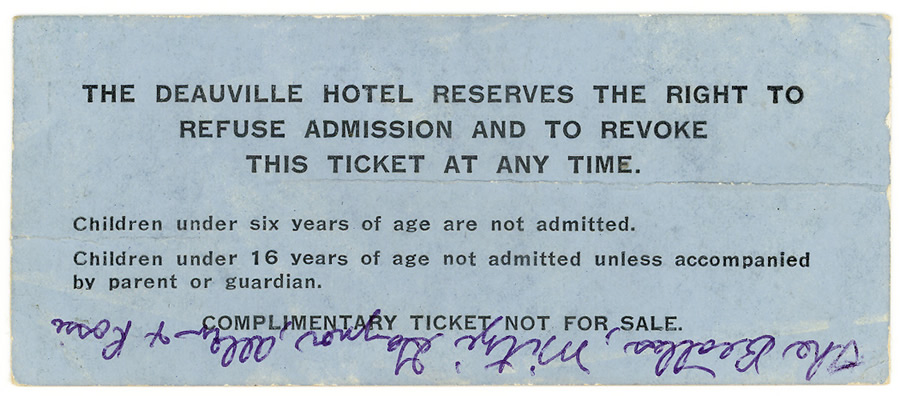
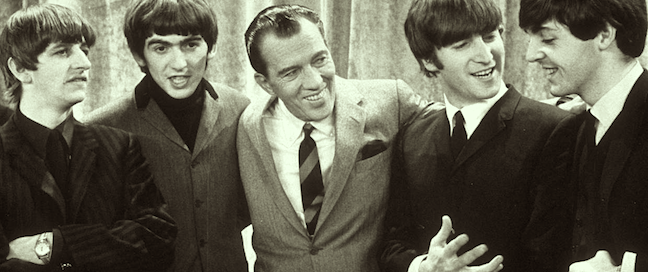
The Beatles’ second appearance on the Ed Sullivan Show took place in Miami’s Deauville Hotel. The Beatles arrived in Miami on Thursday, February 13, and the concert took place on the night of the 16th. The link below is of a rehearsal, which was filmed but not aired.
The Beatle’s first live appearance on U.S. television was February 9, 1964. However, Americans did have previous chances to see them via stories on the evening news, and a taped segment on The Tonight Show with Jack Paar. The common thread to these appearances is the sarcasm and bad jokes which the reporters and Paar felt compelled to use in order to dismiss the Beatles as an inexplicable phenomenon. All of them were probably taken aback when they finally realized that the Beatles weren’t going to go away any time soon.
November 18, 1963 on “The Huntley-Brinkley Report”~
Nov. 22, 1963 on “CBS Morning News With Mike Wallace”~
Chinese New Year, also known as the Spring Festival, is the most important Chinese traditional festival. Chinese New Year (CNY) celebrations run from Chinese New Year’s Eve, the last day of the last month of the lunar calendar, to the Lantern Festival on the 15th day of the first lunar month, making the festival the longest in the Chinese calendar.
Legend says that there was a man-eating beast, “nian”, in ancient China. “Nian” would come from the mountain once a year on the New Year Eve and infiltrate houses silently to prey on humans and animals. People later learned that “nian” was afraid of loud noises and the colour red, so people use explosives, fireworks and colour red to scare “nian” away.
CNY is centuries old and gains significance because of several myths and traditions. Traditionally, the festival was a time to honour deities as well as ancestors. It is a time for family reunion and celebration. It is as important as the Thanksgiving Day and Christmas combined in the Western culture.
More information can be found at this wonderful blog:
The Great Baltimore Fire of 1904 started at 10:50 a.m. on Feb. 7 and raged on until 5 p.m. the next day. It destroyed over 1,500 buildings and is the third worst fire in this country’s history (right behind the Great Chicago Fire of 1871 and the San Francisco Earthquake and Fire of 1906). Incredibly, only one life was lost as a direct result of this huge conflagration.
The panoramic photo above, from the collection of the Library of Congress, gives an idea of the complete and total devastation of downtown Baltimore. If you click on the link you will be able to see a much larger version of this image: http://www.loc.gov/pictures/resource/pan.6a05843/
Greta Deses’s Dada (1967) profiles the Dada movement with live performances, film excerpts, interviews and a reenactment of a performance at the groundbreaking Cabaret Voltaire.
Hugo Ball, Tristan Tzara and Marcel Janco met on February 5, 1916 in Zurich with the ambitious plan of instigating nothing less than an artistic revolution. Their Cabaret Voltaire, which they founded that evening, was a combination of a pub, theater, gallery, and club. Throughout that year, they organized unpredictable events combining chaotic performances, recitations and music. FROM http://www.dw.com/en/how-dadaism-revolutionized-art-100-years-ago/a-19016756



 The Misty Miss Christy