William Lyman Underwood (March 5, 1864-Jan. 24, 1929)

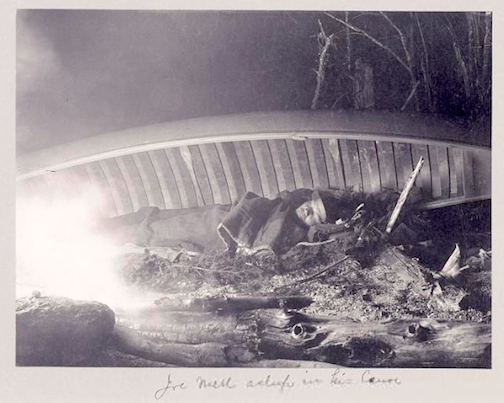
canoe

William Lyman Underwood and his brother Loring (1874–1930) were early leaders in nineteenth-century nature photography. Loring, trained as a horticulturist, focused on the cultivated landscapes of parks and estate gardens, while William preferred the wilderness of northeastern America. A renowned public speaker, William gave more than forty lectures a year about his experiences as “a camera hunter,” accompanied by a lantern slide show of his photographs. This run-of-the-century [sic] entertainment instructed audiences about an environment that Underwood feared was vanishing.
http://americanart.si.edu/collections/search/artist/?id=6755

In 1895, William Lyman Underwood, director of a Massachusetts canned-food bookcompany, came to MIT seeking the help of a scientist–any scientist–who could fix the problem of his smelly canned clams. He went straight to the biology department, asking whether anyone could “suggest a cause and, better still, a remedy.” The department chair passed Underwood off to his assistant, Samuel Cate Prescott, advising the chemist to teach the canner a bit about microbes.

During these experiments, Underwood indulged his passion for photography. The March 1898 Technology Quarterly featured several of his actual-size photographs of petri dishes filled with circular spidery blooms of bacillus–each like a telescopic glance at a pockmarked moon–as well as some strikingly clear slides of microörganisms at 1,000 times their actual size.
https://www.technologyreview.com/s/412221/two-happy-clams/
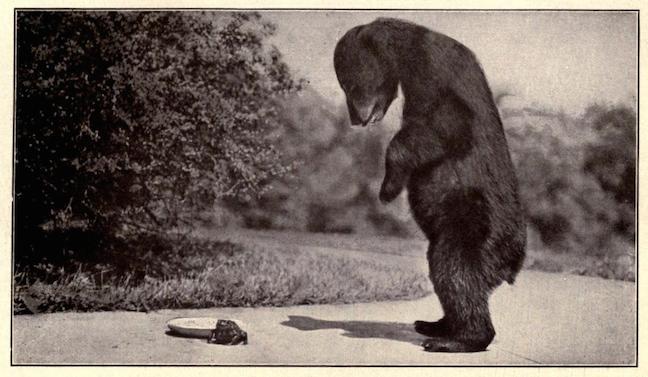
bear“Wild brother; strangest of true stories from the north woods”~
https://archive.org/details/wildbrotherstran00undeiala
Underwood’s Deviled Ham: The Oldest Trademark Still in Use~
http://www.smithsonianmag.com/arts-culture/underwoods-deviled-ham-the-oldest-trademark-still-in-use-119136583/

Andy Warhol (1928-1987)

2016-02-22-warhol-e1456088647797

Andy Warhol Died 29 Years Ago Today,
Here’s a Look at One of His First Silkscreens.
artnetnews

Blake Gopnik, Monday, February 22, 2016  Andy Warhol died 29 years ago today in a hospital in New York, after a routine gallbladder operation. It seems only fitting to commemorate the end of his artmaking by revisiting its beginnings. The work I’ve chosen as today’s Daily Pic was made in the spring of 1962, as one of the very first of the silkscreened canvases that became Warhol’s signature mode for the next quarter century. It’s the titular work in a touring exhibition called “Open This End: Contemporary Art from the Collection of Blake Byrne,” curated by the art historian Joseph Wolin and now at the Wallach Art Gallery of Columbia University.
https://news.artnet.com/art-world/andy-warhol-died-29-years-ago-today-here-is-when-he-started-to-matter-431666

Andy Warhol, A Documentary Film~

Andy Warhol Biography


The Andy Warhol Museum~ http://www.warhol.org/museum/
The Andy Warhol Foundation for the Visual Arts~ http://warholfoundation.org/

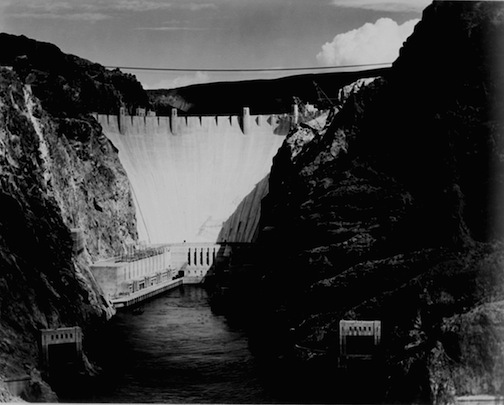
Records of the National Park Service: Ansel Adams Photographs

Dam

In 1941 the National Park Service commissioned noted photographer Ansel Adams to create a photo mural for the Department of the Interior Building in Washington, DC. The theme was to be nature as exemplified and protected in the U.S. National Parks. The project was halted because of World War II and never resumed.

The holdings of the National Archives Still Picture Branch include 226 photographs taken for this project, most of them signed and captioned by Adams.

http://www.archives.gov/research/ansel-adams/

Photographer Esther Bubley: Born February 16, 1921

ebubley

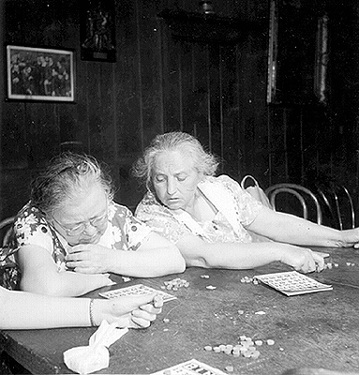
“Put me down with people, and it’s just overwhelming,” Bubley exclaimed in an interview. Like most great photojournalists, she found her art in everyday life, and she successfully balanced her artistic ambitions with the demands of commercial publishing. Edward Steichen, curator of photographs at the Museum of Modern Art and the era’s arbiter of taste, was a great supporter of Bubley, whose work embodied his aesthetic ideal that photography “explain man to man and each to himself.” She was shown in several group shows at the Museum of Modern Art and was given a one-person show at the Limelight, Helen Gee’s legendary coffee house and the only gallery specializing in photography in New York during the 1950s. Bubley worked primarily for the printed page, however, and like her colleagues, can be only partially understood in the context of today’s gallery-oriented photography world, in which photographs are shown as isolated works of art.
FROM http://www.estherbubley.com/bio_frame_set.htm

bingo

http://www.loc.gov/rr/print/coll/womphotoj/bubleyintro.html

https://www.loc.gov/exhibits/wcf/wcf0012.html

https://lens.blogs.nytimes.com/2011/08/02/tender-moments-in-the-maelstrom-of-war/

February 7, 1904: The Great Baltimore Fire Begins


Photographs from the Great Baltimore Fire~
http://darkroom.baltimoresun.com/2014/02/great-baltimore-fire-of-1904-110-years-later/#1

1904The Great Baltimore Fire of 1904 started at 10:50 a.m. on Feb. 7 and raged on until 5 p.m. the next day. It destroyed over 1,500 buildings and is the third worst fire in this country’s history (right behind the Great Chicago Fire of 1871 and the San Francisco Earthquake and Fire of 1906). Incredibly, only one life was lost as a direct result of this huge conflagration.

The panoramic photo above, from the collection of the Library of Congress, gives an idea of the complete and total devastation of downtown Baltimore. If you click on the link you will be able to see a much larger version of this image: http://www.loc.gov/pictures/resource/pan.6a05843/

“A Lost Story of Segregated America From LIFE’s First Black Photographer”

150112-gordon-parks-fort-scott-07

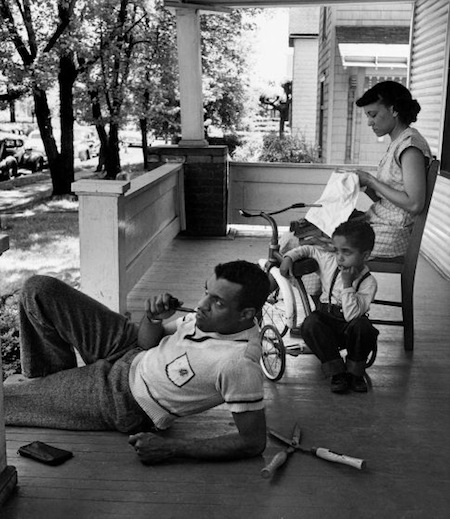
“When Gordon Parks left his hometown of Fort Scott, Kansas, at the age of 15 in 1928, it was to escape a place he would later call “the mecca of bigotry.” Parks’ mother arranged for her son, the youngest of her 15 children, to live with an older sister in Minnesota, where, she hoped, Gordon would be spared the “bitter trials of Kansas.”
At 37, Gordon Parks returned to Fort Scott, sent by LIFE to photograph the bitter trials of Kansas that his mother had wanted him to escape. But his pictures would never be published, bumped from the magazine by stories deemed more newsworthy.
Now these rarely seen photographs are making their public debut in an exhibit, Gordon Parks: Back to Fort Scott, at Boston’s Museum of Fine Arts, which opens on Saturday, Jan. 17. All but lost for more than half a century, the story behind the photographs is now being told for the first time.”

A Lost Story of Segregated America From LIFE’s First Black Photographer:
http://time.com/3664001/gordon-parks-fort-scott/

31 Rolls of Undeveloped Film from a Soldier in WWII Discovered and Processed

post

Photographer Levi Bettweiser is the man behind the Rescued Film Project, an effort to find and rescue old and undeveloped rolls of film from the far corners of the world.

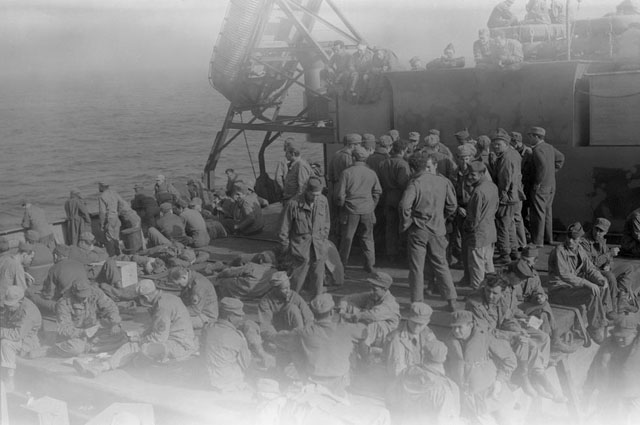
He recently came across one of his biggest finds so far: 31 undeveloped rolls of film shot by a single soldier during World War II.

Bettweiser tells us he found the film rolls in late 2014 at an auction in Ohio. About half the rolls were labeled with various location names (i.e. Boston Harbor, Lucky Strike Beach, LaHavre Harbor). “I know nothing about who shot the film or who it belonged to,” he says.

31 Rolls of Undeveloped Film from a Soldier in WWII Discovered and Processed

http://www.rescuedfilm.com/#!rescuedwwii/c1d05

“A Lost Story of Segregated America From LIFE’s First Black Photographer”

https://schristywolfe.com/wp-content/uploads/2015/01/150112-gordon-parks-fort-scott-07.jpg

“When Gordon Parks left his hometown of Fort Scott, Kansas, at the age of 15 in 1928, it was to escape a place he would later call “the mecca of bigotry.” Parks’ mother arranged for her son, the youngest of her 15 children, to live with an older sister in Minnesota, where, she hoped, Gordon would be spared the “bitter trials of Kansas.”
At 37, Gordon Parks returned to Fort Scott, sent by LIFE to photograph the bitter trials of Kansas that his mother had wanted him to escape. But his pictures would never be published, bumped from the magazine by stories deemed more newsworthy.
Now these rarely seen photographs are making their public debut in an exhibit, Gordon Parks: Back to Fort Scott, at Boston’s Museum of Fine Arts, which opens on Saturday, Jan. 17. All but lost for more than half a century, the story behind the photographs is now being told for the first time.”

A Lost Story of Segregated America From LIFE’s First Black Photographer:
http://time.com/3664001/gordon-parks-fort-scott/

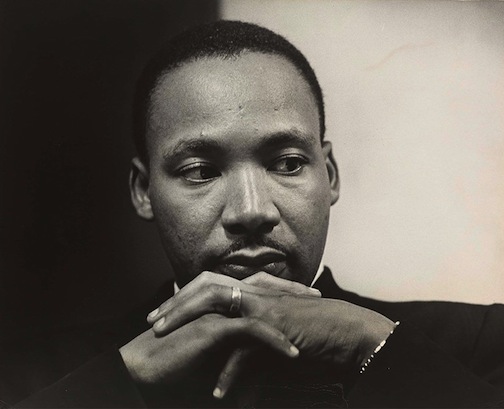
Smithsonian Collection: “Remembering Dr. Martin Luther King, Jr.”~
https://schristywolfe.com/2015/01/19/smithsonian-collection-remembering-dr-martin-luther-king-jr/
“Robert Penn Warren Civil Rights Oral History Project”~
https://schristywolfe.com/2015/01/19/robert-penn-warren-civil-rights-oral-history-project/