Pride Month~ June 4

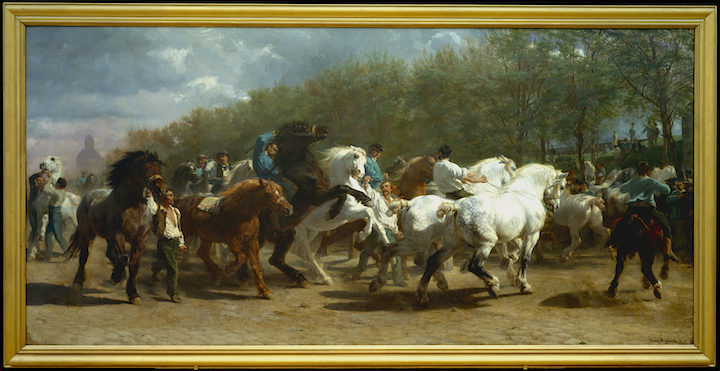
Rosa Bonheur (1822-1899)  One of the best known artists of the 19th century
http://ringlingdocents.org/bonheurbio.htm

The Horse Fair / 1852-55 / Oil on canvas / 96 1/4”x 199 1/2”

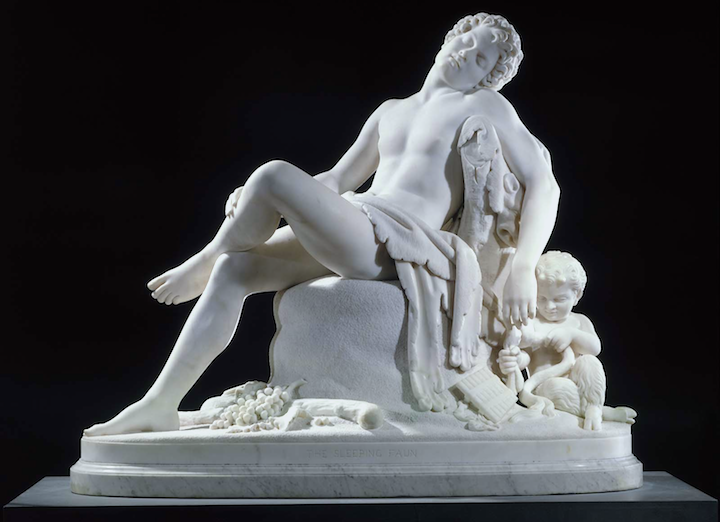
Harriet Hosmer (1830-1908)  Credited with opening the field of sculpture to women
https://americanart.si.edu/artist/harriet-hosmer-2314

Sleeping Faun / after 1865 / Marble / 34 1/2”x 41”x 16 1/2”

Pride Month~ June 3

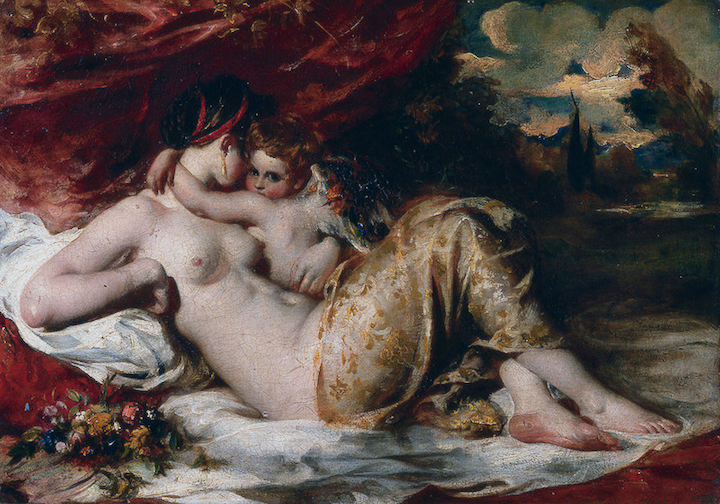
William Etty (1787-1849)   English artist best known for his nude figures
http://www.cassone-art.com/magazine/article/2011/11/theres-something-about-etty-art-and-controversy-at-york-city-art-gallery/?psrc=around-the-galleries

Venus and Cupid / c.1825/1835 / Oil on canvas / 12.4”x17.4”


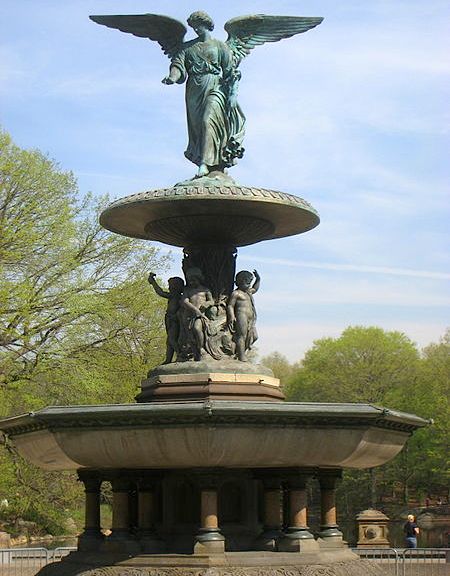
Emma Stebbins (1815-1882)   One Of The First American Women Sculptors
http://www.womenhistoryblog.com/2015/05/emma-stebbins.html

Angel of the Waters (Bethesda Fountain) / c.1873 / Figures: bronze; lower basin: blue stone; pool: westerly granite / H: 25′; Diameter of lower basin 15′; Diameter of pool 96′

Salmagundi

Christo and Jeanne-Claude: Love

The Gates / 1979-05 / 7,503 vinyl “gates” / Central Park, NYC, February 12, 2005-February 27, 2005

Christo Vladimirov Javacheff and Jeanne-Claude were a married couple who created environmental works of art. Christo and Jeanne-Claude were born on the same day, June 13, 1935; Christo in Gabrovo, Bulgaria, and Jeanne-Claude in Morocco. They first met in Paris in October 1958 when Christo painted a portrait of Jeanne-Claude’s mother.
Their works include the wrapping of the Reichstag in Berlin and the Pont-Neuf bridge in Paris, the 24-mile (39 km)-long artwork called Running Fence in Sonoma and Marin counties in California, and The Gates in New York City’s Central Park.
Jeanne-Claude died, aged 74, on November 18, 2009, from complications of a brain aneurysm. Christo died at his home in New York City on May 31, 2020, at 84.  ~Wikipedia

Their relationship lasted 51 years, and they did everything together, Jeanne-Claude said, except three things: “We never fly on the same airplane… I do not draw. Christo is the one who puts on paper our ideas… And I have always deprived him of the joy of working with our accountant.”  ~The Guardian

Salmagundi

Charles & Ray Eames: Love

(Learn more by clicking on hyperlinks embedded in text)

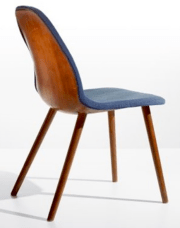
“Charles was a designer with an eye for form. Ray was an artist with an eye for color. They complemented each other on projects like coat hangers, films, their namesake chairs, and large architectural projects. Through four decades of creative work, they revolutionized design and created an indelible mark on American History. The duo was not without faults, but the pair proved to be inseparable and inspirational. They were the Eameses.”
https://www.pastemagazine.com/design/charles-and-ray-eames/first-couple-of-design-charles-eames/

“Their partnership, which obliterated the distinctions between private and professional lives, inspired numerous contemporary working marriages…Charles and Ray, architect and artist, wanted to do everything — disciplinary boundaries meant nothing to them — and, by and large, succeeded.” https://nymag.com/nymetro/arts/features/1437/

The Work of Charles and Ray Eames: A Legacy of Invention
AD Classics: Eames House / Charles and Ray Eames
The Love Letters of Charles & Ray Eames

Salmagundi

Vietnam Veterans Memorial

Maya Lin’s original competition submission for the Vietnam Veterans Memorial in Washington, D.C. Architectural drawings and a one-page written summary, 1980 or 1981.

In 1979, Congress grants a Vietnam War veterans’ committee the right to build a memorial on the Mall in Washington, D.C., dedicated to American soldiers killed in the conflict in Vietnam…When the winner is announced, no one is more surprised than the student architect herself, Maya Lin, a 20-year-old Yale undergraduate…Lin describes the Memorial thus: “I went to see the site. I had a general idea that I wanted to describe a journey…a journey that would make you experience death and where you’d have to be an observer, where you could never really fully be with the dead. It wasn’t going to be something that was going to say, ‘It’s all right, it’s all over,’ because it’s not.”
FROM http://www.pbs.org/wgbh/cultureshock/flashpoints/visualarts/thewall_a.html

Spotlight: Maya Lin~ https://www.archdaily.com/774717/spotlight-maya-lin

(Learn more by clicking on embedded hyperlinks)

Salmagundi

Venus de Milo / Musée du Louvre

Venus de Milo, the ancient statue commonly thought to represent Aphrodite…was carved from marble by the artist Alexandros* about 150 BCE. It was found in pieces on the Aegean island of Melos on April 8, 1820, and was subsequently presented to Louis XVIII (who then donated it to the Louvre in 1821).  ~https://www.britannica.com/topic/Venus-de-Milo

*Alexandros of Antioch (2nd-1st century BC) was a Greek sculptor of the Hellenistic age. His dates of birth and death are unknown. ~https://en.wikipedia.org/wiki/Alexandros_of_Antioch

(Learn more by clicking on hyperlinks embedded in text)

What Happened to the Venus De Milo’s Arms?
http://mentalfloss.com/article/62722/what-happened-venus-de-milos-arms
The Mystery of What Venus de Milo Was Once Holding
https://www.smithsonianmag.com/smart-news/3-d-printing-offers-guess-what-venus-de-milo-might-have-been-holding-180955176/

Salmagundi

Meta Vaux Warrick Fuller
“Peace Halting the Ruthlessness of War”

1917 / Bronze cast sculpture / 14”x16 3/4”x9”/ Private collection

Meta Vaux Warrick Fuller (June 9, 1877-March 18, 1968) was…a multi-talented artist who wrote poetry, painted, and sculpted but was most noted for her sculpture. Warrick was a protegé of Auguste Rodin…Warrick is considered a forerunner of the Harlem Renaissance. ~FROM Wikipedia

In May, 1917, Meta Warrick Fuller took second prize in a competition under the auspices of the Massachusetts Branch of the Woman’s Peace Party, her subject being “Peace Halting the Ruthlessness of War.” War is personified as on a mighty steed and trampling to death numberless human beings. In one hand he holds a spear on which he has transfixed the head of one of his victims. ~FROM Documenting the American South

(Learn more by clicking on hyperlinks embedded in text)

In the Studio: The Meta Vaux Warrick Fuller Collection~ https://danforth.framingham.edu/exhibition/meta-fuller/

Salmagundi

The Kiss

Auguste Rodin (French, 1840-1917)

The Tate’s The Kiss is one of three full-scale versions made in Rodin’s lifetime. Its blend of eroticism and idealism makes it one of the great images of sexual love. However, Rodin considered it overly traditional, calling The Kiss ‘a large sculpted knick-knack following the usual formula.’
~http://www.tate.org.uk/art/artworks/rodin-the-kiss-n06228
~The Rodin Museum in Paris, France
~Ny Carlsberg Glyptotek in Copenhagen, Denmark

The three larger marble versions were exhibited together at the Musée d’Orsay in 1995. A fourth copy was made after the death of Rodin by sculptor Henri-Léon Gréber for the Rodin Museum of Philadelphia.

(Learn more by clicking on embedded hyperlinks)

Salmagundi

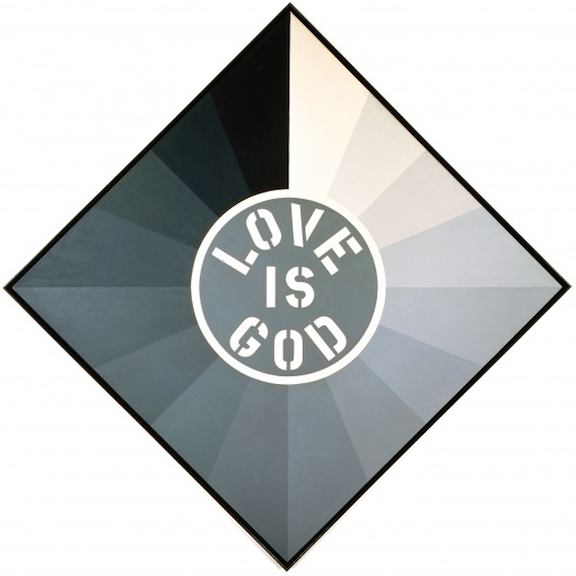
Robert Indiana’s LOVE

The inspiration came from his childhood as a Christian Scientist, when the phrase “God is love” was prominent. Indiana inverted the idea to suggest that “Love is God.

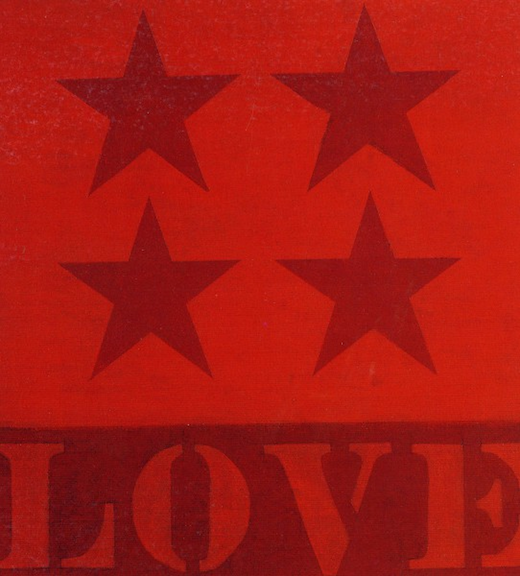
The first LOVE painting was a small canvas in 1961 called 4-Star Love, which was the word “love” with four stars stacked above it and that was really the inspiration for stacking the letters.

The motif first appeared as a series of rubbings in 1964 on his personal Christmas cards.

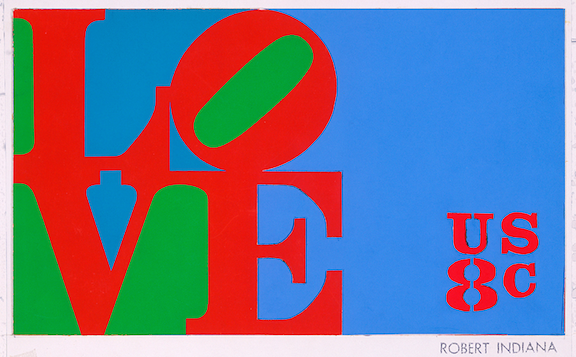
[In 1965] MoMA asked him to design a Christmas card. Inspired by his recent painting, he chose the single word ‘love’, the letters of which he arranged on two lines to fit the card’s square format better. To create a more interesting design he angled the ‘o’. Indiana submitted several colour variations. The museum chose the one with red letters against a blue and green background.

It was inspired by a sign at a gas station. During the Depression, my father worked for Phillips 66, which had a huge sign up in the sky. I can still see that red and green sign against the blue Indiana sky. My first ”Love” was red, green and blue.

Few Pop images are more widely recognized than Indiana’s LOVE…[it]has appeared in prints, paintings, sculptures, banners, rings, tapestries, and stamps. Full of erotic, religious, autobiographical, and political underpinnings—especially when it was co-opted as an emblem of 1960s idealism—LOVE is both accessible and complex in meaning. In printed works, Indiana has rendered LOVE in a variety of colors, compositions, and techniques. He even translated it into Hebrew for a print and a sculpture at the Israel Museum in Jerusalem

(Learn more by clicking on text-embedded hyperlinks leading to sources)

Salmagundi

Princeton Battle Monument (1922)

This limestone monument was designed by the prominent Beaux Arts sculptor Frederick MacMonnies with the help of architect Thomas Hastings. Commissioned in 1908, it was finished and dedicated in 1922, with President Harding in attendance. On the sides of the monument are the seals of the United States and the original thirteen states, including New Jersey. The creation of the monument served to commemorate the Battle of Princeton, which took place on January 3, 1777. The sculpture depicts Washington leading his troops into battle, as well as the death of General Hugh Mercer.
https://princetonhistory.org/research/historic-princeton/historic-sites/

(Learn more by clicking on embedded hyperlinks)