Maria made her first professional appearance in von Suppe’s Boccacio in 1939 and sang the leading part in Tosca in 1942. After a series of disappointments and resenting envy by her colleagues, she returned to the American land of her birth. She lived there for two years (1945-1947), met the bass Nicola Rossi – Lemeni and through him came to know the tenor Giovanni Zenatello, artistic director of the Arena of Verona. Maria Kalogeropoulos left for Italy, met the industrialist Giovanni Batista Meneghini, married him, became Maria Callas and experienced her artistic life’s curtain raiser without suspecting that she was about to emerge as the lyric theatre’s most brilliant personality. FROM http://www.hri.org/MFA/thesis/autumn97/callas.html
Callas’ ability to sing such a wide range of roles was one of the things that led to her meteoric rise. But critic Conrad Osborne says it also contained the seeds of her vocal decline. Callas’ voice was already starting to fail her by the time she was in her 40s — quite young for an opera singer. A number of factors, including a rapid loss of weight, may explain why…But for Callas fans like James Jorden, the diva more than made up for her vocal flaws with her talent for bringing the music to life. FROM http://www.npr.org/templates/story/story.php?storyId=123612228
By the time of her retirement, she had performed more than 40 different roles and had recorded more than 20 complete operas. Callas’s personality and philosophy of performance are powerfully depicted in Terrence McNally’s play Master Class (first performed and published 1995), based on her classes at Juilliard. FROM http://www.britannica.com/biography/Maria-Callas
Willie Dixon and James Cotton with Muddy Waters, Sunnyland Slim, Otis Spann, Sonny Terry, Brownie McGhee, and Mable Hillery in 1966 at the Canadian CBC Television studio, recording a portion of a CBC “Festival” series:
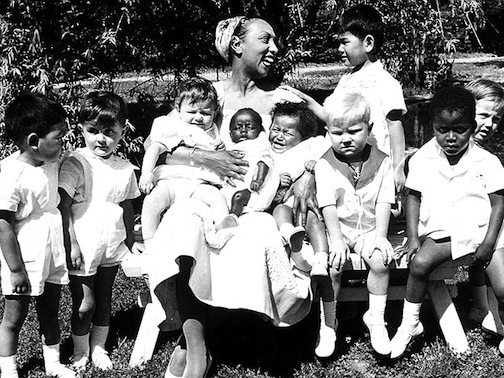
Joséphine Baker (June 3, 1906-April 12, 1975) was an American-born French entertainer, French Resistance agent, and civil rights activist.
“Baker flourished as a dancer in several Vaudeville shows, which was a popular theatre genre in the 20th century. She eventually moved to New York City and participated in the celebration of black life and art now known as the Harlem Renaissance. A few years later her success took her to Paris. Baker became one of the most sought-after performers due to her distinct dancing style and unique costumes. Although her audiences were mostly white, Baker’s performances followed African themes and style. In her famed show Danse Sauvage she danced across stage in a banana skirt. Baker was multitalented, known for her dancing and singing she even played in several successful major motion pictures released in Europe.“ FROMhttps://www.womenshistory.org/education-resources/biographies/josephine-baker
Ella Fitzgerald by Al Hirschfeld, 1993. Ink on board. Melvin R. Seiden Collection
of Drawings by Al Hirschfeld, Harvard Theatre Collection, Houghton Library, Harvard University
In mid 1936, Ella made her first recording. “Love and Kisses” was released under the Decca label, with moderate success. By this time she was performing with Chick’s band at the prestigious Harlem’s Savoy Ballroom, often referred to as “The World’s Most Famous Ballroom.”
Shortly afterward, Ella began singing a rendition of the song, “(If You Can’t Sing It) You Have to Swing It.” During this time, the era of big swing bands was shifting, and the focus was turning more toward bebop. Ella played with the new style, often using her voice to take on the role of another horn in the band. “You Have to Swing It” was one of the first times she began experimenting with scat singing, and her improvisation and vocalization thrilled fans. Throughout her career, Ella would master scat singing, turning it into a form of art. FROM Ella Fitzgerald | Official Site~ http://www.ellafitzgerald.com/about/biography
Francis Albert Sinatra [was born] in Hoboken, New Jersey. Although his mother had hoped that he would be the first person in the family to attend college and was disappointed that he did not finish high school, she encouraged his ambition to be a singer. His father, on the other hand, was opposed and insisted that he should find a job. The young Sinatra worked briefly as a truck driver for a newspaper, a riveter in a Hoboken shipyard, and a fruit hauler. By 1932, he had decided that he wanted to be a professional singer. FROM http://www.anb.org/view/10.1093/anb/9780198606697.001.0001/anb-9780198606697-e-1803570
His break came in 1937, when he and three instrumentalists, billed as the Hoboken Four, won on the Major Bowes Original Amateur Hour. After some touring, the group disbanded. Harry James signed Sinatra to sing with his orchestra, and on July 13, 1939, two weeks after his debut as a big-band vocalist at the Hippodrome Theatre in Baltimore, Sinatra cut his first disc, “From the Bottom of My Heart,” with the orchestra. FROM https://www.rollingstone.com/music/music-news/an-appreciation-of-frank-sinatra-1915-1998-59176/
James graciously freed Sinatra from his contract when the singer received a more lucrative offer from bandleader Tommy Dorsey in December 1939. By 1942 Sinatra’s fame had eclipsed that of Dorsey, and the singer yearned for a solo career. FROM https://www.britannica.com/biography/Frank-Sinatra
Between 1943 and 1946, Sinatra’s solo career blossomed as the singer charted a slew of hit singles. Sinatra made his movie acting debut in 1943. In 1945, he won a special Academy Award for The House I Live In, a 10-minute short made to promote racial and religious tolerance on the home front. Sinatra’s popularity began to slide in the postwar years (but) in 1953, he made a triumphant comeback, winning a supporting actor Oscar for From Here to Eternity. FROM https://www.biography.com/people/frank-sinatra-9484810
In the mid-’70s Sinatra’s career slowed down, but in mid-1980, after a five-year recording hiatus, he released Trilogy which included a version of “Theme From New York, New York” that the city fervently adopted. In 1985, he was accorded the Presidential Medal of Freedom, the nation’s highest civilian award. Frank Sinatra died of a heart attack on May 14, 1998, in L.A. FROM https://www.rollingstone.com/music/music-news/an-appreciation-of-frank-sinatra-1915-1998-59176/
While some accused Ringo Starr of being a clumsy drummer, many more agreed with George Harrison’s assessment: “Ringo’s the best backbeat in the business.” And while many in the wake of the Beatles’ breakup predicted that Starr would be the one without a solo career, he proved them wrong. Not only has he released several LPs (the first came out before the Beatles disbanded) and hit singles, but he’s also the only Beatle to establish a film-acting career for himself outside of the band’s mid-’60s movies. http://www.rollingstone.com/music/artists/ringo-starr
Anybody who knows the Beatles’ music intimately knows the tympanic accents and fills as clearly today as when they were recorded: the famous drum roll that launches into “She Loves You”; the shimmering incandescence of his cymbal work on so many of those early hits; the impressionistic free-form of “Rain”; the loping cadence and crispy snare of “Sexy Sadie”; the haunting, almost cinematic drama and rich texture behind “Long, Long”; the building, tour-de-force crescendo that leads up to the “The End” on “Abbey Road.”
“Here’s what I discovered in the very first session that I did with him,” recalls Walsh. “He came in and I said, ‘You want to see a chart on the song?’ And he said, ‘No, give me the lyrics.’ He responds to the singer. A great example of that is when he plays on the Beatles’ ‘Something’ and he does that fill that’s such a musical response it’s almost like a guitar player; there’s notes to it.” http://variety.com/2014/music/news/ringo-starr-paul-mccartney-beatles-1201073353/
Fats Waller (May 21, 1904-December 15, 1943), jazz and popular pianist, singer, and songwriter, was born Thomas Wright Waller in New York City, the son of Edward Martin Waller, a Baptist preacher, and Adeline Lockett. From age six Waller was devoted to the piano but initially failed to practice properly or learn to read music well, because he could memorize lessons immediately. In his youth he also played reed organ in church. He studied piano, string bass, and violin at P.S. 89, which he attended to about age fourteen or fifteen. Although his girth had earned him a nickname by this time, the names Thomas and Fats appeared interchangeably (and sometimes together, as Thomas “Fats” Waller) in his professional work until at least 1931. Later in his career, and posthumously, the nickname prevailed. http://www.anb.org/articles/18/18-01201.html
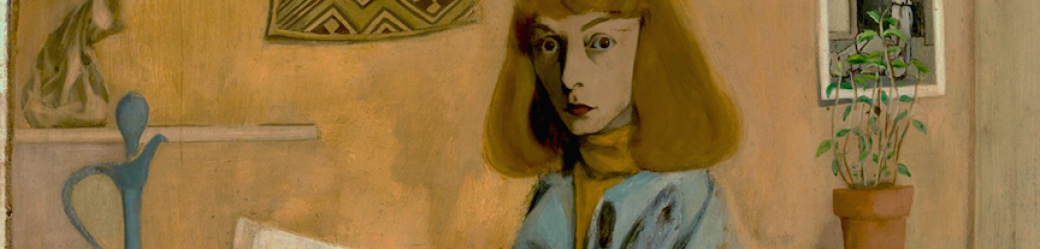
Maria made her first professional appearance in von Suppe’s Boccacio in 1939 and sang the leading part in Tosca in 1942. After a series of disappointments and resenting envy by her colleagues, she returned to the American land of her birth. She lived there for two years (1945-1947), met the bass Nicola Rossi – Lemeni and through him came to know the tenor Giovanni Zenatello, artistic director of the Arena of Verona. Maria Kalogeropoulos left for Italy, met the industrialist Giovanni Batista Meneghini, married him, became Maria Callas and experienced her artistic life’s curtain raiser without suspecting that she was about to emerge as the lyric theatre’s most brilliant personality.
Conrad Osborne says it also contained the seeds of her vocal decline. Callas’ voice was already starting to fail her by the time she was in her 40s — quite young for an opera singer. A number of factors, including a rapid loss of weight, may explain why…But for Callas fans like James Jorden, the diva more than made up for her vocal flaws with her talent for bringing the music to life.
By the time of her retirement, she had performed more than 40 different roles and had recorded more than 20 complete operas. Callas’s personality and philosophy of performance are powerfully depicted in Terrence McNally’s play Master Class (first performed and published 1995), based on her classes at Juilliard.





 The Misty Miss Christy