Artist Birthday Quiz for 11/12~
In 1880, this artist received a commission to create a pair of bronze doors for a new decorative arts museum in Paris; the museum was never built and the doors were not completed in his lifetime.
This Brooklyn photographer and digital pioneer uses her art as a means of storytelling, working as a freelancer for the Village Voice, The New York Times, LIFE magazine, and more.
Answers here~ https://schristywolfe.com/2015/11/12/november-12/
Artist Birthday Quiz for 11/11~
This early western photographer is best known for his mammoth-plate prints using 18”x22” glass plate negatives, but he actually published the majority of his work as stereoviews.
This French neo-impressionist painter was one of the originators of the technique known as pointillism or divisionism, created by scientifically juxtaposed small dots of pure color.
Answers here~ https://schristywolfe.com/2015/11/11/november-11/
Artist Birthday Quiz for 11/10~
Which 18th-century English artist gained popularity for his morality paintings, and the engravings that were made from them?
Which American-born British sculptor was a proponent of the idea that the creative process is inseparably related to the material being used?
Answers here~ https://schristywolfe.com/2015/11/10/november-10/
Artist Birthday Quiz for 11/9~
What Swiss-American photographer took the suggestion of Walker Evans to apply for the Guggenheim Fellowship that would result in his most famous book?
What renowned American architect may be best known today for the scandal surrounding his murder by the jealous husband of a former lover?
Answers here~ https://schristywolfe.com/2015/11/09/november-9/
Artist Birthday Quiz for 11/8~
Which American watercolorist turned to oils late in his career, developing a style of painting known as Precisionism?
Which 20th century Greek artist became a seminal figure in the revival of Greek Byzantine icon painting around the world?
Answers here~ https://schristywolfe.com/2015/11/08/november-8/
Classic Covers: Election | The Saturday Evening Post

Artist Birthday Quiz for 11/7~
What Spanish Baroque painter, whose work infrequently included landscapes, portraits, and still lifes, is especially noted for religious subjects?
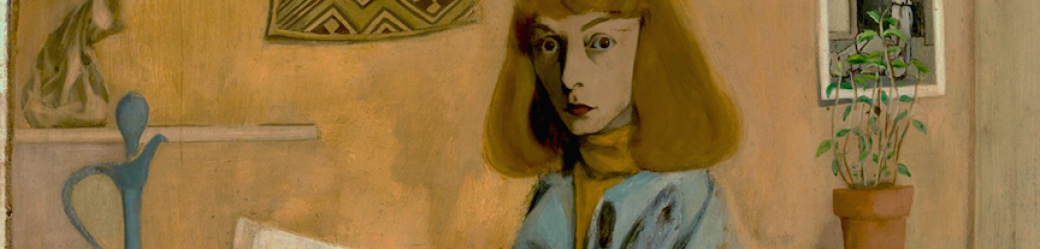
What Czech-born American painter and printmaker maintained two studios in the 1920s, frequently traveling back and forth from Paris to New York City?
Answers here~ https://schristywolfe.com/2015/11/07/november-7/
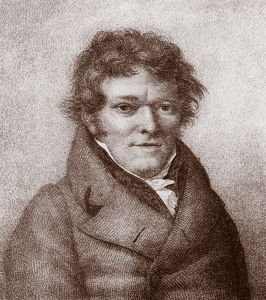
Alois Senefelder: Born November 6, 1771
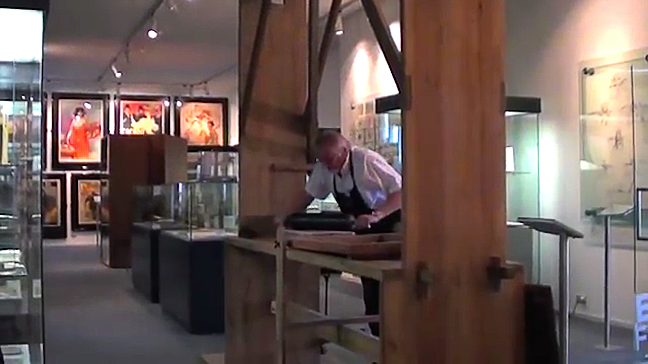
Alois Senefelder (1771-1834) was an Austrian actor and playwright who invented the printing technique of lithography in 1798. Born Aloys Johann Nepomuk Franz Senefelder in Prague where his actor father was appearing on stage. He was educated in Munich and won a scholarship to study law at Ingolstadt. The death of his father in 1791 forced him to leave his studies to support his mother and eight siblings, and he became an actor and wrote a successful play Connoisseur of Girls.
Problems with the printing of his play Mathilde von Altenstein caused him to fall into debt, and unable to afford to publish a new play he had written, Senefelder experimented with a novel etching technique using a greasy, acid resistant ink as a resist on a smooth fine-grained stone of Solnhofen limestone. He then discovered that this could be extended to allow printing from the flat surface of the stone alone, the first planographic process in printing. He joined with the André family of music publishers and gradually brought his technique into a workable form, perfecting both the chemical processes and the special form of printing press required for using the stones. He called it “stone printing” or “chemical printing”, but the French name “lithography” became more widely adopted.
FROM http://www.radio.cz/en/static/inventors/senefelderLithography is a printing technique that gives multiple reproductions of an image drawn with ink or crayon on a certain type of limestone. The image must be prepared with a chemical process so that the grease contained in the ink or crayon (both being specially made for lithographic work) becomes permanently fixed to the stone. When the naturally absorbant stone is wetted before printing the lithographic ink will be retained in all areas containing grease and repelled in all other areas. The characteristic of this printing technique lies in the fact that the image area and the non-image area react differently to the presence of ink.
FROM http://www.polymetaal.nl/beguin/mapl/lithography/lithodefinition.htm

Alois Senefelder Invents & Develops Lithography (1796 – 1819)
What is Lithography?