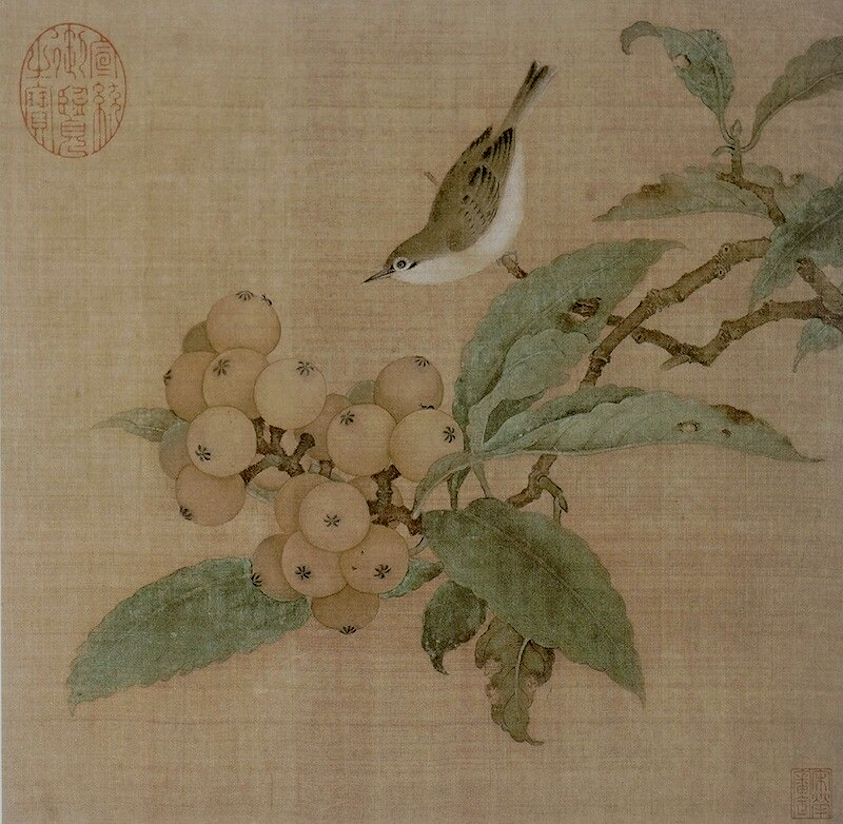
Patience, young grasshopper! (Animals in Art)

How narrow is the vision that exalts the busyness of the ant above the singing of the grasshopper.
~Sand and Foam by Kahlil Gibran http://gutenberg.net.au/ebooks05/0500611h.html

Because grasshoppers have such powerful jumping legs, people sometimes don’t realize that they also have wings. Grasshoppers use their jumping ability to give them a boost into the air but most are pretty strong fliers and make good use of their wings to escape predators.
~FROM https://www.thoughtco.com/fascinating-facts-about-grasshoppers-1968334

Clicking on the embedded links below will take you to larger images of these works:

This slideshow requires JavaScript.

1. Sculpture of a Grasshopper, Mexico, 1300 / Stone / Barakat Gallery, Los Angeles, CA

2. The Plague of Grasshoppers, Germany, c.1400 / Getty Museum Collection, California

3. Still life with fruits, a grasshopper and a butterfly by Maria Sibylla Merian, c.1670 / Staatliche Museen zu Berlin, Germany

4. Locusta Germanica.Tab XXIV by Rosel von Rosenhof, c.1746 / Engraving with hand coloring / Pictura Antique Prints, The Netherlands

5. Freshwater Jar with Procession of Grasshoppers, by Makuzu Kōzan I, c.1870/80s / Stoneware with wood lid and ivory knob / The Metropolitan Museum of Art, NYC

6. Grasshopper and sunflower by Shibata Zeshin, c.1877 / Woodblock print / Minneapolis Institute of Art, MN

7. French Art Deco Grasshopper Hood Ornament, c.1920s / Bronze on Bakelite Plinth / Deco Interiors, Gloucestershire, UK

8. Corsage Brooch with Grasshoppers by René Lalique, c.1920 / Molded glass, nickel silver, marcasite, and pigmented resin / The Walters Art Museum, Baltimore, MD

9. Grasshopper by M.C Escher, 1935 / Wood engraving / Limited edition, various collections

10. Dog and grasshopper, 1930 / Porcelain / Musée National Adrien Dubouche, Limoges, France

11. Don’t Be a Job Hopper by Walt Disney Company, 1944 / Poster / Franklin D. Roosevelt Library and Museum, Hyde Park, NY

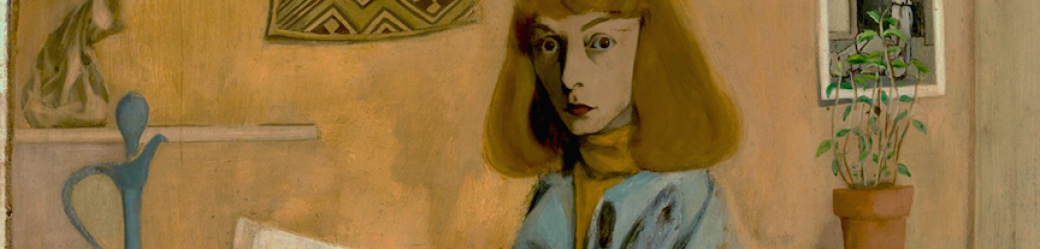
12. Green Grasshopper by Yvonne Rosalind Barlow, c.1964 / Oil on board / Rugby Art Gallery and Museum, UK

13. Locust And Grasshopper by Salvador Dalí, 1967 / Original colored lithograph / Limited edition, various collections

14. The Ant and the Grasshopper by Jacob Lawrence, 1969 / Ink on paper / Paul G. Allen Family Collection

[14 embedded links above]

Grasshopper Found Embedded in van Gogh Masterpiece
https://nelson-atkins.org/grasshopper-found-embedded-van-gogh-masterpiece/
Andy Warhol’s Endangered Species (Animals in Art)

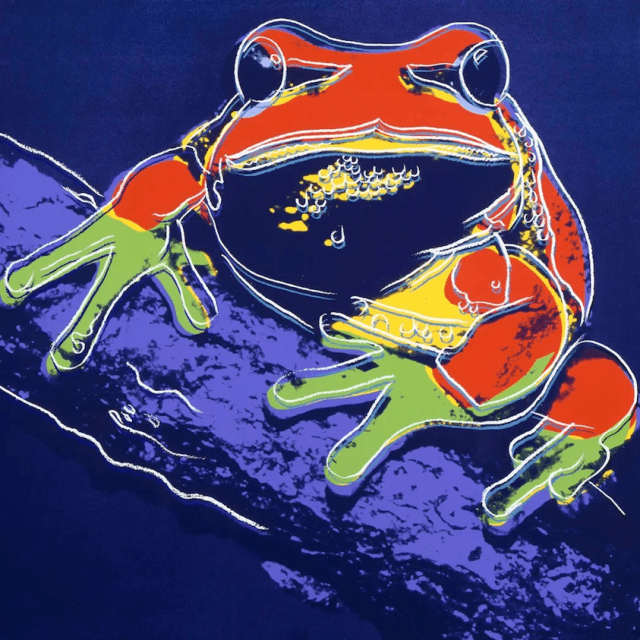
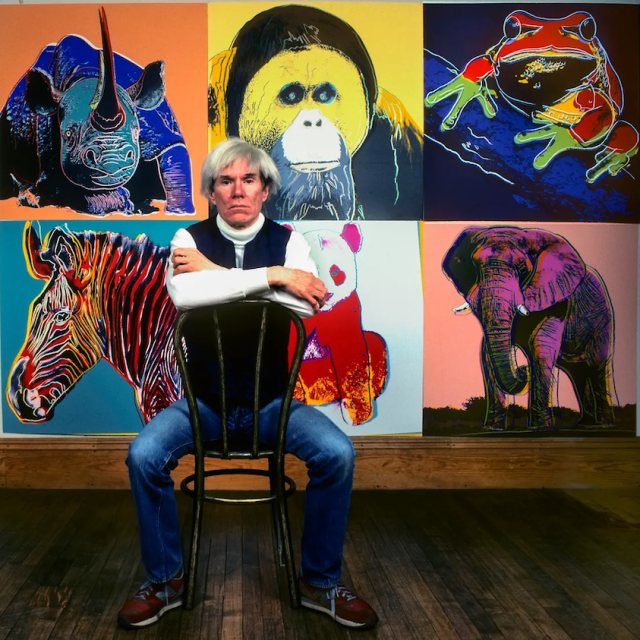
Created in 1983, the series consists of 10 silkscreen prints featuring images of animals that were endangered or threatened with extinction. The series was a collaboration between Warhol and his friend, the art dealer and gallerist Ron Feldman, and it was created in support of the Endangered Species Act, which was passed by the U.S. Congress in 1973.
~FROM https://andipaeditions.com/blog/104-endangered-species-by-andy-warhol-an-important-milestone/

Andy Warhol at The Factory, NYC, April 12, 1983 [Getty Images]

Endangered Species Portfolio, 1983 / Screenprint on Lenox Museum Board / 41″x41″ / Various collections

[1 embedded link above]

10 Facts About Andy Warhol’s Endangered Species
https://www.myartbroker.com/artist-andy-warhol/10-facts/10-facts-about-warhol-endangered-species

Sam Savitt

Equine artist and illustrator Sam Savitt (1917-2000)

Image from Equestrian Living: Remembering Artist Sam Savitt
https://eqliving.com/remembering-artist-sam-savitt/

[Sam Savitt] “started his career doing magazine illustrations, and became well known for his illustrations for Dell comic book covers, for whom he did Western illustrations. He wrote, or co-wrote, 17 books on horses, as well as private commissions and the Sam Savitt series of charts, which were used in the Smithsonian.”
https://janebadgerbooks.co.uk/illustrators/savitt-sam/

The Lone Ranger’s Famous Horse Hi-Yo Silver, No3, 1952 / Dell Comics

Lad: A Dog Anniversary Edition, 1968 / E. P. Dutton, NY

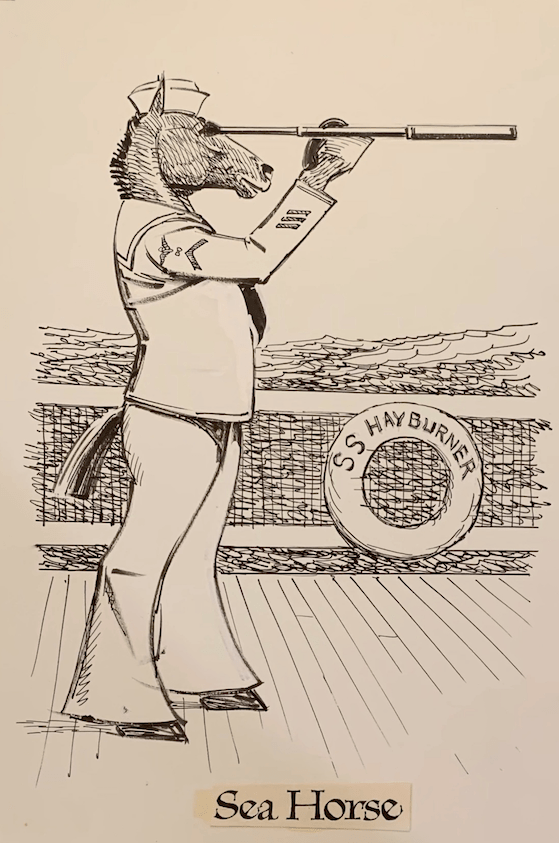
Sea Horse from Sam Savitt’s Book of Horse Nonsense, 1975 / Black Horse Press, NY

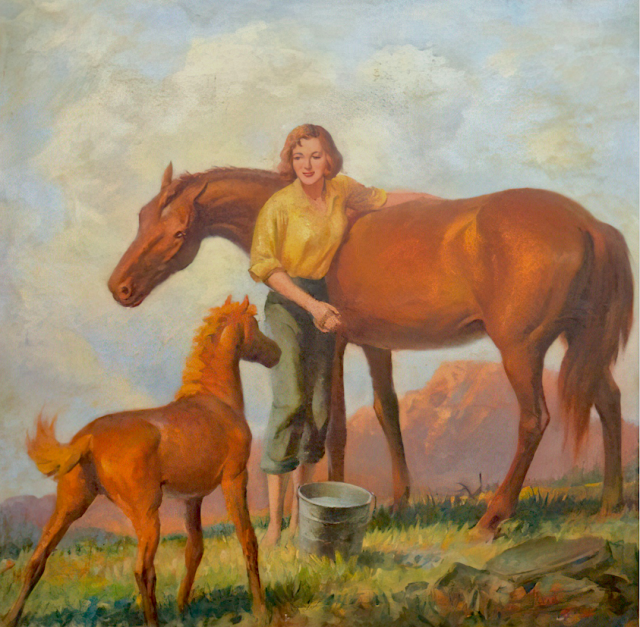
Woman with a horse and foal, ND / Oil on canvas / Private collection

[5 embedded links above]

Wikipedia~ https://en.wikipedia.org/wiki/Sam_Savitt
Field Guide to Wild American Pulp Artists~
https://www.pulpartists.com/Savitt.html
Horse Book Illustrators, Part Three: Sam Savitt~
http://estatesalechronicles.blogspot.com/2014/06/horse-book-illustrators-part-three-sam.html

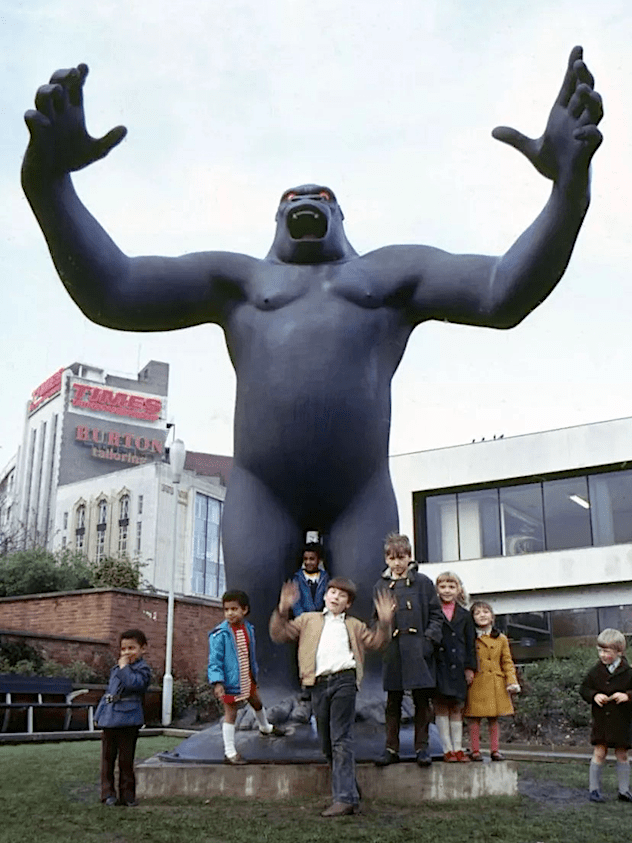
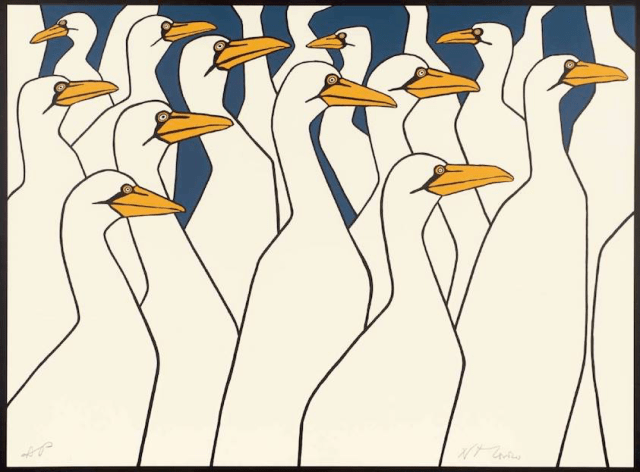
Nicholas Monro (Animals in Art)

Monro [was] an English sculptor, printmaker and art teacher. He was a member of the Pop Art movement which came into prominence in the 1960s. He stood out among this group for making sculpture the principal vehicle for his work, particularly using fibreglass, filling the Robert Fraser Gallery in London, for example, with forty fibreglass sheep.
~FROM https://warwick.ac.uk/services/art/artist/nicholasmonro/

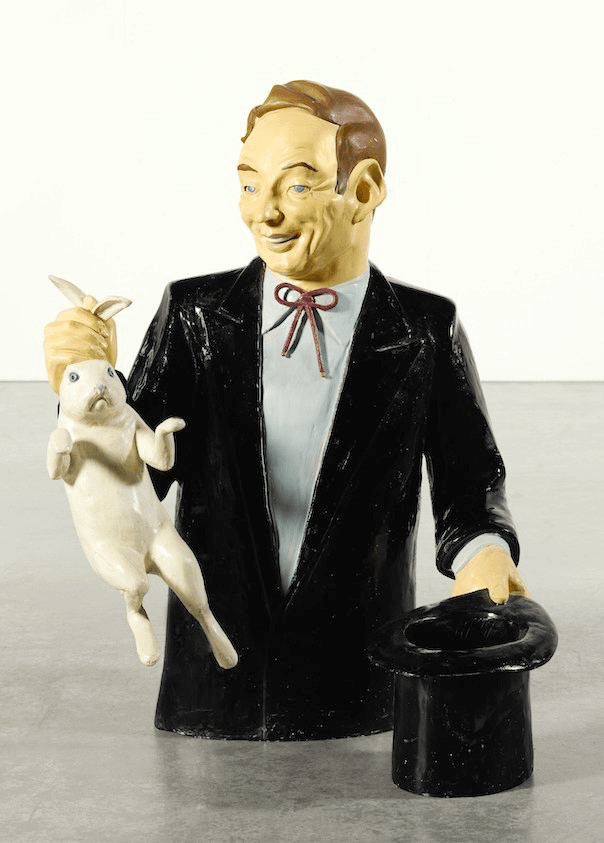
1. Magician, 1964 / Painted fiberglass / Private collection

2. Animals Running Through Fire, 1970 / Screenprint on paper / Various collections, incl. Victoria & Albert Museum, UK

3. King Kong, 1972 / Painted fiberglass / Private collection

4. Colony, 1972 / Screenprint on paper / Various collections, incl. Tate Britain, UK

[4 embedded links above]

Nicholas Monro~
https://en.wikipedia.org/wiki/Nicholas_Monro
The Contraption – A tribute to Nicholas Monro 1936 – 2022
http://walkspace.uk/2022/11/the-contraption-a-tribute-to-nicholas-monro-1936-2022/

Pop Art and Animals~
https://www.artmajeur.com/en/magazine/5-art-history/pop-art-and-animals/331567
11 artists express themselves through animal pop art~
https://talkcarpet.com/super-original-artist-impressions-on-our-zeitgeist-at-mima-brussels/

Franz Marc (Animals in Art)

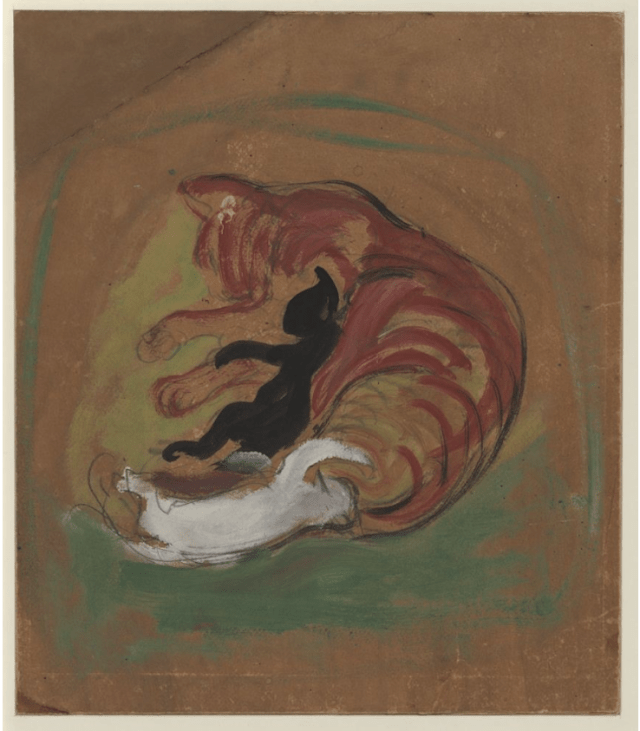
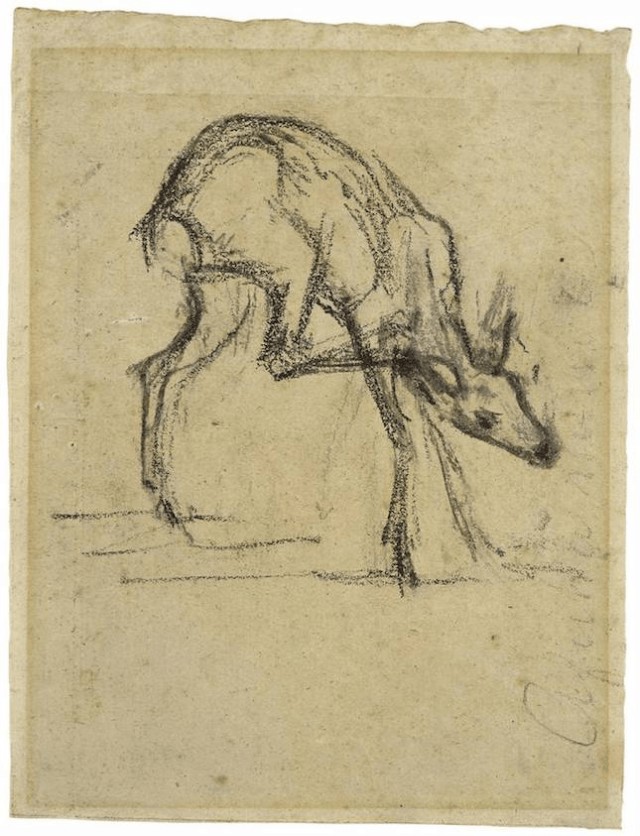
Aiming to recreate the animals ‘from the inside’, Marc made himself so complete a master of their anatomy that he felt qualified to teach classes on the subject, though in the end there were few takers. This anatomical knowledge gave him the ability to improvise. From this point on, Marc did not aim to merely copy nature, but to capture the spirit of nature and of ‘animal life’.
~FROM https://www.gseart.com/artist/franz-marc/bio

1. Katze mit Jungen, 1900-1916 / Tempera, oil, pencil on cardboard / Kunstmuseum Moritzburg, Halle, Germany

2. Sketch, 1908 / Crayon on paper / Private collection

3. Two Horses, 1908-09 / Bronze / Lenbachhaus München, Germany

4. Yellow Cow, 1911 / Oil on canvas / Solomon R. Guggenheim Museum, NYC

5. Tierlegende (Animal Legend), 1912 / Woodcut on Japanese paper / Various locations

[5 embedded links above]

Franz Marc~
https://en.wikipedia.org/wiki/Franz_Marc

Why Did Franz Marc Paint Animals?
https://www.thecollector.com/why-did-franz-marc-paint-animals/
Franz Marc and the animalization of art
https://smarthistory.org/franz-marc-animal-art/

Noah’s Ark (Animals in Art)

In the Judeo-Christian flood story, God became angry with the sins of mankind. He told his faithful servant, Noah, to build an ark large enough for his family (which included eight people; his wife, his three sons and their wives) and two of every creature on earth. God delivered the promised deluge, killing everyone and everything on earth except the population of the ark.
~FROM https://www.pbs.org/independentlens/blog/a-flood-of-myths-and-stories/

Noah’s Ark by Edward Hicks, 1846 / Oil on canvas / Philadelphia Museum of Art, PA

[1 embedded link above]

Edward Hicks~
https://en.wikipedia.org/wiki/Edward_Hicks
https://bucksco.michenerartmuseum.org/artists/edward-hicks/

Genesis 5:32 to 10:1~
https://www.biblegateway.com/passage/?search=Genesis%205%3A32-10%3A1&version=NIV

Born May 9~ Eliyakota Samualie

Eliyakota Samualie (May 9, 1939-November 1987) was a Canadian Inuit graphic artist and sculptor.
Biography on Wikipedia: https://en.wikipedia.org/wiki/Eliyakota_Samualie

Bird and Fish by Eliyakota Samualie
c.1980-1981 / Ink and color pencil on paper / University of Delaware Museums Collections, Newark, DE

Eliyakota Samualie on Canadian Art price index: https://artpriceindex.ca/artist/1167240/Eliyakota-Samualie/

Further reading:
https://www.inuitartzone.com/collections/samuellie-eliyakota
https://www.historymuseum.ca/capedorsetprints/themes/animals.php
https://www.thecanadianencyclopedia.ca/en/article/inuit-printmaking

December is Root Vegetables and Exotic Fruits Month! #3

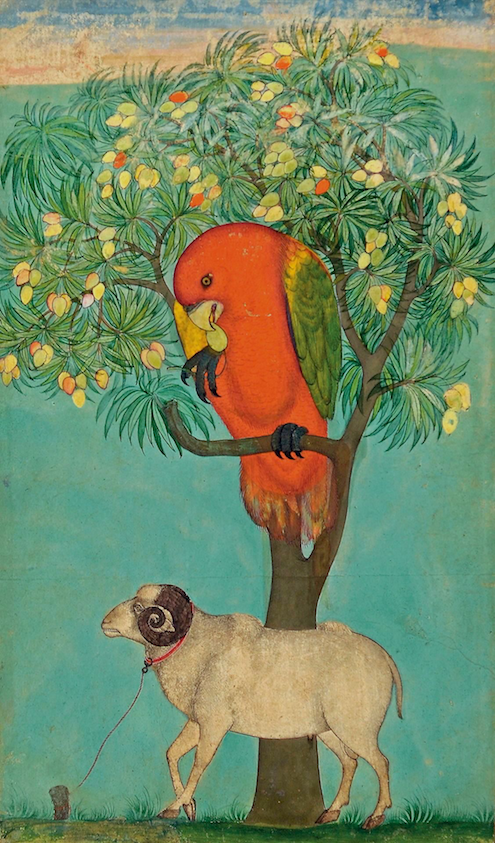
A Parrot Perched on a Mango Tree; a Ram Tethered Below
by anonymous artist from Deccan plateau of south-central India

c.1630–70 / Ink, opaque watercolor, and gold on paper / 9 7/16″x5 9/16″
Jagdish and Kamla Mittal Museum of Indian Art, Hyderabad, India

[There are three embedded links above]