Gerald Brockhurst: October 31, 1890-May 4, 1978

Jeunesse Dorée by Gerald Leslie Brockhurst

1934 / Oil on board / 30”x24 4/5” / Lady Lever Art Gallery, National Museums Liverpool, UK

British-born painter and etcher who became an American citizen in 1949. Precociously gifted, an excellent draughtsman, and a fine craftsman, Brockhurst won several prizes at the Royal Academy Schools and went on to have a highly successful career as a society portraitist, first in Britain and then in the USA, where he settled in 1939, working in New York and New Jersey. He is best known for his portraits of glamorous women, painted in an eye-catching, dramatically lit, formally posed style similar to that later associated with Annigoni. As an etcher Brockhurst is remembered particularly for Adolescence (1932), a powerful study of a naked girl on the verge of womanhood staring broodingly into a mirror—one of the masterpieces of 20th-century printmaking.  ~Oxford University Press

“Dorette” and Gerald Leslie Brockhurst~
https://collections.tepapa.govt.nz/object/39559
Wikipedia~ https://en.wikipedia.org/wiki/Gerald_Brockhurst
Gerald Leslie Brockhurst painting the Duchess of Windsor~
https://www.npg.org.uk/collections/search/portrait/mw233820/Gerald-Leslie-Brockhurst?LinkID=mp08078&role=sit&rNo=13

Kerry James Marshall: Born October 17, 1955

“For me,” he said in his MCA Chicago lecture, “the thing that has the greatest transformative capacity in the art world today, in terms of what people expect to see when they go to the art museum, is a painting that has a black figure in it, because 95 percent of all the other paintings you see are going to have white figures in them. The whole history of representation is built on the representation of white folks. Now, all of that stuff is good, so you have to figure out how to get good like that, and then get in there on the terms that are relevant for now.” Marshall has done this “from the ground up,” as Metropolitan Museum curator Ian Alteveer put it, working through historical styles and genres, including Rococo love scenes, large-scale history paintings, and Impressionist plein air fetes.
http://www.artnews.com/2016/03/02/the-painter-of-modern-life-kerry-james-marshall-aims-to-get-more-images-of-black-figures-into-museums/?singlepage=1

http://hyperallergic.com/310477/how-kerry-james-marshall-rewrites-art-history/
http://www.nga.gov/content/ngaweb/Collection/artist-info.35534.html#biography

Artist Birthday Quiz for 10/2~

Which 18th century landscape painter and his brother, two of the many famous painters from the Dutch city of Dordrecht, were pupils of their father?

Which photographer studied painting in college but pursued photography instead, becoming best known for her portraits of VIPs and celebrities?

Answers here~ https://schristywolfe.com/2015/10/02/october-2/

Artist Birthday Quiz for 9/29~

What 16th century Venetian painter had an inscription in his studio that read “Michelangelo’s design and Titian’s Color”, seeking as he did to produce the compositional methods of Michelangelo while using the coloring of Titian?

What 17th century Italian artist’s practice of painting directly from posed models violated the idealism of Renaissance theory by establishing that painting could be an extension of everyday experience?

Answers here~ https://schristywolfe.com/2015/09/29/september-29/

Artist Birthday Quiz for 9/28~

Which French academic artist was the most popular portrait painter of his day, exhibiting at the Paris Salon for the first time in 1844 and appointed professor at the École des Beaux-Arts in 1864, where he taught until his death?

Which painter, who moved to New York in 1950 as he was dissatisfied with the Japanese contemporary art scene, was the first Japanese-American artist working in the abstract-expressionist style to receive international acclaim?

Answers here~ https://schristywolfe.com/2015/09/28/september-28/

August 12 or 19: Birthday of George Bellows


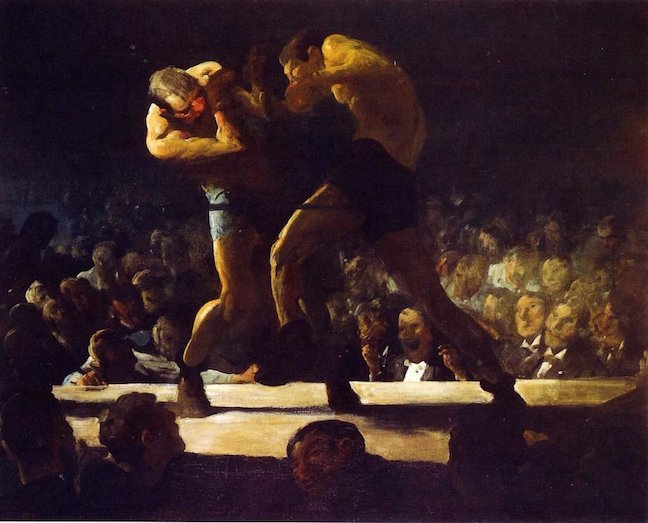
George Wesley Bellows (August 12 or August 19, 1882 – January 8, 1925) was an American realist painter, known for his bold depictions of urban life in New York City, becoming, according to the Columbus Museum of Art, “the most acclaimed American artist of his generation”.   Wikipedia

Bellows once commented that “there is nothing I do not want to know that has to do with life or art.” He drew equal inspiration from municipal workers removing snow from the city’s streets, longshoremen loading and unloading cargo from ocean liners and freighters, and the ladies and gentlemen who created a rich visual pageantry as they enjoyed New York’s parks. The variety of Bellows’s urban subjects was matched by the range of palettes and techniques he employed, often on immense canvases. Few would have disputed a critic who observed of Bellows at the time of his death, “He was an adherent of ‘wallop’ in painting.” In an astute bid for broad appeal, Bellows exhibited his works widely, attracting both critics—”There’s been an awful lot written about me,” he admitted—and patrons. His dramatic paintings of familiar subjects were acquired by major museums, important regional art centers, educational institutions, and prominent collectors, from the relatively adventurous to those with more conventional tastes. Both an active academician and a keen independent, Bellows was at home among diverse factions of the art world. Writing in 1913, the critic Forbes Watson noted his “curious appeal” to “the conservative and radical alike.”
http://www.metmuseum.org/exhibitions/listings/2012/bellows


This slideshow requires JavaScript.

http://www.georgebellows.com/biography
https://www.britannica.com/biography/George-Wesley-Bellows
https://en.wikipedia.org/wiki/George_Bellows


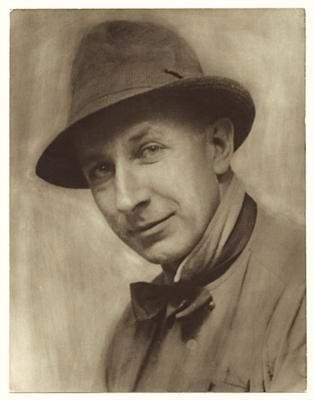
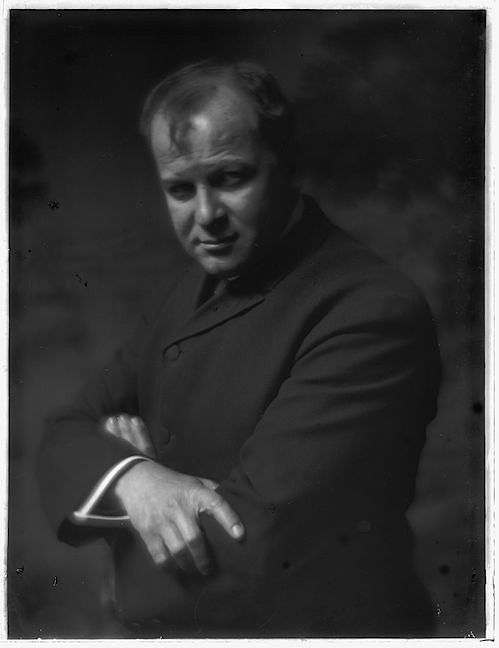
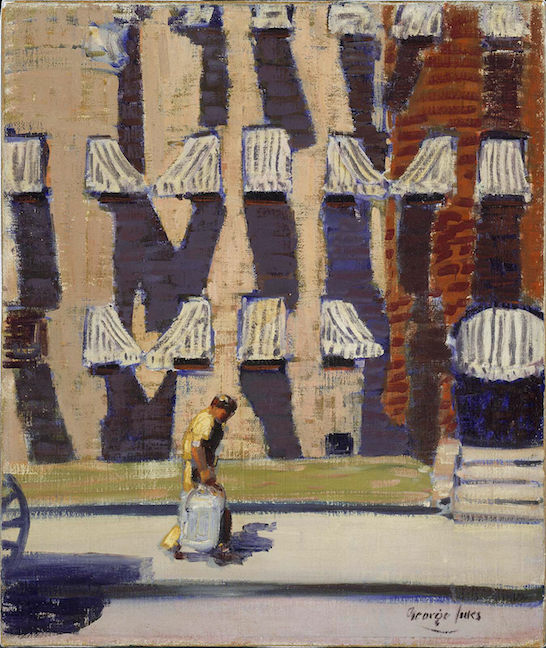
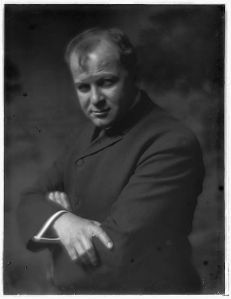
George Luks: Born August 13, 1867

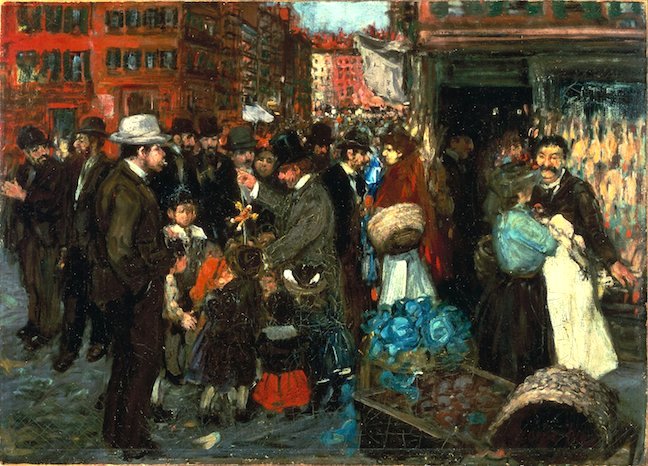
HesterStreet

GeoBLuksGeorge Luks was an American realist painter and comic illustrator, best known for his images of New York and its inhabitants. Born in Williamsport, Pennsylvania, Luks worked as a vaudeville performer before moving to Philadelphia to study art at the Pennsylvania Academy of the Fine Arts…Luks was publishing comic illustrations in Puck and Truth, and upon his return in 1893 he accepted a job as a newspaper illustrator at the Philadelphia Press.
FROM http://www.illustrationhistory.org/artists/george-luks

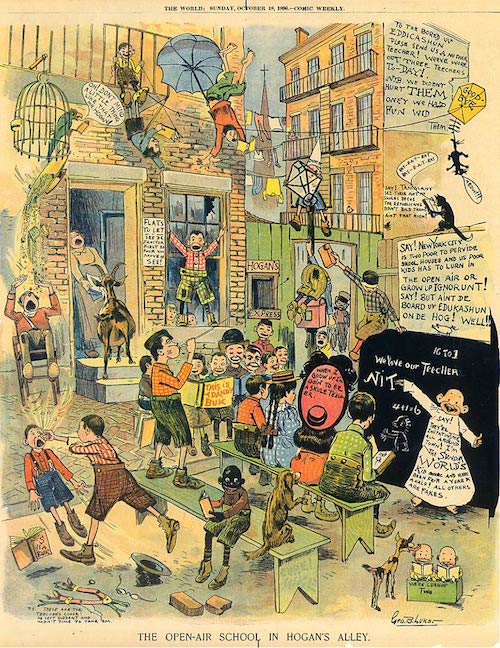
His career took a small detour in 1895 when heYellowKid traveled to Cuba as an artist-correspondent for the Philadelphia Evening Bulletin…When he returned to America in 1896, he joined the staff of Pulitzer’s World as an illustrator and cartoonist…One of his many famous colleagues at the World was Richard F. Outcault, who had joined the staff in 1894…Outcault’s Yellow Kid became so popular with the public and showed that it increased the newspaper’s sales as well as the sales of merchandise his likeness appeared on, from candy to whiskey. This awareness was occurring at the same time that William Randolph Hearst had come to town, purchased the Journal and was having an intense battle with Pulitzer’s World for dominance in New York City. Hearst knew a good thing when he saw it and lured Outcault away from Pulitzer…Pulitzer was not to be outdone, however, and assigned Luks to continue drawing the Yellow BostonKid in Hogan’s Alley for the World…Luks [continued to work] at his painting and was finally able to make a living at it. He left the newspaper in 1898.
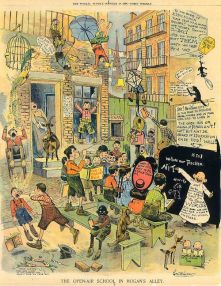
FROM https://www.hoganmag.com/blog/george-luks-the-other-yellow-kid-artist

George Luks prided himself in being the “bad boy” of American art and would be pleased that this notion has survived as his reputation as a significant painter of the twentieth century continues to grow. A heavy drinker and engaged story-teller, Luks manufactured details of his own life to make himself more colorful. Most ingrained in his biography was his tall tale of KidWithBallhaving fought in the Mid-West as “Chicago Whitey,” a middle-weight boxing champion. No one ever checked his details. However, the mythology Luks created around himself masked an insecurity that reveals itself in the diversity of styles he sometimes employed as a painter. His mainstay was realism, but he experimented with impressionism and post-impressionism and was known to alter a canvas if it was criticized, sometimes ruining it entirely. The critic, James Huneker, noted literally hundreds of unfinished canvases in Luks upper Manhattan studio which he would either re-work or paint over. But when Luks was “on” he was a forceful painter of huge talent and confidence, noted for his sure, brilliant handling of a brush.
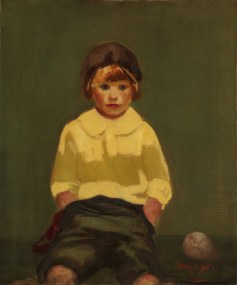
FROM http://www.tfaoi.com/aa/2aa/2aa563.htm
Ephemeral New York: Posts Tagged ‘George Luks’~
https://ephemeralnewyork.wordpress.com/tag/george-luks/

August 12 or 19: Birthday of George Bellows

George Wesley Bellows (August 12 or August 19, 1882 – January 8, 1925) was an American realist painter, known for his bold depictions of urban life in New York City, becoming, according to the Columbus Museum of Art, “the most acclaimed American artist of his generation”.   Wikipedia

Bellows once commented that “there is nothing I do not want to know that has to do with life or art.” He drew equal inspiration from municipal workers removing snow from the city’s streets, longshoremen loading and unloading cargo from ocean liners and freighters, and the ladies and gentlemen who created a rich visual pageantry as they enjoyed New York’s parks. The variety of Bellows’s urban subjects was matched by the range of palettes and techniques he employed, often on immense canvases. Few would have disputed a critic who observed of Bellows at the time of his death, “He was an adherent of ‘wallop’ in painting.” In an astute bid for broad appeal, Bellows exhibited his works widely, attracting both critics—”There’s been an awful lot written about me,” he admitted—and patrons. His dramatic paintings of familiar subjects were acquired by major museums, important regional art centers, educational institutions, and prominent collectors, from the relatively adventurous to those with more conventional tastes. Both an active academician and a keen independent, Bellows was at home among diverse factions of the art world. Writing in 1913, the critic Forbes Watson noted his “curious appeal” to “the conservative and radical alike.”
FROM http://www.metmuseum.org/exhibitions/listings/2012/bellows

This slideshow requires JavaScript.

http://www.georgebellows.com/biography