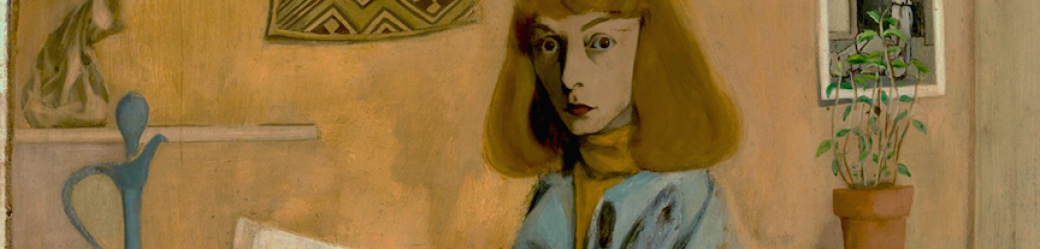
Pride Month~ June 4

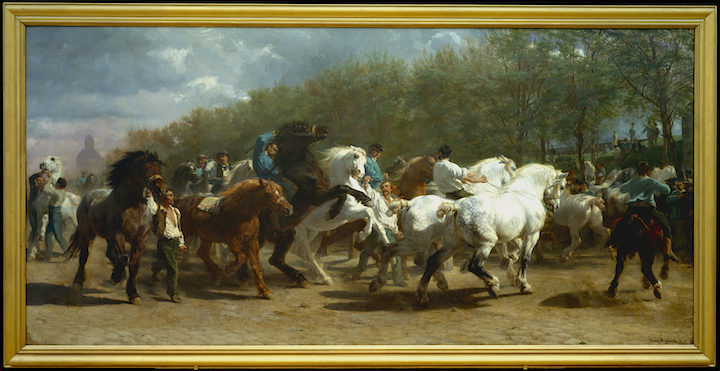
Rosa Bonheur (1822-1899)  One of the best known artists of the 19th century
http://ringlingdocents.org/bonheurbio.htm

The Horse Fair / 1852-55 / Oil on canvas / 96 1/4”x 199 1/2”

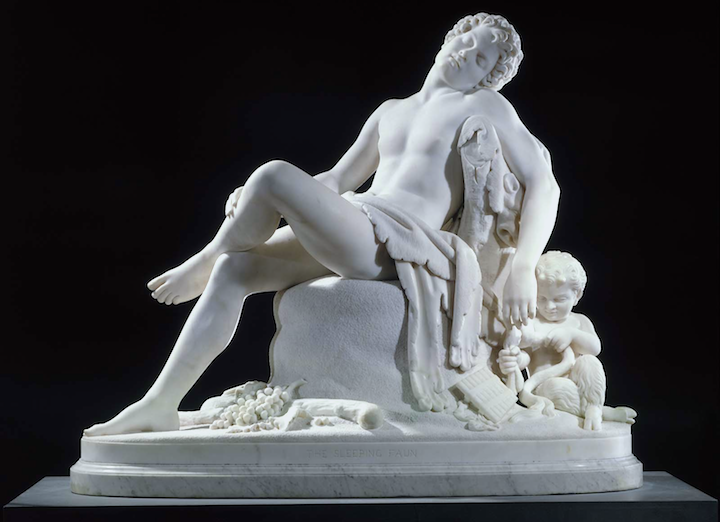
Harriet Hosmer (1830-1908)  Credited with opening the field of sculpture to women
https://americanart.si.edu/artist/harriet-hosmer-2314

Sleeping Faun / after 1865 / Marble / 34 1/2”x 41”x 16 1/2”

Pride Month~ June 3

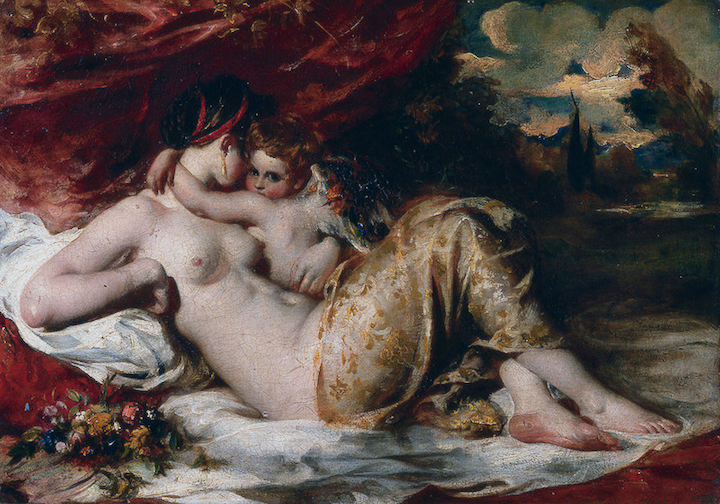
William Etty (1787-1849)   English artist best known for his nude figures
http://www.cassone-art.com/magazine/article/2011/11/theres-something-about-etty-art-and-controversy-at-york-city-art-gallery/?psrc=around-the-galleries

Venus and Cupid / c.1825/1835 / Oil on canvas / 12.4”x17.4”


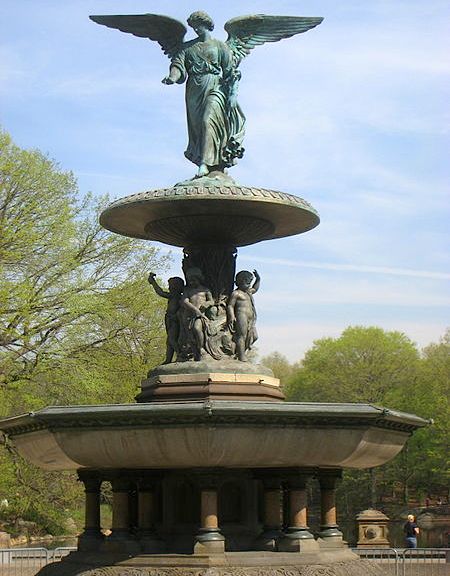
Emma Stebbins (1815-1882)   One Of The First American Women Sculptors
http://www.womenhistoryblog.com/2015/05/emma-stebbins.html

Angel of the Waters (Bethesda Fountain) / c.1873 / Figures: bronze; lower basin: blue stone; pool: westerly granite / H: 25′; Diameter of lower basin 15′; Diameter of pool 96′

Salmagundi

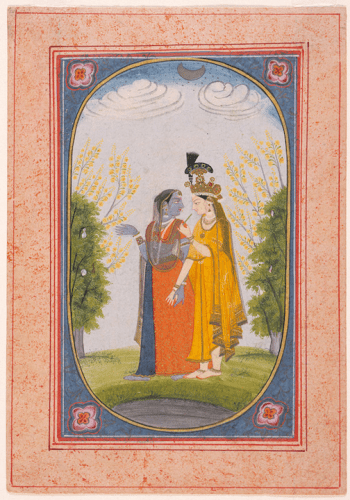
Radha & Krishna: Love

Radha, daughter of Vrishabhanu, was the mistress of Krishna during that period of his life when he lived among the cowherds of Vrindavan…So great was Radha’s love for Krishna that even today her name is uttered whenever Krishna is referred to, and Krishna worship is thought to be incomplete without the deification of Radha. ~ https://www.learnreligions.com/love-stories-from-hindu-literature-1770571

In many paintings (2003.178a), the divine couple is presented within a fertile, flowering landscape filled with pairs of birds. ~ https://www.metmuseum.org/toah/hd/rajp/hd_rajp.htm

“Krishna and Radha (Primary Title)”

“Krishna and Radha under a Tree in a Storm”

“Radha and Krishna Dressed in Each Other’s Clothes”

(Learn more by clicking on embedded hyperlinks in titles)

Salmagundi

A Taube  by  C.R.W. Nevinson
[War]

1916 / Oil on canvas / 25”x30” / Imperial War Museums, UK

Christopher Richard Wynne Nevinson ARA (13 August 1889 – 7 October 1946) was an English figure and landscape painter, etcher and lithographer, who was one of the most famous war artists of WWI.  ~Wikipedia

He served in France with the Red Cross and the Royal Army Medical Corps, 1914–16, before being invalided out, and his harsh, steely images of life and death in the trenches received great acclaim when he held a one-man exhibition at the Leicester Galleries, London, in 1916…In 1917 Nevinson returned to France as an Official War Artist, and he was the first to make drawings from the air. ~artuk.org

After the war Nevinson concentrated on townscape and genre painting. His autobiography, “Paint and Prejudice”, was published in 1937. He renewed his career as a war artist with the onset on the Second World War but a stroke cut short his war involvement in 1942. He died in 1946.  ~firstworldwar.com

^^  (Learn more by clicking on hyperlinks embedded in images and text)  ^^

Salmagundi

In Flanders Field-Where Soldiers Sleep and Poppies Grow / Robert Vonnoh
1890 / Oil on canvas / 58”x104” / The Butler Institute of American Art

In Flanders Fields By John McCrae

In Flanders fields the poppies blow
Between the crosses, row on row,
That mark our place; and in the sky
larks, still bravely singing, fly
Scarce heard amid the guns below.

We are the Dead. Short days ago
We lived, felt dawn, saw sunset glow,
Loved and were loved, and now we lie,
In Flanders fields.

Take up our quarrel with the foe:
To you from failing hands we throw
The torch; be yours to hold it high.
If ye break faith with us who die
We shall not sleep, though poppies grow
In Flanders fields.

“ ‘In Flanders Field’  became popular almost immediately upon its publication. It was translated into other languages and used on billboards advertising Victory Loan Bonds in Canada. The poppy soon became known as the flower of remembrance for the men and women in Britain, France, the United States, and Canada who have died in service of their country.” ~poets.org

^^  (Learn more by clicking on the six hyperlinks embedded in text)  ^^

Salmagundi

Charles & Ray Eames: Love

(Learn more by clicking on hyperlinks embedded in text)

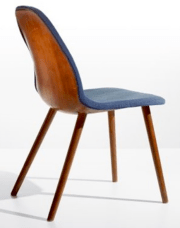
“Charles was a designer with an eye for form. Ray was an artist with an eye for color. They complemented each other on projects like coat hangers, films, their namesake chairs, and large architectural projects. Through four decades of creative work, they revolutionized design and created an indelible mark on American History. The duo was not without faults, but the pair proved to be inseparable and inspirational. They were the Eameses.”
https://www.pastemagazine.com/design/charles-and-ray-eames/first-couple-of-design-charles-eames/

“Their partnership, which obliterated the distinctions between private and professional lives, inspired numerous contemporary working marriages…Charles and Ray, architect and artist, wanted to do everything — disciplinary boundaries meant nothing to them — and, by and large, succeeded.” https://nymag.com/nymetro/arts/features/1437/

The Work of Charles and Ray Eames: A Legacy of Invention
AD Classics: Eames House / Charles and Ray Eames
The Love Letters of Charles & Ray Eames

Salmagundi

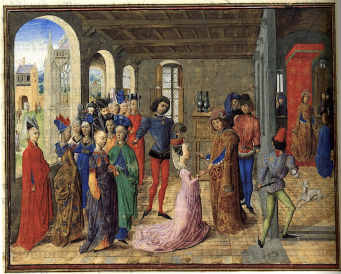
Weddings in the Renaissance

The scholars Silvana Seidel Menchi and Diego Quaglion…provide startling information demonstrating just how informal the act of marriage could be and how it could take place in almost any location. “With the assistance of a ladder, the groom, flanked by witnesses, reached the bride, and facing each other they pronounced the formula of the ritual, balanced in an equilibrium as unstable as the tie that thus bound them.” Indeed, before the edicts of The Council of Trent systematized the requirements of a proper wedding in 1563, only mutual consent was an absolute necessity for marriage. FROM Art and Love in Renaissance Italy / MetPublications /
The Metropolitan Museum of Art

(Learn more by clicking on hyperlinks embedded in text)

Salmagundi

Frida Kahlo and Diego Rivera: Love and War

Two years after [her] accident, in 1927, [Kahlo] met the painter Diego Rivera, whose work she’d come to admire and who became her mentor. In 1929, despite the vocal protestations of Kahlo’s mother, Frida and Diego were wedded and one of art history’s most notoriously tumultuous marriages commenced. 
FROM https://www.brainpickings.org/2013/04/19/frida-kahlo-diary-love-letters/

Kahlo…believed that her relationship with Rivera transcended the bodily, physical, even painterly world. “It’s not love, or tenderness, or affection, it’s life itself, my life, that I found when I saw it in your hands, in your mouth and in your breasts,” she [wrote] to him. “I have the taste of almonds from your lips in my mouth. Our worlds have never gone outside. Only one mountain can know the core of another mountain.”
FROM https://www.artsy.net/article/artsy-editorial-frida-kahlos-love-letters-diego-rivera-reveal-volatile-relationship

(Learn more by clicking on the embedded hyperlinks above)

This slideshow requires JavaScript.

Salmagundi

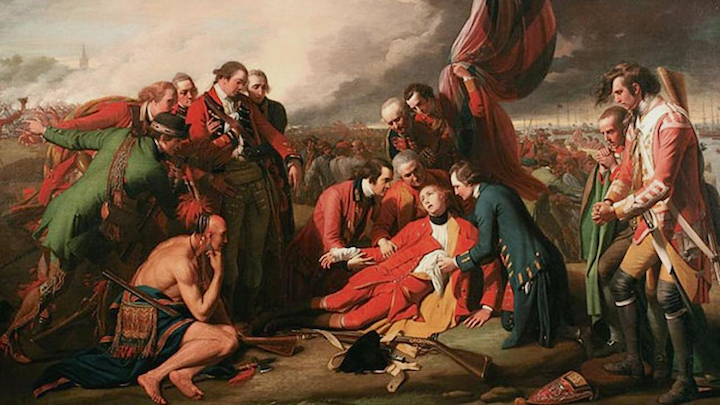
The Death of General Wolfe by Benjamin West

On September 13, 1759, during the Seven Years’ War (1756-63) [known in the United States as the French and Indian War], the British General James Wolfe achieved a dramatic victory; Wolfe was fatally wounded during the battle, but his victory ensured British supremacy in Canada.
https://www.history.com/topics/native-american-history/battle-of-quebec-1759

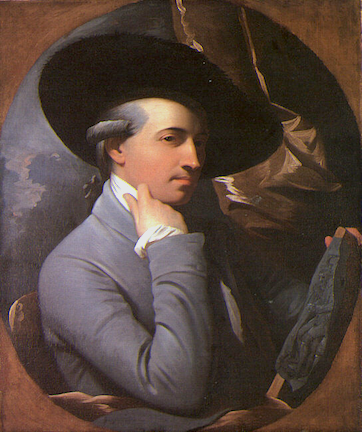
Benjamin West, Self-portrait 1770

Besides the original, at least four other additional versions of The Death of General Wolfe were also produced by West. The primary copy of The Death of General Wolfe is currently in the collection of the National Gallery of Canada, with further examples at the Royal Ontario Museum (Canadiana art collection), as well as the University of Michigan Museum of Art. The fourth copy produced resides at Ickworth House, Suffolk, England. Each reproduction had its own variation in the depiction of Wolfe’s death. A fifth autograph copy was commissioned by George III in 1771 and is still in the Royal Collection.
FROM https://en.wikipedia.org/wiki/The_Death_of_General_Wolfe

(Learn more by clicking on embedded hyperlinks)

Salmagundi


Mother’s Day: Love

The artist’s mother, comtesse Adèle de Toulouse-Lautrec, at breakfast, Malromé Chateau
by Henri de Toulouse-Lautrec
c.1881-1883 / Oil on canvas / 36.8”x31.8” / Musée Toulouse-Lautrec, France

Portrait of the Artist’s Mother by Vincent van Gogh
1888 / Oil on canvas / 16”x12-3/4” / Norton Simon Museum, Pasadena
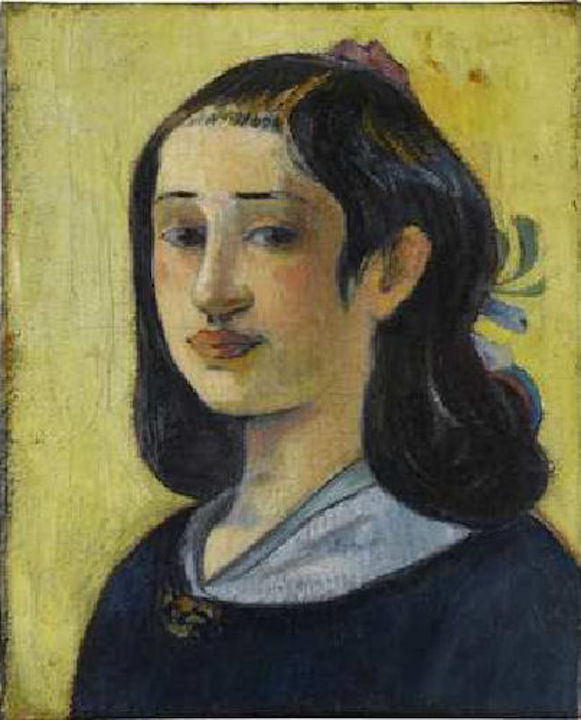
The Artist’s Mother by Paul Gauguin
Between 1890 & 1893 / Oil on canvas / 16.1”x12.9” / Staatsgalerie Stuttgart, Germany
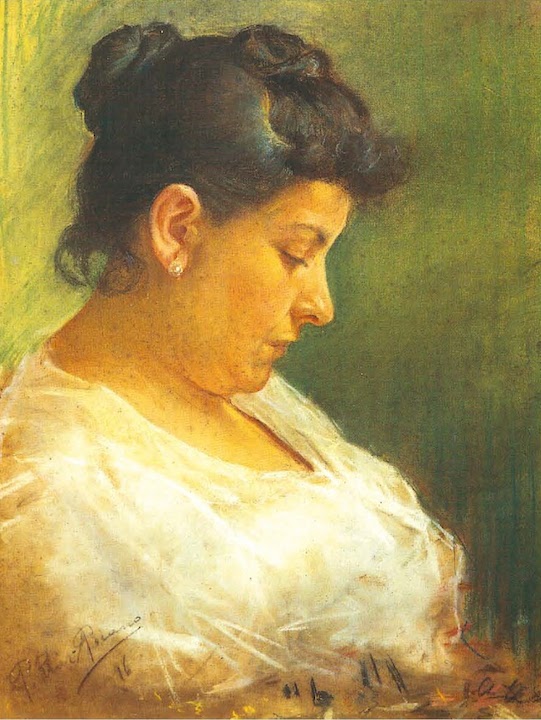
The Artist’s Mother by Pablo Picasso
1896 / Pastel on paper / 19.6”x15.3” / Museu Picasso, Barcelona
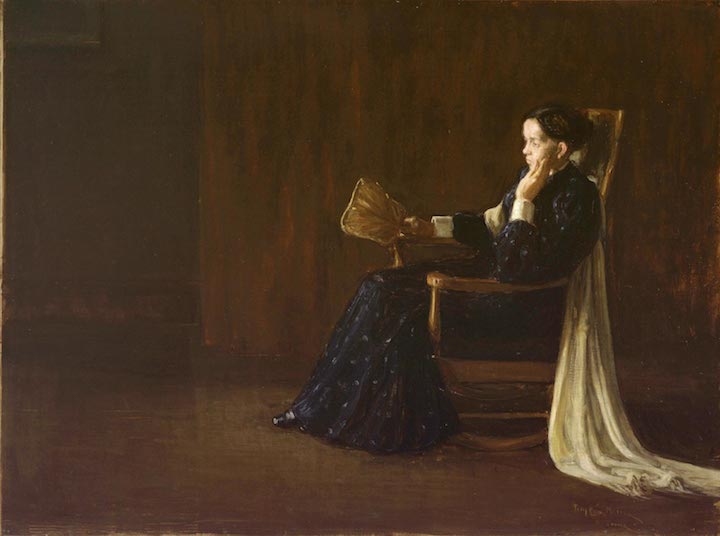
Portrait of the Artist’s Mother by Henry Ossawa Tanner
1897 / Oil on canvas / 29 1/4”x39 1/2” / Philadelphia Museum of Art

Mrs. Robert S. Cassatt, the Artist’s Mother by Mary Cassatt
c.1889 / Oil On Canvas / 38”x27” / Fine Arts Museums of San Francisco

Woman with Plants by Grant Wood
1929 / Oil on upsom board / 20 1/2”x17 7/8” / Museum of Art Cedar Rapids, Iowa
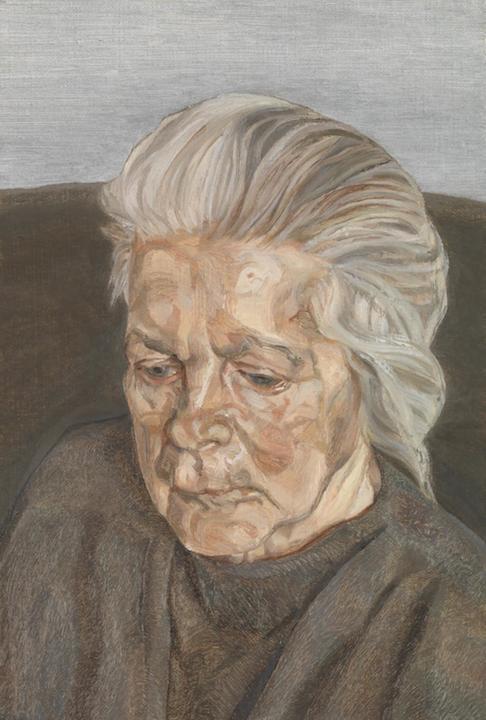
The Painter’s Mother IV by Lucian Freud
1973 / Oil on canvas / 10 3/4”x 7 1/3” / Tate, London
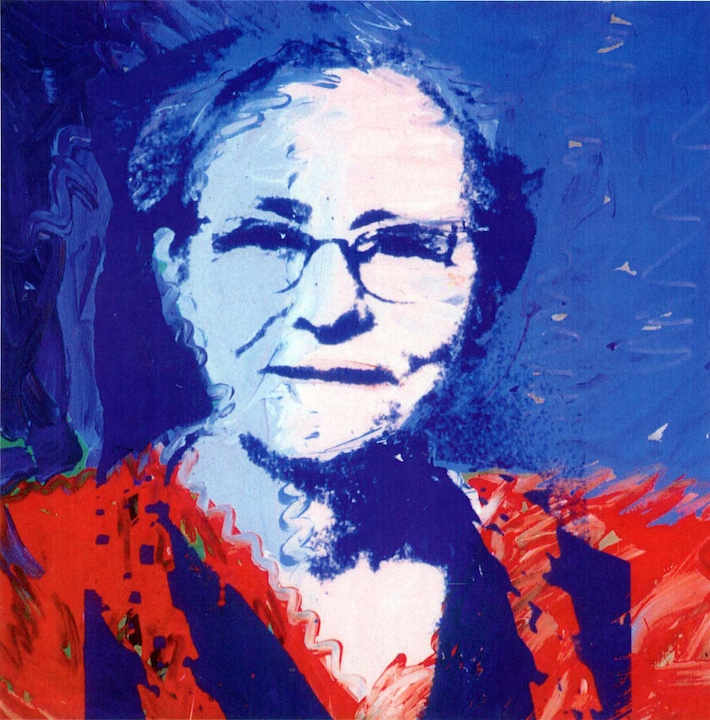
Julia Warhola by Andy Warhol
1974 / Silkscreen ink and synthetic polymer paint on canvas / 40”x40” / The Andy Warhol MuseumMum by David Hockney
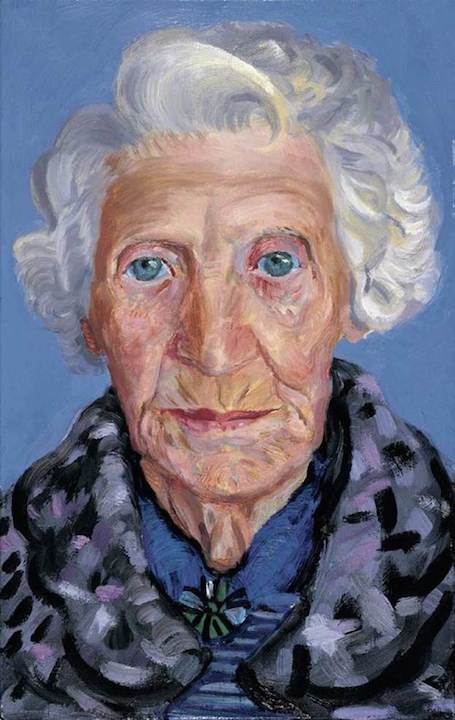
1988 / Oil on canvas / 16 1/2”x10 1/2” / The David Hockney Foundation

(Learn more by clicking on embedded hyperlinks)