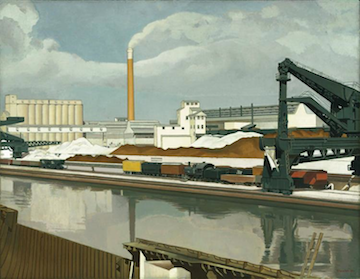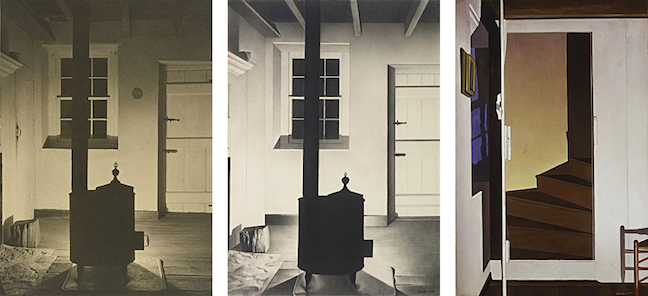
Charles Sheeler: Born July 16, 1883

Sheeler

Charles Sheeler (1883–1965)~
http://www.metmuseum.org/toah/hd/shee/hd_shee.htm
Precisionism~ http://www.metmuseum.org/toah/hd/prec/hd_prec.htm
Power / Fortune, December1940~
https://www.fulltable.com/vts/f/fortune/ills/sheeler/b.htm


The American modernist Charles Sheeler (1883–1965) explored the relationships between photography, film, and more traditional media such as painting and drawing with more rigor and intellectual discipline than perhaps any other artist of his generation. As in a well-conceived scientific experiment, Sheeler used his own photographs and film stills as the basis for paintings and drawings, thus crystallizing the differences and similarities between them. Works in one medium manage to function as independent objects while also being inextricably linked to works in other media.Charles Sheeler: Across Media


Ringo Starr: Born on July 7, 1940

youngRingo

While some accused Ringo Starr of being a clumsy drummer, many more agreed with George Harrison’s assessment: “Ringo’s the best backbeat in the business.” And while many in the wake of the youngerRingoBeatles’ breakup predicted that Starr would be the one without a solo career, he proved them wrong. Not only has he released several LPs (the first came out before the Beatles disbanded) and hit singles, but he’s also the only Beatle to establish a film-acting career for himself outside of the band’s mid-’60s movies.
http://www.rollingstone.com/music/artists/ringo-starr

Anybody who knows the Beatles’ music intimately knows the tympanic accents and fills as clearly today as when they were recorded: the famous drum roll that launches into “She Loves You”; the shimmering incandescence of his cymbal work on so many of those early hits; the impressionistic free-form of “Rain”; the loping cadence and crispy snare of “Sexy Sadie”; the haunting, almost cinematic drama and rich texture behind “Long, Long”; the building, tour-de-force crescendo that leads up to the “The End” on “Abbey Road.”

“Here’s what I discovered in the very first session that I did with him,” recalls Walsh. “He came in and I oldRingosaid, ‘You want to see a chart on the song?’ And he said, ‘No, give me the lyrics.’ He responds to the singer. A great example of that is when he plays on the Beatles’ ‘Something’ and he does that fill that’s such a musical response it’s almost like a guitar player; there’s notes to it.”
http://variety.com/2014/music/news/ringo-starr-paul-mccartney-beatles-1201073353/

olderRingo

Irving Penn: Born June 16, 1917

Penn

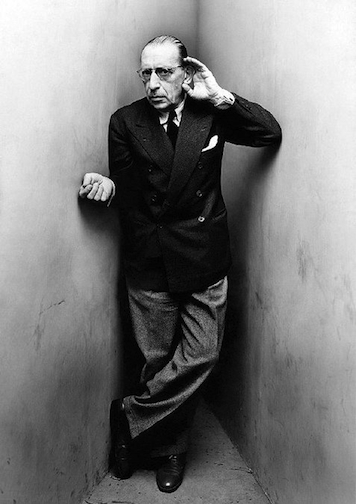
CapoteThe photographer Irving Penn put Marcel Duchamp in a corner, exposed Colette’s forehead and swaddled Rudolf Nureyev’s lithe body in layers of winter clothing. His subjects, who included many of the greatest creative talents of the 20th century, emerged from their portrait sessions with their carefully shaped personas profoundly shaken. Mr. Penn died on Oct. 7, 2009; he was 92.Fashion1
As one of the 20th century’s most prolific and influential photographers of fashion and the famous, Mr. Penn’s signature blend of classical elegance and cool minimalism was recognizable to magazine readers and museumgoers worldwide.
FROM https://www.nytimes.com/topic/person/irving-penn

Irving Penn Foundation~ https://irvingpenn.org/

Fashion2Art Institute of Chicago: Irving Penn Archives~ https://archive.artic.edu/irvingpennarchives/overview/Igor

Time Magazine: Appreciation –The Photos of Irving Penn~ http://content.time.com/time/photogallery/0,29307,1929105_1964784,00.html

Margaret Bourke-White: Born June 14, 1904

eagle

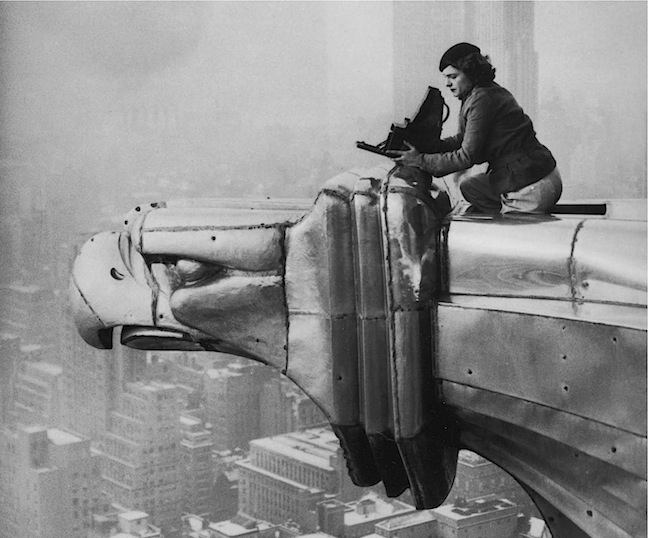
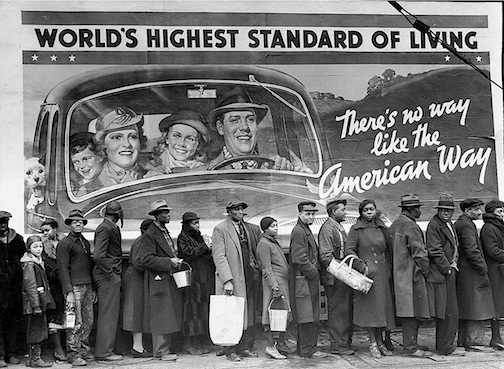
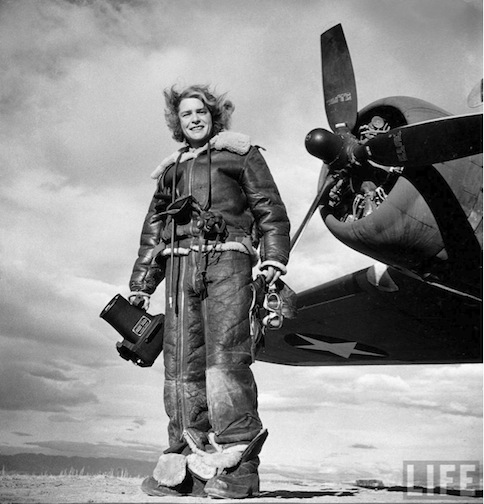
standardoflvngMargaret Bourke-White was a pioneering photojournalist whose insightful pictures of 1930s Russia, German industry, and the impact of the Depression and drought in the American midwest established her reputation…In 1927 she graduated from Cornell University with a degree in biology, but she spent most of her time establishing herself as a professional photographer. Bourke-White opened her first studio in her apartment in Cleveland, Ohio.
FROM http://www.moma.org/interactives/objectphoto/artists/712.htmlairplane

campAs an artist, Bourke-White continued to use photography as an instrument to examine social issues from a humanitarian perspective. She witnessed and documented some of the 20th century’s most notable moments, including the liberation of German concentration camps by General Patton in 1945, the release of Mahatma Gandhi from prison in 1946, and the effects of South African labor exploitation in the 1950s. Her career was cut short in 1966 due to Parkinson’s disease, and she died in 1971.
FROM https://www.howardgreenberg.com/artists/margaret-bourke-white

International Photography Hall of Fame and Museum~ https://iphf.org/inductees/margaret-bourke/

LIFELIFE’s First-Ever Cover Story~ http://time.com/3764198/lifes-first-ever-cover-story-building-the-fort-peck-dam-1936/

Shorpy Archives~ http://www.shorpy.com/image/tid/208

Julia Margaret Cameron~ Born June 11, 1815

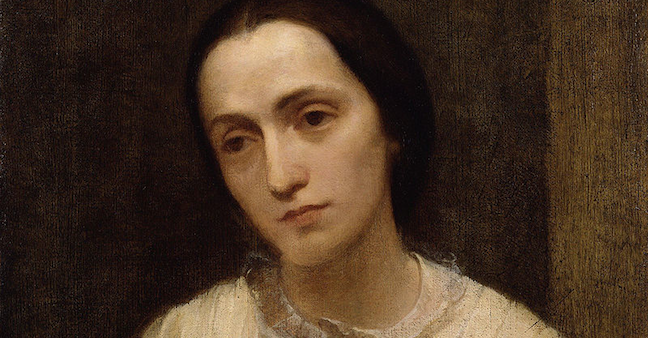
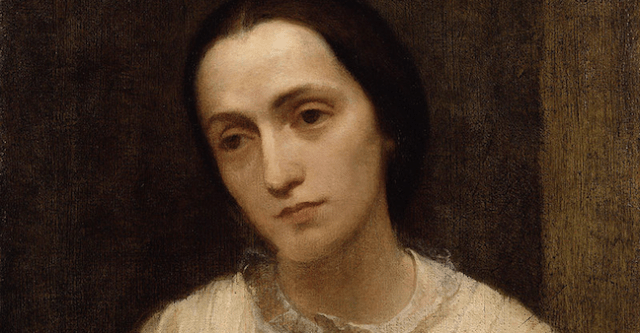
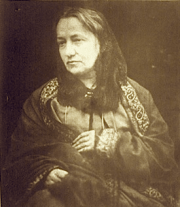
Detail: Painting of Julia Margaret Cameron by George Frederic Watts
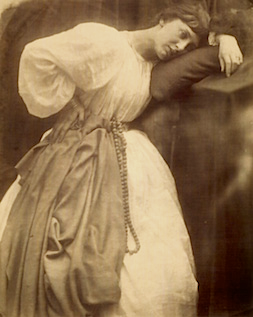
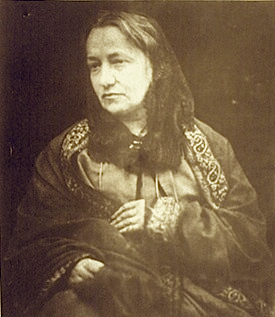
Julia Margaret Pattle was born in British India, on June 11, 1815, the daughter of an official in the Bengal Civil Service and a descendant of the French aristocracy. After her early years she received an education in France and England, returning to India in 1834. Four years later, in 1838, she married Charles Hay Cameron, twenty years her senior. In 1848, after Charles retired, he and Julia returned to England where they raised five children, adding a sixth in 1857 when they adopted Mary Ryan. Through Julia’s sister, Sarah Prinsep, the new arrivals cultivated a wide circle of elite, intellectual friends. It is this company of friends, family, and servants that Cameron used as models for her “tableux vivants”.
FROM http://d.lib.rochester.edu/camelot/creator/julia-margaret-cameron

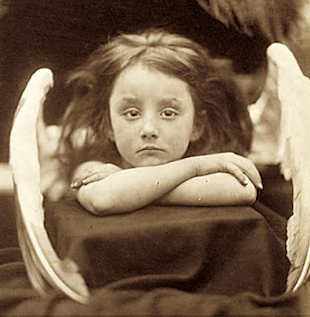
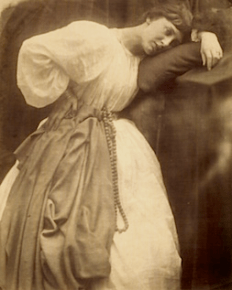
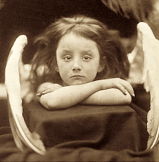
Cameron’s practice of photography began relatively late in her life, at age forty-eight, when her daughter gave her a sliding wooden box camera. Her “very first success in photography” came in January 1864, with a portrait of Annie, daughter of a neighbor.
Cameron used the wet collodion process, making prints with albumen printing-out paper, and worked with large negatives in order to avoid having to enlarge. In 1864 she began to register her work at the British Copyright Office, became a member of the Photographic Society of London and of Scotland, and prepared photographs for exhibition and sale through the London print dealers P. and D. Colnaghi. Most of her work was made between 1864 and 1875, before she left for family coffee plantations in Ceylon.
FROM https://www.icp.org/browse/archive/constituents/julia-margaret-cameron?all/all/all/all/0

From the first moment I handled my lens with a tender ardour,” she wrote, “and it has become to me as a living thing, with voice and memory and creative vigour.” Condemned by some contemporaries for sloppy craftsmanship, she purposely avoided the perfect resolution and minute detail that glass negatives permitted, opting instead for carefully directed light, soft focus, and long exposures that allowed the sitters’ slight movement to register in her pictures, instilling them with an uncommon sense of breath and life.  FROM http://www.metmuseum.org/exhibitions/listings/2013/julia-margaret-cameron
Heilbrunn Timeline of Art History

The Beauty of the Heroine: Julia Margaret Cameron and the Poetic Portrait

Julia Margaret Cameron: soft-focus photographer with an iron will
Marion Post Wolcott: Born June 7, 1910

Wolcott

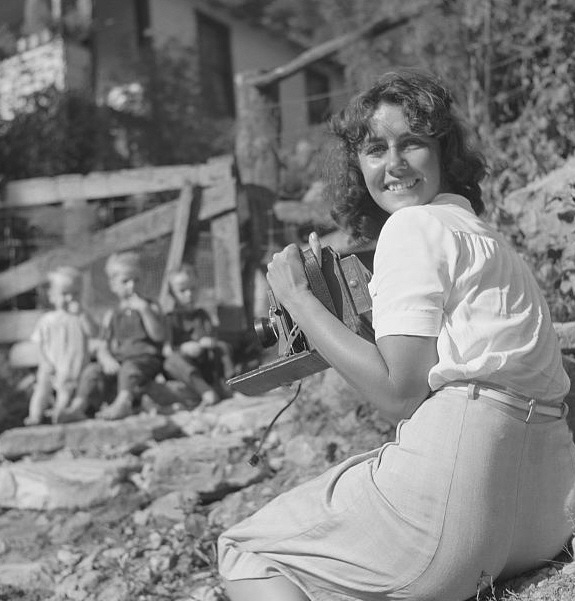
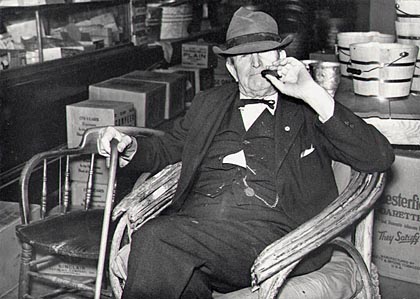
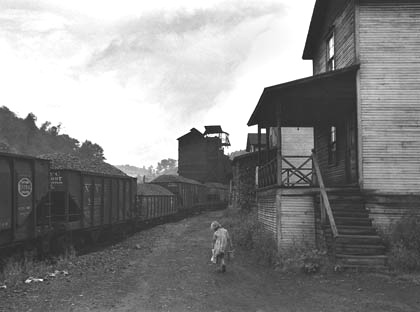
manwithstogieMarion Post Wolcott is best known for the more than 9,000 photographs she produced for the Farm Security Administration (FSA) from 1938 to 1942.1 This work is preserved at the Library of Congress Prints and Photographs Division and also available online. Before Wolcott became a government photographer, she earned her living making photographs for magazines and newspapers. Initially she worked freelance, but, as a staff photojournalist in 1937 and 1938, Wolcott broke gendertrain barriers in the newspaper darkroom. Then she worked for the Farm Security Administration, one of the largest news photography projects in the world.  students Although she worked professionally for only a few years, her artistry and perseverance have inspired many articles, books, and exhibitions and her photographs created a lasting record of American life on the eve of World War II.
FROM http://www.loc.gov/rr/print/coll/womphotoj/wolcottessay.html

The Photography of Marion Post Wolcott~
https://americanart.si.edu/artist/marion-post-wolcott-18332
Oral history interview with Marion Post Wolcott, 1965~
http://www.aaa.si.edu/collections/interviews/oral-history-interview-marion-post-wolcott-12262
Shorpy: M.P. Wolcott~ http://www.shorpy.com/image/tid/142

Richard Avedon: May 15, 1923-Oct 1, 2004

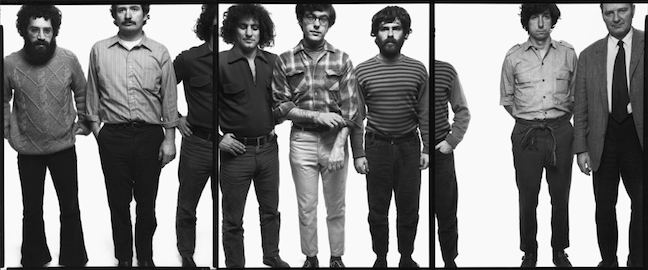
Mr. Avedon revolutionized the 20th-century art of fashion photography, imbuing it with touches of both gritty realism and outrageous fantasy and instilling it with a relentlessly experimental drive. So great a hold did Mr. Avedon’s fashion photography come to have on the public imagination that when he was in his 30’s he was the inspiration for Dick Avery, the fashion photographer played by Fred Astaire in the 1957 film “Funny Face.” In 1978 he appeared on the cover of Newsweek while a retrospective exhibition of his work was on display at the Metropolitan Museum of Art.
https://www.nytimes.com/2004/10/02/obituaries/richard-avedon-the-eye-of-fashion-dies-at-81.html

MoMA Collection~ http://www.moma.org/collection/artists/248?=undefined&page=1
International Photography Hall of Fame and Museum~ http://www.iphf.org/hall-of-fame/richard-avedon/

American Masters~ http://www.pbs.org/wnet/americanmasters/richard-avedon-about-the-photographer/467/
The Richard Avedon Foundation~ http://www.theavedonfoundation.net/

This slideshow requires JavaScript.

chicago7

Eadweard Muybridge: Born April 9, 1830

Yosemite

Photographs of Yosemite~
http://www.yosemite.ca.us/library/yosemite_its_wonders_and_its_beauties/list_of_photographs.html
Biography~ http://www.iphf.org/hall-of-fame/eadweard-muybridge/
BBC Documentary~ https://youtu.be/5Awo-P3t4Ho

Before his death in 1903, Muybridge would emigrate to America, change his name three times, come close to death and suffer brain damage in a carriage accident. Perhaps most sensationally, he would also be acquitted for the murder of Major Harry Larkyns, his wife’s lover, and the true father of his presumed son Floredo Helios Muybridge.
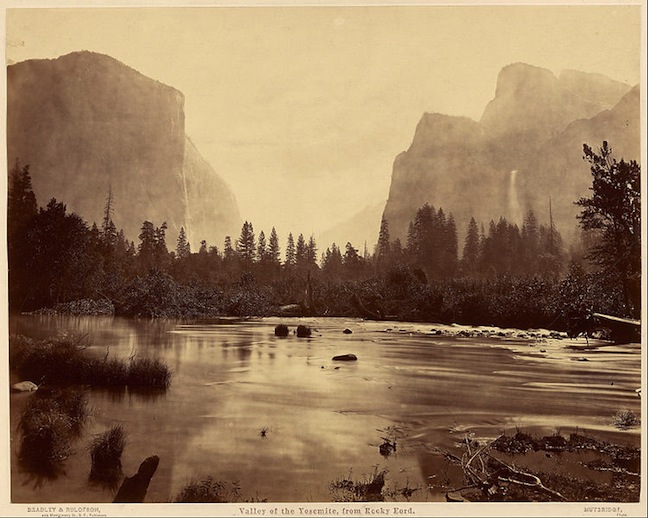
In fact, Muybridge enjoyed a professional life which may even have surpassed his sensational personal biography. He gained fame through adventurous and progressive landscape photography before working as a war and official government photographer; something which took him from the Lava beds of California during the Modoc War to Alaska and Central America.
Furthermore, Muybridge was instrumental in the development of instantaneous photography. To accomplish his famous motion sequence photography, Muybridge even designed his own high speed electronic shutter and electro-timer, to be used alongside a battery of up to twenty-four cameras!
While Muybridge’s motion sequences helped revolutionise still photography, the resultant photographs also punctuated the history of the motion picture. Muybridge actually came tantalisingly close to producing cinema himself with his projection device the ‘Zoöpraxiscope’.
Research resource~ http://www.eadweardmuybridge.co.uk/

Clarence Hudson White: Born on April 8, 1871

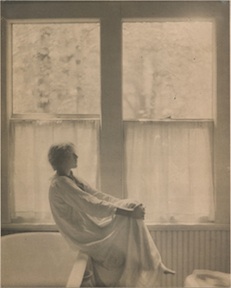
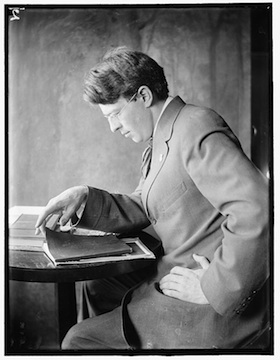
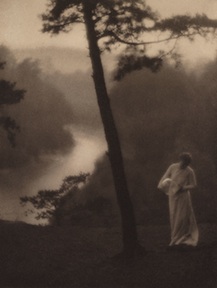
white1“Before White was able to become a full-time artist and teacher, he worked for nearly a decade in Newark, Ohio, balancing a bookkeeping job with his avocation as a photographer. Featured in the third issue of Camera Work, White received international recognition for his work…In 1906 he moved to New York and assisted Alfred Stieglitz in the operation of his newly opened gallery.”
FROM http://americanart.si.edu/collections/search/artist/?id=6761

white2

“When White first began teaching, the medium of photography was coming into its own as a means of artistic expression, and its advantages for communication had been acknowledged. Photographs were preferred over wood engravings and often over drawings for illustration in newspapers and magazines. The use of photographs in advertisements was on the rise. But no place existed for people to learn how to use the camera in the art of seeing.

white3Charismatic amateur photographer and teacher Clarence H. White was inspired to found a school that would advocate applying art principles to professional and commercial as well as art photography.”
FROM http://www.loc.gov/loc/lcib/0112/white.html

Clarence H. White: https://media.artic.edu/stieglitz/clarence-h-white/
Wikipedia entry: https://en.wikipedia.org/wiki/Clarence_Hudson_White