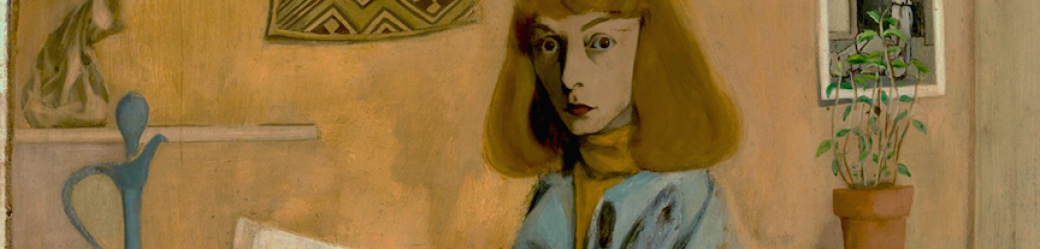
I have observed among the pictures submitted here quite a few paintings which make one actually come to the conclusion that the eye shows things differently to certain human beings than the way they really are, that is, that there really are men who see the present population of our nation only as rotten cretins; who, on principle, see meadows blue, skies green, clouds sulphur yellow, and so on—or, as they say, experience them as such. I do not want to enter into an argument here about the question of whether the persons concerned really do or do not see or feel in such a way, but in the name of the German people, I want to forbid these pitiful misfortunates who quite obviously suffer from an eye disease, to try vehemently to foist these products of their misinterpretation upon the age we live in, or even to wish to present them as “Art.” ~Adolph Hitler, 1937
http://laphamsquarterly.org/arts-letters/artifactitious-stammerings
Monthly Archives: February 2016
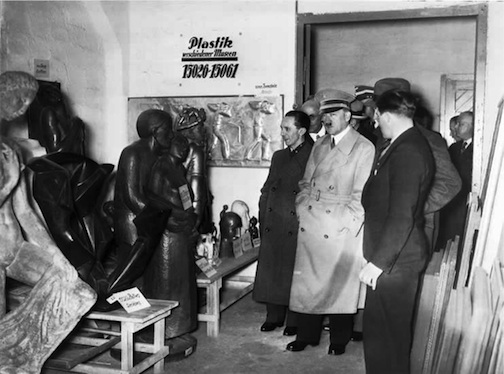
Enrico Caruso: Born February 25, 1873
‘The Great Caruso’ or ‘King of Tenors’ was born in Naples in 1873. He was his parents’ 18th child and the first to survive infancy. Music was his escape from the wretched reality that surrounded him. He sang in Neapolitan cafes and restaurants. By 1895 he was singing leading roles at the Opera House in Naples. From there he went to the major Italian opera houses and then became an international star. ‘Who has sent you to me? God?’ exclaimed Puccini on first hearing him sing.
FROM http://www.vam.ac.uk/content/articles/e/enrico-caruso/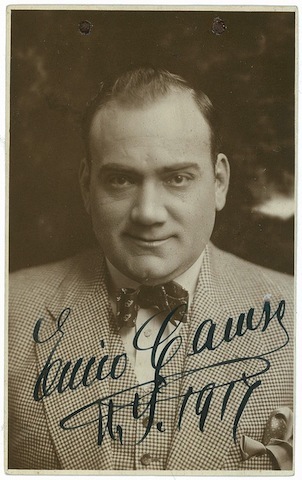
Below: Enrico Caruso drawing caricature sketches in booth at charity fair in Southampton, L.I.~
https://www.loc.gov/item/2005680287/
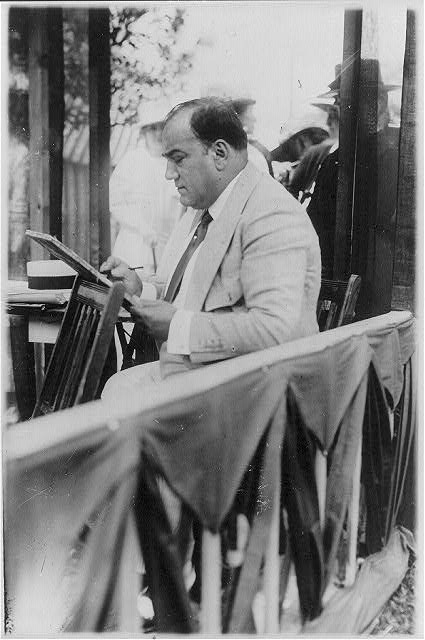
Caruso was a compulsive caricaturist who made spontaneous and witty sketches of colleagues and strangers wherever he went. His doodles often captured a candid likeness of the person, but they were never cruel.
Although he was proud of his sketches, he turned down offers to draw professionally. However, he did regularly contribute to an Italian-American newspaper called La Follia di New York, from which a book of drawings was eventually produced. Nowadays his cartoons are extremely collectable. One firm even reproduced one of his self caricatures as a powder compact.
FROM http://www.vam.ac.uk/content/articles/e/enrico-caruso/
Drawings by Enrico Caruso~
https://commons.wikimedia.org/wiki/Category:Drawings_by_Enrico_Caruso
February 25~
Enrico Caruso (1873-1921)
https://schristywolfe.com/2016/02/25/enrico-caruso-born-february-25-1873-2/
George Harrison (1943-2001)
https://schristywolfe.com/2015/02/25/769/
The White Album Cover

*Richard Hamilton (February 24, 1922 – September 13, 2011) was an English painter and collage artist.
The White Album: How Richard Hamilton Brought Conceptual Art to the Beatles
https://www.sothebys.com/en/articles/the-white-album-how-richard-hamilton-brought-conceptual-art-to-the-beatles
Steve Jobs: Born February 24, 1955

Jobs’s friend Larry Ellison, the founder of Oracle, had a private jet, and he designed its interior with a great deal of care. One day, Jobs decided that he wanted a private jet, too. He studied what Ellison had done. Then he set about to reproduce his friend’s design in its entirety—the same jet, the same reconfiguration, the same doors between the cabins. Actually, not in its entirety. Ellison’s jet “had a door between cabins with an open button and a close button,” Isaacson writes. “Jobs insisted that his have a single button that toggled. He didn’t like the polished stainless steel of the buttons, so he had them replaced with brushed metal ones.” Having hired Ellison’s designer, “pretty soon he was driving her crazy.” Of course he was. The great accomplishment of Jobs’s life is how effectively he put his idiosyncrasies—his petulance, his narcissism, and his rudeness—in the service of perfection. “I look at his airplane and mine,” Ellison says, “and everything he changed was better.”
FROM http://www.newyorker.com/magazine/2011/11/14/the-tweaker
“Remembering that I’ll be dead soon is the most important tool I’ve ever encountered to help me make the big choices in life,” he said. “Because almost everything — all external expectations, all pride, all fear of embarrassment or failure — these things just fall away in the face of death, leaving only what is truly important.”
Renata Scotto: Born February 24, 1934
[Renata Scotto] began vocal studies when she was 14, and moved to Milan when she was 16. In 1952, when she was just 19, she made her debut as Violetta (La traviata) at the Teatro Nuovo, followed by her La Scala debut as Walter in La Wally. However, only a few years later she had a vocal crisis, losing most of her upper range; she now credits her recovery to Alfredo Kraus (himself renowned for a solid technique and vocal longevity), who introducing her to his teacher, Mercedes Llopart. After completely restudying her technique, she re-began her career as a coloratura, making her London debut at the Stoll Theater as Adina in L’elisir d’amore. She returned to La Scala, and in 1957, replaced Maria Callas (whom she had greatly admired) as Amina in La Sonnambula.
– See more at:
http://www.allmusic.com/artist/renata-scotto-mn0000681028/biography
http://musicalworld.com/artists/renata-scotto/biography.html
 Thanks to the outstanding Facebook page A Mighty Girl, https://www.facebook.com/amightygirl I learned today about the Civil Rights Movement Veterans website: http://www.crmvet.org/index.htm Their stated purpose: “This website is created by Veterans of the Southern Freedom Movement (1951-1968). It is where we tell it like it was, the way we lived it, the way we saw it, the way we still see it. With a few minor exceptions, everything on this site was written, created, or spoken by Movement activists who were direct participants in the events they chronicle.”
The site contains a wealth of letters, diary entries, interviews, personal narratives, essays, and more. They also have a large collection of photographs taken during that era, allowing us to see history as it was being made.
Men in Wigs
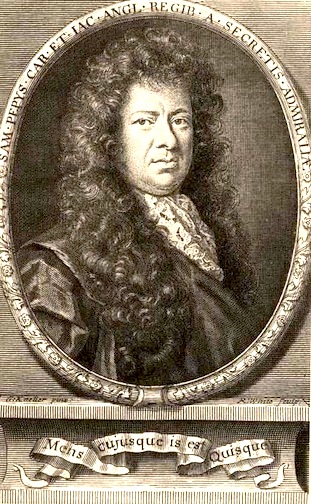
This morning come two of Captain Cooke’s boys, whose voices are broke, and are gone from the Chapel, but have extraordinary skill; and they and my boy, with his broken voice, did sing three parts; their names were Blaewl and Loggings; but, notwithstanding their skill, yet to hear them sing with their broken voices, which they could not command to keep in tune, would make a man mad–so bad it was.
The quote above is Samuel Pepys (born February 23, 1633) referring to John Blow (born February 23, 1649). Samuel Pepys was a member of Parliament who is now most famous for his private diary, kept from 1660 until 1669.
Samuel Pepys (1633 – 1703)
http://www.bbc.co.uk/history/historic_figures/pepys_samuel.shtml
The Diary of Samuel Pepys: http://www.gutenberg.org/files/4200/4200-h/4200-h.htm
 John Blow was an English Baroque composer and organist whose opera Venus & Adonis is considered the earliest surviving British opera and which is believed to have influenced Henry Purcell’s later opera Dido and Aeneas.
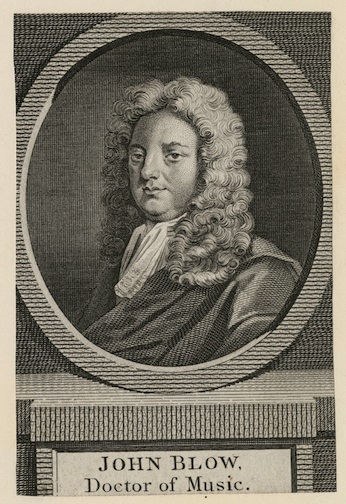
John Blow (1649 – 1708)
https://en.wikipedia.org/wiki/John_Blow
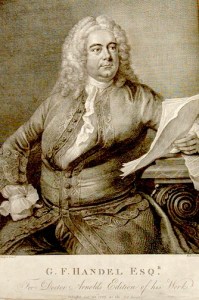 After Purcell, opera in England languished until the arrival of George Frideric Handel (born February 23, 1685) who, however, wrote most of his operas in Italian. Acis and Galatea is Handel’s only work for the theatre that is set to an English libretto.
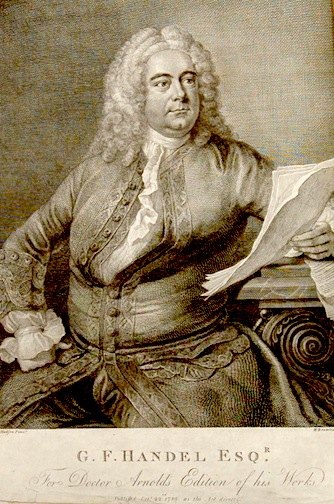
George Frideric Handel (1685 – 1759)
https://en.wikipedia.org/wiki/George_Frideric_Handel
Of course, most of us know Handel for his English-language oratorio Messiah and for his collection of short pieces for small orchestra known as the Water Music.
Andy Warhol (1928-1987)

Andy Warhol Died 29 Years Ago Today,
Here’s a Look at One of His First Silkscreens.
artnetnews
Blake Gopnik, Monday, February 22, 2016 Andy Warhol died 29 years ago today in a hospital in New York, after a routine gallbladder operation. It seems only fitting to commemorate the end of his artmaking by revisiting its beginnings. The work I’ve chosen as today’s Daily Pic was made in the spring of 1962, as one of the very first of the silkscreened canvases that became Warhol’s signature mode for the next quarter century. It’s the titular work in a touring exhibition called “Open This End: Contemporary Art from the Collection of Blake Byrne,” curated by the art historian Joseph Wolin and now at the Wallach Art Gallery of Columbia University.
https://news.artnet.com/art-world/andy-warhol-died-29-years-ago-today-here-is-when-he-started-to-matter-431666
Andy Warhol, A Documentary Film~
The Andy Warhol Museum~ http://www.warhol.org/museum/
The Andy Warhol Foundation for the Visual Arts~ http://warholfoundation.org/
The Abu Simbel Sun Festival~ 2/22 & 10/22
For ten minutes, the statues of the main divinities of the time, Ra-Horakhty, Amun-Ra and the deified king Ramesses glow from the morning sun’s first rays. The creator god of Memphis, Ptah, being associated with the underworld in one of his guises, remains partially in the shadows.
This solar alignment used to occur a day earlier; however the remarkable moving of the temple to higher ground in the 1960s saw the solar event occurring one day later than it did originally. The two temples at Abu Simbel were relocated, block-by-block, to save them from the rising waters of the new Aswan High Dam’s reservoir, Lake Nasser.
The original dates, October 21 and February 21 are often cited as being chosen to acknowledge Ramesses’ birthday and coronation days, however there is no evidence at all to support the idea. It is probably more likely that the dates have an important religious significance.
https://www.nilemagazine.com.au/2015-october/2015/10/22/the-abu-simbel-sun-festival
Abu Simbel: The Temples That Moved~ https://www.livescience.com/37360-abu-simbel.html
Photographs: Egypt’s Twice-Annual Sun Phenomenon Wows Crowds~
https://www.voanews.com/a/egypt-sun-festival/4266365.html
 The Misty Miss Christy