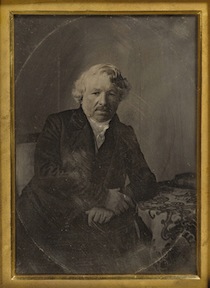
Louis Jacques Mande Daguerre was born near Paris, France in 1787. The illusionistic painter Pierre Prevost asked him to join his team of panorama-painting artists when he was just twenty years old. Daguerre soon after became an assistant stage designer for a theater. He was a gifted illusionist in terms of his ability to design sets that dazzled his audiences. An artist who wanted his work to be as real as possible, Daguerre created amazingly life-like scenes right in the theater. These designs, which were able to simulate the passage of day into night, changes in weather, and even give viewers the feel of motion, Daguerre later coined as “dioramas,” or “dramas of light.” By 1825, Daguerre was a successful creator, proprietor, and promoter of a successful illusionistic theater in Paris that specialized in these dioramas. https://www.fi.edu/history-daguerreotype
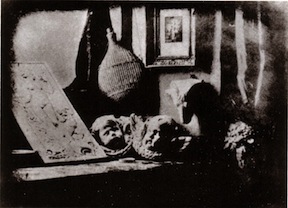
Daguerre had been searching since the mid-1820s for a means to capture the fleeting images he saw in his camera obscura, a draftsman’s aid consisting of a wood box with a lens at one end that threw an image onto a frosted sheet of glass at the other. In 1829, he had formed a partnership with Nicéphore Niépce, who had been working on the same problem—how to make a permanent image using light and chemistry—and who had achieved primitive but real results as early as 1826. By the time Niépce died in 1833, the partners had yet to come up with a practical, reliable process.
http://www.metmuseum.org/toah/hd/dagu/hd_dagu.htmNiépce died in 1833 before practical success was achieved. But Daguerre had learned important things
through the partnership, and by 1837 had worked out a solution to the puzzle. In brief, his method consisted of treating silver-plated copper sheets with iodine to make them sensitive to light, then exposing them in a camera and “developing” the images with warm mercury vapor. On the basis of its novelty, and difference from the pewter-and-resin based systems developed by Niépce, Daguerre claimed the invention as his own by naming it “The Daguerreotype.”
https://www.daguerreiansociety.org/
The Diorama: 19th century entertainment~
Daguerre’s Sole Extant Diorama, Recently Restored~
Category Archives: Birthdays


Claude Monet (1840-1926)
Marie Anna Zacharias~ born November 11, 1828
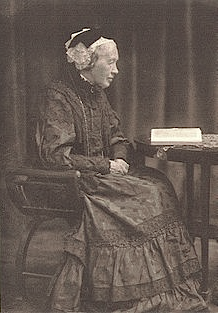 Marie Anna Zacharias (November 11, 1828 – February 15, 1907) was a German art patron, amateur artist, and co-founder & deputy president of the Hamburg Kunstfreunde (Friends of Art), a society of Hamburg’s fine arts patrons formed in 1893 and attached closely to the Hamburger Kunsthalle art museum.
Marie Zacharias was the center of a large circle of intellectual and artistic people. She enjoyed music, played the piano, painted, drew, wrote about art and cultural history, and was well known for the musical evenings at her home where artists, merchants, and officials gathered together.
In 1893, Zacharias’ close friend [Hamburger Kunsthalle director] Alfred Lichtwark founded the Gesellschaft Hamburgischer Kunstfreunde. Collectors, art lovers, and amateurs gathered for an exchange of ideas, up-to-date information about the Hamburger Kunsthalle, and the new acquisitions of the collection. Once a year they held an exhibition which included art by the members.
The society published a yearbook from 1895-1912, which was designed by the members 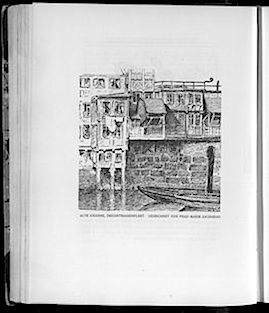 themselves. Each volume contained vignettes and illustrations contributed by members. Until her death in 1907, Zacharias was represented in almost every volume of the society’s yearbooks. Later in life she concentrated on woodcuts, and she wrote her memoirs, “Family, City and Children Stories”. Marie Zacharias died at the age of 78 years; until 14 days before her death she was still taking drawing lessons. Her work can be found in the Museum of Hamburg History, the State Archives, and the Hamburger Kunsthalle. Three portraits of Zacharias painted by Leopold von Kalckreuth in 1904 at the suggestion of Lichtwark are also in the collection of the Hamburger Kunsthalle.
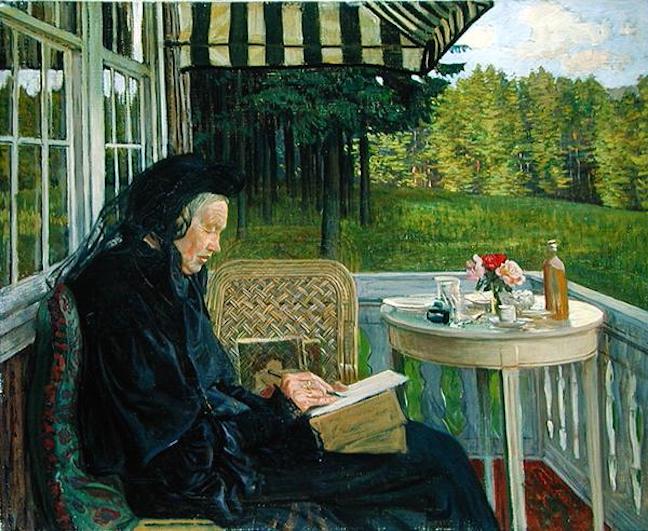
Born November 5, 1783~ Caroline Tischbein
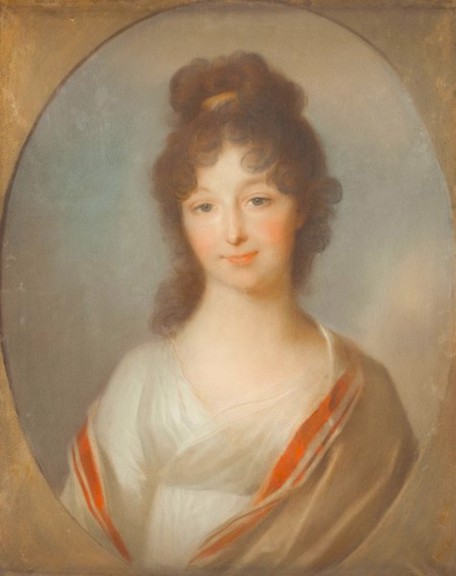 Caroline Tischbein (Wilken) ~ painter, illustrator, and writer ~ was born on this day in 1783.
Caroline Tischbein belonged to a family that produced more than 20 artists in three generations. Between 1770 and 1830, the women were well known as artists by their contemporaries. After that, the female members of the family fell into oblivion, although the male painters did not. The best known among them is Johann Heinrich Wilhelm Tischbein (1751-1829) who in 1787 shared a flat in Rome with Johann Wolfgang von Goethe, during which time Johann painted “Goethe in the Roman Campagna”.
Caroline and the other Tischbein women have been resurrected by art historian Prof. Dr. Martina Sitt, Professor of General Art History at the University of Kassel. For more than a year, under her leadership, the students at the Kunsthochschule Kassel researched these “disappeared artists” and used the results to mount an exhibition about them.
Caroline was the daughter of the Arolsen court painter Johann Friedrich August Tischbein and Sophie Tischbein. She received drawing lessons from her father, who later became director of the Academy in Leipzig (the city where Caroline would meet her future husband). Historian and professor Friedrich Wilken and Caroline met during his studies in Leipzig and married in 1806. The couple moved first to Heidelberg and later to Berlin; in both cities they traveled in intellectual and artistic circles. Caroline Tischbein died in Berlin on April 29, 1843. She left behind her memoirs which were written for her children but subsequently published.
In addition to Caroline, women painters from the Tischbein family included:
Elisabeth (Betty) Tischbein (1787-1867), another daughter of Johann Friedrich August Tischbein.
Amalie Tischbein (1756-1839), daughter of the Kassel court painter and academy professor Johann Heinrich Tischbein.
Sophia Antoinette Tischbein (1761-1826), daughter of Johann Jacob Tischbein and his wife, the painter Magdalene Gertrud Lilly.
Magdalene Margarethe Tischbein (1763-1836), sister of Sophia Antoinette
Top: portrait of Caroline Tischbein by her father Johann Friedrich August Tischbein (1750-1812)
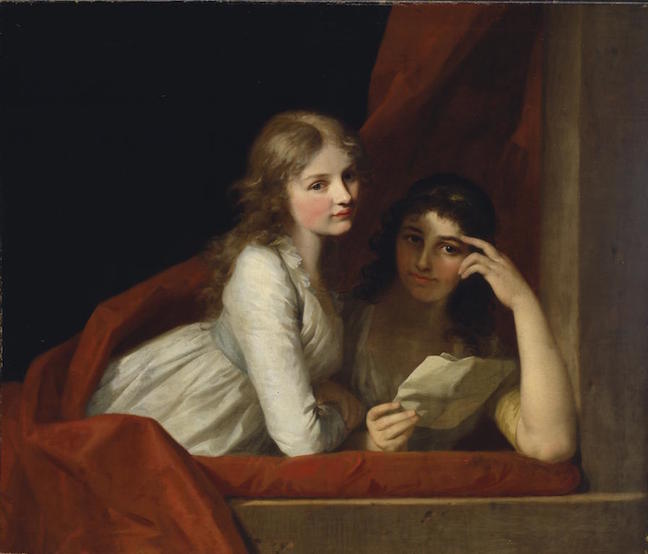
Bottom: “Two Sisters” painted by Caroline Tischbein. The picture probably shows members of the Tischbein family, but their identity is unknown.
SOURCES~
“Disappeared artists”: University of Kassel [link has since broken]
The women of the family Tischbein
Tischbein, Caroline (5 November 1783–1843)
Robert Mapplethorpe: American Photographer (1946-1989)
 youtube “Robert Mapplethorpe Portraits”~ https://youtu.be/ol0CD8gjniA
In 1973, the Light Gallery in New York City mounted his first solo gallery exhibition, “Polaroids.” Two years later he acquired a Hasselblad medium-format camera and began shooting his circle of friends and acquaintances—artists, musicians, socialites, pornographic film stars, and members of the S & M underground. He also worked on commercial projects, creating album cover art for Patti Smith and Television and a series of portraits and party pictures for Interview Magazine.
…in 1986, he was diagnosed with AIDS. Despite his illness, he accelerated his creative efforts, broadened the scope of his photographic inquiry, and accepted increasingly challenging commissions. The Whitney Museum of American Art mounted his first major American museum retrospective in 1988, one year before his death in 1989.
…
Today Mapplethorpe is represented by galleries in North and South America and Europe and his work can be found in the collections of major museums around the world. Beyond the art historical and social significance of his work, his legacy lives on through the work of the Robert Mapplethorpe Foundation. He established the Foundation in 1988 to promote photography, support museums that exhibit photographic art, and to fund medical research in the fight against AIDS and HIV-related infection.FROM http://www.mapplethorpe.org/biography/
Robert Mapplethorpe’s Proud Finale
Behind rock’s finest album cover: A timeless friendship

Patti Smith 1979 Robert Mapplethorpe 1946-1989 ARTIST ROOMS Acquired jointly with the National Galleries of Scotland through The d’Offay Donation with assistance from the National Heritage Memorial Fund and the Art Fund 2008 https://www.tate.org.uk/art/artworks/mapplethorpe-patti-smith-ar00495
Katsushika Hokusai: Born October 31(?), 1760
Katsushika Hokusai (c.October 31, 1760-May 10, 1849) was a Japanese artist, ukiyo-e painter, and printmaker during the Edo period. Born to an artisan family in present-day Tokyo, he began painting at a young age, and became apprenticed to a wood-carver as a teenager. At the age of 18, he was accepted into the studio of Katsukawa Shunsho, an artist of the ukiyo-e style, which was focused on the depiction of the booming merchant class, including courtesans, Kabuki actors, and sumo wrestlers. After Shunsho’s death, Hokusai began experimenting with other styles of art, including Western styles. But he didn’t fully develop his own signature technique until he was expelled from the Katsukawa School.
FROM http://www.artnet.com/artists/katsushika-hokusai/biography
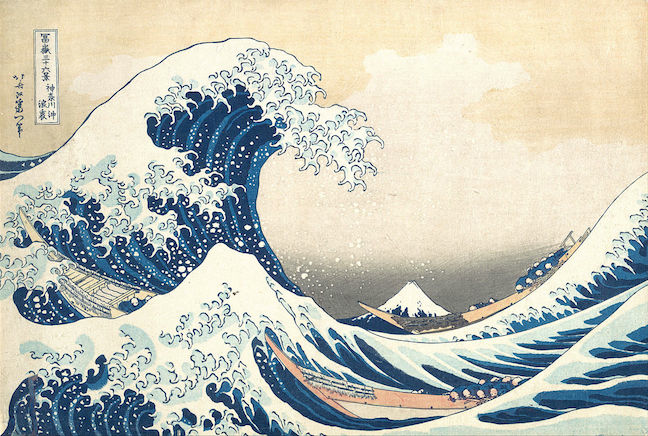
Hokusai is best known for the woodblock print series Thirty-Six Views of Mount Fuji which includes the internationally iconic print The Great Wave off Kanagawa.
Hokusai created the monumental Thirty-Six Views of Mount Fuji both as a response to a domestic travel boom in Japan and as part of a personal obsession with Mount Fuji. It was this series, specifically The Great Wave off Kanagawa and Fine Wind, Clear Morning, that secured his fame both in Japan and overseas. While Hokusai’s work prior to this series is certainly important, it was not until this series that he gained broad recognition.
Artwork~ https://ukiyo-e.org/artist/katsushika-hokusai
Artwork~ https://www.rijksmuseum.nl/en/rijksstudio/artists/katsushika-hokusai
Woodblock Prints in the Ukiyo-e Style~
http://www.metmuseum.org/toah/hd/ukiy/hd_ukiy.htm
Gerald Brockhurst: October 31, 1890-May 4, 1978
Jeunesse Dorée by Gerald Leslie Brockhurst
 1934 / Oil on board / 30”x24 4/5” / Lady Lever Art Gallery, National Museums Liverpool, UK
British-born painter and etcher who became an American citizen in 1949. Precociously gifted, an excellent draughtsman, and a fine craftsman, Brockhurst won several prizes at the Royal Academy Schools and went on to have a highly successful career as a society portraitist, first in Britain and then in the USA, where he settled in 1939, working in New York and New Jersey. He is best known for his portraits of glamorous women, painted in an eye-catching, dramatically lit, formally posed style similar to that later associated with Annigoni. As an etcher Brockhurst is remembered particularly for Adolescence (1932), a powerful study of a naked girl on the verge of womanhood staring broodingly into a mirror—one of the masterpieces of 20th-century printmaking. ~Oxford University Press
“Dorette” and Gerald Leslie Brockhurst~
https://collections.tepapa.govt.nz/object/39559
Wikipedia~ https://en.wikipedia.org/wiki/Gerald_Brockhurst
Gerald Leslie Brockhurst painting the Duchess of Windsor~
https://www.npg.org.uk/collections/search/portrait/mw233820/Gerald-Leslie-Brockhurst?LinkID=mp08078&role=sit&rNo=13
Mary Blair: Born October 21, 1911
Her vibrant colors and stylized designs pervade Disney animated films from 1943 to 1953 (such as THE THREE CABALLEROS, CINDERELLA, ALICE IN WONDERLAND AND PETER PAN). A prolific artist, during the 1950’s and 60’s she brought eye-appealing flair to children’s books (I CAN FLY), advertisements, theatrical set designs, and large-scale theme park murals and attractions (such as Disneyland’s IT’S A SMALL WORLD).
…
Though much of her art veers away from naturalism toward abstraction, she was one of Walt Disney’s favorite artists; he personally responded to her use of color, naïve graphics, and the storytelling aspect in her pictures…
FROM About Mary~ http://magicofmaryblair.com/about-mary/
Biography~ http://www.californiawatercolor.com/pages/mary-blair-biography
MARY BLAIR (1911-1978)~ https://www.illustrationhistory.org/artists/mary-blair
Peter Max: Born October 19, 1937
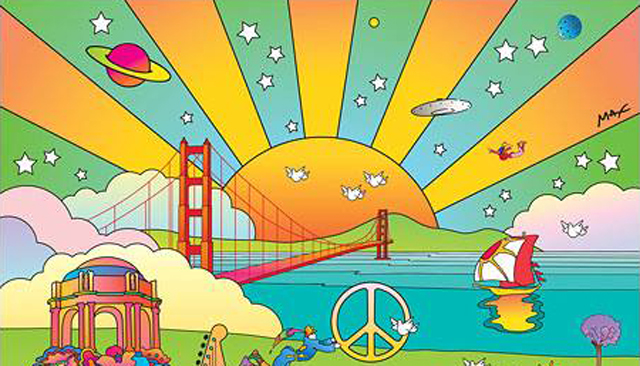
“When Go-Go Met Day-Glo“
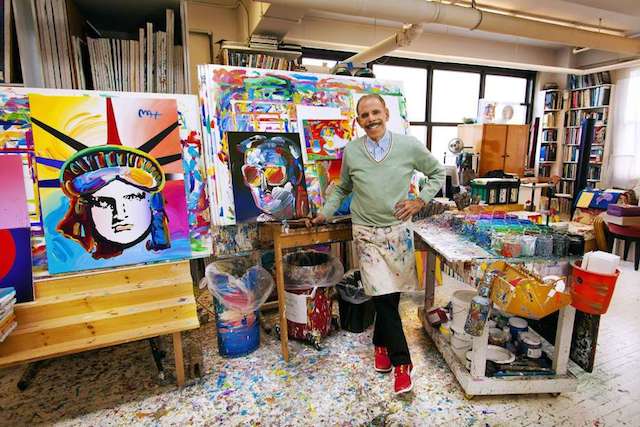
Biography~ https://www.parkwestgallery.com/artist/peter-max
[There are five embedded links above]
Kerry James Marshall: Born October 17, 1955
“For me,” he said in his MCA Chicago lecture, “the thing that has the greatest transformative capacity in the art world today, in terms of what people expect to see when they go to the art museum, is a painting that has a black figure in it, because 95 percent of all the other paintings you see are going to have white figures in them. The whole history of representation is built on the representation of white folks. Now, all of that stuff is good, so you have to figure out how to get good like that, and then get in there on the terms that are relevant for now.” Marshall has done this “from the ground up,” as Metropolitan Museum curator Ian Alteveer put it, working through historical styles and genres, including Rococo love scenes, large-scale history paintings, and Impressionist plein air fetes.
http://www.artnews.com/2016/03/02/the-painter-of-modern-life-kerry-james-marshall-aims-to-get-more-images-of-black-figures-into-museums/?singlepage=1
http://hyperallergic.com/310477/how-kerry-james-marshall-rewrites-art-history/
http://www.nga.gov/content/ngaweb/Collection/artist-info.35534.html#biography

 The Misty Miss Christy