http://www.phillipscollection.org/research/american_art/bios/miller-bio.htm
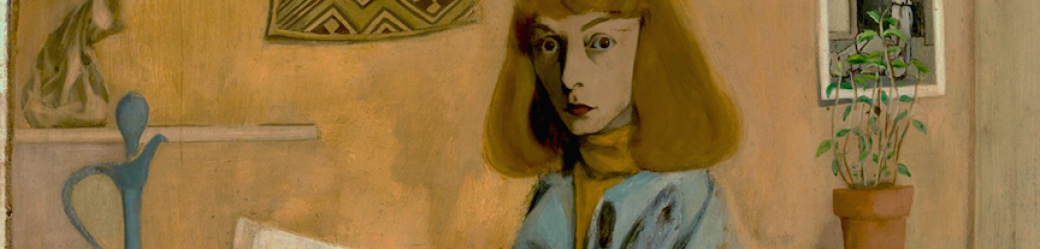
A gallery of paintings can be found on this blog: Kenneth Hayes Miller (1876 – 1952)
http://www.phillipscollection.org/research/american_art/bios/miller-bio.htm
A gallery of paintings can be found on this blog: Kenneth Hayes Miller (1876 – 1952)
In the 1820’s, in his early career, Etty received critical acclaim. An 1826 review for his ‘Choice of Paris’, described him as having talent that “no artist of the present day can equal”. Etty continued to exhibit at the Royal Academy throughout his career but his work was not universally popular. His nudes were a particular source of criticism. A review in the Times newspaper said, “nakedness without purity is offensive and indecent, and in Mr. Etty’s canvas is mere dirty flesh”. Etty was seen by others as the best English painter of the nude, but he has never become a household name.
http://www.historyofyork.org.uk/themes/victorian/william-etty-artisthttp://www.yorkartgallery.org.uk/exhibition/previous-exhibition-william-etty-art-and-controversy/
http://www.tate.org.uk/art/artists/william-etty-172
 Biography~ https://www.guggenheim.org/artwork/artist/david-hare
Exhibition catalogue at Weinstein Gallery, September 2012~
https://issuu.com/weinstein_gallery/docs/david-hare-exhibit-catalogue
Tamarind lithographs~ https://tamarind.unm.edu/?s=David+Hare
New York Times obituary~
http://www.nytimes.com/1992/12/25/arts/david-hare-sculptor-and-photographer-dies-at-75.html
Sir Anthony Caro (1924–2013) played a pivotal role in the development of twentieth-century sculpture. In the early 1960s, he began making brightly painted, abstract steel structures that he positioned directly on the floor, the omission of a pedestal marking a radical shift in the dynamic between work and viewer. In addition to steel, he also produced works in bronze, lead, silver, stoneware, and wood, as well as on paper. Caro’s constant reinvention of the language of abstract sculpture, as well as his influential teaching at St. Martin’s School of Art in London, distinguished him as the successor to artists such as Henry Moore and David Smith, and as an innovative artist in his own right. Resolutely nonfigurative, his sculptures nevertheless operate as analogues for human experience. As art historian Rosalind Krauss has observed, “Caro rendered the human form not as it looked from the outside, but how it felt from the inside, with its relationships subjectively conditioned.”
https://gagosian.com/artists/anthony-caro/
Obituary, NYT~
http://www.nytimes.com/2013/10/25/arts/design/anthony-caro-sculptor-who-discovered-a-path-to-abstraction-dies-at-89.html
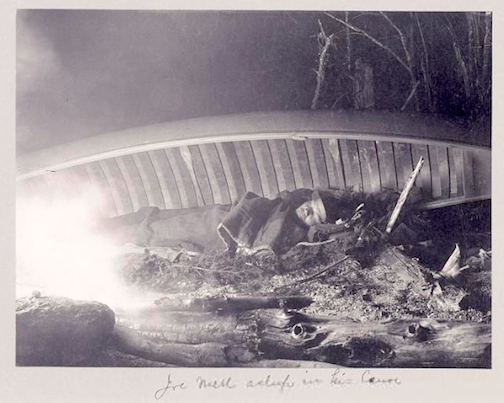
William Lyman Underwood and his brother Loring (1874–1930) were early leaders in nineteenth-century nature photography. Loring, trained as a horticulturist, focused on the cultivated landscapes of parks and estate gardens, while William preferred the wilderness of northeastern America. A renowned public speaker, William gave more than forty lectures a year about his experiences as “a camera hunter,” accompanied by a lantern slide show of his photographs. This run-of-the-century [sic] entertainment instructed audiences about an environment that Underwood feared was vanishing.
http://americanart.si.edu/collections/search/artist/?id=6755In 1895, William Lyman Underwood, director of a Massachusetts canned-food
company, came to MIT seeking the help of a scientist–any scientist–who could fix the problem of his smelly canned clams. He went straight to the biology department, asking whether anyone could “suggest a cause and, better still, a remedy.” The department chair passed Underwood off to his assistant, Samuel Cate Prescott, advising the chemist to teach the canner a bit about microbes.
…
During these experiments, Underwood indulged his passion for photography. The March 1898 Technology Quarterly featured several of his actual-size photographs of petri dishes filled with circular spidery blooms of bacillus–each like a telescopic glance at a pockmarked moon–as well as some strikingly clear slides of microörganisms at 1,000 times their actual size.
https://www.technologyreview.com/s/412221/two-happy-clams/
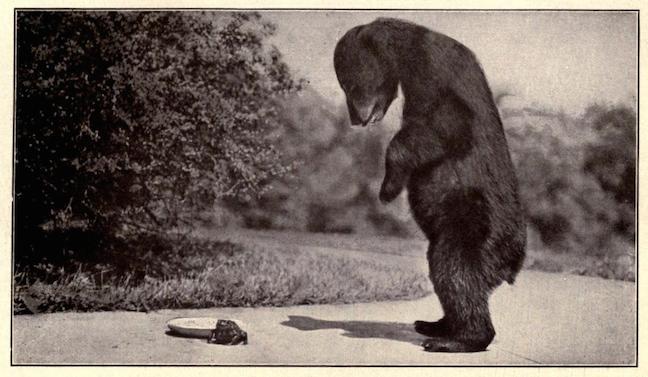 “Wild brother; strangest of true stories from the north woods”~
https://archive.org/details/wildbrotherstran00undeiala
Underwood’s Deviled Ham: The Oldest Trademark Still in Use~
http://www.smithsonianmag.com/arts-culture/underwoods-deviled-ham-the-oldest-trademark-still-in-use-119136583/
Today, Howard Pyle is not nearly as well known as his images. However, he was one of America’s most popular illustrators and storytellers at a time when top illustrators were celebrities. At his death, he was designated by the New York Times “the father of American magazine illustration as it is known to-day.” His illustrations appeared in magazines like Harper’s Monthly, Collier’s Weekly, St. Nicholas, and Scribner’s Magazine, gaining him national and international exposure. And because magazines so influenced the nation’s visual culture, Pyle’s images and stories—including American history and tales of pirates and medieval adventurers—reached millions, helping to shape the American imagination.
https://www.delart.org/collections/howard-pyle/about-howard-pyle/
Howard Pyle: Born: March 5, 1853 | Died: November 9, 1911~
https://en.wikipedia.org/wiki/Howard_Pyle
Howard Pyle: 1853–1911
https://americanillustration.org/project/howard-pyle/
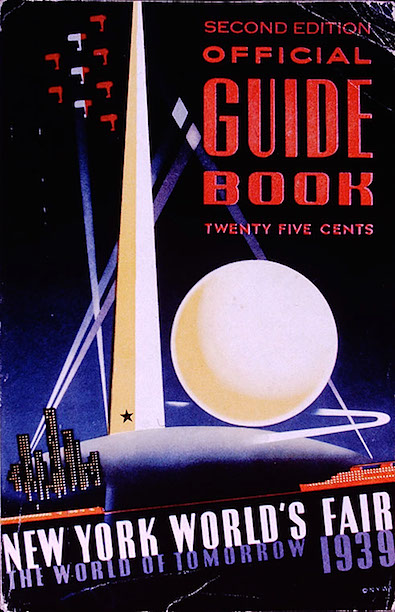
Born in Vienna and trained as a painter at the Kunstgewerbeschüle, Joseph Binder’s early designs won numerous international competitions that placed his posters in public spaces throughout Europe. A leader in the emerging field of graphic design, Binder felt that posters were “an expression of contemporary civilization reduced to its simplest forms for instantaneous visual communication.”
FROM http://americanart.si.edu/collections/search/artist/?id=418
In 1936 Joseph Binder settled in New York for good and in 1944 became an American citizen.
In his design he focused on the reduction of geometric forms, on color contrasts and the psychological impact of colors. His clients included American Railroads, American Airlines, A&P Iced Coffee, Fortune and Graphis. In 1948 the U.S. Navy made him their art director and designer.
In the 1960s Binder turned away from commercial graphic work and renewed his explorations in graphic works of art in the abstract style.
FROM http://www.aiga.org/medalist-josephbinder#5
Joseph Binder’s Ships and Planes~
http://www.printmag.com/daily-heller/joseph-binders-ships-and-planes/
Joseph Binder on Artnet~
https://www.artnet.com/artists/joseph-binder/
John Edward Costigan (1888-1972)
https://en.wikipedia.org/wiki/John_Edward_Costigan


Augusta Savage (1892-1962)
http://dos.myflorida.com/cultural/programs/florida-artists-hall-of-fame/augusta-savage/