Man Ray: Born August 27, 1890

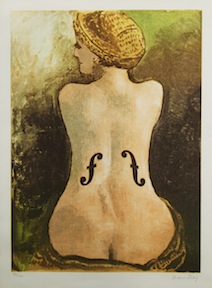
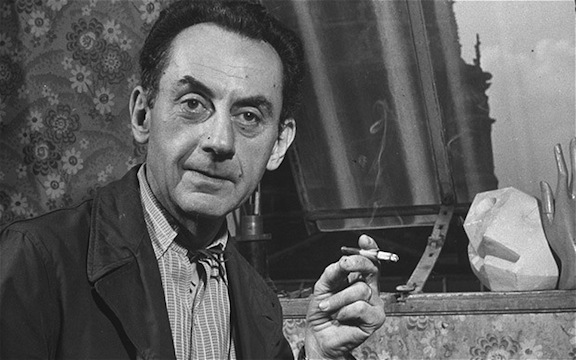
RayMan Ray, the master of experimental and fashion photography was also a painter, a filmmaker, a poet, an essayist, a philosopher, and a leader of American modernism. jazz 
Through Duchamp, Man Ray met some of the most exciting artists and thinkers in Paris. Though he didn’t speak a word of French at first, he was welcomed kikiinto this group and became its unofficial photographer. 
Though deeply immersed in the artistic life of France, World War II forced Man Ray to leave Paris, and he moved to Hollywood. He spent ten years there working as a fashion photographer. With arthis brave use of lighting and minimalist representation, Man Ray produced fashion rayographphotographs unlike any that had come before—and forever changed that discipline.
FROM http://www.pbs.org/wnet/americanmasters/episodes/man-ray/prophet-of-the-avant-garde/510/

The Man Ray Trust~ http://www.manraytrust.com/
Man Ray: The Painter~
http://structureandimagery.blogspot.com/2012/03/man-ray-painter.html
Man Ray’s Other Passion, Printmaking~
http://www.huffingtonpost.com/2013/10/12/man-ray-prints_n_4078032.html
Photographer Man Ray: A Film by Jean-Paul Fargier 1998~
https://youtu.be/s8gJJaUuWco

Man

The World’s First Cartoon: Fantasmagorie (1908)


On August 17, 1908, Cohl released the cartoon “Fantasmagorie”

Émile Cohl is one of the earliest pioneers of animation, along with John Stuart Blackton. Together they laid the foundations of the medium in the early 1900s, with simple caricatures and stick figures. Cohl goes down in history as the creator of the first genuine fully animated cartoon: ‘Fantasmagorie’ (1908). He was also the first to adapt a comic strip into a regular animated film series. Cohl was furthermore a well-known caricaturist in his day and made a few comics himself.
https://www.lambiek.net/artists/c/cohl_emile.htm

cohl_emile_lerire1899

Rube Goldberg: Born July 4, 1883


Learn more~ http://www.rube-goldberg.com/
https://www.rubegoldberg.org/all-about-rube/a-cultural-icon/

[Rube Goldberg’s] father…convinced Rube to study Engineering at the School of Mining Engineering at UC Berkeley. He went on to graduate from UC Berkeley with a degree in Engineering in 1904.

After graduation, Rube Goldberg took on a position designing sewer pipes for the San Francisco Water and Sewers Department…he lasted six months. Rube Goldberg followed his passion and began to shift gears to pursue his previous dreams and pursue a career as a cartoonist.

Rube Goldberg made an important observation. In his eyes, many people seemed to be solving simple problems with overly complex contraptions. This…was his main inspiration for the “Inventions!” series. The most famous of which has come to be known as the Rube Goldberg Machine.

Rube Goldberg is the only cartoonist to be listed in the Merriam-Webster dictionary as an actual adjective. The phrase “Rube Goldberg” has been adopted into common use to mean “doing something simple in a very complicated way that is not necessary”.
http://interestingengineering.com/rube-goldberg-the-man-behind-the-worlds-craziest-machines/

Rudolph Valentino: Born May 6, 1895

While in New York during the spring of 1923, Rudolph Valentino paid a visit to the Brunswick studios and recorded two songs. El Relicario in Spanish and The Kashmiri Song in English. According to legend, Valentino recorded these songs for his new bride, Natacha Rambova since they had recently wed after a few very tense years of legal difficulties concerning Valentino’s divorce from Jean Acker.
It was reported that after he heard his voice, he quipped “There goes my opera career!
https://www.popsike.com/19231926-Rudolph-Valentino-SingsKashmiri-Love-SongEl-Relicario-78rpm-Record/200783413331.html

John Waters: Born April 22, 1946

WatersFace

“Beverly Hills John,” 2012, C-Print

The Hollywood Reporter: You made a hilarious, new 74-minute version of your X-rated 1972 cult film Pink Flamingos, rewritten as a “desexualized sequel” — a children’s movie with an all-kid cast. Why did you decide to exhibit the video here, in this way?
John Waters: I don’t think of it as the next movie in my filmography at all.I don’t want it showing in a movie theater where people have to come in and take a seat and have to watch it straight through. You understand what the piece is if you watch it for 20 minutes.
The Hollywood Reporter: Tell me a little bit about how you reconcile your work in the worlds of art and of film, pop and pulp culture?
John Waters: I have gone to great lengths in my career to keep my art career and my film career completely separate. But my art work is as equal to me as making movies.

FROM http://www.hollywoodreporter.com/news/director-john-waters-has-a-762318

Interview, 2015, The Guardian~
http://www.theguardian.com/artanddesign/2015/jun/30/john-waters-art-lassie-justin-bieber-ansel-adams
Interview, 2004, BOMB~ http://bombmagazine.org/article/2628/john-waters
John Waters: Born April 22, 1946~
https://schristywolfe.com/2015/04/22/john-waters-born-april-22-1946/
New John Waters Bathrooms at the BMA~ https://bmoreart.com/2021/10/speeches-champagne-and-lines-for-the-loo-new-john-waters-bathrooms-at-the-bma.html


FrameScreenersArt

Leopold Stokowski: Born on April 18, 1882

This great conductor was born on 18 April 1882 and died on 13 September 1977…Stokowski began his conducting career at the Cincinnati Symphony Orchestra in 1909, at the young age of 27….After a few years in Cincinnati, however, Stokowski moved on to the Philadelphia Orchestra and molded it into one of the finest orchestras in the world. In fact, Rachmaninoff claimed that the Philadelphia WAS the finest orchestra in the world.
FROM http://www.classical.net/music/guide/society/lssa/stokybio.php

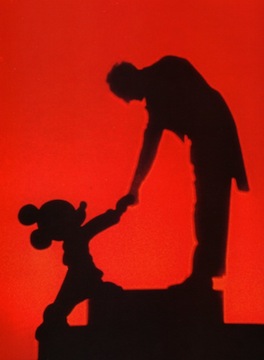
Stokowski arrived in Los Angeles January 2, 1938 to record the Sorcerer’s Apprentice with a hand-picked orchestra of 85 Hollywood session musicians…Disney had decided that The Sorcerer’s Apprentice short film needed to be expanded to a full-length movie, in order to be financially viable. Fantasia was issued in 1941 and 1942, and was released again many times over the years, and continues even today to play in some theaters.
FROM http://www.stokowski.org/1939_1940_Electrical_Recordings_Stokowski.htm

Mickey

Leopold Stokowski was a frequent visitor to the [New York] Philharmonic over the years, appearing with the Orchestra on nearly 200 occasions…In his last appearance with the Philharmonic, on February 8, 1969, he led a program of music by Bach and two modern works inspired by him: Lukas Foss’s Phorion, and Rock Variations and Fantasy on a Brandenburg Concerto, written and performed by the New York Rock and Roll Ensemble.
FROM https://nyphil.org/about-us/artists/leopold-stokowski

Eadweard Muybridge: Born April 9, 1830

Yosemite

Photographs of Yosemite~
http://www.yosemite.ca.us/library/yosemite_its_wonders_and_its_beauties/list_of_photographs.html
Biography~ http://www.iphf.org/hall-of-fame/eadweard-muybridge/
BBC Documentary~ https://youtu.be/5Awo-P3t4Ho

Before his death in 1903, Muybridge would emigrate to America, change his name three times, come close to death and suffer brain damage in a carriage accident. Perhaps most sensationally, he would also be acquitted for the murder of Major Harry Larkyns, his wife’s lover, and the true father of his presumed son Floredo Helios Muybridge.
In fact, Muybridge enjoyed a professional life which may even have surpassed his sensational personal biography. He gained fame through adventurous and progressive landscape photography before working as a war and official government photographer; something which took him from the Lava beds of California during the Modoc War to Alaska and Central America.
Furthermore, Muybridge was instrumental in the development of instantaneous photography. To accomplish his famous motion sequence photography, Muybridge even designed his own high speed electronic shutter and electro-timer, to be used alongside a battery of up to twenty-four cameras!
While Muybridge’s motion sequences helped revolutionise still photography, the resultant photographs also punctuated the history of the motion picture. Muybridge actually came tantalisingly close to producing cinema himself with his projection device the ‘Zoöpraxiscope’.
Research resource~ http://www.eadweardmuybridge.co.uk/