Eadweard Muybridge: Born April 9, 1830

Yosemite

Photographs of Yosemite~
http://www.yosemite.ca.us/library/yosemite_its_wonders_and_its_beauties/list_of_photographs.html
Biography~ http://www.iphf.org/hall-of-fame/eadweard-muybridge/
BBC Documentary~ https://youtu.be/5Awo-P3t4Ho

Before his death in 1903, Muybridge would emigrate to America, change his name three times, come close to death and suffer brain damage in a carriage accident. Perhaps most sensationally, he would also be acquitted for the murder of Major Harry Larkyns, his wife’s lover, and the true father of his presumed son Floredo Helios Muybridge.
In fact, Muybridge enjoyed a professional life which may even have surpassed his sensational personal biography. He gained fame through adventurous and progressive landscape photography before working as a war and official government photographer; something which took him from the Lava beds of California during the Modoc War to Alaska and Central America.
Furthermore, Muybridge was instrumental in the development of instantaneous photography. To accomplish his famous motion sequence photography, Muybridge even designed his own high speed electronic shutter and electro-timer, to be used alongside a battery of up to twenty-four cameras!
While Muybridge’s motion sequences helped revolutionise still photography, the resultant photographs also punctuated the history of the motion picture. Muybridge actually came tantalisingly close to producing cinema himself with his projection device the ‘Zoöpraxiscope’.
Research resource~ http://www.eadweardmuybridge.co.uk/

elvisbillboard 001Let’s be frank here: Elvis devotees are a lot like fish in a barrel. Anyone can shoot them, with reliably satisfying results. Their reverence almost invites intrusion. So the measure of a portfolio of Elvis believers is not the colorfulness of the characters – that much is a given – but the empathy of the photographer. Anyone can capture the tribe’s signature plumage. The trick is teasing out the individual humanity underneath.

“It’s like religion, where people put their trust in something,” she said. “They trust in him. He guides their lives. They wake up with Elvis, they get married with Elvis. He’s there all the time.”

Elvis Is Everywhere: http://lens.blogs.nytimes.com/2015/04/08/elvis-is-everywhere/

Clarence Hudson White: Born on April 8, 1871

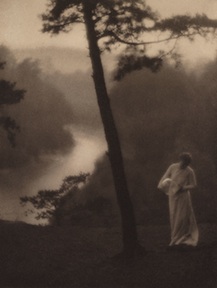
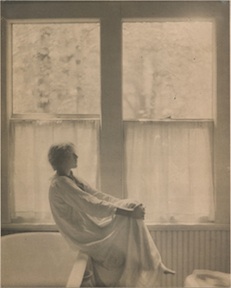
white1“Before White was able to become a full-time artist and teacher, he worked for nearly a decade in Newark, Ohio, balancing a bookkeeping job with his avocation as a photographer. Featured in the third issue of Camera Work, White received international recognition for his work…In 1906 he moved to New York and assisted Alfred Stieglitz in the operation of his newly opened gallery.”
FROM http://americanart.si.edu/collections/search/artist/?id=6761

white2

“When White first began teaching, the medium of photography was coming into its own as a means of artistic expression, and its advantages for communication had been acknowledged. Photographs were preferred over wood engravings and often over drawings for illustration in newspapers and magazines. The use of photographs in advertisements was on the rise. But no place existed for people to learn how to use the camera in the art of seeing.

white3Charismatic amateur photographer and teacher Clarence H. White was inspired to found a school that would advocate applying art principles to professional and commercial as well as art photography.”
FROM http://www.loc.gov/loc/lcib/0112/white.html

Clarence H. White: https://media.artic.edu/stieglitz/clarence-h-white/
Wikipedia entry: https://en.wikipedia.org/wiki/Clarence_Hudson_White

Herbert Bayer: Born April 5, 1900

HerbertBayerStadelwand1936© M.T. Abraham Center© M.T. Abraham Center – Provided by copyright owner of both photograph and artwork, CC BY 3.0
https://commons.wikimedia.org/w/index.php?curid=24556654

Herbert Bayer (1900-1985) is one of the individuals most closely identified with the famous Bauhaus program in Weimar, Germany. Together with Walter Gropius, Laszlo Moholy-Nagy, and Wassily Kandinsky, Bayer helped shape a philosophy of functional design that extended across disciplines ranging from architecture to typography and graphic design. Endowed with enormous talent and energy, Bayer went on to produce an impressive body of work, including freelance graphics commissions, Modernist exhibition design, corporate identity programs, and architecture and environmental design…Though Bayer came to the Bauhaus as a student, he stayed on to become one of its most prominent faculty members.
FROM https://library.rit.edu/gda/designers/herbert-bayer

Collection at MoMA~ http://www.moma.org/collection/artists/399
New York Times Obituary~
http://www.nytimes.com/1985/10/01/arts/herbert-bayer-85-a-designer-and-artist-of-bauhaus-school.html

This slideshow requires JavaScript.

Edward Steichen: Born March 27, 1879

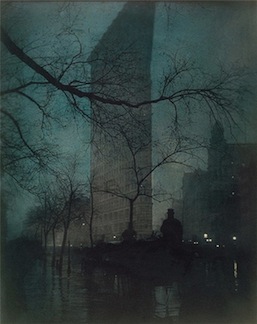
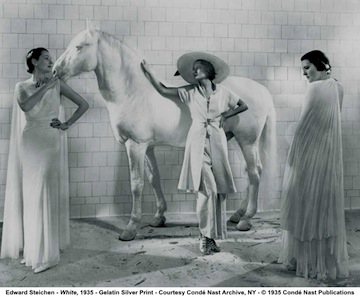
flatironThe audience for Steichen’s early photographs—readers of Camera Work, visitors to 291, and members of amateur camera clubs—were important within artistic circles, but their number was small compared to the audience he would address following the war. Indeed, Steichen’s large and painterly early prints, perhaps because of their rarity, are now far less known by the general public than his portraits of Greta Garbo, Marlene Dietrich, Gloria Swanson, and other celebrities that appeared in Condé Nast’s Vogue and Vanity Fair in the 1920s and 1930s, or his fashion and advertising photographs that shared those same pages. Moreover, while the circulation of Camera Work never topped a Whitethousand (and was often much less) and its intended audience was an intellectual elite, the Condé Nast publications catered to a much larger and broader readership, one hungry for just the sort of glamorous celebrity portraiture at which Steichen excelled.
FROM http://www.metmuseum.org/toah/hd/stei/hd_stei.htm

Edward Steichen photos from the International Center of Photography:
https://www.icp.org/browse/archive/constituents/edward-steichen?all/all/all/all/0

Edward Weston: Born March 24, 1886

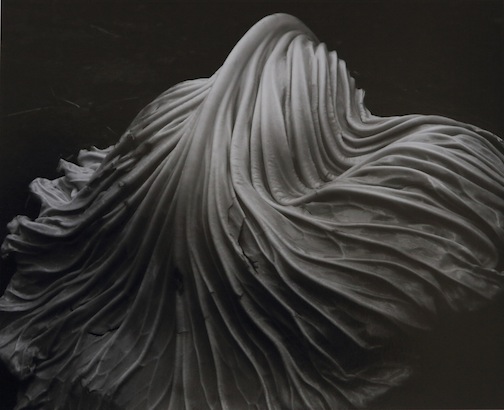
Cabbage-Leaf

After moving back to California in 1926, Weston began his work for which he is most deservedly famous: natural forms, close-ups, nudes, and landscapes. Between 1927 and 1930, Weston made a series of monumental close-ups of seashells, peppers, and halved cabbages, bringing out the rich textures of their sculpture-like forms. Weston moved to Carmel, California in 1929 and shot the first of many photographs of rocks and trees at Point Lobos, California. Weston became one of the founding members of Group f/64 in 1932 with Ansel Adams, Willard Van Dyke, Imogen Cunningham and Sonya Noskowiak. The group chose this optical term because they habitually set their lenses to that aperture to secure maximum image sharpness of both foreground and distance. 1936 marked the start of Weston’s series of nudes and sand dunes in Oceano, California, which are often considered some of his finest work. Weston became the first photographer to receive a Guggenheim Fellowship for experimental work in 1936.

FROM https://www.edward-weston.com/edwardweston

Pattie Boyd: Born on March 17, 1944

Boyd

Patricia Anne “Pattie” Boyd (born March 17, 1944) is a model, photographer and author, born in Somerset, England. She was the first wife of both George Harrison and Eric Clapton…Pattie began her modeling career in 1962 in London, and appeared on the cover of Vogue and in several advertising campaigns. She was cast in the Beatles’ first feature film A Hard Days Night in 1964, where she first met George Harrison…She married George Harrison in January, 1966 and when being a ‘Beatle wife’ made it too difficult to work, she began taking a strong interest in photography.

https://sfae.com/Artists/Pattie-Boyd

Pattie Boyd is sick of being called a muse: ‘What have I done to inspire George Harrison?’
https://english.elpais.com/culture/2022-10-14/pattie-boyd-is-sick-of-being-called-a-muse-what-have-i-done-to-inspire-george-harrison.html

Pattie Boyd Talks Art, Fashion, and Beatlemania
https://lithub.com/pattie-boyd-talks-art-fashion-and-beatlemania/

Pattie Boyd, often in the shadow of her famous husbands, has put a trove of mementos up for auction
https://www.pbs.org/newshour/amp/arts/pattie-boyd-often-in-the-shadow-of-her-famous-husbands-has-put-a-trove-of-mementos-up-for-auction

David Hare: March 10, 1917-December 21, 1992

DavidHareBiography~ https://www.guggenheim.org/artwork/artist/david-hare

Exhibition catalogue at Weinstein Gallery, September 2012~
https://issuu.com/weinstein_gallery/docs/david-hare-exhibit-catalogue

Tamarind lithographs~ https://tamarind.unm.edu/?s=David+Hare
New York Times obituary~
http://www.nytimes.com/1992/12/25/arts/david-hare-sculptor-and-photographer-dies-at-75.html

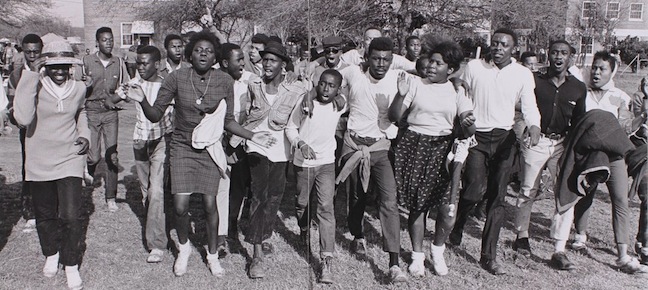
March 7, 1965: Selma to Montgomery Marches begin

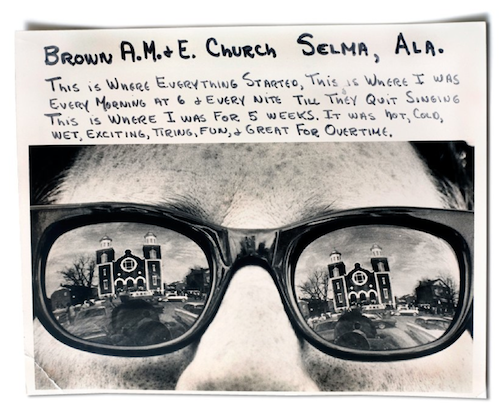
Selma through the camera lens:
https://schristywolfe.com/wp-content/uploads/2015/03/barker.jpg

James Barker
These Rare Photos of the Selma March Place You in the Thick of History. James Barker, a photographer from Alaska, shares his memories of documenting the famed event:
http://www.smithsonianmag.com/history/rare-photos-selma-march-thick-history-180953874/?no-ist

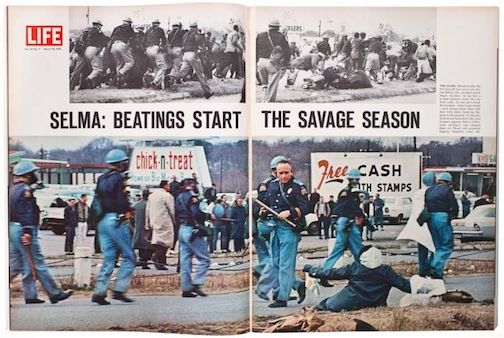
LIFE

Charles Moore, Flip Schulke and Frank Dandridge
How LIFE Magazine Covered the Selma Marches in 1965. Fifty years after nonviolent protesters clashed with Alabama state troopers in Selma:

http://time.com/3720555/selma-bloody-sunday/

smartin

Spider Martin
Photographer Helped Expose Brutality Of Selma’s ‘Bloody Sunday’:
http://www.npr.org/blogs/codeswitch/2015/03/06/390943835/photographer-helped-expose-brutality-of-selmas-bloody-sunday


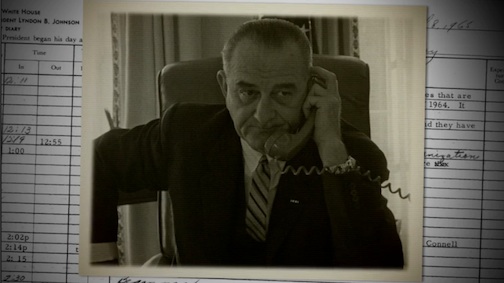
The Atlantic: “What LBJ Really Said About Selma” [click photo]:

lbj