Whiskey Going into the Rackhouse to Age or Whiskey Barrels
by Thomas Hart Benton
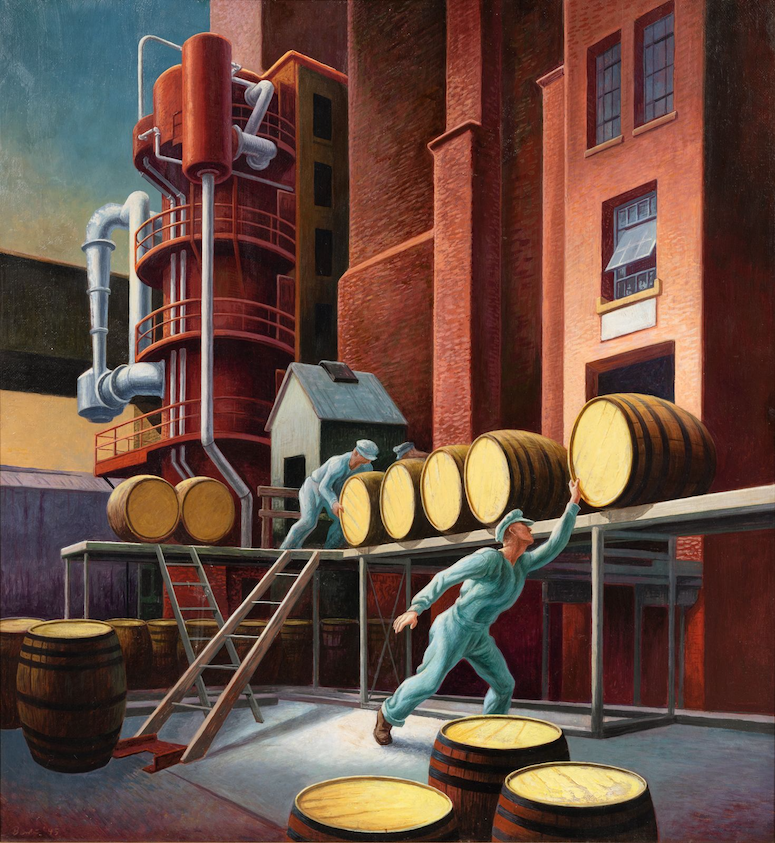 1945 / Oil-tempera on board / 39″x36 1/4″ / Private collection
1945 / Oil-tempera on board / 39″x36 1/4″ / Private collection
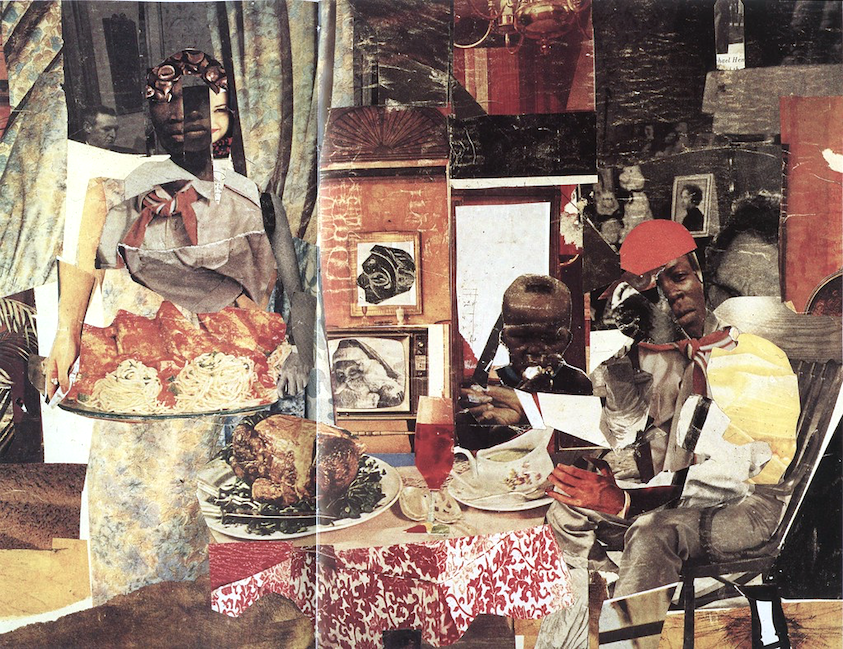 1964 / Collage of various papers with graphite on cardboard / 12 1/2″x15 3/4″ / Private collection
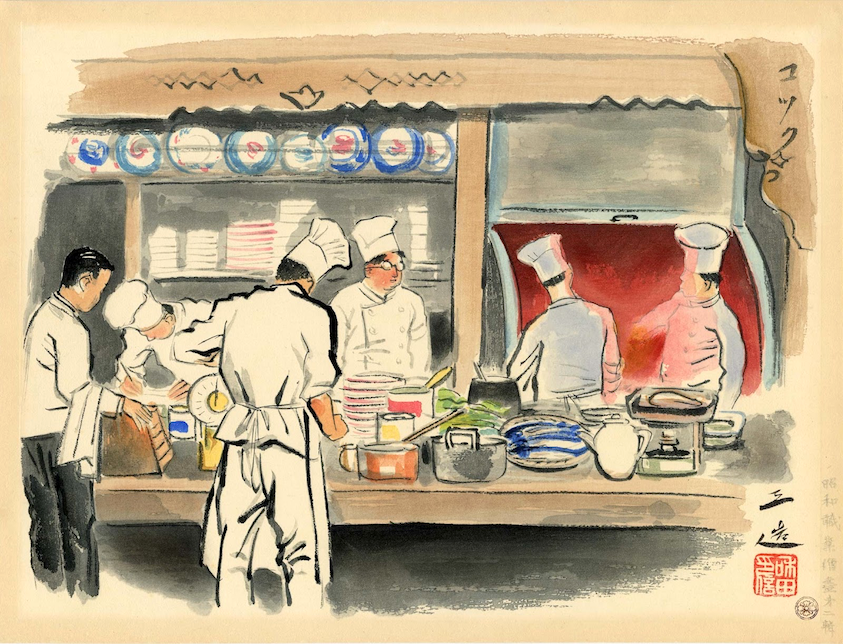 1940/41 / Woodblock print / Approximately 11″x14 1/2″ / Private collection
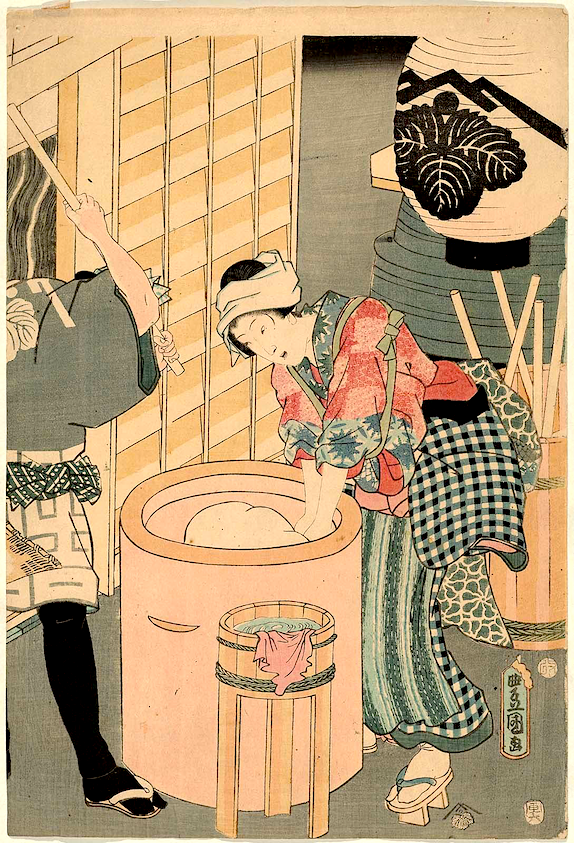 1854 / Polychrome woodblock triptych / 14 15/16″x30 1/8″
Various collections, including Museum of Fine Arts, Boston, MA
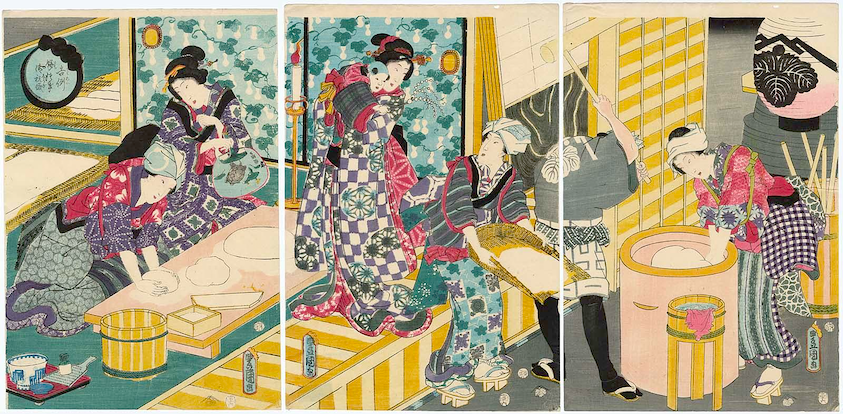
 18th century / Woodblock print; ink and color on paper / 14 15/16″x10 3/8″
Various collections, including Harvard Art Museums, Cambridge, MA
Beginning in the late 1930s, Cadmus, Jared and Margaret French –
and
sometimes Tooker by the mid-1940s – spent summers in Provincetown, Fire Island, and Nantucket. Most of the time was spent in Saltaire, Fire Island, which became the setting of paintings that A. Hyatt Mayor [museum curator, art historian, and writer] once dubbed the ‘Fire Island School.’ ~Cadmus, French, & Tooker, the Early Years
 George Tooker (1920–2011), Bathers (Bath Houses) by George Tooker
1950 / Egg tempera on gessoed board / The Huntington, San Marino, CA
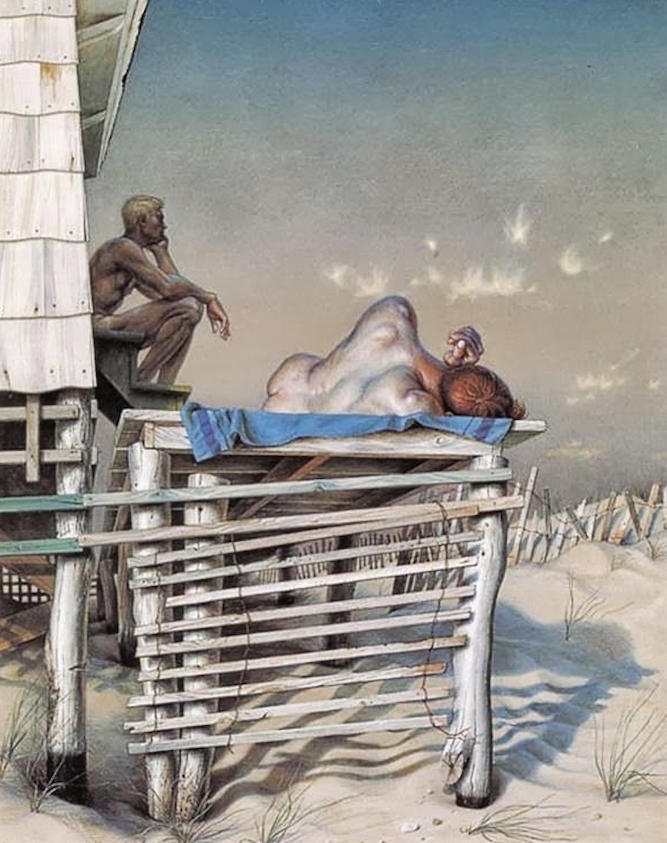
Point O’View by Paul Cadmus
1945 / Egg tempera on panel / Williams College Museum of Art, Williamstown, MA
Three women and a Lifeguard by Jared French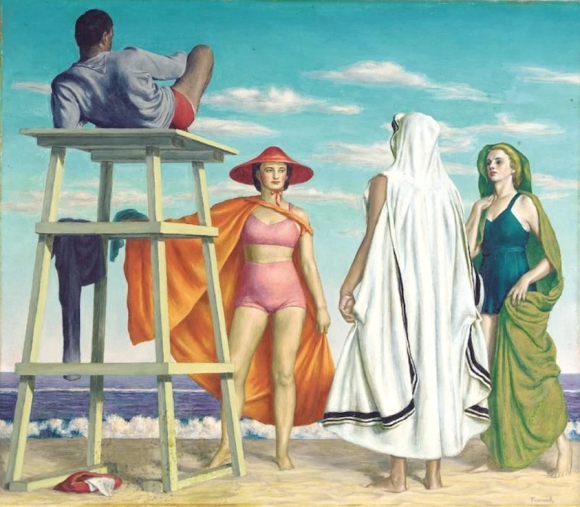
ND / Oil on canvas / Private collection

The Moon by Day by Margaret French
1939 / Egg tempera on canvas mounted to board / Private collection
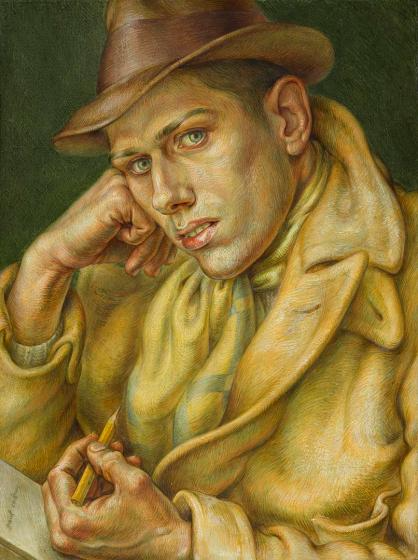
Tooker began studying at the Art Students League in New York City from 1943 to 1945 under American painter Reginald Marsh…Tooker met then sixteen-year-old Paul Cadmus, who became his lover, lifelong friend, and major artistic mentor. ~theartstory.org
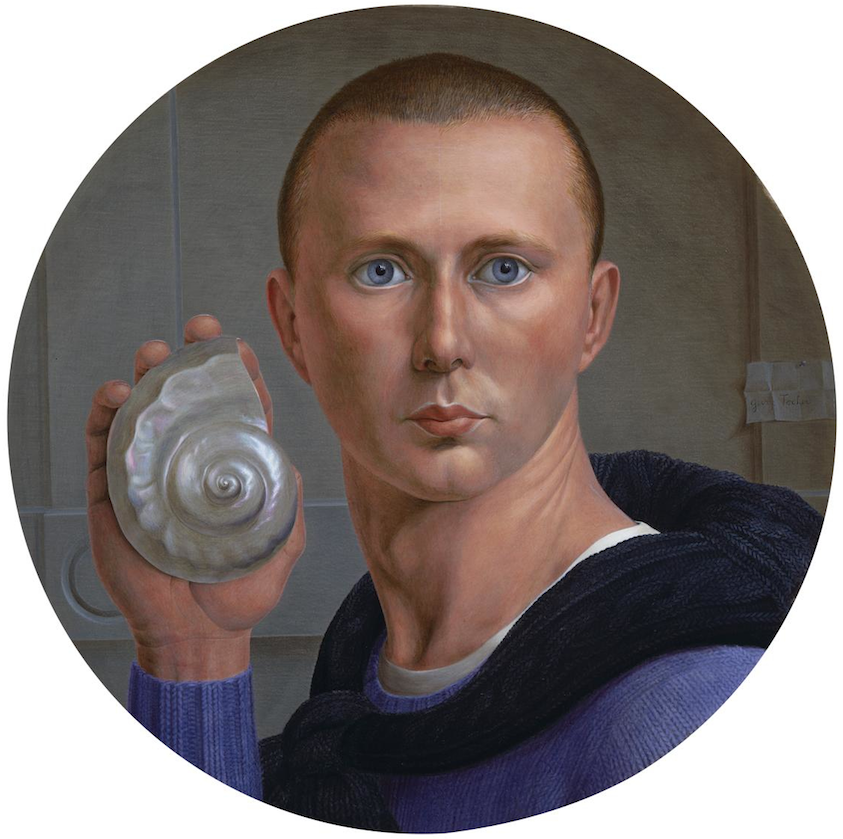
Self-Portrait of the Artist by George Tooker
1947 / Tempera on panel / Promised Gift to Crystal Bridges Museum of American Art, Bentonville, Arkansas
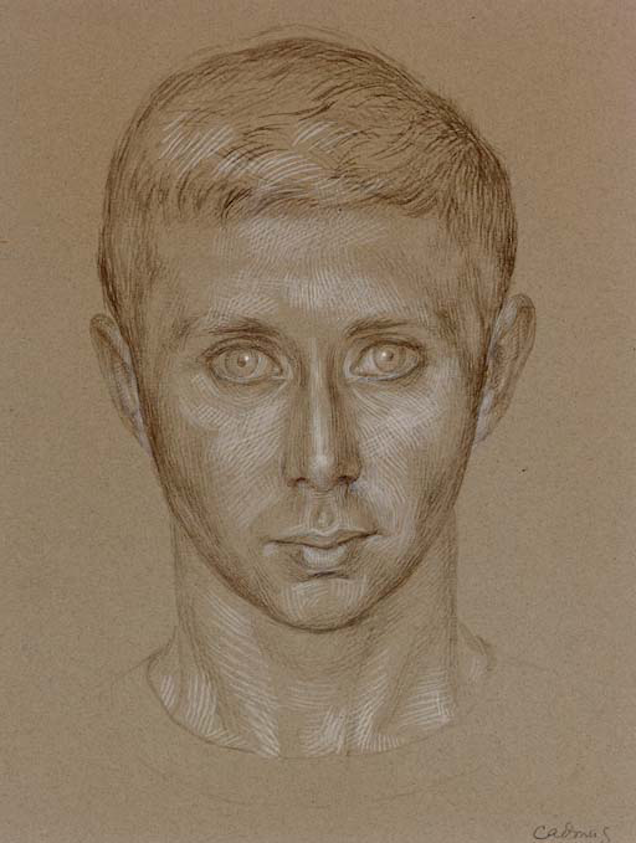
Portrait of George Tooker by Paul Cadmus
1949 / Ink heightened with white on paper / Private collection
Self-Portrait by Paul Cadmus
1935 / Tempera on board / Crystal Bridges Museum of American Art, Bentonville, Arkansas
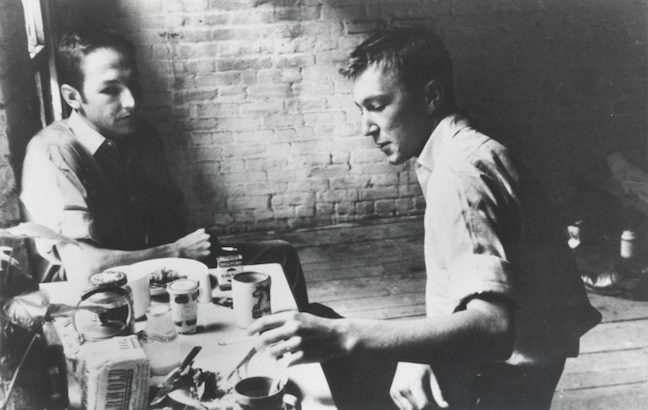
RR: “I’m not frightened of the affection that Jasper and I had, both personally and as working artists.
I don’t see any sin or conflict in those days when each of us was the most important person in each other’s lives.”
~Rauschenberg, with Affection by Richard Meyer
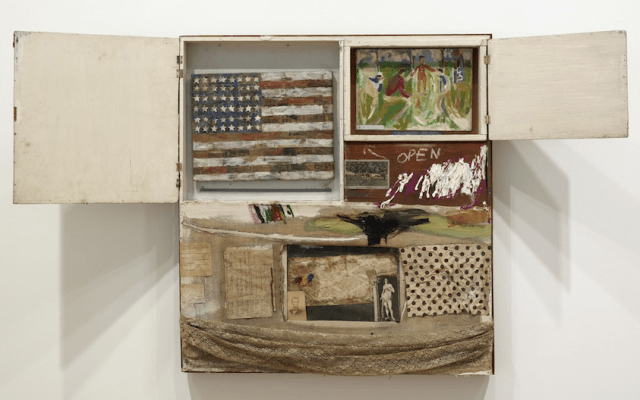 Short Circuit by Robert Rauschenberg
1955 / Oil, fabric, notebook paper, postcard, printed reproductions, concert program, and autograph on canvas, wood supports, and cabinets / MoMA, NY, NY
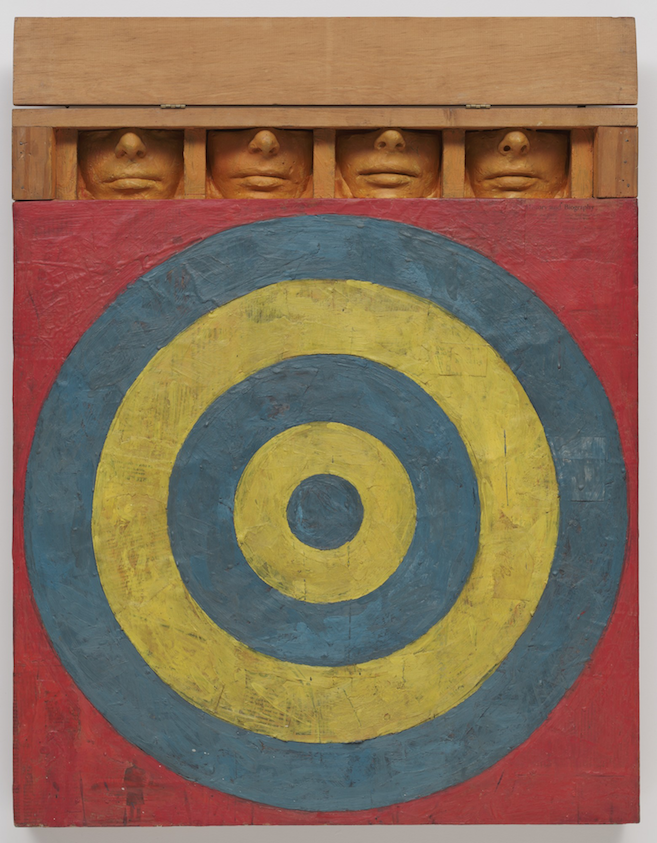
Target with Four Faces
by Jasper Johns
1955 / Encaustic on newspaper and cloth over canvas surmounted by four tinted-plaster faces in wood box with hinged front / Art Institute of Chicago, IL
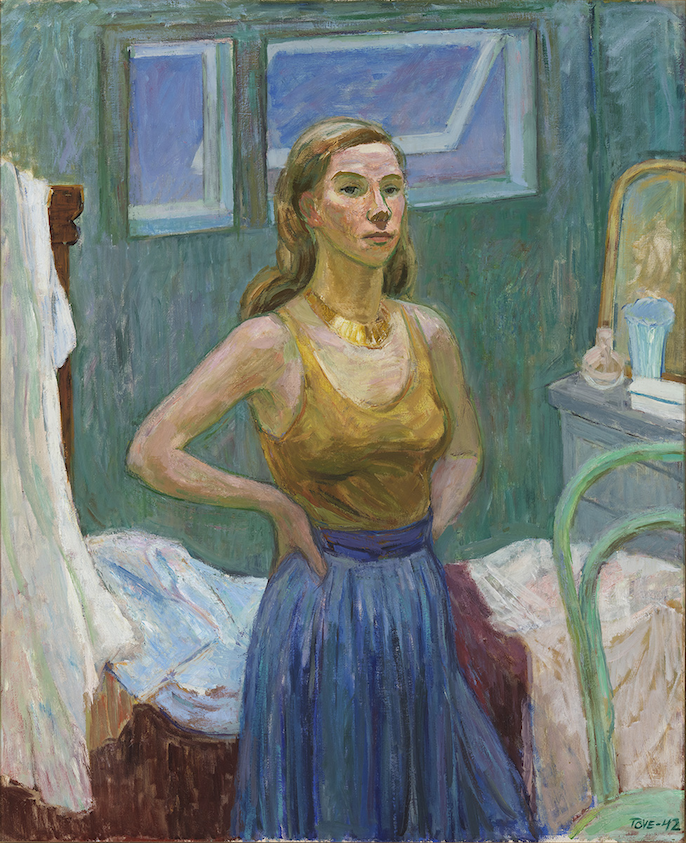
They found one another at the Artists’ Guild Christmas party in Helsinki in 1955…and their relationship gradually developed in the course of the following spring. “At last I’ve found my way to the one I want to be with,” Tove Jansson wrote in one of her first letters to Tuulikki Pietilä in the summer of 1956. FROM Literary Hub
Self-Portrait by Tove Jansson
1942 / Oil on canvas / Ateneum Art Museum, Finnish National Gallery, Helsinki, Finland
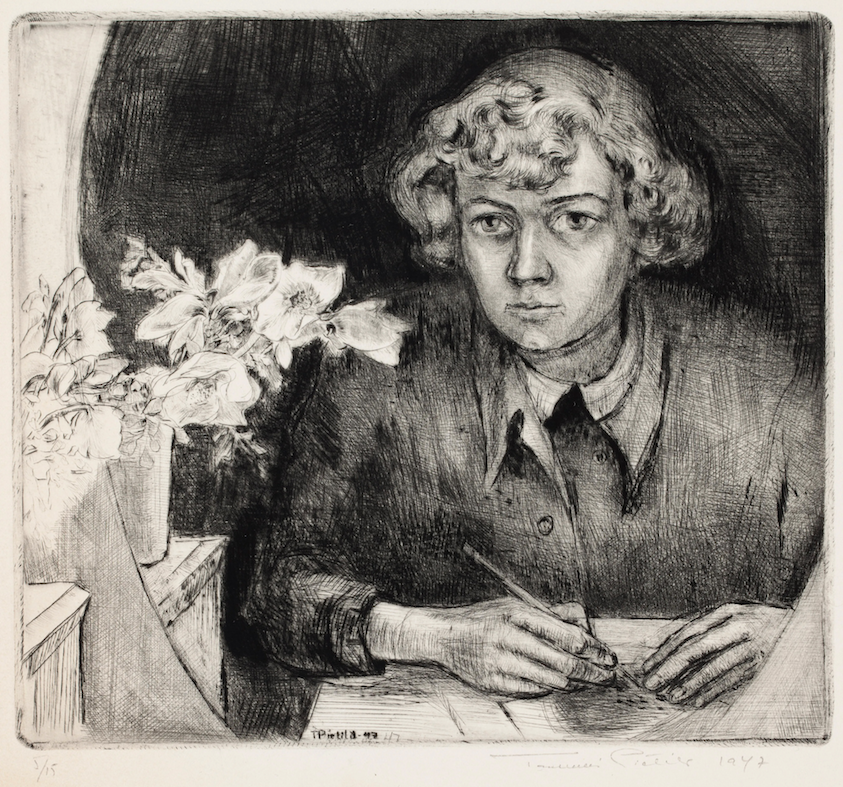
Self-Portrait with Flowers by Tuulikki Pietilä
1947 / Drypoint / Ateneum Art Museum, Finnish National Gallery, Helsinki, Finland
In Gertrude Stein’s prose poem, “Miss Furr and Miss Skeene”…
she celebratesthe lives of two American expatriate artists living together in France at the beginning of the twentieth century. Stein identified the subjects of the work as Cincinnati artists <<<Ethel Mars and Maud Hunt Squire>>> Mars and Squire met while attending the Art Academy of Cincinnati in the 1890s. This marked the beginning of a relationship that would last a lifetime. ~Cincinnati Art Museum
Street Scene, Provincetown by Ethel Mars
c.1919 / White-line color woodcut / Private collection

Bathers, Provincetown by Maud Hunt Squire
c.1914-1919 / Color woodcut on ivory Japanese paper / Art Institute of Chicago, IL