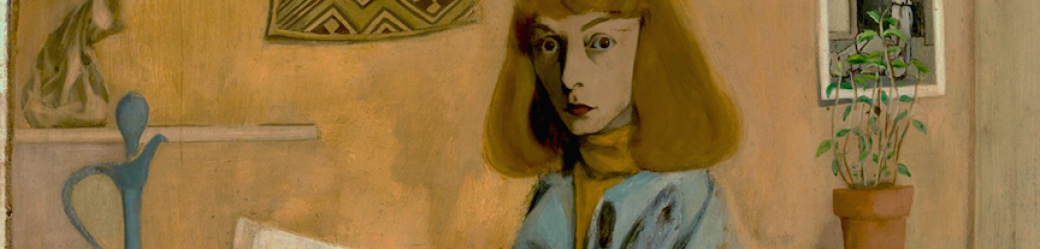
Elizabeth Catlett (April 15, 1915-April 2, 2012)

CatlettPic

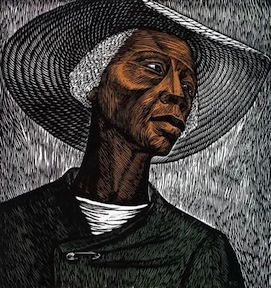
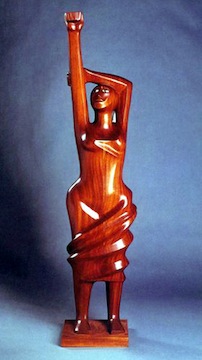
Sculptor and printmaker Elizabeth Catlett used her art to advocate for social change in both the U.S. and her adopted country of Mexico for almost three-quarters of a century. The granddaughter of former slaves, Catlett was raised in Washington, D.C. Her father died before she was born and her mother held several jobs to raise three children. Refused admission to Carnegie Institute of Technology because of her race, Catlett enrolled at Howard University, where her teachers included artist Catlett1Loïs Mailou Jones and philospher Alain Locke. She graduated with honors in 1935 and went on to earn the first the first M.F.A. in sculpture at the University of Iowa five years later.
Grant Wood, her painting teacher at Iowa, encouraged students to make art about what they knew best and to experiment with different mediums, inspiring Catlett to create lithographs, linoleum cuts, and sculpture in wood, stone, clay, and bronze. She drew subjects from African American and later Mexican life.
In 1946, a grant from the Rosenwald Foundation enabled Catlett to move to Mexico City with her husband, Catlett2printmaker Charles White. There she joined the Taller de Gráfica Popular, an influential and political group of printmakers. At the Taller, Catlett met the Mexican artist Francisco Mora, whom she married after divorcing White and with whom she had three sons.

https://nmwa.org/explore/artist-profiles/elizabeth-catlett

Biography: https://www.elizabethcatlettart.com/bio
NYT~”Elizabeth Catlett, Sculptor With Eye on Social Issues, Is Dead at 96″: http://www.nytimes.com/2012/04/04/arts/design/elizabeth-catlett-sculptor-with-eye-on-social-issues-dies-at-96.html

Louis-Ernest Barrias (April 13, 1841-February 4, 1905)

NatureThe figure first appeared in white marble at the Paris Salon of 1893 as ‘La Nature mystérieuse et voilée se découvre devant la Science’ and was acquired by the faculty at l’Ecole de Médecine in Bordeaux. Barrias returned to the theme a few years later exhibiting a related sculpture at the 1899 Salon, simply titled ‘La Nature se dévoilant’. Following in the spirit of pioneers of polychromy such as Charles-Henri-Joseph Cordier and Eugène Cornu this figure was carved using expensive and luxurious materials such as Algerian onyx for the drapery, lapis lazuli for the ribbon and malachite for the scarab. This figure is now in the collection of the Muse d’Orsay. A final version in white marble was made in 1902 and acquired by the École de Medicine in Paris.   https://lapada.org/

Nature Revealing Herself To Science~
http://www.sinaiandsons.com/catalogue/20th%20Century/Bronze/Barrias%20Figures.php
Biography~ https://en.wikipedia.org/wiki/Louis-Ernest_Barrias#Biography

Herbert Bayer: Born April 5, 1900

HerbertBayerStadelwand1936© M.T. Abraham Center© M.T. Abraham Center – Provided by copyright owner of both photograph and artwork, CC BY 3.0
https://commons.wikimedia.org/w/index.php?curid=24556654

Herbert Bayer (1900-1985) is one of the individuals most closely identified with the famous Bauhaus program in Weimar, Germany. Together with Walter Gropius, Laszlo Moholy-Nagy, and Wassily Kandinsky, Bayer helped shape a philosophy of functional design that extended across disciplines ranging from architecture to typography and graphic design. Endowed with enormous talent and energy, Bayer went on to produce an impressive body of work, including freelance graphics commissions, Modernist exhibition design, corporate identity programs, and architecture and environmental design…Though Bayer came to the Bauhaus as a student, he stayed on to become one of its most prominent faculty members.
FROM https://library.rit.edu/gda/designers/herbert-bayer

Collection at MoMA~ http://www.moma.org/collection/artists/399
New York Times Obituary~
http://www.nytimes.com/1985/10/01/arts/herbert-bayer-85-a-designer-and-artist-of-bauhaus-school.html

This slideshow requires JavaScript.

Joseph Csaky: Born March 18, 1888

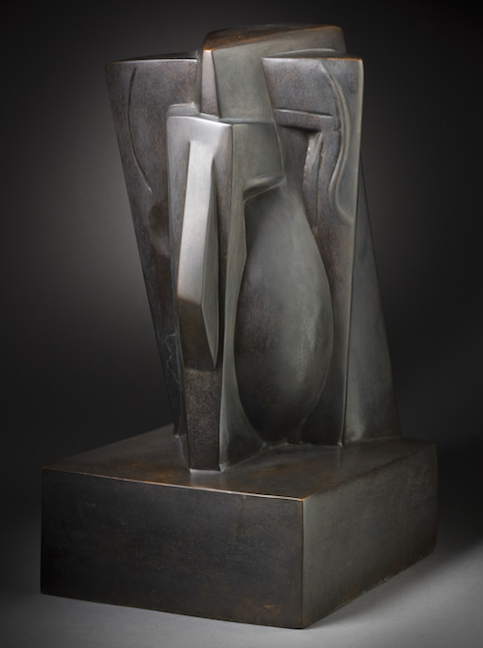
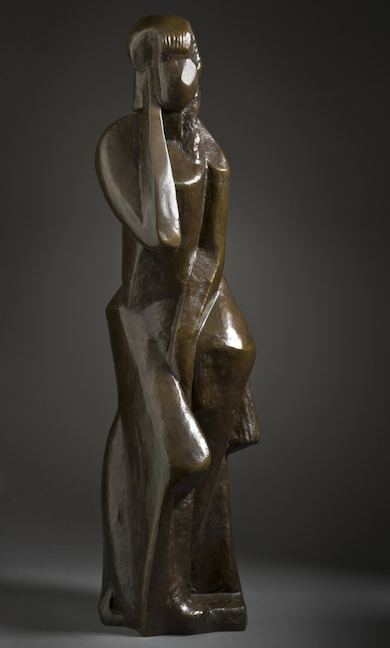
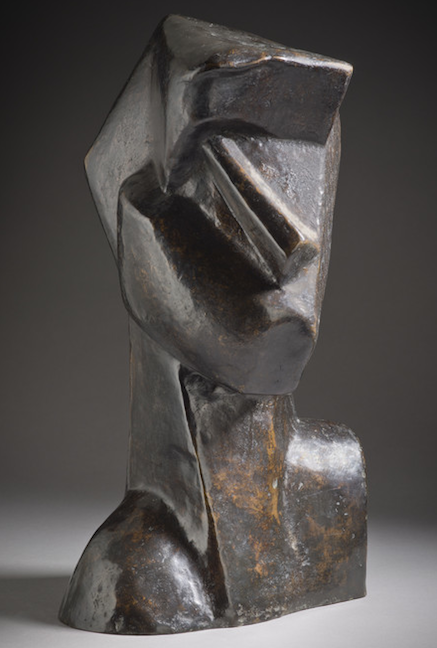
Joseph Csaky (March 18, 1888-May 1, 1971) was a Hungarian avant-garde artist, sculptor, and graphic artist, best known for his early participation as a sculptor in the Cubist movement.*

https://collections.lacma.org/node/2109599

*https://en.wikipedia.org/wiki/Joseph_Csaky
http://www.ngv.vic.gov.au/explore/collection/work/3363/
https://www.guggenheim.org/artwork/artist/joseph-csaky

David Hare: March 10, 1917-December 21, 1992

DavidHareBiography~ https://www.guggenheim.org/artwork/artist/david-hare

Exhibition catalogue at Weinstein Gallery, September 2012~
https://issuu.com/weinstein_gallery/docs/david-hare-exhibit-catalogue

Tamarind lithographs~ https://tamarind.unm.edu/?s=David+Hare
New York Times obituary~
http://www.nytimes.com/1992/12/25/arts/david-hare-sculptor-and-photographer-dies-at-75.html

Anthony Caro: March 8, 1924-October 23, 2013

Sir Anthony Caro (1924–2013) played a pivotal role in the development of twentieth-century sculpture. In the early 1960s, he began making brightly painted, abstract steel structures that he positioned directly on the floor, the omission of a pedestal marking a radical shift in the dynamic between work and viewer. In addition to steel, he also produced works in bronze, lead, silver, stoneware, and wood, as well as on paper. Caro’s constant reinvention of the language of abstract sculpture, as well as his influential teaching at St. Martin’s School of Art in London, distinguished him as the successor to artists such as Henry Moore and David Smith, and as an innovative artist in his own right. Resolutely nonfigurative, his sculptures nevertheless operate as analogues for human experience. As art historian Rosalind Krauss has observed, “Caro rendered the human form not as it looked from the outside, but how it felt from the inside, with its relationships subjectively conditioned.”
https://gagosian.com/artists/anthony-caro/


Obituary, NYT~
http://www.nytimes.com/2013/10/25/arts/design/anthony-caro-sculptor-who-discovered-a-path-to-abstraction-dies-at-89.html

Howard Pyle: March 5, 1853-November 9, 1911

Today, Howard Pyle is not nearly as well known as his images. However, he was one of America’s most popular illustrators and storytellers at a time when top illustrators were celebrities. At his death, he was designated by the New York Times “the father of American magazine illustration as it is known to-day.” His illustrations appeared in magazines like Harper’s Monthly, Collier’s Weekly, St. Nicholas, and Scribner’s Magazine, gaining him national and international exposure. And because magazines so influenced the nation’s visual culture, Pyle’s images and stories—including American history and tales of pirates and medieval adventurers—reached millions, helping to shape the American imagination.
https://www.delart.org/collections/howard-pyle/about-howard-pyle/

Howard Pyle: Born: March 5, 1853 | Died: November 9, 1911~
https://en.wikipedia.org/wiki/Howard_Pyle

Howard Pyle: 1853–1911
https://americanillustration.org/project/howard-pyle/

This slideshow requires JavaScript.