Dorothy P. Lathrop: Born April 16, 1891

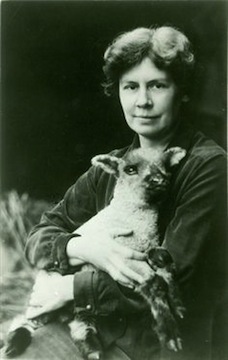
DPLwLamb

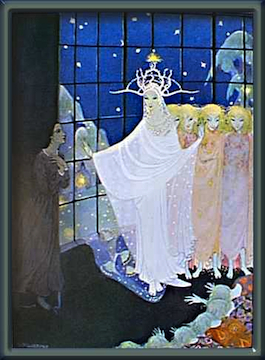
“Dorothy Pulis Lathrop was born April 16, 1891 in Albany, New York. One of the most influential and important illustrators of children’s books in the thirties and forties, she began her career in 1918. At that time she was a 27 year old teacher of art in Albany. Arguably her most famous works were the illustrations for Rachel Field’s, Hitty, Her First Hundred Years, the story of a doll. The book was awarded the Newbery Medal in 1930 and a new edition was in the stores for Christmas 1999. An image from the book is at the right. Lathrop was awarded the very first Caldecott Medal in 1938 for her book Animals of the Bible (1937).
”
FROM http://lathropgenealogy.blogspot.com/2005/03/dorothy-lathrop-biography.html

Read/download The Three Mulla-mulgars~ http://www.gutenberg.org/ebooks/32620
Read/download Down-adown-derry~ https://archive.org/details/downadownderrybo00delauoft

Fairieswomen

Leonardo da Vinci: Born April 15, 1452

LastSupperThe Last Supper ~ 1494–1498 ~ Oil/tempera on dry plaster ~ Convent of Santa Maria delle Grazie, Milan

The illegitimate son of a 25-year-old notary, Ser Piero, and a peasant girl, Caterina, Leonardo was born on April 15, 1452, in Vinci, Italy, just outside Florence…Growing up in his father’s Vinci home, Leonardo had access to scholarly texts owned by family and friends. He was also exposed to Vinci’s longstanding painting tradition, and when he was about 15 his father apprenticed him to the renowned workshop of Andrea del Verrochio in Florence. Even as an apprentice, Leonardo demonstrated his colossal talent.
>>>>>>   https://legacy.mos.org/leonardo/ (Museum of Science: Leonardo da Vinci, Renaissance Man)

“On Leonardo da Vinci’s Birthday MFA Boston Shows the Most Beautiful Drawing in the World”~ https://news.artnet.com/in-brief/leonardo-da-vinci-birthday-288061 (artnet news)

Slideshow~ http://www.metmuseum.org/toah/hd/leon/hd_leon.htm#slideshow1 (Metropolitan Museum of Art, Heilbrunn Timeline of Art History)

Leonardo Da Vinci timeline~ http://worldhistoryproject.org/topics/leonardo-da-vinci (World History Project)


The Story of Leonardo’s Horse~ https://www.davincisciencecenter.org/about/leonardo-and-the-horse/the-full-story-of-leonardos-horse/ (Da Vinci Science Center)


Ralph Steadman Illustrates the Life of Leonardo da Vinci~ http://www.brainpickings.org/2014/07/11/ralph-steadman-i-leonardo/ (Brain Pickings)

List of works by Leonardo da Vinci~ http://en.wikipedia.org/wiki/List_of_works_by_Leonardo_da_Vinci (Wikipedia)

Portrait of Cecilia Gallerani (Lady with the Ermine), about 1488Lady with an Ermine
1489–1490
Oil on wood panel
Wawel Castle, Kraków

Mona LisaMonaLisa
1503–1506 (perhaps 1517)
Oil on wood panel
Musée du Louvre, Paris

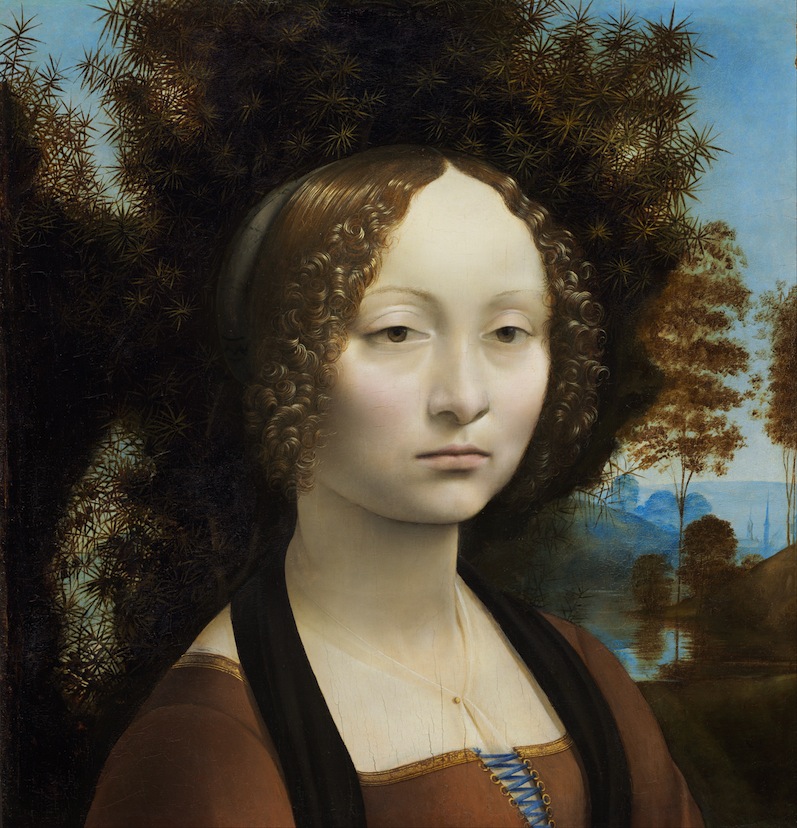
Ginevra
Ginevra de’Benci
1474–1478
Oil on wood panel
National Gallery of Art, Washington, D.C.

St. John the BaptistJohnTheBaptist
1513–1516

Oil on wood panel
Musée du Louvre, Paris

>> Click on images to enlarge <<<

Edward Bruce: Born April 13, 1879

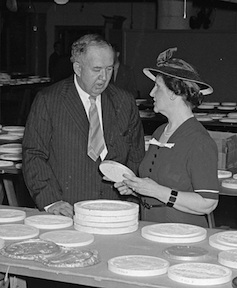
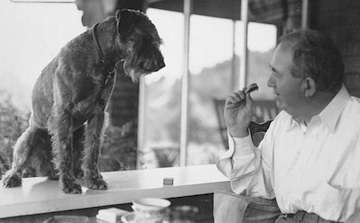
Bruce1Edward Bruce was born in 1879 in Dover Plains, New York. Though he enjoyed painting at a young age, he pursued a career in law and graduated from Columbia Law School in 1904. He practiced law in New York and in Manila, Philippines and was actively involved in international issues.SH143
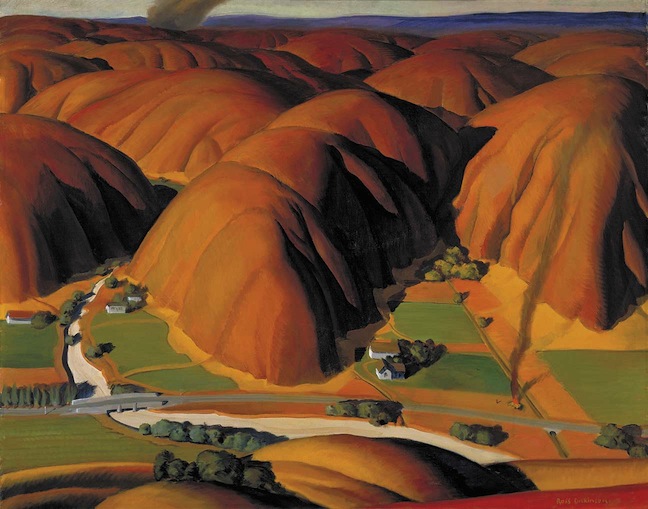
In 1923 Bruce gave up his career in law and business and began to paint, particularly landscapes. He and his wife Peggy spent the next six years in Anticoli Carrado, Italy where he studied painting from his friend and fellow artist Maurice Sterne. Bruce returned to the United States in 1929 and settled in California, exhibiting his artwork to much public and critical praise. In addition, Bruce was an avid collector of Chinese art.
In 1933 Bruce was appointed Chief of the newly established Public Works of Art Project, a federal government New Deal program within the U.S. Treasury Department, that employed artists to decorate numerous public buildings and parks…In 1940 he was appointed to the Commission of Fine Arts by President Franklin Delano Roosevelt.
Bruce2Bruce received many honors and awards during his lifetime both for his work as an artist and for his capable and dedicated administration of federal arts programs. Despite poor health, he continued his work for the Section of Fine Arts until shortly before his death in 1943.
http://www.aaa.si.edu/collections/edward-bruce-papers-7264/more

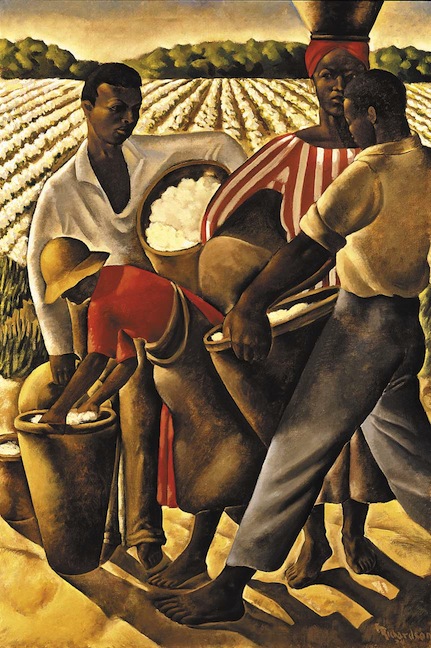
On December 8, 1933, the Advisory Committee to the Treasury on Fine Arts met to decide the newdealartdetails of the Public Works of Art Project (PWAP), the first of the New Deal art programs. The PWAP came at a crucial moment for federal support of the arts during the Great Depression. As artist Olin Dows (1904–1981) recalled, “If the first crash [i.e. Depression] art program had not been so carefully newdealarttoothought out and expertly organized, I doubt that other programs would have been undertaken. The man mainly responsible was Edward Bruce.” Bruce, an advisor to the Treasury Department, hosted the meeting at his home. First Lady Eleanor Roosevelt was present as were such arts leaders as Juliana Force and Forbes Watson, who worked with Bruce to organize the Public Works of Art Project.
https://www.incollect.com/articles/1934-a-new-deal-for-artists

History of the New Deal Art Projects~ http://wpamurals.org/history.html
The New Deal Art Registry~ http://www.newdealartregistry.org/Home.html

Louis-Ernest Barrias (April 13, 1841-February 4, 1905)

NatureThe figure first appeared in white marble at the Paris Salon of 1893 as ‘La Nature mystérieuse et voilée se découvre devant la Science’ and was acquired by the faculty at l’Ecole de Médecine in Bordeaux. Barrias returned to the theme a few years later exhibiting a related sculpture at the 1899 Salon, simply titled ‘La Nature se dévoilant’. Following in the spirit of pioneers of polychromy such as Charles-Henri-Joseph Cordier and Eugène Cornu this figure was carved using expensive and luxurious materials such as Algerian onyx for the drapery, lapis lazuli for the ribbon and malachite for the scarab. This figure is now in the collection of the Muse d’Orsay. A final version in white marble was made in 1902 and acquired by the École de Medicine in Paris.   https://lapada.org/

Nature Revealing Herself To Science~
http://www.sinaiandsons.com/catalogue/20th%20Century/Bronze/Barrias%20Figures.php
Biography~ https://en.wikipedia.org/wiki/Louis-Ernest_Barrias#Biography

Hardie Gramatky: Born on April 12, 1907

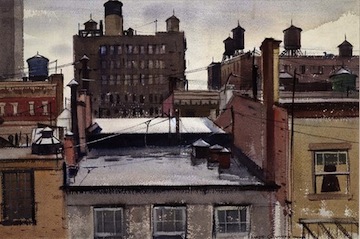
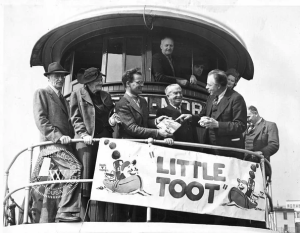
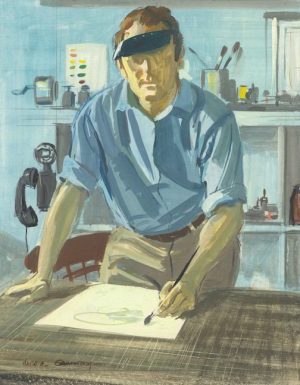
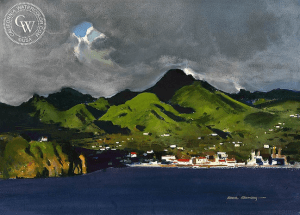
Bernhard August “Hardie” Gramatky, Jr. (April 12, 1907-April 29, 1979) was an American painter, writer, animator, and illustrator. In a 2006 article in Watercolor Magazine, Andrew Wyeth named him as one of America’s 20 greatest watercolorists. He wrote and illustrated several children’s books, most notably Little Toot.
FROM https://en.wikipedia.org/wiki/Hardie_Gramatky

ROOF

http://www.californiawatercolor.com/pages/hardie-gramatky-biography

https://www.mazzamuseum.org/project/miles-gallery/

https://www.lambiek.net/artists/g/gramatky_hardie.htm

Eadweard Muybridge: Born April 9, 1830

Yosemite

Photographs of Yosemite~
http://www.yosemite.ca.us/library/yosemite_its_wonders_and_its_beauties/list_of_photographs.html
Biography~ http://www.iphf.org/hall-of-fame/eadweard-muybridge/
BBC Documentary~ https://youtu.be/5Awo-P3t4Ho

Before his death in 1903, Muybridge would emigrate to America, change his name three times, come close to death and suffer brain damage in a carriage accident. Perhaps most sensationally, he would also be acquitted for the murder of Major Harry Larkyns, his wife’s lover, and the true father of his presumed son Floredo Helios Muybridge.
In fact, Muybridge enjoyed a professional life which may even have surpassed his sensational personal biography. He gained fame through adventurous and progressive landscape photography before working as a war and official government photographer; something which took him from the Lava beds of California during the Modoc War to Alaska and Central America.
Furthermore, Muybridge was instrumental in the development of instantaneous photography. To accomplish his famous motion sequence photography, Muybridge even designed his own high speed electronic shutter and electro-timer, to be used alongside a battery of up to twenty-four cameras!
While Muybridge’s motion sequences helped revolutionise still photography, the resultant photographs also punctuated the history of the motion picture. Muybridge actually came tantalisingly close to producing cinema himself with his projection device the ‘Zoöpraxiscope’.
Research resource~ http://www.eadweardmuybridge.co.uk/

Clarence Hudson White: Born on April 8, 1871

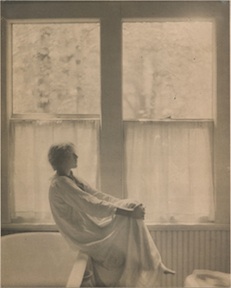
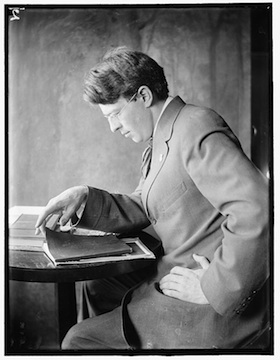
white1“Before White was able to become a full-time artist and teacher, he worked for nearly a decade in Newark, Ohio, balancing a bookkeeping job with his avocation as a photographer. Featured in the third issue of Camera Work, White received international recognition for his work…In 1906 he moved to New York and assisted Alfred Stieglitz in the operation of his newly opened gallery.”
FROM http://americanart.si.edu/collections/search/artist/?id=6761

white2

“When White first began teaching, the medium of photography was coming into its own as a means of artistic expression, and its advantages for communication had been acknowledged. Photographs were preferred over wood engravings and often over drawings for illustration in newspapers and magazines. The use of photographs in advertisements was on the rise. But no place existed for people to learn how to use the camera in the art of seeing.

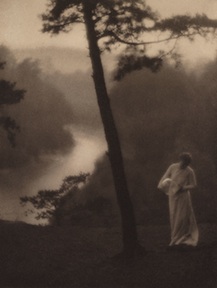
white3Charismatic amateur photographer and teacher Clarence H. White was inspired to found a school that would advocate applying art principles to professional and commercial as well as art photography.”
FROM http://www.loc.gov/loc/lcib/0112/white.html

Clarence H. White: https://media.artic.edu/stieglitz/clarence-h-white/
Wikipedia entry: https://en.wikipedia.org/wiki/Clarence_Hudson_White

Herbert Bayer: Born April 5, 1900

HerbertBayerStadelwand1936© M.T. Abraham Center© M.T. Abraham Center – Provided by copyright owner of both photograph and artwork, CC BY 3.0
https://commons.wikimedia.org/w/index.php?curid=24556654

Herbert Bayer (1900-1985) is one of the individuals most closely identified with the famous Bauhaus program in Weimar, Germany. Together with Walter Gropius, Laszlo Moholy-Nagy, and Wassily Kandinsky, Bayer helped shape a philosophy of functional design that extended across disciplines ranging from architecture to typography and graphic design. Endowed with enormous talent and energy, Bayer went on to produce an impressive body of work, including freelance graphics commissions, Modernist exhibition design, corporate identity programs, and architecture and environmental design…Though Bayer came to the Bauhaus as a student, he stayed on to become one of its most prominent faculty members.
FROM https://library.rit.edu/gda/designers/herbert-bayer

Collection at MoMA~ http://www.moma.org/collection/artists/399
New York Times Obituary~
http://www.nytimes.com/1985/10/01/arts/herbert-bayer-85-a-designer-and-artist-of-bauhaus-school.html

This slideshow requires JavaScript.

Clifford Berryman: Born April 2, 1869

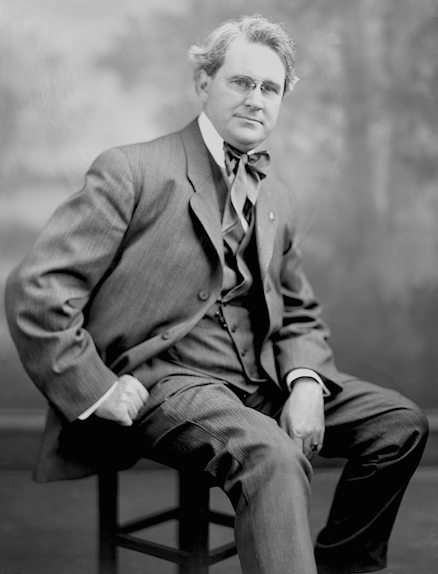
Clifford K. Berryman (1869-1949) was a Pulitzer Prize–winning editorial cartoonist, perhaps best known for inspiring the Teddy Bear toy. As a draftsman, illustrator, and cartoonist, Berryman always worked in pen and ink. Berryman satirized both Democrats and Republicans with a light-hearted approach.

Born April 2, 1869 in Clifton, Kentucky, he never attended art school and was entirely self-taught. His first job, in 1886, was as a draftsman at the United States Patent Office in D.C. From 1891 to 1896, he worked as a general illustrator and it was during this time that he learned cartooning by studying contemporary cartoons and copying the artist’ styles.

Berryman’s illustration entitled “And Boys, Remember the Maine!”, which appeared in the Washington Post on April 3, 1898, depicts an angry Uncle Sam addressing sailors as the USS Maine sinks in the background. “Remember the Maine,” became the battle-cry for American sailors during the Spanish-American War.

Berryman originated the “Teddy Bear” in his illustration “Drawing the Line in Mississippi”, published November 16, 1902 in the Post. It showed President Theodore Roosevelt refusing to shoot a captured cub during a bear hunt. This is the cartoon which inspired New York store owner Morris Michtom to create a new toy and call it the Teddy Bear. This little bear appeared in cartoons drawn by Berryman throughout Roosevelt’s career.


Berryman drew thousands of cartoons, first with the Washington Post and then with the Washington Star, where he drew cartoons until his death on December 11, 1949. Berryman’s cartoons can be found at the Library of Congress, the National Archives, and George Washington University.

Biography~ https://alchetron.com/Clifford-K-Berryman-1222344-W

Running for Office: Candidates, Campaigns, and the Cartoons of Clifford Berryman~
https://www.archives.gov/exhibits/running-for-office/