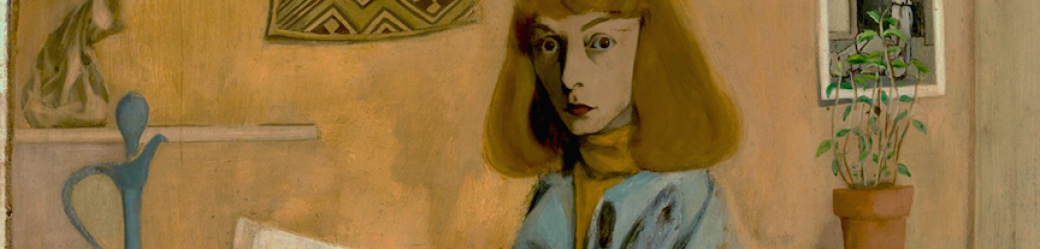
Armand Guillaumin (born February 16, 1841, Paris, France – died June 26, 1927, Paris) was a French landscape painter and lithographer who was a member of the Impressionist group.
http://www.britannica.com/biography/Armand-Guillaumin
Category Archives: Artists Born Today Include:
Photographer Esther Bubley: Born February 16, 1921
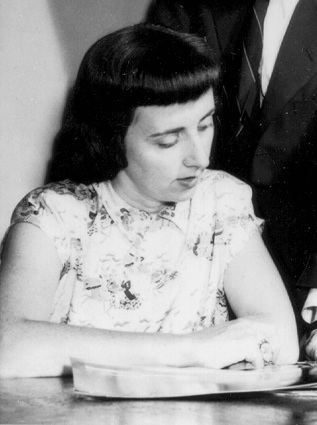
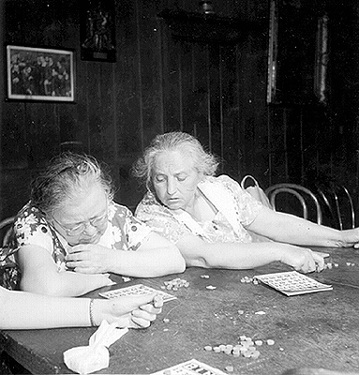
“Put me down with people, and it’s just overwhelming,” Bubley exclaimed in an interview. Like most great photojournalists, she found her art in everyday life, and she successfully balanced her artistic ambitions with the demands of commercial publishing. Edward Steichen, curator of photographs at the Museum of Modern Art and the era’s arbiter of taste, was a great supporter of Bubley, whose work embodied his aesthetic ideal that photography “explain man to man and each to himself.” She was shown in several group shows at the Museum of Modern Art and was given a one-person show at the Limelight, Helen Gee’s legendary coffee house and the only gallery specializing in photography in New York during the 1950s. Bubley worked primarily for the printed page, however, and like her colleagues, can be only partially understood in the context of today’s gallery-oriented photography world, in which photographs are shown as isolated works of art.
FROM http://www.estherbubley.com/bio_frame_set.htm
http://www.loc.gov/rr/print/coll/womphotoj/bubleyintro.html
https://www.loc.gov/exhibits/wcf/wcf0012.html
https://lens.blogs.nytimes.com/2011/08/02/tender-moments-in-the-maelstrom-of-war/
American Gothic
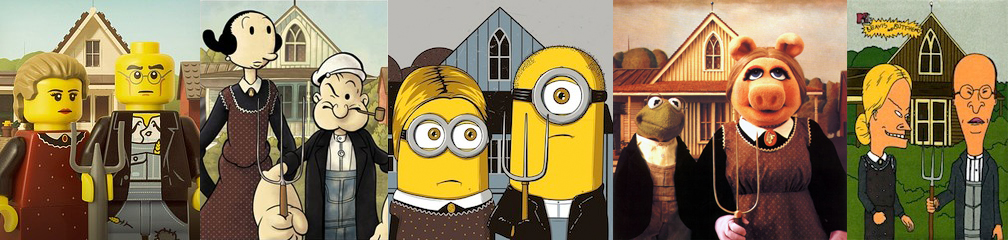
The painting endures, Biel concludes, because it is both itself and a parody of itself. Its meaning has more to do with the viewer’s perception than Wood’s intention. In this, Biel is identifying something common to all visual material. Paintings (like films) never change, but they are subject to differing responses and interpretations as times change. Those that survive cultural, aesthetic and historical shifts share the characteristics that can be seen in ”American Gothic.” It’s simple — two people and a house — and easily remembered. It’s ambiguous and thus can evoke the ambivalent. Wood’s choice of clothing, hairstyle, color and sober posture denies specifics, yet suggests a time, a place and an attitude. It opens the door to popularity (anyone can enjoy it for any reason); argument (does it criticize Middle America or affirm its values?); hatred (it’s an ugly cliché and she’s got rickrack on her dress); parody (the Barbie and Ken or Mickey and Minnie Mouse versions); rebellion (Gordon Parks’s photograph of a black cleaning woman uses the pose to remind us of its basic whiteness); commerce (Paul Newman and his daughter posing on their organic snack packages); politics (representations of a long line of American presidents and their first ladies); and endless pop cultural references (the small-town tableau of ”The Music Man” or the credits for ”Green Acres”)
http://www.nytimes.com/2005/07/10/books/review/10BASSING.html?pagewanted=all&_r=0


Benjamin Waterhouse Hawkins: Feb. 8, 1807 – Jan. 27, 1894
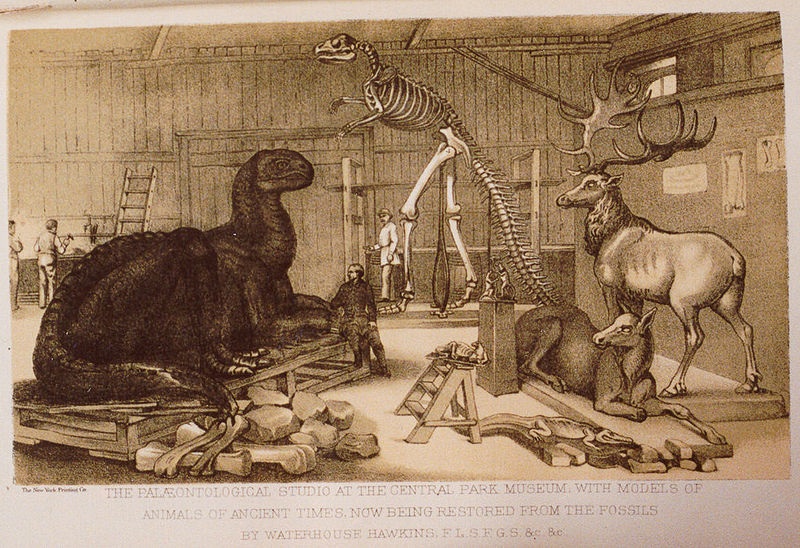 Reconstructed skeletons of dinosaurs and life-size models of how they may once have appeared are now commonplace. But until the British artist Benjamin Waterhouse Hawkins created such things in the second half of the nineteenth century, dinosaurs and their kin were poorly understood and of little interest to anyone but a handful of professional paleontologists. Hawkins was responsible for designing public displays both in Great Britain and in the United States depicting prehistoric life…The beginnings of Hawkins’s lasting influence in paleontology can be traced to September 1852, when he earned an extraordinary commission: to fashion a group of life-size sculptures of “antediluvian monsters” for London’s Crystal Palace.
http://www.naturalhistorymag.com/htmlsite/master.html?http://www.naturalhistorymag.com/htmlsite/1208/1208_feature.html
In order to refute the nascent stirrings of evolutionary theory, Owens pressed Hawkins to transform the iguanodon from the huge, low-to-the-ground lizard that scientists had guessed at since its discovery nearly twenty years earlier into a majestic quadruped that walked rather than slithered, built like a grotesquely oversized dog or pig.
…
Mistakes of that sort abounded in Hawkins’s models, driven in most cases less by ideology than by understandable lack of knowledge. As any contemporary visitor to Dinosaur Court will instantly grasp, these dinosaurs are … off. Awkwardly, humorously so.
http://editions.nymoon.com/post/22591159984/wrongosaurus-dinosaurs-at-the-crystal-palace-by
Following his success with the Crystal Palace Exhibition, Hawkins came to New York City with the intent of recreating on one side of the Atlantic what had been so successful on the other…The plan was to set them up in a “Paleozoic Museum” in Central Park, which was then being landscaped under the direction of Frederick Law Olmstead, an ex-engineer officer in the Union army.
…
However, in 1871, before either the park or the dinosaurs were finished, New York City politics intervened. The corrupt Tammany Hall-Boss Tweed machine took control of city politics, and Hawkins and his dinosaurs were out.
http://academic.brooklyn.cuny.edu/geology/chamber/hawkins.html
The Central Park Conservancy’s historian, Sara Cedar Miller, told us this morning: “The dinosaur models were made of concrete and metal so their ‘bones’ would basically be unidentifiable if found. The remains were thrown into the Pond, not under sod…and the Pond has been dredged for restoration restored many times and it is quite unlikely that anything would be there now.”
http://gothamist.com/2014/09/23/no_there_are_no_dinosaurs_buried_in.php
The link below leads to a collection of images from an album of manuscripts, clippings, and images assembled over time by Benjamin Waterhouse Hawkins: Collection 803. Benjamin Waterhouse Hawkins Album. Academy of Natural Sciences of Philadelphia. http://www.ansp.org/research/library/archives/0800-0899/hawkins803/
January 17: 365 days of Artists’ Birthdays
My first post in Artists Born Today Include: was on January 17, 2015. My plan was to find two artists who were born on each day, and post an image and a link for each artist.
There were days when I had so many fine artists to choose from that it was difficult to figure out which two to feature. There were other days when I spent ages trying to locate even two artists who were born that day AND had some sort of biography online. Some mornings Google would make me do a Captcha to prove that I was not a robot, due to the number of tabs and links upon which I was bouncing around at lightning speed.
By the end of the year, I had learned quite a bit. I discovered artists whom I had never heard of before. I found wonderful web sites and blogs which I bookmarked because I wanted to return to them when I wasn’t in a hurry to post on my blog.
I learned that books are most certainly not dead. More than once I had to ignore the birthday of an artist because, despite there being plenty of online images and plenty of print biographies, it would seem that nobody had ever bothered to put any of their critical or biographical information online. I can honestly say that if you want to learn about an artist, the library will be much more useful than the internet.
Thank you for visiting my blog. I hope I’ll see you again soon.
Frances Benjamin Johnston: Born January 15, 1864

“Frances Benjamin Johnston (1864-1952) was one of the first American women to achieve prominence as a photographer. Trained at the Académie Julian in Paris, she studied photography upon her return to Washington, D.C., in the mid-1880s and opened a professional studio circa 1890. Her family’s social position gave Johnston access to the First Family and leading Washington political figures and launched her career as a photojournalist and portrait photographer. Johnston turned to garden and estate photography in 1910s.”
~https://www.loc.gov/pictures/collection/fbj/
Frances Benjamin Johnston~ http://www.cliohistory.org/exhibits/johnston/
Photographs~ http://www.whitehousehistory.org/galleries/frances-benjamin-johnston
Library of Congress~ http://www.loc.gov/rr/print/coll/fbjchron.html
Barbara Hepworth: Born January 10, 1903
 https://www.thelondonmagazine.org/i-the-sculptor-am-the-landscape-barbara-hepworths-roots-of-stone/
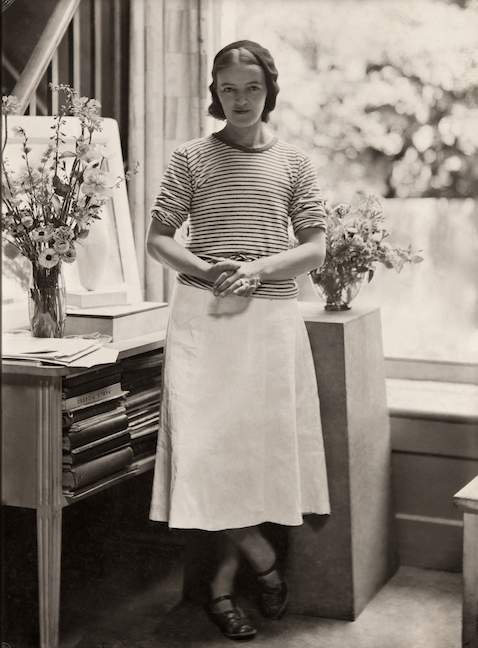
Barbara Hepworth was a British sculptor, who was born in Wakefield, Yorkshire in 1903. She was a leading figure in the international art scene throughout a career spanning five decades.
~ link: Who is Barbara Hepworth?
Biography~https://mymodernmet.com/barbara-hepworth/
Official site~ https://barbarahepworth.org.uk/
George Washington Carver: c.1864 – January 5, 1943
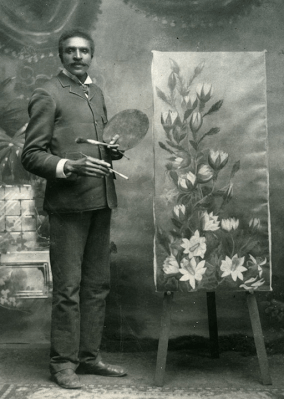
“Probably one of the most recognized names in agricultural research, George Washington Carver (c.1865-1943) overcame numerous obstacles to achieve a graduate education and gain international fame as an educator, inventor, and scientist. FROM http://www.encyclopediaofalabama.org/article/h-1064
Born a slave, [Carver] is one of the most historically prominent African American scientists. Carver was a pioneer as an agriculturalist and botanist by introducing methods of soil conservation for farmers, inventing hundreds of by-products from peanuts, pecans, sweet potatoes, and soybeans, and practicing “zero waste” sustainability. Scholars have recognized Carver’s talent as a painter and his ability to develop paints and dyes from various natural sources;
however, there is very little scholarship documenting his work as a textile artist.”
FROM http://digitalcommons.unl.edu/cgi/viewcontent.cgi?article=1922&context=tsaconf
“Throughout Carver’s life, he balanced two interests and talents that may seem at odds – the creative arts and the natural sciences. Skills of observation, experimentation, replication, and communication applied to both art and science, making Carver as comfortable in the sciences as in the arts.” FROM https://www.thehenryford.org/explore/stories-of-innovation/what-if/george-washington-carver
“In the late 1880s, [Carver] made his way to Winterset, Iowa, where a white couple encouraged him to apply to Simpson College in Indianola, Iowa. The only African American student, Carver enrolled in Simpson in September 1890 as an art major. His art teacher recognized his considerable talents, but she was concerned that as a black man, he would have difficulties finding work as a professional artist. After Carver showed her some plants he had hybridized, she suggested that he transfer to Iowa State College of Agricultural and Mechanic Arts (now Iowa State University), in Ames, Iowa, where her father,J. L. Budd, taught horticulture”. FROM http://www.encyclopediaofalabama.org/article/h-1064
“Holdings at the G.W. Carver National Monument and Tuskegee Institute National Historic indicate that Carver was proficient in textile techniques such as embroidery, weaving, crocheting, knitting and basketry. According to a document written by the National Park Service Carver created, ’embroideries on burlap, ornaments made of chicken feathers, seed and colored peanut necklaces, woven textiles’ (p. 24) and that ‘He was an honorary member of the Royal Society of Arts in London, England’.” FROM http://digitalcommons.unl.edu/cgi/viewcontent.cgi?article=1922&context=tsaconf
“What spare time he salvaged from his hectic schedule usually went for the pursuit of loves Carver had sacrificed, like botany and art. He found time to crochet, knit, and do needlework. He found these activities satisfactory and they enabled him to produce useful items for friends. He had great appreciation for the world around him, in particular, the materials found in nature. He dyed many of his own threads and fibers with natural dyes made from local walnut, mulberry, and ochre clay.
He became a scientist, a teacher, a speaker, and more, but he never entirely let go of his art. Rather he brought it to his other pursuits, and at times even let it guide them. Carver taught art classes at Tuskegee in addition to his regular roster of courses. He also allowed his artistic talents to improve his scientific work. He drew diagrams with the fine pen of an illustrator, collected specimens with the attention of a painter and crossbred plants with profound creativity. Through out his life he maintained the soul of an artist and continued to paint. Carver was driven by science, but art remained his passion.” FROM https://www.nps.gov/teachers/classrooms/george-washington-carver-the-artist-resource-to-his-people.htm
December 31~
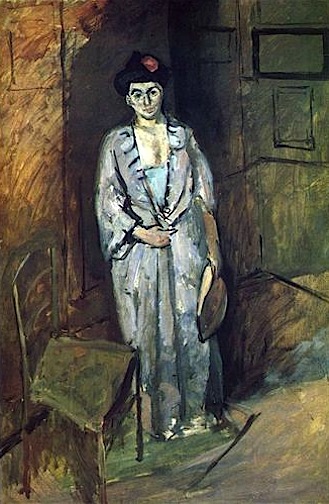
Henri Matisse (1869-1954)
http://www.metmuseum.org/toah/hd/mati/hd_mati.htm
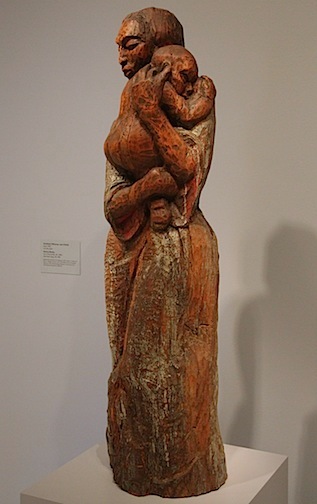
Selma Burke (1900-1995)
https://en.wikipedia.org/wiki/Selma_Burke
December 30~
W. Eugene Smith (1918-1978)
http://www.icp.org/browse/archive/constituents/w-eugene-smith?all/all/all/all/0

Lila Katzen (1932-1998)
http://www.groundsforsculpture.org/Artist/Lila-Katzen


